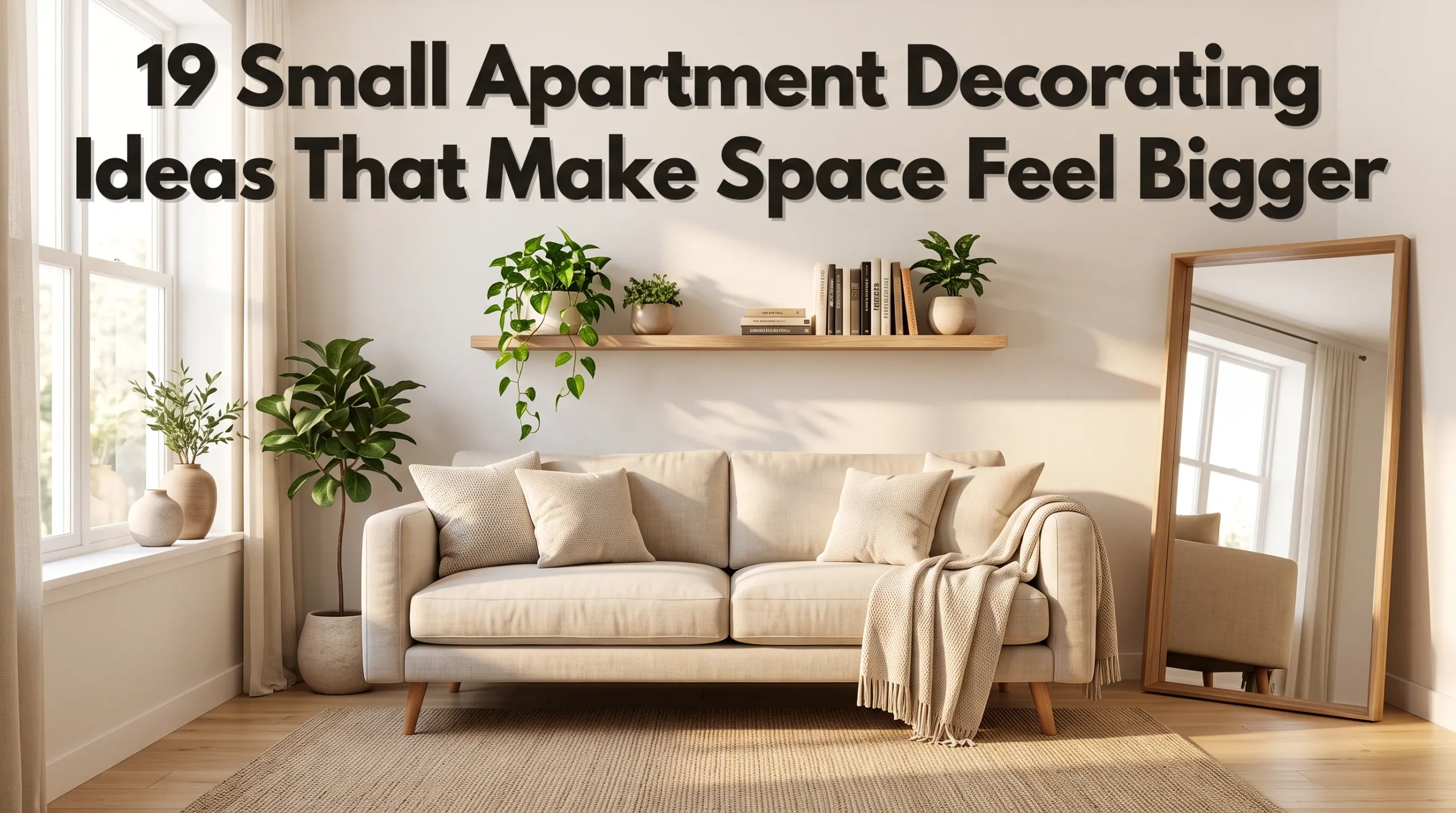
19 Small Apartment Decorating Ideas That Make Space Feel Bigger
Small apartment decorating can feel like a constant game of inches. The sofa is comfortable, but it takes up half the living room. The kitchen has enough cabinets until you actually start using them. Then there is that awkward corner by the window that somehow becomes the permanent home for bags, shoes, boxes, and everything else without a place.
When I first started working in interior design, I learned this firsthand. Living in a compact studio taught me that decoration isn’t about adding more—it’s about choosing better.
The good news is that a small apartment does not need more furniture to feel finished. It usually needs better furniture, smarter storage, clearer zones, and enough breathing room to let the space work.
That is where small apartment decorating ideas become different from decorating a larger home. Every piece has to earn its footprint. A mirror can help bounce light around the room. A storage ottoman can replace both a coffee table and an extra storage box. A narrow shelf can use an empty wall instead of valuable floor space.
The ideas below are designed for real apartments—studios, one-bedroom homes, rentals, compact bedrooms, small kitchens, and open-plan spaces. Each one addresses a specific problem small spaces face, and each one has been tested in actual homes.
The goal is not to make your apartment look empty. It is to make it feel comfortable, functional, uncluttered, and genuinely yours.
Quick Answer
The fastest way to make a small apartment feel more spacious: protect your walking space while making furniture and storage work harder. Start with multifunctional pieces, vertical storage, appropriately sized rugs, strategically placed mirrors, ceiling-height curtains, and layered lighting. Keep larger surfaces visually calm and avoid filling every empty corner.
Why These Ideas Actually Work
The most useful small-space solutions solve one of four core problems:
- Floor space: furniture and storage take up too much room.
- Visual clutter: too many objects compete for attention.
- Poor layout: furniture blocks natural movement.
- Limited storage: everyday items have nowhere convenient to go.
Before buying anything, identify which problem frustrates you most. A new shelf won’t fix an awkward furniture layout, and another storage cabinet won’t help if the apartment already feels visually crowded.
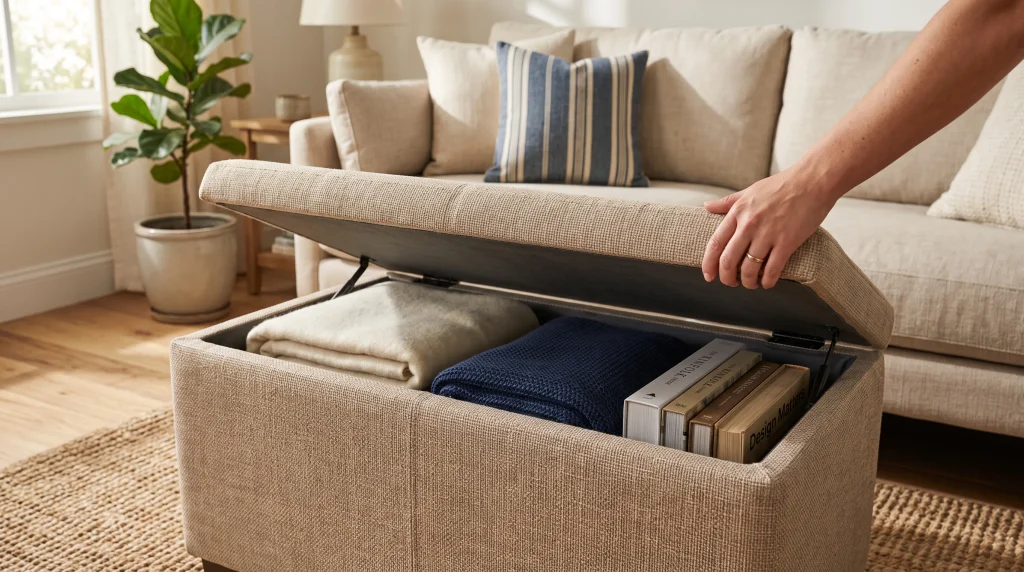
1. Storage Ottoman
A storage ottoman is one of the easiest ways to make a small living room work harder.
During the day, it acts as a footrest or coffee-table alternative. When guests arrive, it provides extra seating. Inside, it holds blankets, books, games, spare cushions, or other items that would otherwise stay visible.
For a compact room, choose a shape that does not interfere with the main walkway. A rectangular ottoman works well in front of a sofa, while a smaller round version may fit better beside a chair.
Think about how you will access the storage. A lift-up lid is convenient for larger items, while drawers or compartments work better for things you reach for regularly.
Small-space tip: Measure the space around the ottoman before buying it. Hidden storage is not helpful if the piece turns your main walkway into an obstacle course.
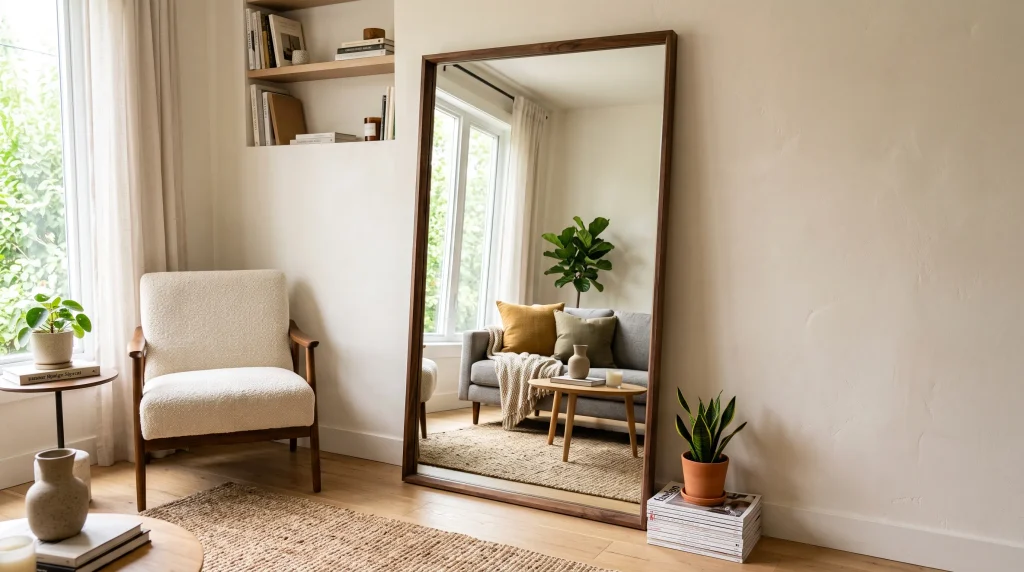
2. Oversized Mirror
A large mirror can make a small room feel brighter and more open—but placement matters more than size alone.
Position it where it can reflect a window, natural light, or another bright part of the room. A mirror facing a cluttered corner simply gives that clutter another place to be seen.
A tall mirror emphasizes vertical space, while a wide mirror can make a narrow wall feel less boxed in. For a rental, a leaning floor mirror provides the effect without requiring permanent wall installation.
The frame also changes the mood. Light wood adds warmth, a thin dark frame creates contrast, and a soft metallic finish can make a neutral room feel more polished.
Before buying: Stand in the spot where you normally sit and check exactly what the mirror will reflect. This practical test prevents costly mistakes.
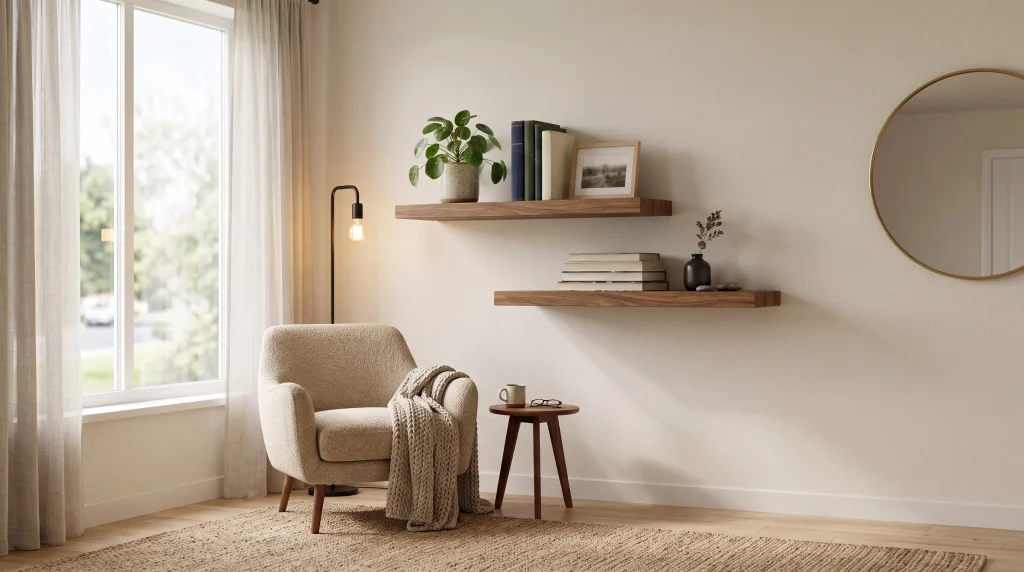
3. Floating Shelves
Walls are valuable real estate in a small apartment.
Floating shelves let you use vertical space without adding another cabinet to the floor. They work well above a desk, beside a doorway, over a sofa, or on an empty kitchen wall.
Use them for things you genuinely need or enjoy having nearby: books, plants, framed photos, baskets, mugs, or everyday supplies.
The key is leaving breathing room. A shelf packed with tiny decorative objects can make the room feel busier. A few larger pieces with space between them usually look more intentional and are easier to maintain.
A narrow shelf near the entrance can hold keys and sunglasses. Shelves above a desk can keep notebooks and supplies off the work surface.
Rental note: Check your lease before drilling. If permanent hardware is not allowed, consider removable solutions designed for your specific wall type and load.
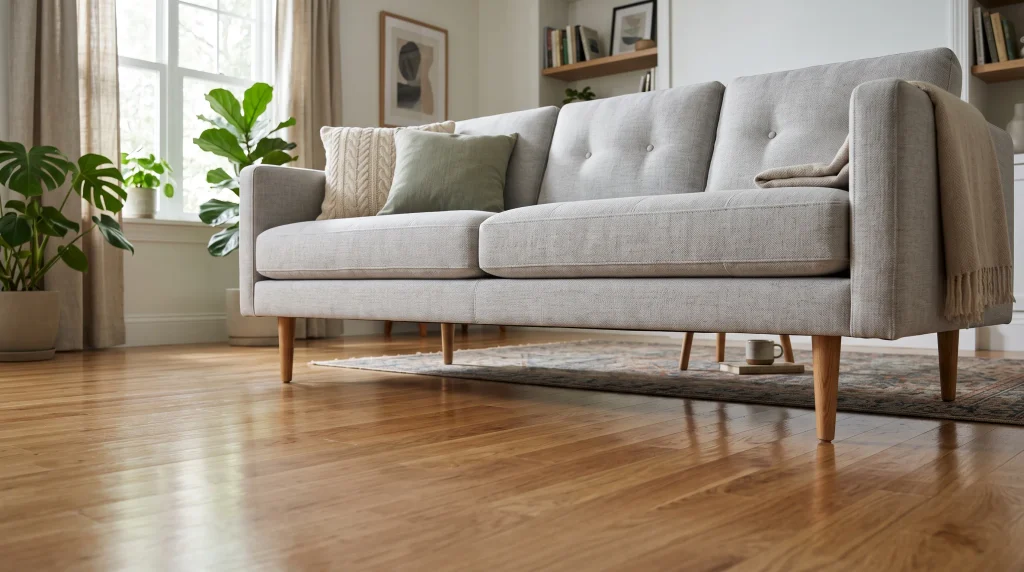
4. Leggy Furniture
Showing more floor can make furniture feel visually lighter.
Sofas, chairs, coffee tables, consoles, and bedside pieces with visible legs create an open strip underneath. That visible flooring helps the eye travel through the room instead of stopping at a solid furniture base.
You do not need every piece to have exposed legs. Start with one major item—such as the sofa or media console—and observe how the room changes.
Slim legs are particularly useful when the furniture itself is substantial. But remember: raised furniture does not make oversized furniture smaller.
Measure first: A huge sectional with delicate legs is still a huge sectional. This principle works best when combined with appropriately-sized pieces.
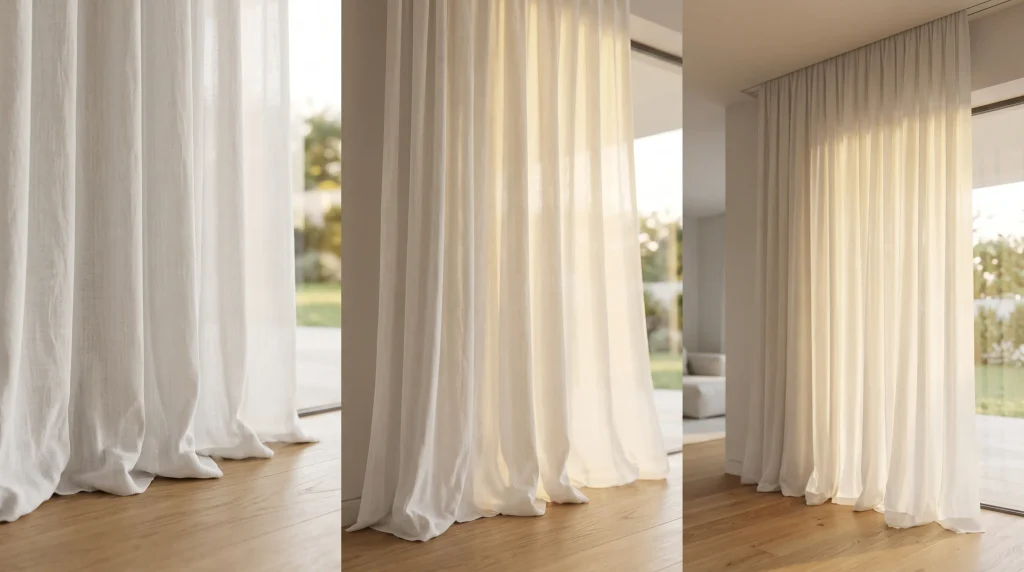
5. Ceiling-Height Curtains
Curtains can change how tall a room feels without changing the architecture.
Instead of mounting the rod directly above the window, place it higher and let the fabric fall all the way to the floor. The longer vertical line draws the eye upward.
Extending the rod beyond both sides of the window also lets the curtains sit outside the glass when open. This leaves more of the window visible during the day.
For small apartments, lightweight linen or linen-look fabrics work well. Soft white, cream, beige, and muted neutral shades help keep the overall look calm.
Important detail: Curtains that stop several inches above the floor can visually shorten the room. Measure from the actual rod position to the floor before ordering panels.
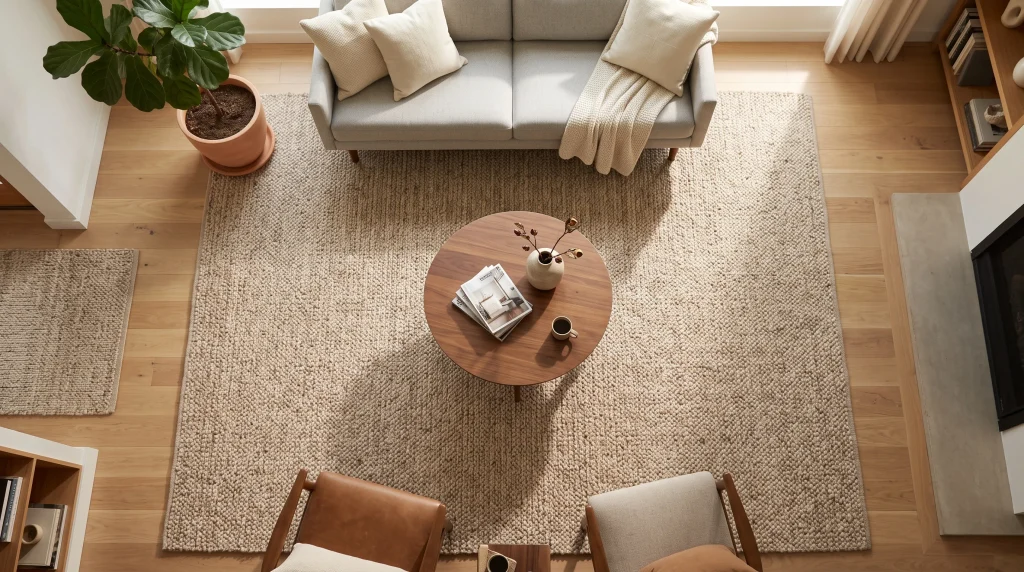
6. One Large Rug
A rug can organize a small apartment without adding a physical wall.
Instead of using several small rugs in the same living area, try one larger rug that visually connects the sofa, chair, and coffee table.
This is especially useful in studios and open-plan apartments because the rug helps define where the living zone begins and ends.
A rug that is only large enough for the coffee table can make the furniture feel disconnected. Whenever possible, allow at least the front legs of major seating pieces to sit on the rug.
Before buying: Use painter’s tape to mark the proposed rug size on the floor. Walk through the room normally and see whether the size protects your main pathways.
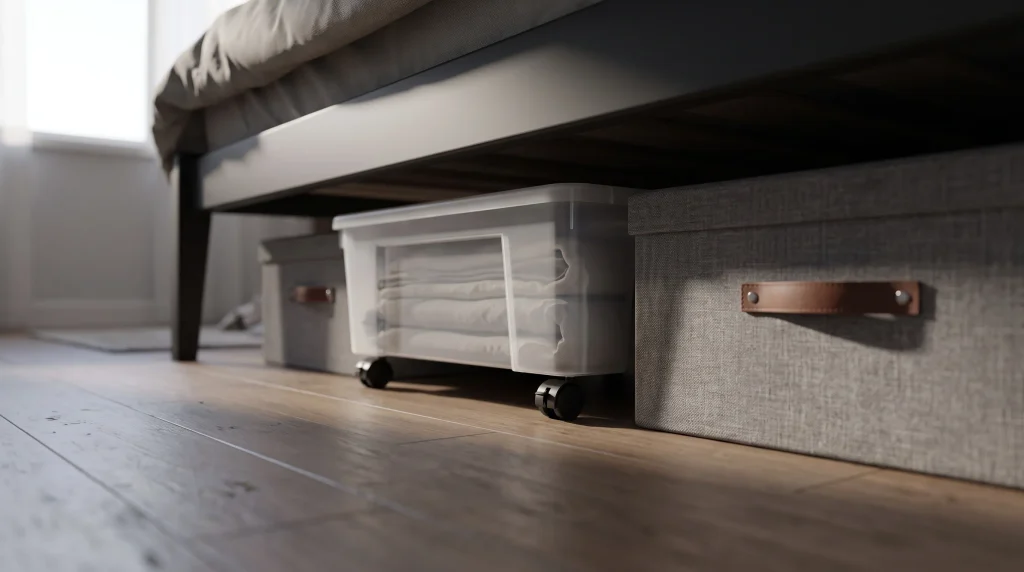
7. Under-Bed Storage
The space underneath the bed is often overlooked, but it can become valuable hidden storage in a small apartment.
Use it for items you do not need every day: seasonal clothing, spare bedding, shoes, luggage, or extra towels.
If your bed does not have built-in drawers, slim rolling containers or storage boxes can create a similar solution.
Measure the available height before buying containers. A box that is slightly too tall can make the entire storage system difficult to use.
Keep similar items together so you can find them later. Use one container for seasonal clothing and another for spare linens.
Small-space rule: Hidden storage should make your life easier, not simply hide a collection of unrelated things.
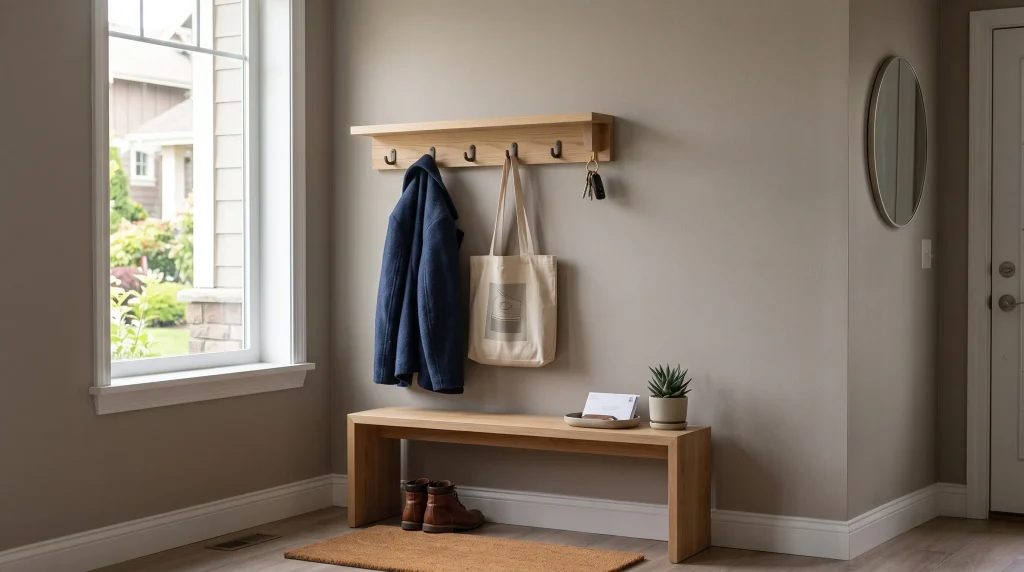
8. Slim Entryway Hooks
A tiny entryway does not need a full cabinet to stay functional.
A short row of hooks can hold coats, handbags, hats, umbrellas, and other everyday items. Add a narrow shelf below for keys, sunglasses, mail, or a small tray.
If there is enough wall space, a mirror above the shelf can make the entrance feel brighter and more open.
The important part is controlling what goes where. When every hook becomes a permanent storage spot, even a small entryway can look crowded.
Better approach: Give each person a designated area and leave some of the wall visually open.
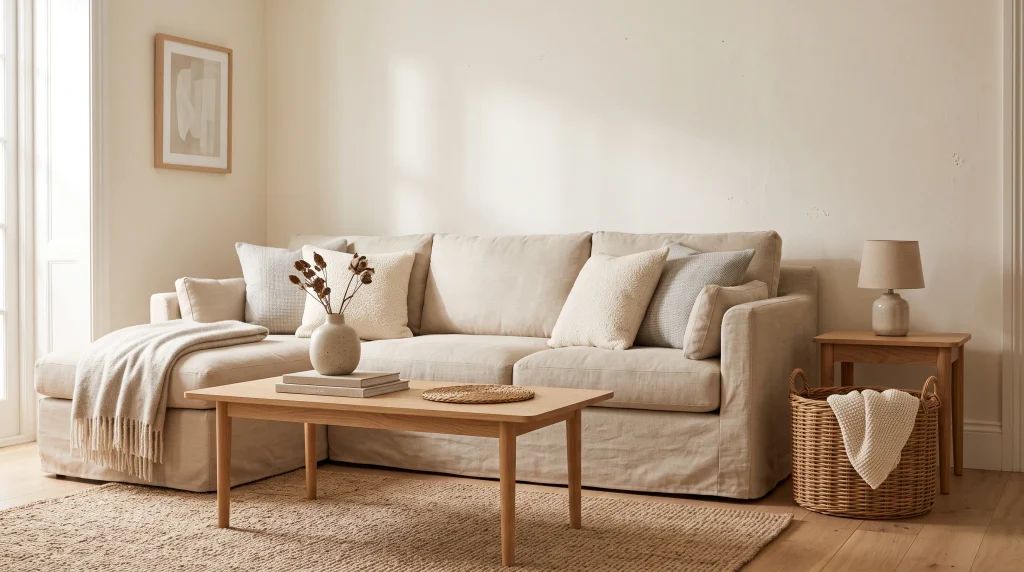
9. Light Neutral Palette
A small apartment does not need to be completely white to feel spacious.
Warm white, cream, beige, pale taupe, and gentle greige can create a quieter backdrop that helps rooms feel connected. Use lighter tones on larger surfaces—walls, curtains, rugs, and larger furniture. Then add personality through artwork, cushions, throws, plants, books, and smaller accessories.
Neutral does not have to mean boring. Texture can provide depth without adding visual noise. Try combinations such as linen with wood, woven baskets with cotton, textured rugs with smooth furniture, or soft upholstery with natural materials.
If the apartment receives limited natural light, very cool white can sometimes feel stark. A warmer neutral may create a softer atmosphere.
Remember: The goal is visual calm, not making every object exactly the same color.
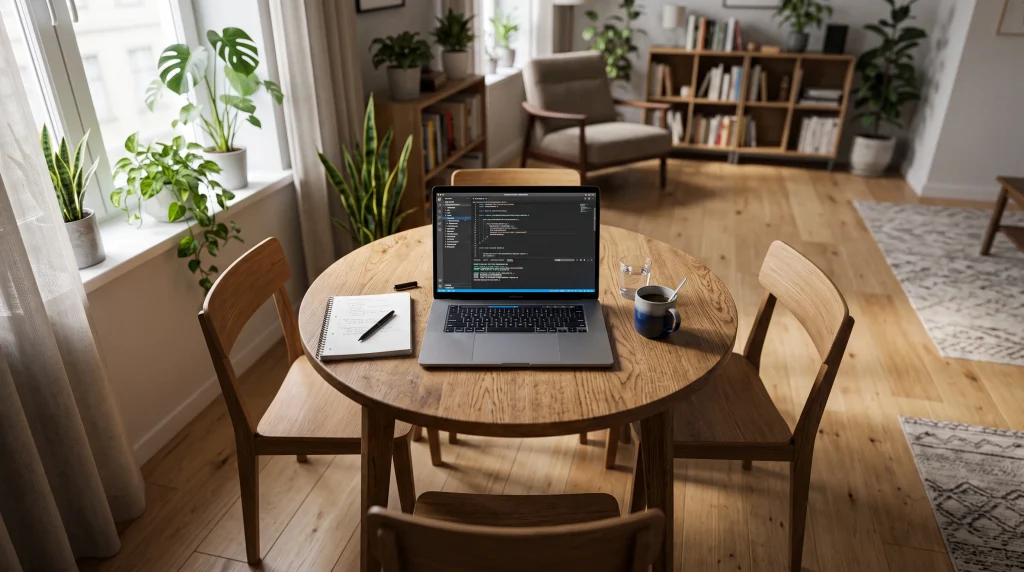
10. Multifunctional Dining Table
In a small apartment, the dining table becomes a breakfast spot, workspace, homework station, craft surface, and dinner table throughout the day.
That makes flexibility more valuable than choosing a table simply because it looks impressive.
Round tables work well in tighter areas because they remove sharp corners. Extendable tables are useful when you normally need a small footprint but occasionally host guests. For very compact spaces, a drop-leaf or wall-mounted table can provide a proper surface without permanently occupying the floor.
Choose chairs that can slide underneath when the table is not being used.
Best small-space approach: Choose the smallest table that comfortably supports your everyday routine, then add flexibility for occasional use.
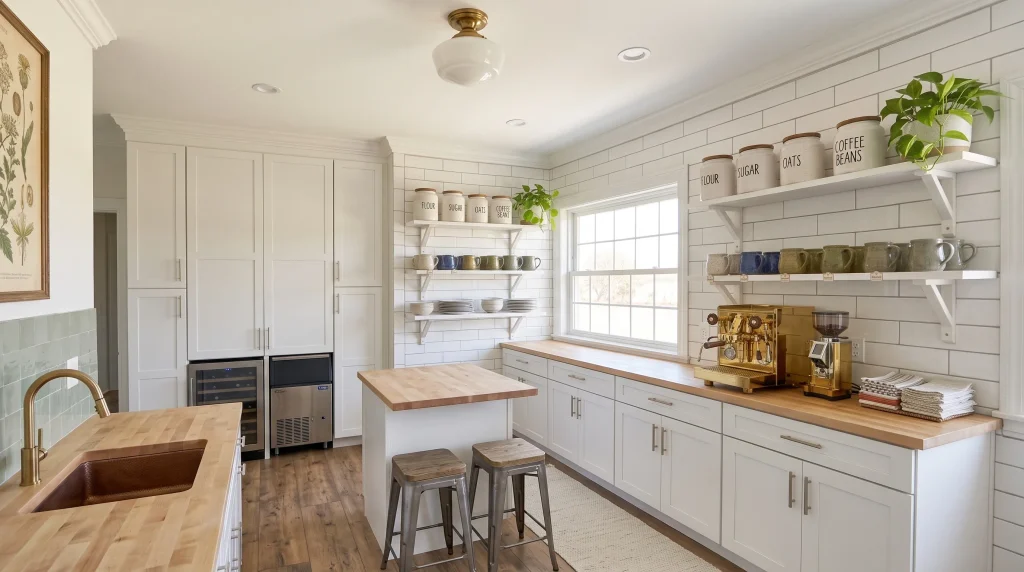
11. Vertical Kitchen Storage
Small kitchens often run out of counter space before they run out of walls.
Look upward. A narrow shelf can hold spices, mugs, dishes, or cutting boards. A wall-mounted rail can keep selected utensils accessible without filling another drawer.
Open storage works best when it is edited. Display items you actually use or enjoy seeing, while keeping less attractive items behind closed doors. Matching containers can make open shelving look calmer and more organized.
Inside cabinets, small organizers can make use of otherwise wasted vertical space. The goal is not to cover every wall with storage. The goal is to free the counter.
Once the main work surface is clear, even a small kitchen can feel easier to cook in.
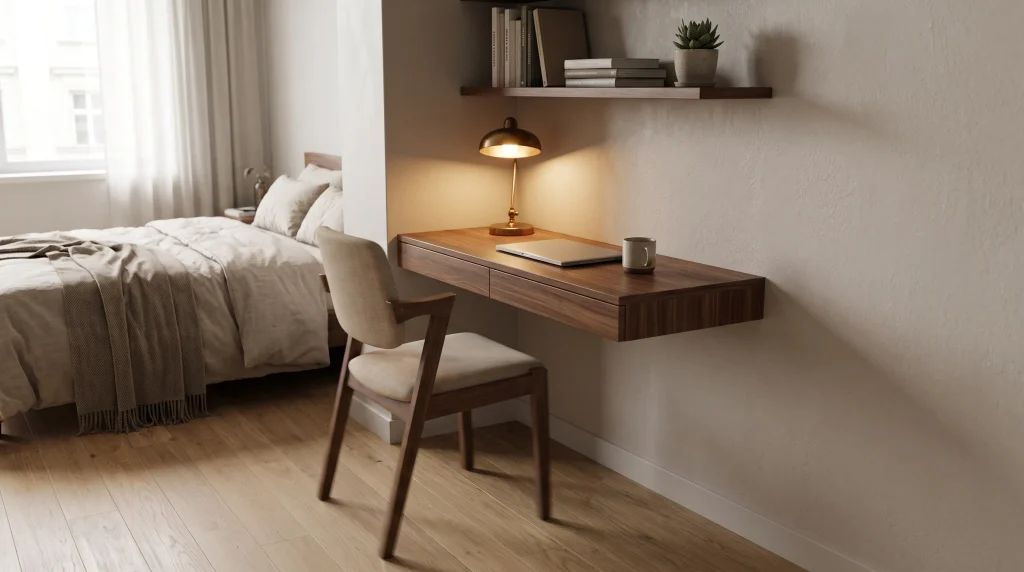
12. Compact Bedroom Desk
A bedroom does not need a full-size office to provide a useful workspace.
A narrow desk, slim console, or wall-mounted surface can fit into a corner without dominating the room. Choose a chair that slides underneath when you finish working. Use a small lamp, floating shelf, or vertical organizer instead of covering the desk with storage.
Before buying a desk, measure more than just the wall. Check the chair clearance, wardrobe doors, bed position, and walking path. A desk can technically fit and still make the bedroom frustrating to use.
Practical test: Sit in the chair, pull it out fully, and walk past it. This helps confirm that the space will actually function as designed.
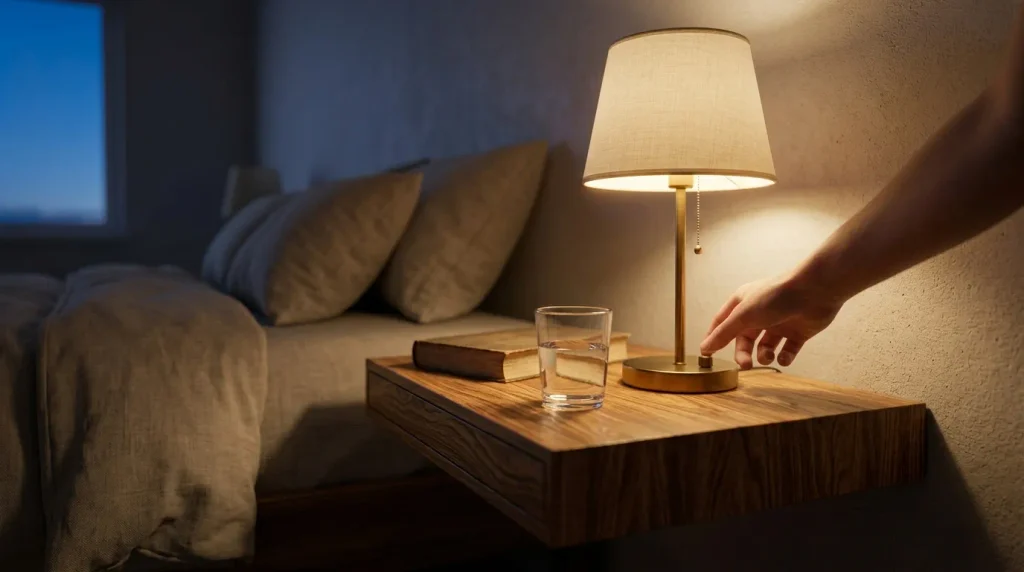
13. Floating Nightstands
Traditional nightstands can take up valuable floor space, particularly in narrow bedrooms.
A floating nightstand replaces that bulky footprint with a slim wall-mounted shelf. It only needs enough room for essentials: a phone, book, water glass, small lamp, or personal items.
Because the floor underneath remains visible, the bedroom can feel easier to move through.
Keep the shelf relatively shallow. You need enough depth for essentials, but not enough to encourage piles of unnecessary items. A wall-mounted reading light can free even more bedside space.
The key is editing: A floating nightstand works best when it holds what you actually need rather than becoming another storage zone.
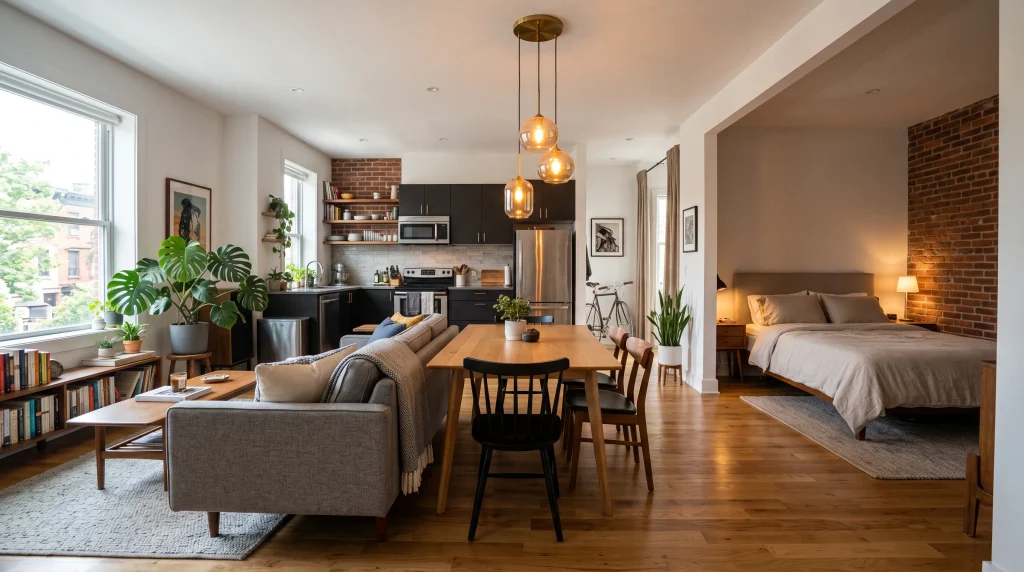
14. Defined Living Zones
An open apartment can feel more organized when each area has a clear purpose.
You do not necessarily need a room divider. Use furniture, rugs, and lighting to create visual boundaries instead.
Place the sofa with its back toward the dining area. Use a rug to anchor the living room. Add a slim console behind the sofa if there is enough clearance.
Lighting can reinforce each zone. A pendant can identify the dining area, while a floor lamp can turn an unused corner into a reading spot.
Always protect the walking paths. A beautiful furniture arrangement is not useful if you have to squeeze around it every morning.
Layout approach: Walk through the apartment the way you normally do. Let your natural movement patterns guide the arrangement.
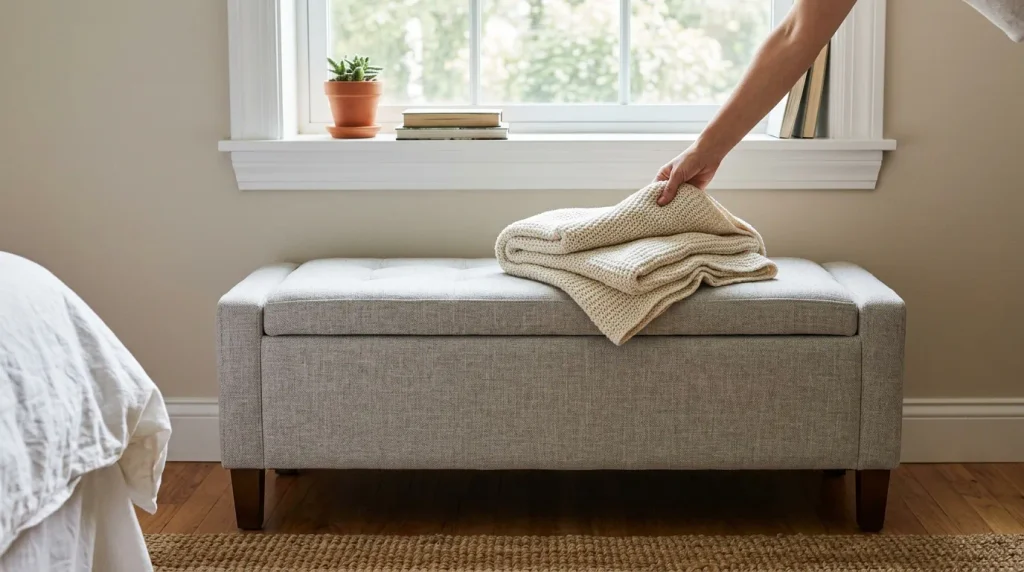
15. Hidden Storage Bench
An empty corner does not always need decoration. Sometimes it needs a job.
A storage bench can turn an unused wall into seating plus storage without requiring another full-size piece of furniture. Place one beneath a window, at the end of a bed, or along an entryway wall.
Use the inside for shoes, blankets, bags, spare bedding, or seasonal accessories. Measure the depth carefully. A bench that projects too far into a narrow walkway can create more problems than it solves.
At an entryway, hooks above the bench can create a compact drop zone. In a bedroom, a bench at the foot of the bed can provide both seating and hidden storage.
Best principle: Choose multifunctional furniture that fits naturally into something you already need.
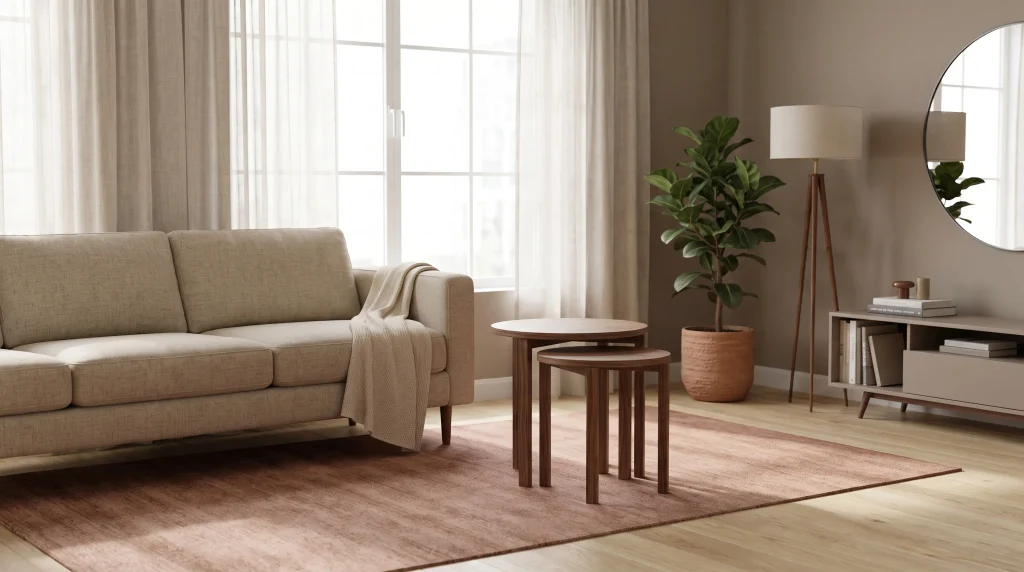
16. Nesting Side Tables
Nesting tables are useful when a room needs to change throughout the day.
Most of the time, the smaller table stays tucked under the larger one, leaving the floor relatively open. When guests arrive, you can separate them and instantly gain another surface. Use the extra table for drinks, books, snacks, laptops, or anything else that needs a temporary home.
Slim legs and simple shapes keep the arrangement visually light. Rounded edges can also make a tight seating area easier to navigate.
Why they work: You are not permanently dedicating floor space to two tables. One table effectively stores inside the other until you need it.
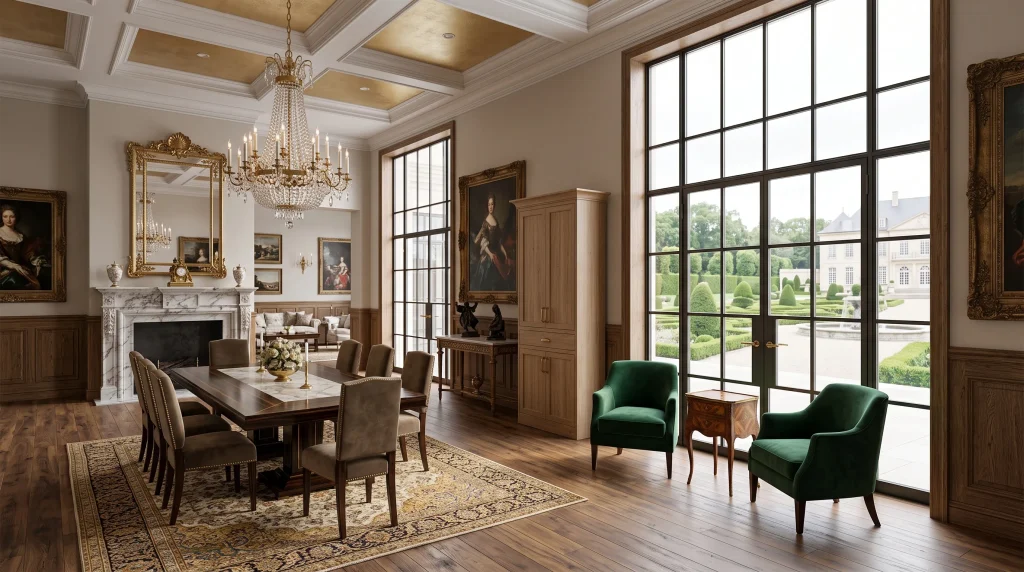
17. Tall Storage Cabinet
When floor space is limited, going upward can be smarter than going wider.
A tall, relatively narrow cabinet can store linens, dishes, books, cleaning supplies, or other everyday items without using as much floor area as a wide unit. Closed doors are particularly helpful because they hide visual clutter.
Before buying, measure the ceiling height and surrounding clearance. Check how the doors open and whether you can comfortably stand in front of the cabinet. Adjustable shelves are useful because storage needs change over time.
If the apartment has low ceilings, choosing a cabinet close to the wall color can help it blend into the room.
Remember: More storage is only an improvement if you can still move around the room comfortably.
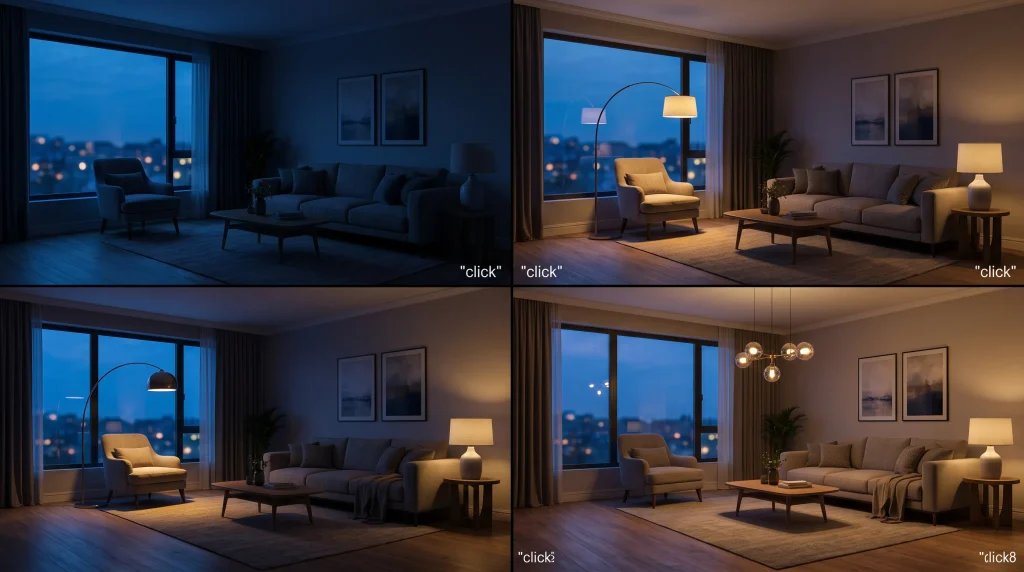
18. Layered Lighting
One ceiling light rarely creates the best atmosphere in a small apartment.
It may provide enough brightness to see, but it does not necessarily make the space feel warm or give each area a clear purpose. Layered lighting solves that by giving different parts of the apartment their own light sources.
A floor lamp can brighten a reading corner. A table lamp can soften a sofa area. A wall light can replace a bulky bedside lamp. A pendant can define a dining zone.
This also makes the apartment more flexible. Brighter lighting can support working and cleaning, while softer lighting can make the same space feel comfortable at night. Dimmable fixtures can provide even more flexibility.
Think beyond brightness: A dark corner can feel like wasted space. The right lamp can transform that corner into a useful part of the apartment.
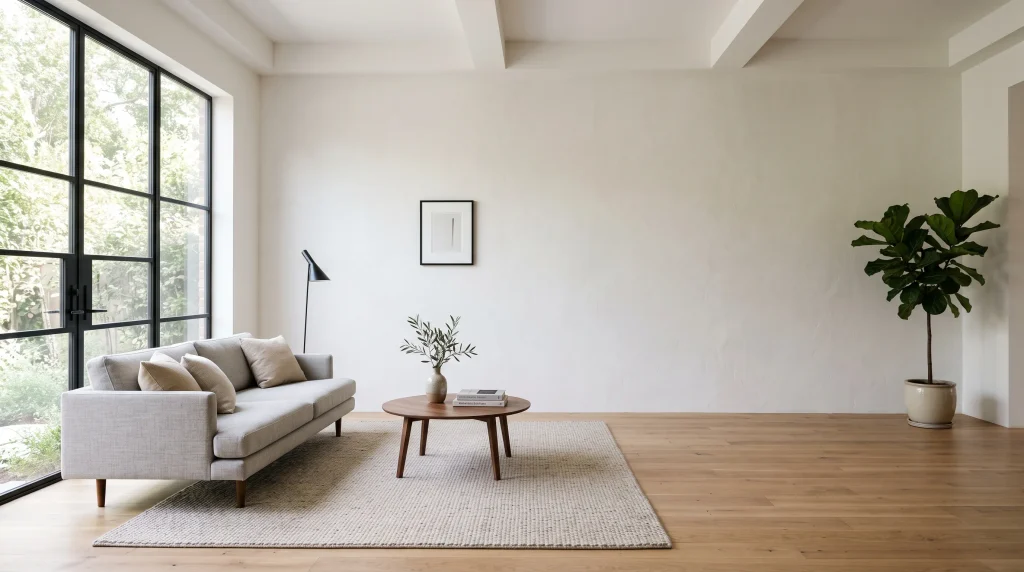
19. Leave Breathing Room
The final idea is also one of the easiest to overlook:
You do not have to decorate every empty spot.
Small apartments need breathing room. An empty section of wall can be more useful than another shelf. An open walkway can make the entire home feel larger. A little space beside a chair can make the room easier to navigate.
Before bringing something new home, ask:
Does this solve a genuine problem, or does it simply give me another object to manage?
Prioritize furniture that stores things, lighting that defines zones, and pieces that can serve more than one purpose.
But not everything needs to multitask. Some pieces can simply exist because you love them. That matters too. A well-decorated apartment should still feel like a home, not a storage system disguised as a living room.
Common Mistakes to Avoid
Small apartments can look crowded even when they do not contain that much furniture. These common mistakes are usually responsible.
Buying Before Measuring
A piece can look perfect online and still be completely wrong for the room. Measure the furniture footprint, walking clearance, door swings, drawers, and nearby furniture before purchasing.
Using Tiny Rugs
A very small rug can make the seating area look disconnected and scattered. Use painter’s tape to test the approximate rug size before spending money.
Filling Every Wall
Vertical storage is useful, but not every empty wall needs shelves, art, hooks, and cabinets. Leave some quiet areas so the room can breathe.
Blocking Walking Paths
The most beautiful layout is not successful if you have to squeeze around furniture. Prioritize the routes you use every day.
Choosing Storage Without Editing
More storage does not automatically mean less clutter. If a cabinet simply gives you more room to collect things, the underlying problem has not changed.
Ignoring Light
A dark apartment can feel smaller when every surface is heavy and poorly lit. Use mirrors, lighter finishes, open floor space, and multiple light sources to create a brighter overall feel.
Small-Space Checklist
Before buying or rearranging anything, ask:
- Does this piece solve a real problem?
- Can I still walk comfortably around it?
- Does it serve more than one purpose?
- Is there a smaller version that would work?
- Can I use vertical space instead of floor space?
- Will it make the room visually busier?
- Does it work with the furniture I already own?
- If I rent, am I allowed to install it?
- Have I measured the actual space?
- Will I still like it after the room is styled?
Frequently Asked Questions
How do you decorate a very small apartment?
Start with the layout rather than the accessories. Protect walking paths, choose appropriately sized furniture, use vertical storage, and select pieces that can serve more than one purpose.
How can I make a small apartment look bigger?
Keep the floor relatively open, use mirrors where they can reflect light, hang curtains higher, connect furniture with a properly sized rug, and avoid filling every available surface.
What furniture is best for a small apartment?
Multifunctional and visually light furniture tends to work well. Storage ottomans, nesting tables, compact desks, floating nightstands, extendable tables, and narrow storage cabinets can provide useful functions without demanding as much permanent floor space.
What colors make a small apartment feel more spacious?
Warm whites, creams, soft beige, pale taupe, and gentle greige can create a lighter backdrop. You can still add darker colors and stronger patterns through smaller accents.
How do you decorate a small apartment without making it cluttered?
Give every frequently used item a practical home, limit unnecessary furniture, keep some surfaces open, and avoid treating every empty corner as a decorating opportunity.
What are good renter-friendly decorating ideas?
Leaning mirrors, removable hooks, freestanding storage, lightweight furniture, rugs, curtains, lighting, and carefully chosen accessories can make a rental feel more personal without requiring permanent changes.
Conclusion
The best small apartment decorating ideas are not about squeezing more furniture into less space. They are about making better decisions with the space you already have.
Use walls when the floor is crowded. Choose furniture that can do more than one job. Keep your main walking paths clear. Let mirrors and curtains work with natural light. Use rugs and lighting to make open layouts feel intentional.
Most importantly, do not rush to fill every corner. A small apartment often feels better when fewer things compete for attention and more of the pieces genuinely earn their place.
Start with the part of your apartment that frustrates you most—storage, lighting, layout, or clutter—and make one thoughtful change. You do not need a complete makeover. Sometimes one well-chosen piece, one better layout, or one cleared surface is enough to change the way the whole apartment works.
Save this guide for your next apartment refresh and come back to it when you are ready to tackle the next small-space problem.

2 Comments