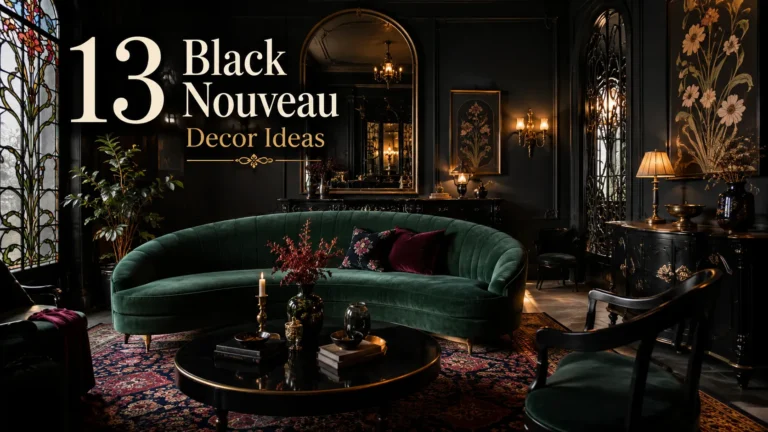
17 Moody Bedroom Decor Ideas That Feel Cozy, Not Gloomy
Want a bedroom that feels deeper, warmer, and more inviting? These moody bedroom decor ideas show how dark colors, soft textures, layered lighting, and a few thoughtful details can turn an ordinary room into a cozy retreat. Whether you love charcoal walls, rich wood, velvet bedding, or warm brass accents, you’ll find practical inspiration that looks stylish without feeling overwhelming.
The goal isn’t simply to make a room darker. It’s to balance contrast, texture, and light so the space feels comfortable from morning to midnight. Even one small change, like swapping a cold bulb for a warm one or adding a layer of linen to your bed, can make a big difference. You don’t need to do everything at once, so pick the idea that speaks to you and build from there.
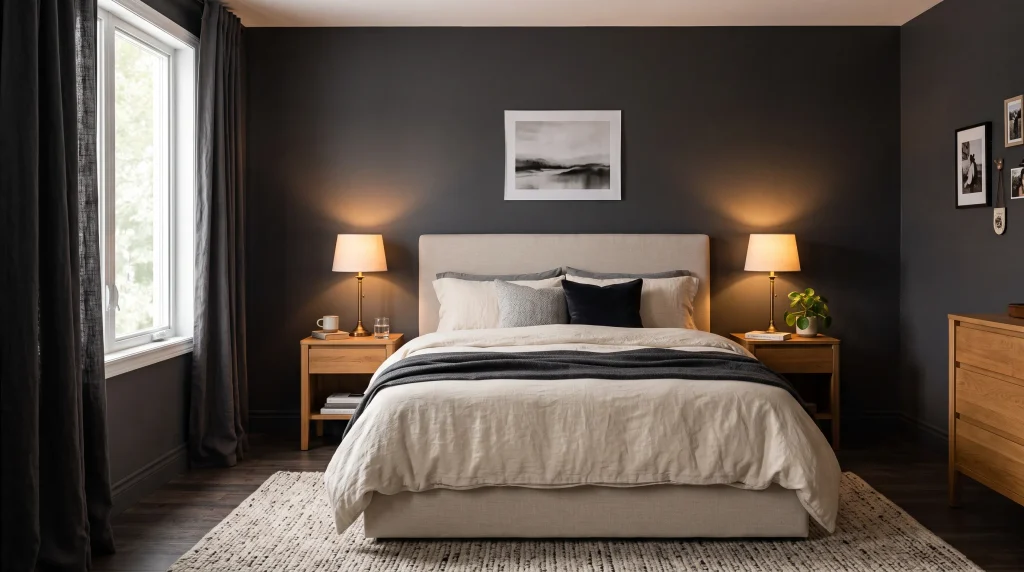
1. Charcoal Walls for a Cocoon-Like Retreat
Painting your bedroom charcoal is one of the quickest ways to make it feel like a hideaway. Deep, smoky walls wrap around the bed and quiet the outside world, which is exactly what most of us want at the end of a long day. Charcoal, espresso, and blue-black all work, but the finish matters. Choose matte paint, because it absorbs light instead of bouncing it back as glare, and the color looks soft and velvety rather than flat.
Once the walls are dark, the warmth has to come from everywhere else. Cream bedding creates a clear contrast, medium-toned oak or walnut furniture adds natural color, and a pair of aged brass lamps gives the corners a gentle glow. Painting all four walls the same shade also helps, because a continuous backdrop makes the room feel planned instead of patchy. If your bedroom gets little daylight, this approach is especially forgiving, since layered lamps can make the darkness feel snug rather than cramped.
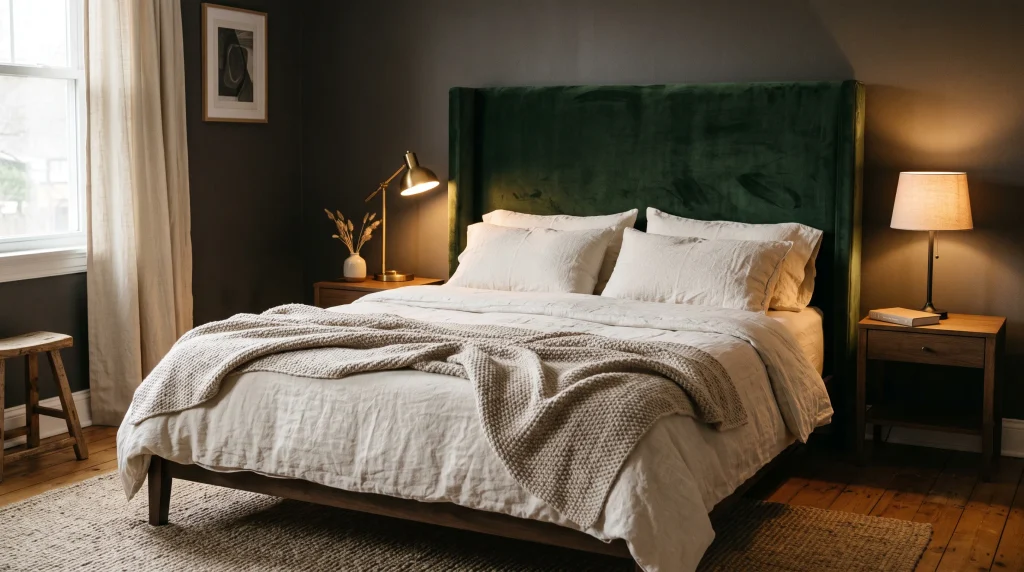
2. Velvet Bed Layers
A velvet headboard adds instant richness without piling on decor. Because velvet catches light differently as you move around the room, it gives a dark space a subtle sense of depth that flat fabrics can’t match. Deep forest green, burgundy, navy, and chocolate brown are the most flattering shades, and each looks expensive in low light.
The trick is to mix textures around it rather than matching everything. Pair the velvet with washed linen sheets, a chunky knitted throw, and cotton pillowcases so the bed feels relaxed instead of formal. Keep nightstands and other furniture understated, since the headboard should be the star. A woven rug under the bed anchors the arrangement, and simple curtains soften the hard edges of the windows. If you like a cleaner look, choose a slimmer upholstered frame; if you want full luxury, go for a tall, generously shaped headboard. Either way, keep artwork and accessories minimal so the fabrics get the attention they deserve.
Read More:15 Autumn & Harvest Decor Ideas for a Warm, Cozy Home
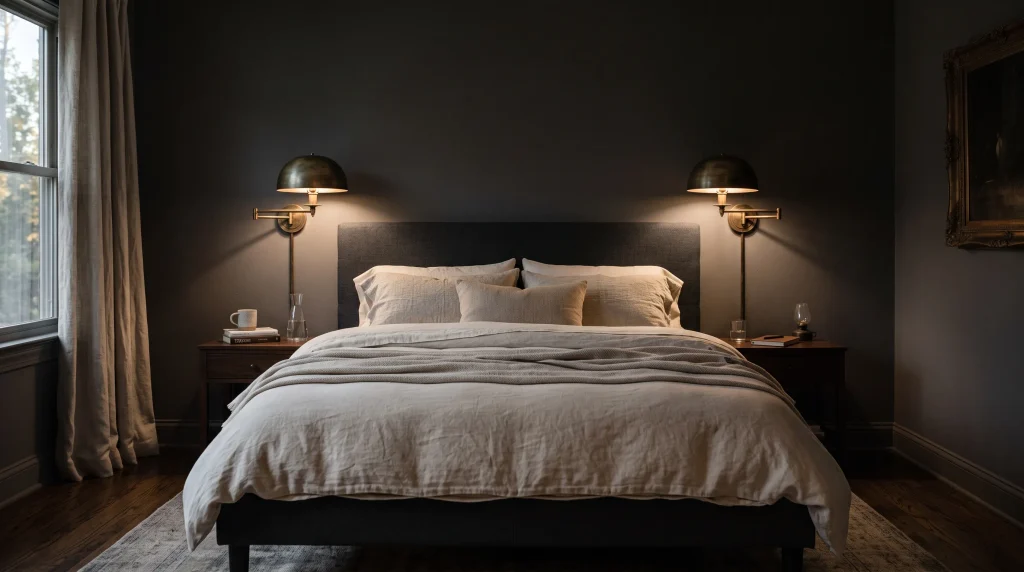
3. Antique Brass Lighting
Lighting is where moody bedrooms are made or broken, and aged brass is one of the kindest finishes you can choose. Its warm, slightly muted shine picks up soft highlights against charcoal, navy, brown, and olive walls, adding a touch of sparkle without making the room feel bright or cold. Pair brass sconces or compact table lamps with warm-white bulbs for an evening glow that helps you unwind.
Placement matters as much as the fixture. Mount sconces slightly above mattress height, or set lamps on narrow nightstands, so the light falls on the bedding instead of into your eyes. Matching pairs on either side of the bed create symmetry, and wall-mounted sconces free up nightstand space for a book and a glass of water. Choose fabric or opaque shades for a softer spread of light, and add a dimmer if you can. Being able to turn the glow down makes the bedroom work for reading, relaxing, and sleeping, all without a renovation.
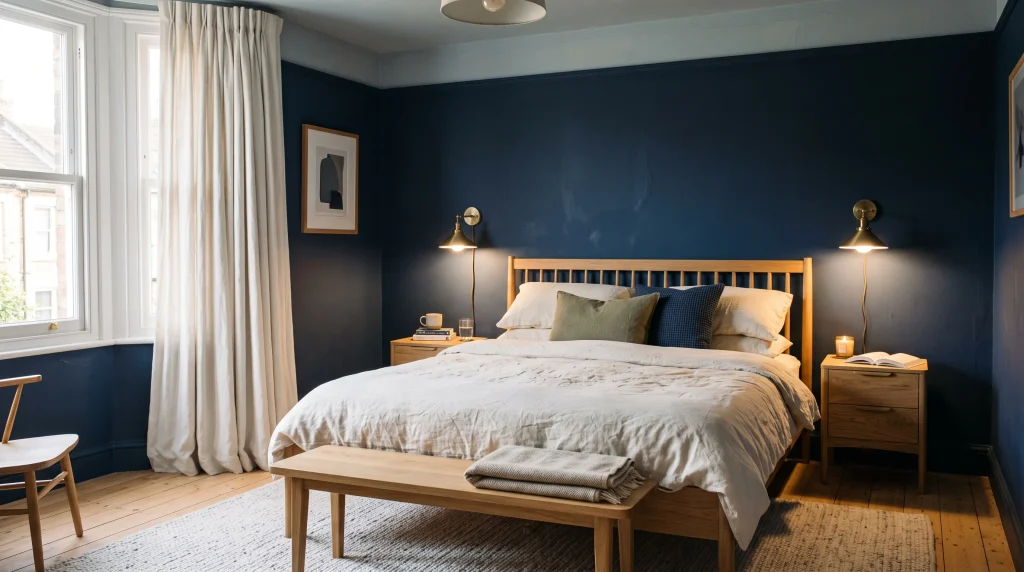
4. Deep Navy Walls
Navy gives you all the drama of black with a softer, friendlier personality. The saturated blue makes a beautiful backdrop for cream bedding, warm oak furniture, and brass details, and it feels at home in traditional, modern, and relaxed rooms alike. To keep the balance right, let the floor and larger textiles stay fairly light so the walls remain the main feature, and bring in natural wood to warm up the coolness of the blue.
Light is the other half of the equation. Warm-white bulbs bring out navy’s gentler side at night, while cool daylight bulbs can make it look harsh. Painting the ceiling a shade lighter helps the room stay open overhead. If your bedroom is small or short on natural light, try navy on just one or two walls, usually the one behind the bed, so you get depth without making every surface feel heavy. Layer the bed with linen, cotton, and a muted green cushion or two, and the deep blue starts to feel cozy rather than cold.
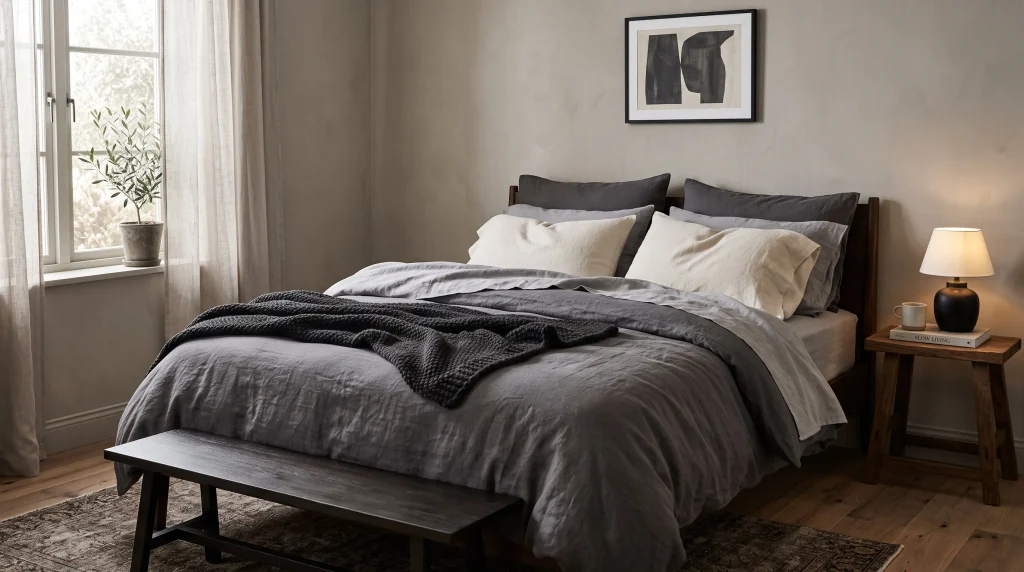
5. Smoky Gray Bedding
Not ready to paint? Smoky gray bedding is the easiest way to try a moody palette. Start with a charcoal or graphite linen duvet, then layer paler gray sheets, cream pillows, and a textured throw. The subtle shifts in tone give the bed depth while keeping it calm and restful. Choose fabrics with visible texture over busy patterns, especially if the rest of the room already has plenty going on.
Slightly rumpled linen is a bonus here because it makes the bed feel lived-in rather than styled for a showroom. Tonal bedding is also easy to update through the year. Keep the main duvet gray, then swap cushions and throws with the seasons: warm beige in winter, faded olive or muted blue when you want a hint of color. A dark wood bench or black side table helps link the bed to the rest of the room. Just avoid matching every item exactly, because small differences in shade create the visual movement that keeps a neutral scheme interesting.
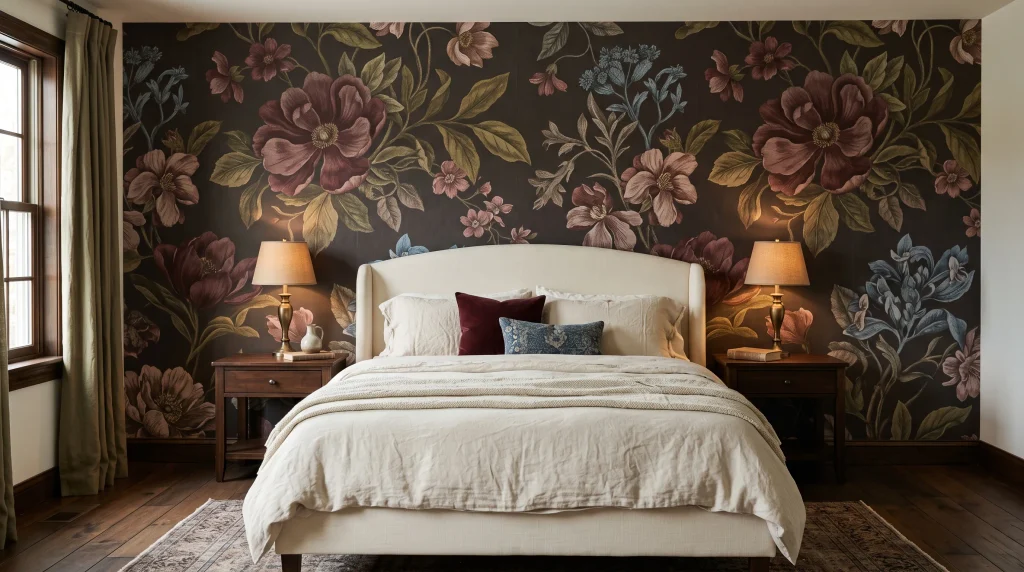
6. Moody Floral Wallpaper
Dark floral wallpaper proves that a moody bedroom can have personality. Look for oversized botanical designs in muted burgundy, olive, dusty rose, and faded blue on a charcoal or deep brown background. Large-scale prints tend to look more sophisticated than tiny ones because the pattern has room to breathe, and softened colors feel calmer than bright, saturated blooms.
Use the wallpaper behind the bed to create a focal wall, then keep everything else quiet. Simple bedding, dark wood nightstands, and warm brass lamps complement the print without competing with it. Pull one or two colors from the pattern into a throw or a pair of cushions so the whole room feels connected. Because the wallpaper does the decorative work, you can skip a gallery wall entirely. If you rent or dislike commitment, removable peel-and-stick wallpaper gives a similar effect and comes off cleanly when you move. The result feels layered, romantic, and intentional rather than busy.
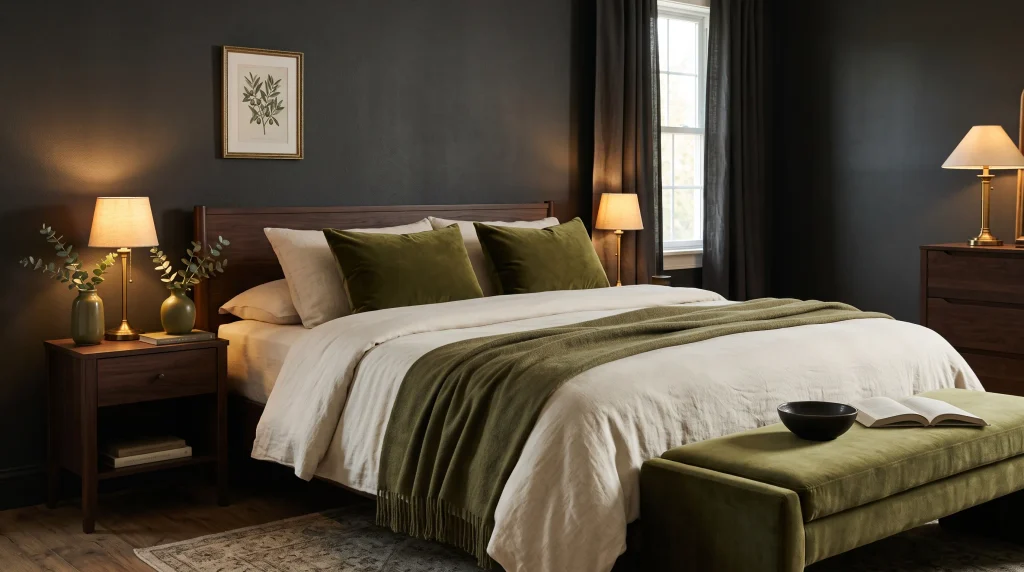
7. Olive Green Accents
Olive green adds an earthy note that keeps a dark bedroom from feeling one-dimensional. It’s muted enough to sit comfortably beside charcoal, cream, walnut, and aged brass, yet distinctive enough to give the room some character. Because it echoes nature, it feels grounded rather than trendy.
The smartest way to use it is in small, repeatable touches. Put two olive cushions on the bed, drape a matching throw across the foot, and repeat the shade in a ceramic piece or a small print. Curtains, a velvet bench, or a single upholstered chair also work if you want a bigger moment. Three or four accents usually look more polished than one oversized green statement piece, because the repetition ties everything together. Warm, low lighting brings out olive’s golden undertones, and cream bedding keeps the contrast soft. Best of all, small accents are easy to change, so if your taste shifts next year, you only need to swap a few textiles instead of repainting.
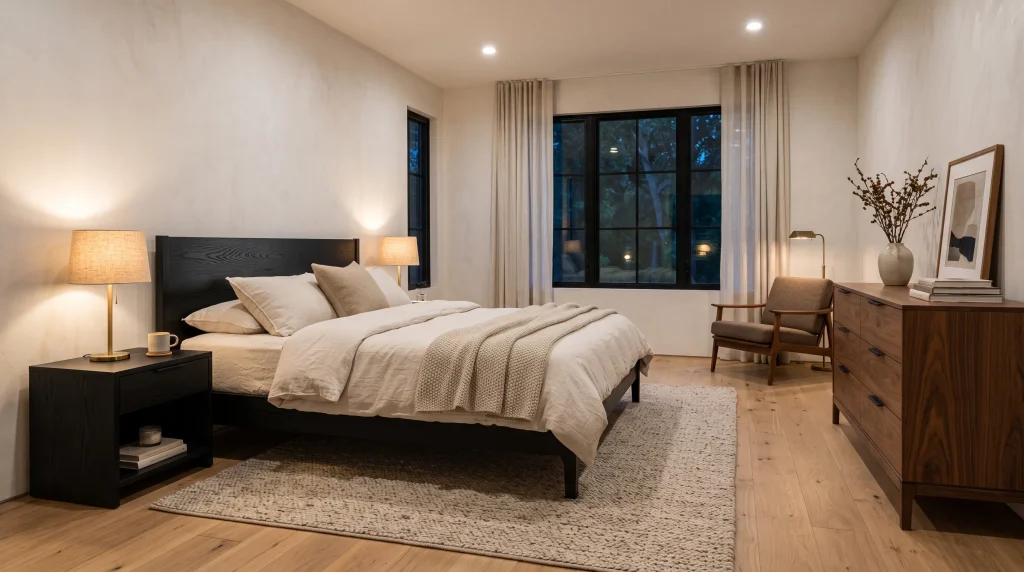
8. Black Wood Furniture
Black wood furniture gives a bedroom a strong, architectural foundation. A black bed frame, low nightstands, or a dresser looks crisp and modern, and it anchors lighter bedding and textured rugs beautifully. Choose pieces with visible grain or a softened satin finish instead of glossy black, which can feel stiff and formal. Natural texture is what stops black from looking harsh.
Balance is important, because several large black pieces can make a room feel smaller. Mix in a warm walnut dresser or a medium oak bench so the tones vary, and keep the bedding light and tactile. A beige or oatmeal rug under the bed separates dark furniture from dark floors and adds another layer. If the room gets limited daylight, place warm lamps near the furniture so its edges stay visible after sunset. Linen, wool, cotton, and wood are the best companions here. Too many hard or reflective surfaces will push the room from sophisticated to cold.
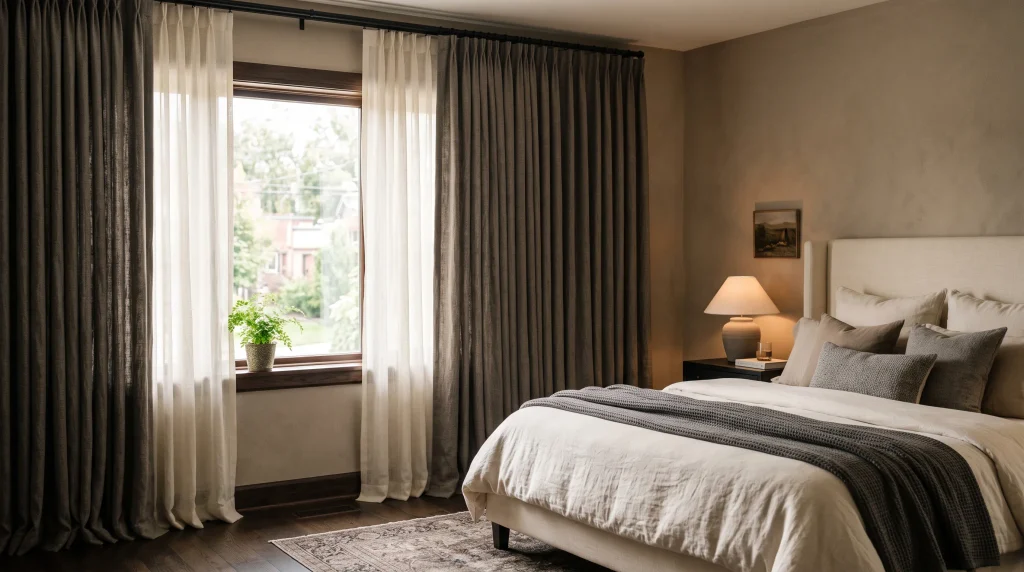
9. Layered Window Drapes
Curtains do more for a moody bedroom than most people expect. Layering sheer ivory panels beneath heavier charcoal, taupe, or chocolate drapes gives you control over both light and privacy: open the sheers for gentle morning daylight, then close the heavy panels for darkness and quiet. Hang the outer curtains close to the ceiling and let them fall to the floor to make windows and walls look taller.
Fabric also softens hard window frames and large blank walls, wrapping the sleeping area in warmth. Lined curtains cut glare in sunny rooms, protect furnishings from fading, and dampen outside noise, which helps if you’re a light sleeper. Choose a color that connects with your existing palette instead of introducing something new. Muted taupe or warm charcoal is usually easier to coordinate than pure black. Even in a small bedroom, floor-length layered drapes can make the space feel more finished, because they add height, softness, and structure at once. It’s one of the simplest upgrades with the biggest payoff.
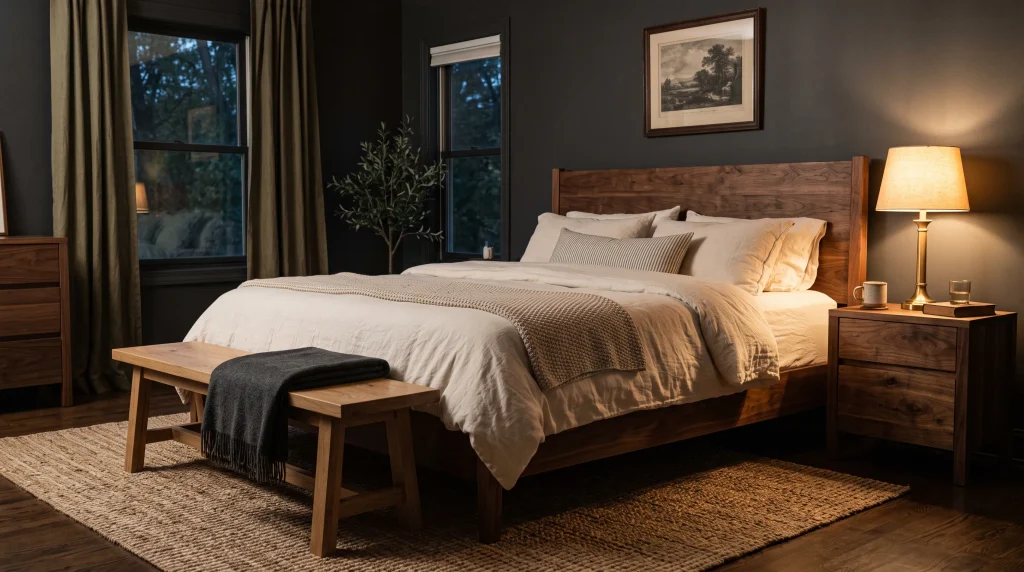
10. Warm Wood Contrast
If a dark palette ever feels severe, warm wood is the fix. Walnut, oak, and teak bring natural grain and color that soften charcoal, navy, brown, and olive walls. A wooden bed frame or headboard can serve as a quiet focal point, timeless enough to outlast trends.
You don’t need everything to match. In fact, slight differences in tone make a room feel collected rather than bought as a set. Try a walnut nightstand beside a lighter oak bench, then tie them together with cream bedding and a woven rug. Keep finishes matte or satin, since high shine can make dark rooms feel less relaxed. Soft, neutral textiles let the grain do the talking, and warm lamps placed close to the wood highlight its texture after sunset. Even one substantial wooden piece, such as a headboard or a chunky dresser, can make an otherwise very dark bedroom feel welcoming. Think of wood as the room’s warm handshake.
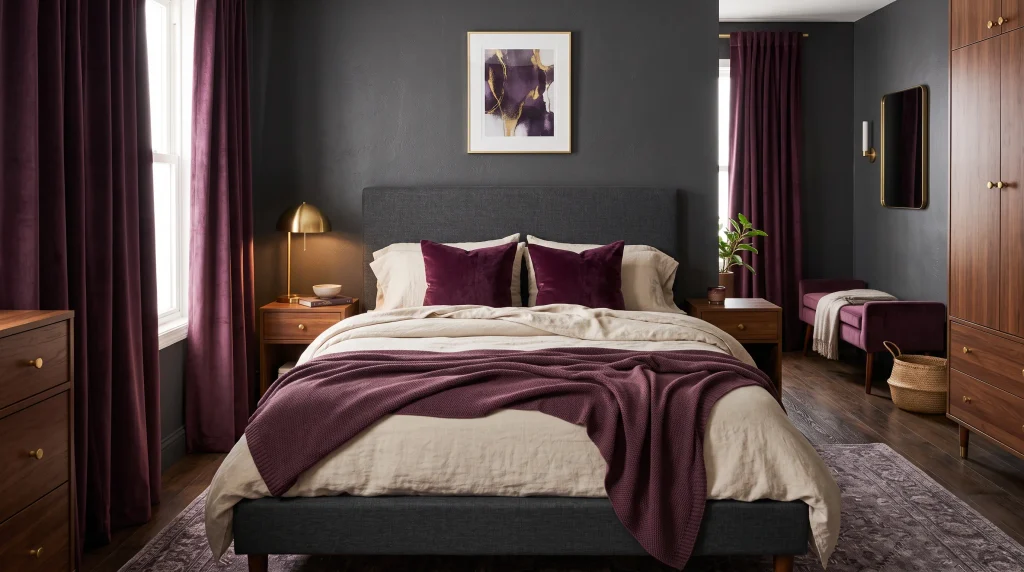
11. Plum Accent Textiles
Deep plum adds richness without overwhelming a neutral foundation. Used in velvet cushions, a throw blanket, a bench, or softly patterned curtains, it brings a jewel-toned warmth that suits charcoal, cream, brown, and muted gold. Because the color is naturally dramatic, a few well-placed pieces go a long way.
Fabric choice changes how plum looks. Velvet gives it a luxurious depth as light moves across the pile, while brushed cotton or linen makes it softer and more relaxed. Keep the largest bedding pieces neutral and let plum appear in smaller layers you can swap later. Lighting matters too: warm bulbs bring out the red and purple undertones, while daylight reveals a quieter, muted side. If strong color makes you nervous, start with two cushions and one throw. That small trio can change the entire look of the bed, and if you love it, you can add a plum curtain or bench later. It’s a low-risk way to give a neutral room more personality.
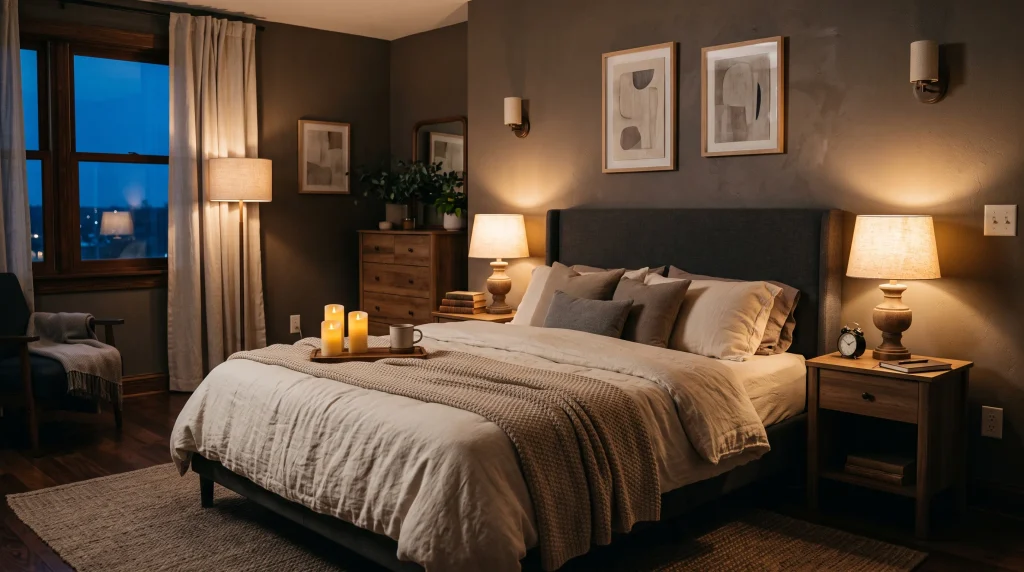
12. Candlelight Bedside Glow
After sunset, a moody bedroom lives or dies by its lighting. Skip the single bright ceiling fixture and use two bedside lamps with fabric or frosted shades to spread a soft glow across walls and bedding. Warm-white bulbs in the 2200K to 2700K range create a relaxed, amber atmosphere without harsh blue tones, and keeping the brightest light near the bed puts it exactly where you need it for reading.
Layering is more effective than simply adding more lamps. Combine bedside lights with a small floor lamp, a subtle wall light, or a dimmed ceiling fixture so different parts of the room have gentle illumination at different heights. Candle-style decor adds a cozy flicker. If you use real candles, keep them well away from bedding and curtains, or choose flameless versions that look similar with less risk. When a dark bedroom feels flat at night, warm layered light is usually the missing ingredient. It reveals texture, adds depth, and makes the palette look chosen rather than simply underlit.
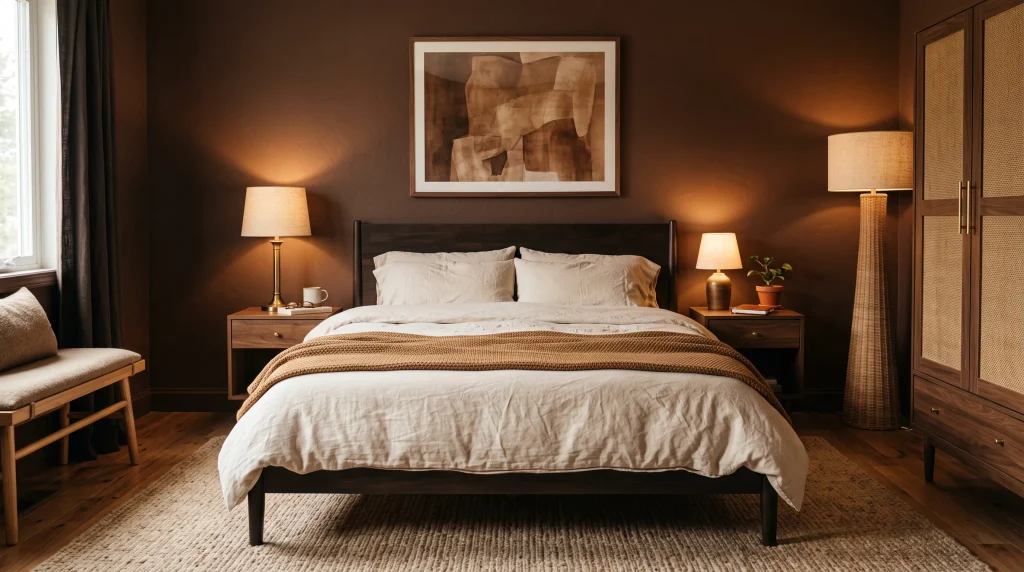
13. Chocolate Brown Palette
Chocolate brown is the warm alternative to black. Walls painted in a deep cocoa shade wrap the room in a cozy, enveloping mood that feels mature without feeling cold. Build the palette around it with espresso, caramel, cream, and walnut so the room has gentle tonal variation instead of one flat color.
Vary finishes as well as shades. Pair matte cocoa walls with a slightly lighter wooden bed, cream bedding, and a caramel throw at the foot. Natural materials like linen, wool, rattan, and wood soften the depth of the brown, and a few brass details, such as lamps or drawer pulls, add a small flash of refinement. A warm beige rug beneath the bed separates darker furniture from the floor and adds another layer. Unlike a stark black-and-white scheme, brown creates softer transitions between surfaces, so the room feels connected from floor to ceiling. If daylight is limited, rely on warm lamps to keep the brown from looking dull. The glow makes it look rich instead.
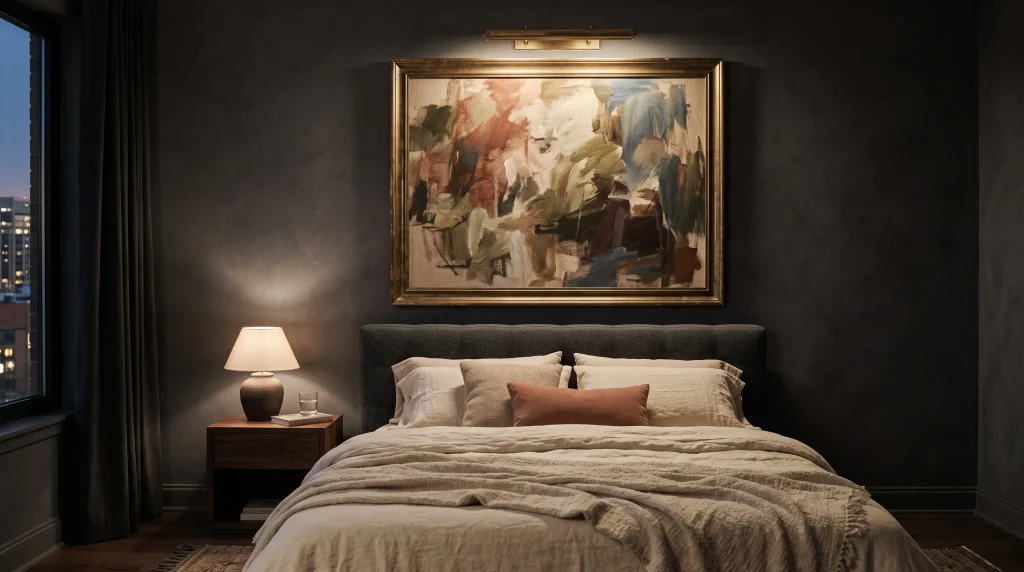
14. Oversized Framed Art
One large piece of art can do the work of a whole gallery wall. On dark walls, an oversized abstract, botanical, or vintage-inspired print creates a clear focal point without adding clutter. Choose muted colors, such as rust, cream, olive, brown, or dusty blue, that relate to the rest of your palette, and hang it above the bed or on the largest uninterrupted wall so it has space to breathe.
Frames matter too. Black, walnut, or aged brass frames reinforce the moody mood, while a bit of empty wall around the piece makes it look deliberate. Consider the room’s shape: a horizontal piece visually widens a narrow wall, while a vertical one emphasizes height in a tall room. Repeat one color from the artwork in a cushion or throw to link everything together. A small picture light or a lamp angled toward it will reveal texture and color at night. It’s a simple styling decision that adds personality while keeping the bedroom calm and cohesive.
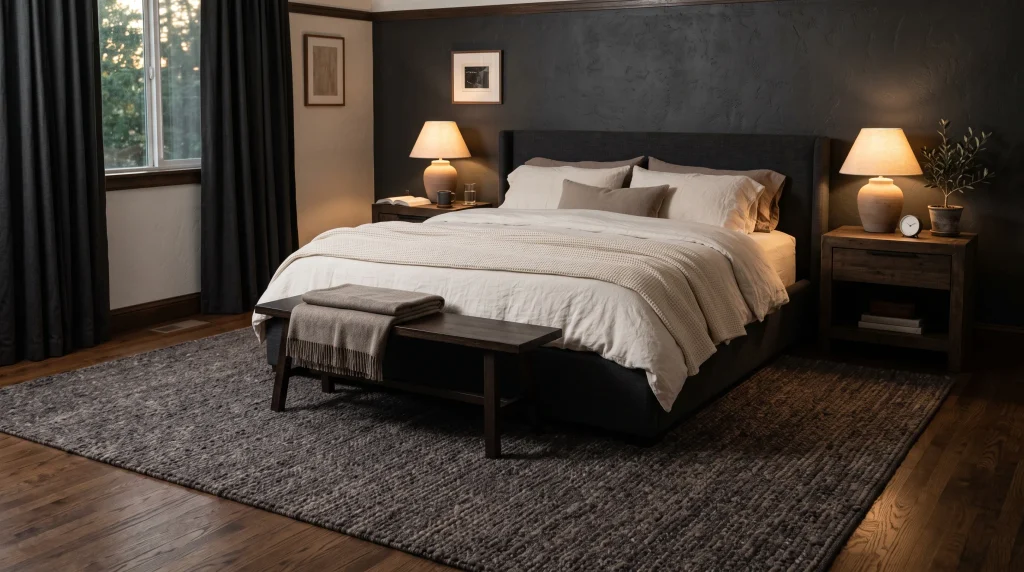
15. Textured Dark Rug
A good rug does quiet, essential work in a moody bedroom. It softens hard flooring, defines the sleeping area, and pulls the furniture into one connected scene. Choose charcoal, deep taupe, espresso, or muted brown in a low-contrast pattern or a high-low weave, ideally in natural wool or cotton for warmth and texture underfoot.
Size and placement make the difference. Position the rug under the lower two-thirds of the bed so it extends beyond both sides. This creates a defined zone and feels more generous than a small rug tucked at the foot. Think about your flooring, too: a slightly lighter taupe works on dark wood floors, while charcoal or chocolate gives stronger definition on pale ones. If the room already has wallpaper, artwork, or heavily textured bedding, keep the rug pattern subtle. A thick rug is also a practical luxury on cold mornings, and it absorbs some of the echo from hard surfaces, which helps the whole space feel quieter and more settled.
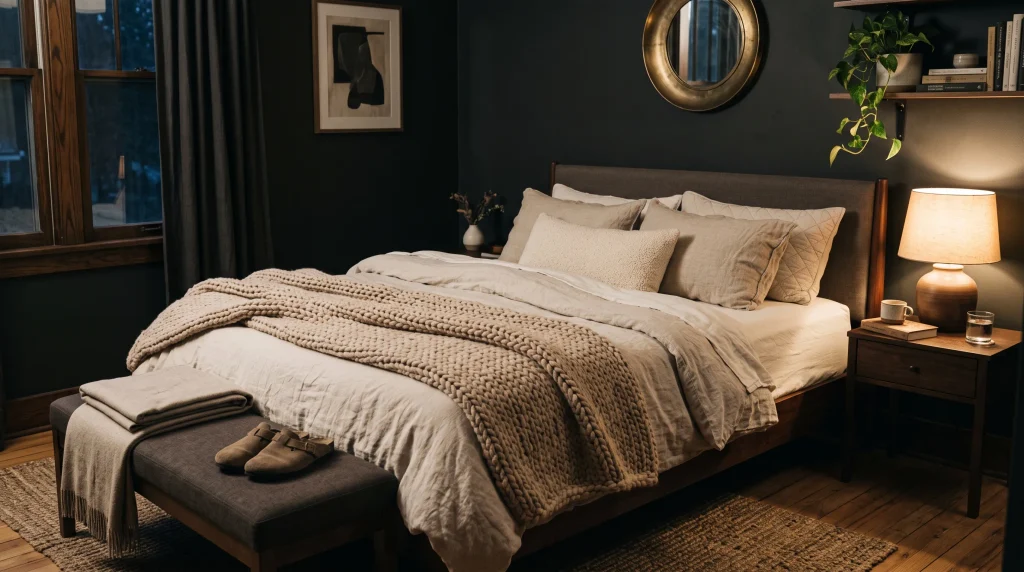
16. Layered Neutral Bedding
Warm neutrals are the easiest way to soften a dark bedroom without losing its drama. Start with cream sheets, add an oatmeal duvet, then finish with beige cushions and a chunky knitted throw. The colors stay close, but the mix of textures gives the bed plenty of depth. Against charcoal, brown, navy, or olive walls, the lighter bed becomes a natural focal point.
The secret is layering texture, not just adding more pillows. Combine washed linen with cotton, bouclé, knit, or a lightly quilted coverlet so there’s subtle contrast across the surface. Favor warm creams and beiges over stark white, which can look sharp beside deep walls. An upholstered bench at the foot of the bed adds another layer and gives you somewhere to sit or stash extra blankets. Neutral bedding also makes seasonal changes effortless: swap in rust cushions in autumn or a sage throw in spring without buying a new duvet. It gives the eye somewhere to rest while the deeper colors stay in charge.
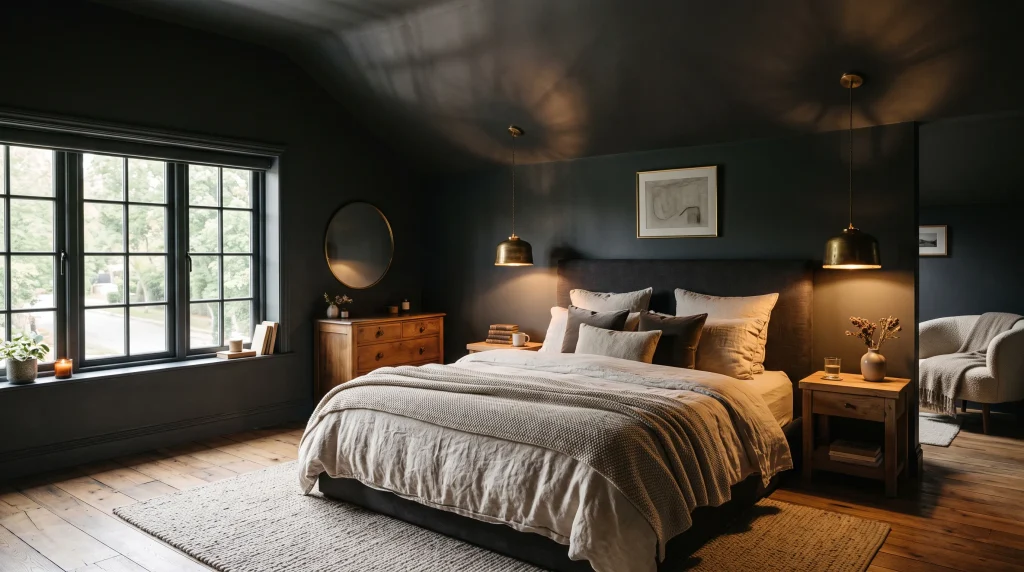
17. Dark Ceiling Detail
Painting the ceiling dark turns a bedroom into a full-on cocoon. Extending charcoal, deep brown, or navy from the walls onto the ceiling creates a seamless, immersive effect and makes the bed area feel wonderfully enclosed. It works best in rooms with generous ceiling height, where the darker surface adds character instead of weight.
Think about light and proportion before committing. In a spacious bedroom, a dark ceiling adds depth without shrinking the room. In a compact one, you can paint only part of the ceiling, or use a slightly lighter shade than the walls, to get a similar mood with less visual heaviness. Warm pendant lights or wall sconces create defined pools of illumination, and aged brass adds a little reflective sparkle to keep things balanced. Keep furniture simple so the architecture becomes part of the design. Combined with layered bedding and natural textures, a dark ceiling finishes the look and makes the room feel intentional from every angle.
Conclusion
A great moody bedroom comes down to balance: depth from rich color, warmth from natural materials, comfort from layered textiles, and atmosphere from soft lighting. You don’t have to repaint or replace everything to get there. Start with one detail that fits your style, whether that’s warmer bulbs, a velvet headboard, or a thick wool rug, and add more as you go.
Save this post on Pinterest so you can come back to your favorite looks when you’re ready to decorate, and share it with someone who loves a cozy, beautifully dark bedroom.