30 Closet Organization Ideas for a Tidy and Stylish Space
A cluttered closet has a way of making the whole bedroom feel unsettled — even when everything else in the room looks great. When you open the doors and face a wall of tangled clothes, toppled shoes, and overflowing shelves, it is hard to start the day feeling calm. The good news is that you do not need a full renovation or a designer wardrobe to fix it. Small, thoughtful changes make an enormous difference.
In this guide, you will find 30 closet organization ideas that work for every kind of space — tiny reach-in wardrobes, spacious walk-in closets, rented apartments, and custom-built rooms. Each idea focuses on a specific problem and offers a practical solution that is easy to maintain. The most effective closet systems are not always the most expensive ones. They are the ones that suit the way you actually live. Whether you are starting from scratch or just need a few upgrades, these ideas will help you build a wardrobe that feels calmer, works better, and stays organized long after the initial tidy-up.
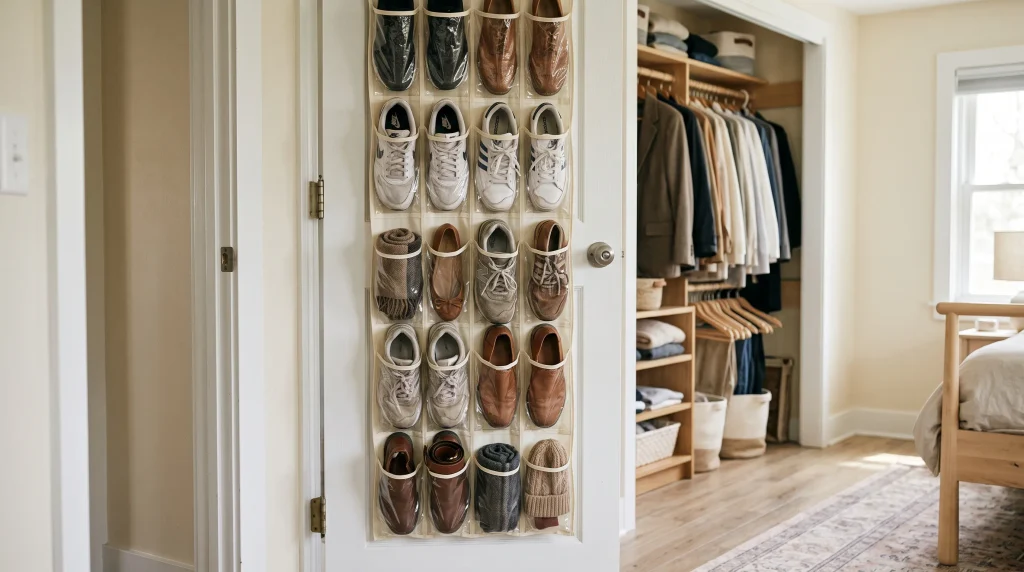
Back-of-Door Shoe Organizer
The back of a closet door is one of the most overlooked surfaces in any bedroom, and a shoe organizer turns it into genuinely useful storage. Clear pockets hold sandals, flats, slippers, scarves, belts, and even small clutch bags so everything stays visible without opening a single drawer. This is one of the most practical small closet organization ideas because it creates storage space without touching the floor or shelves. Keep the pairs you wear most often in the middle rows where they are easiest to reach, and move occasional shoes toward the top.
Choose an organizer with reinforced attachment points so the weight does not pull the hardware loose over time. Make sure the door still closes comfortably once the pockets are filled. For renters, over-the-door versions that need no drilling are a simple and damage-free solution. Avoid stuffing pockets beyond their intended capacity — one item per pocket keeps the system easy to use every single morning.
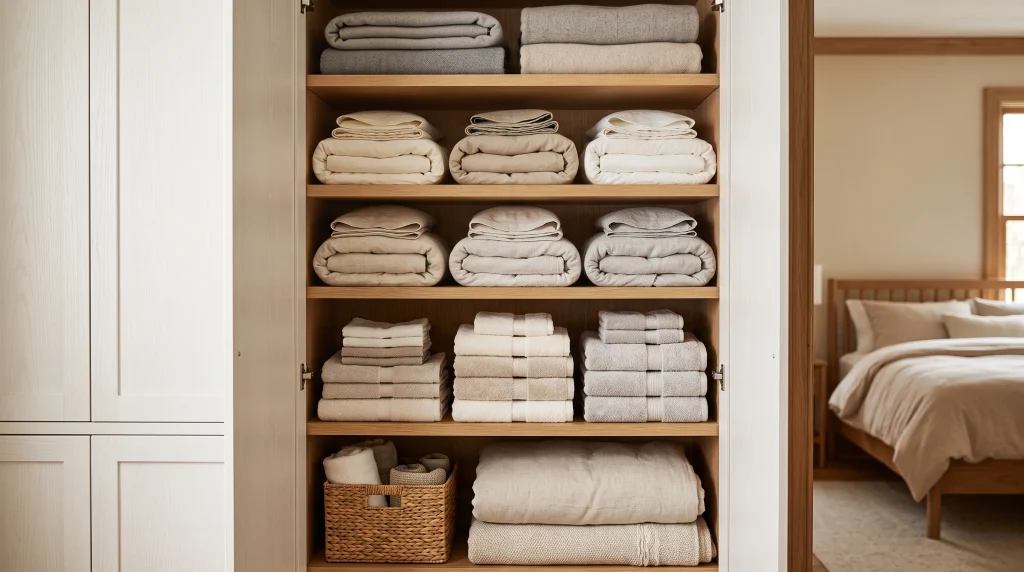
Linen Shelf Zones
Giving household linens their own dedicated shelf zone prevents bedding and towels from slowly taking over your clothing storage. The most effective approach is to fold each bedding set together and tuck the pillowcases inside the fitted sheet so every piece of a set stays in one place. Use separate shelves for bath towels, bed sheets, and blankets rather than stacking everything together. This makes it much easier to find exactly what you need without pulling apart a whole pile.
If shelf space is tight, use labeled fabric bins or woven baskets for smaller linens like hand towels and spare pillowcases. Reserve the open shelves for larger folded pieces that are used regularly. Heavier blankets and duvets sit best on lower shelves where they are stable and easy to lift. Lighter pillowcases and guest towels can go higher. With clear zones and consistent folding habits, the linen section becomes one of the easiest parts of the closet to maintain throughout the week.
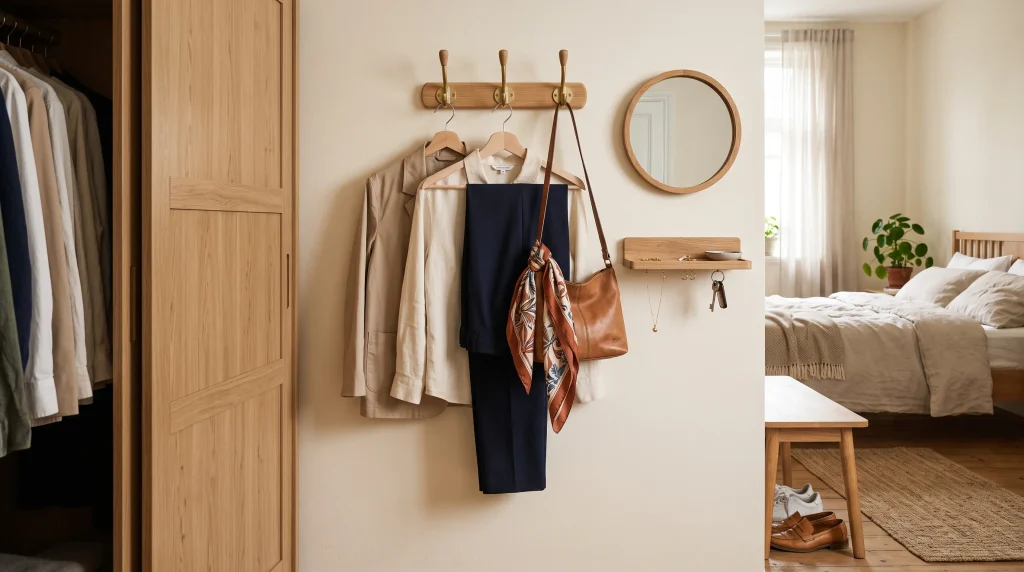
Outfit Planning Station
A small outfit planning station beside the wardrobe can make busy mornings feel noticeably smoother. The idea is simple — install two or three sturdy hooks on the wall near the closet and use them to hang tomorrow’s complete outfit the night before. Include the jacket, bag, scarf, or any accessories so everything is together and ready to go. This removes the morning scramble and keeps selected pieces separate from the main wardrobe, which makes the rest of the clothing easier to browse.
Keep the station intentional and minimal. One or two planned outfits are plenty; anything more and the hooks start to look like an overflow rail rather than a preparation zone. Return anything unused back to the wardrobe at the end of the day. Add a small mirror nearby if space allows and place a shallow dish or tray underneath the hooks for jewelry or keys. The whole setup takes up very little room but adds a lot of calm to the daily routine.
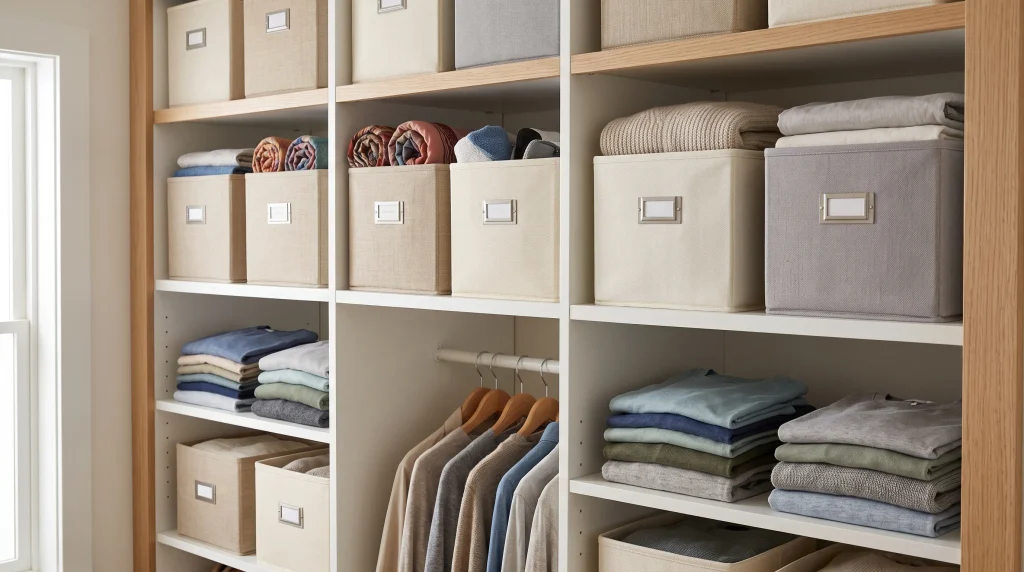
Labeled Fabric Bins
Open shelves look polished and purposeful when each section has its own labeled fabric bin to corral loose items. Use separate bins for scarves, gym accessories, seasonal clothing, spare linens, or anything else that does not hang neatly on a rail. Soft-sided fabric bins are lightweight, easy to pull down, and available in neutral shades like beige, cream, gray, and white that blend naturally into most wardrobe interiors. A handwritten or printed label on the front means nobody has to guess what is inside.
Place the most frequently used bins at a comfortable reaching height and save the upper shelves for seasonal or occasional storage. Do not pack them so tightly that items become difficult to retrieve — a slightly relaxed bin is far easier to use than one that needs two hands to open. This approach is one of the most budget-friendly closet storage ideas because simple fabric containers can completely transform the look and function of existing shelving without replacing a single piece of furniture.
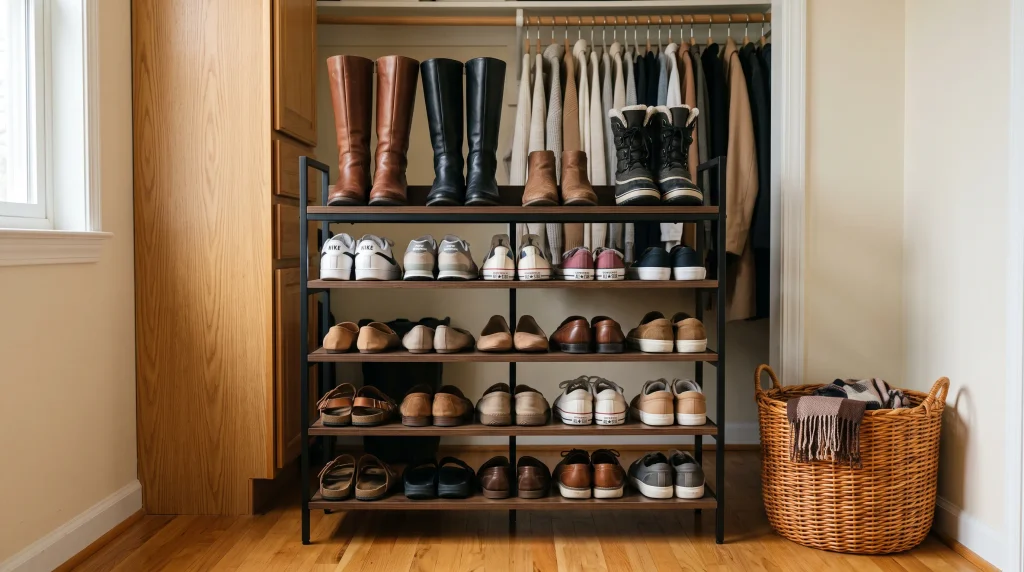
Tiered Shoe Rack
A tiered shoe rack solves one of the most common closet floor problems — shoes scattered in every direction with no clear system. Instead of placing pairs directly on the floor, a staggered rack lifts footwear onto multiple levels so you can see every pair at once without moving anything. This works especially well in small closet spaces because the rack grows upward rather than outward, keeping the footprint compact while fitting far more shoes.
Arrange the shoes you wear most often on the easiest-to-reach middle level, and move occasional or seasonal pairs to the top. Measure your tallest boots before choosing the rack to make sure there is enough clearance between levels. Group shoes loosely by type — trainers together, flats together, heels together — so finding a specific pair takes only a glance. A freestanding rack needs no installation, which makes it one of the most convenient shoe storage ideas for renters. Keep the space underneath clean and the area around the rack clear for a tidy, well-organized closet floor.
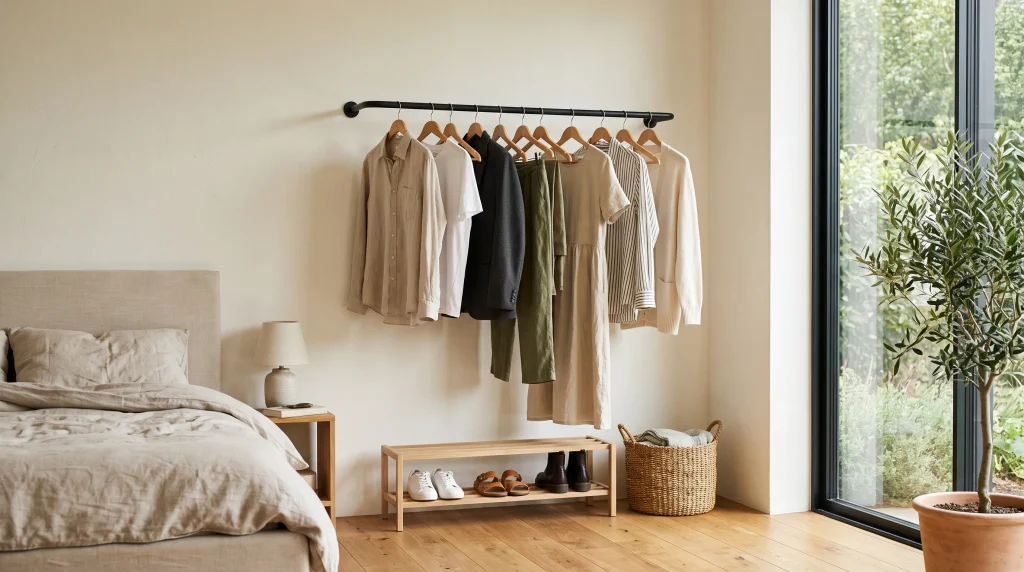
Wall-Mounted Clothing Rail
A wall-mounted clothing rail is a clean and stylish way to add hanging capacity without taking up floor space with bulky wardrobe furniture. Mount one on an empty bedroom wall and use it for everyday shirts, jackets, trousers, or outfits that are planned for the coming days. Because the floor beneath the rail stays completely open, the room feels lighter and more spacious than it would with a traditional wardrobe in the same spot.
A slim black metal rail paired with matching wooden hangers creates a modern, editorial look. A natural wood rail with linen hangers gives a softer, more relaxed feel. Whatever the style, keep the displayed clothing selective. The rail works best as a curated zone for frequently worn pieces, not as extra overflow space for everything that does not fit elsewhere. If the floor area below the rail allows it, add a narrow shoe rack or woven basket underneath. Use consistent hangers and arrange clothing by type or color to keep the display feeling intentional.
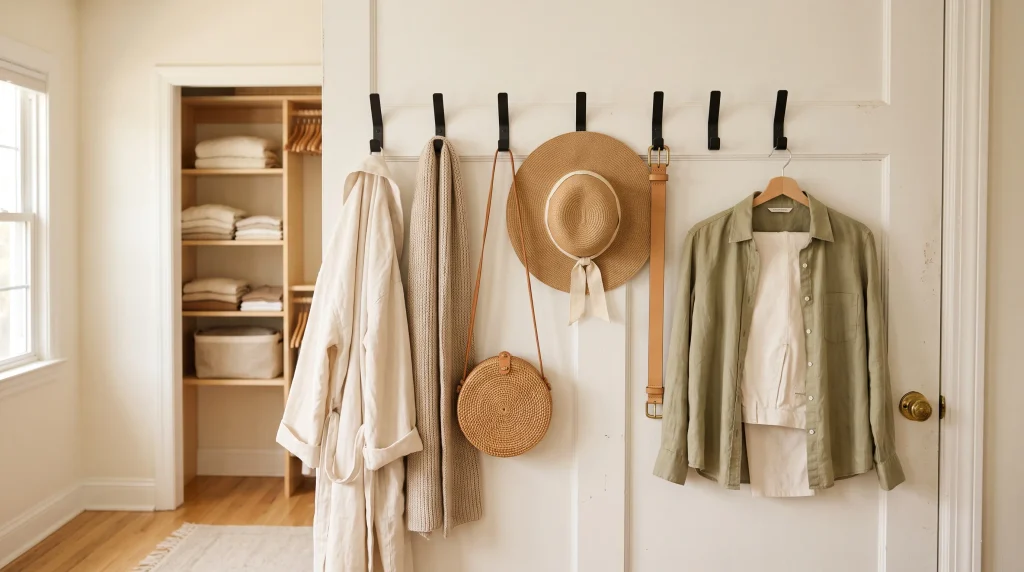
Door-Mounted Hooks
A few well-placed hooks on the back of a closet door can quietly solve several small organization problems at once. Hang robes, belts, scarves, tomorrow’s outfit, hats, or reusable bags from a simple row of hooks and suddenly those items have a proper home instead of ending up on a chair or the floor. This is one of the easiest small closet ideas to implement because it adds vertical storage to a surface that would otherwise go completely unused.
Choose a matching set of hooks for a cleaner look. For renters, adhesive or over-the-door hook strips work well and leave no marks when removed, provided the surface is smooth and the hooks are not overloaded. Place daily essentials at a comfortable height and move occasional items higher up. Avoid hanging too many things at once — a few purposeful hooks are more effective than a door crowded with everything at once. Simple, intentional, and completely free of floor clutter.
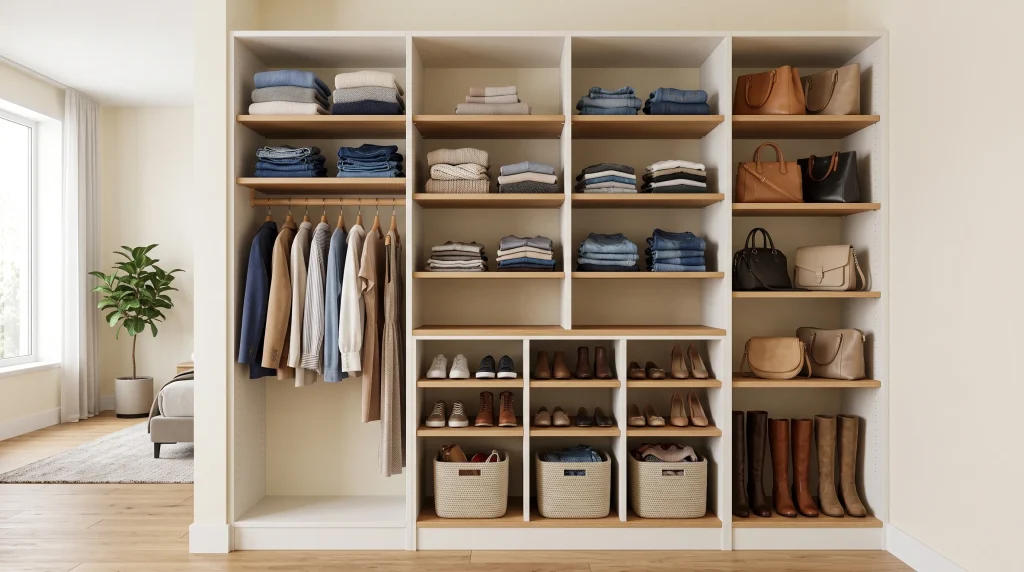
Adjustable Closet Shelves
Fixed shelves are one of the main reasons closets feel inefficient — the spacing never quite matches what you actually own. Adjustable shelving solves this completely by letting you create taller openings for boots and handbags, medium sections for folded sweaters, and shorter compartments for shoes or small bins. This flexibility makes adjustable shelves one of the most practical long-term closet storage solutions because the system can evolve as your wardrobe does.
Start by measuring your tallest belongings — boots, hatboxes, oversized bags — and plan the shelf positions around them. Keep the categories you reach for most often between waist and eye level so they are always easy to access. Use the higher areas for seasonal storage and the floor below for shoes or a hamper. Pair adjustable shelves with matching baskets and drawer organizers to build a personalized system that feels cohesive. Unlike fixed shelving, this setup never needs to be replaced — just rearranged whenever life changes.
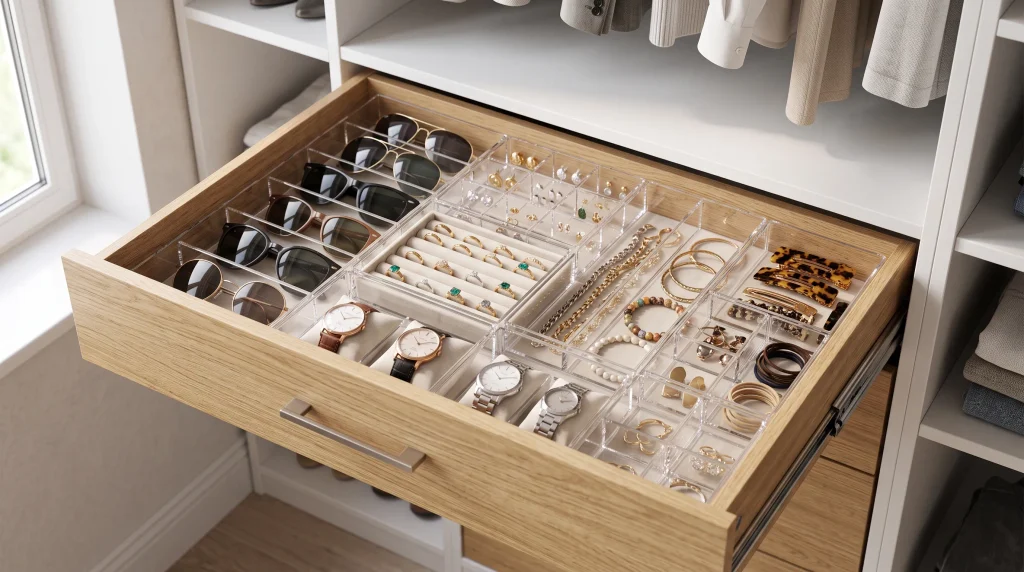
Clear Acrylic Organizers
Small accessories have a habit of disappearing into drawers and creating a tangled mess that takes several minutes to sort through every morning. Clear acrylic organizers solve this by dividing the drawer into dedicated sections for sunglasses, watches, rings, hair clips, earrings, and everyday essentials. Because the material is completely transparent, you can see everything at a glance without lifting a single lid or pulling out a tray.
Acrylic also looks visually light and clean, which keeps the drawer feeling spacious even when it is fully organized. Stackable versions make use of the full height of the drawer so nothing is wasted. For a polished result, keep similar items grouped together and leave a small amount of breathing room in each section rather than cramming every compartment to capacity. This is one of the most effective closet organization tips for anyone who wants a tidy drawer that genuinely stays tidy. Pair the organizers with consistent folding habits and a brief weekly reset for best results.
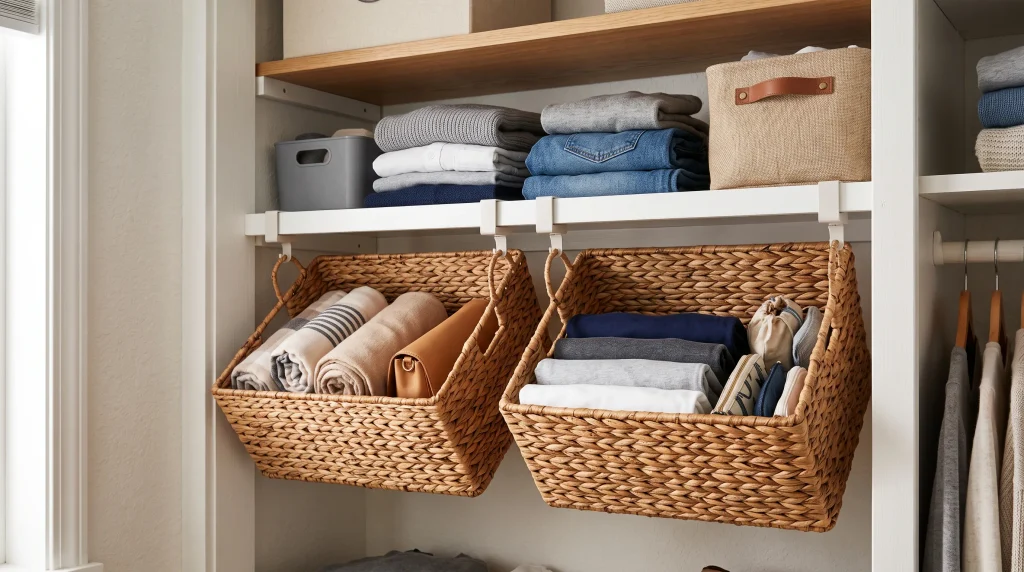
Under-Shelf Baskets
Most closet shelves waste the space directly beneath them, and an under-shelf basket turns that gap into genuinely useful storage. These baskets clip or slide onto an existing shelf and hang below it, creating an extra level for scarves, folded T-shirts, handbags, or lightweight accessories. The basket holds its contents at a slight angle that actually makes items easier to see and retrieve than they would be in a flat drawer.
Choose woven baskets for warmth or slim metal wire versions for a more modern wardrobe. Stick to one consistent style throughout the closet so the overall look stays cohesive rather than mixed. Use these baskets for items you reach for regularly rather than occasional storage, because the hanging position means very heavy objects should be avoided. This idea is one of the most satisfying easy closet organization upgrades because it creates storage out of space that already exists — no installation, no drilling, and no extra furniture required.
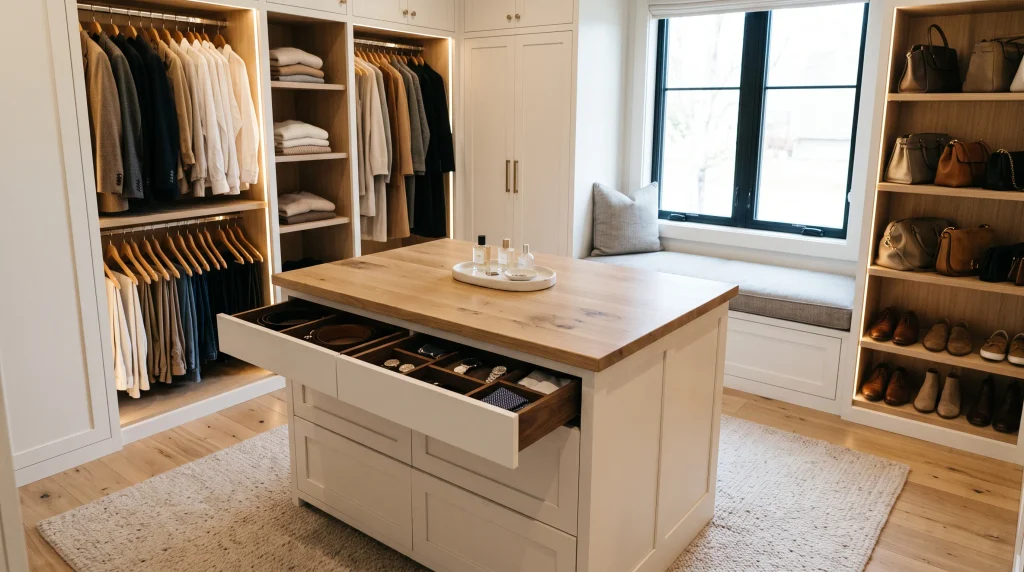
Walk-In Closet Island
A closet island is one of the most functional additions to a spacious walk-in wardrobe. It creates a central storage zone that combines shallow drawers for jewelry, belts, and accessories with deeper compartments for folded clothing, and tops it all with a flat surface for a tray, a perfume collection, or everyday essentials. The island anchors the room visually and gives the closet the organized, purposeful feeling of a boutique dressing room.
Before choosing an island, measure the walking clearance on every side and confirm that each drawer can open fully without obstruction. A narrow island can work even in a medium-sized walk-in as long as the proportions are right. Choose a finish that coordinates with the existing cabinetry — white, warm oak, or soft gray are all versatile options. Skip excess surface decoration and focus on internal organization instead. Divided trays and labeled drawers will do more for daily function than any decorative item placed on top.
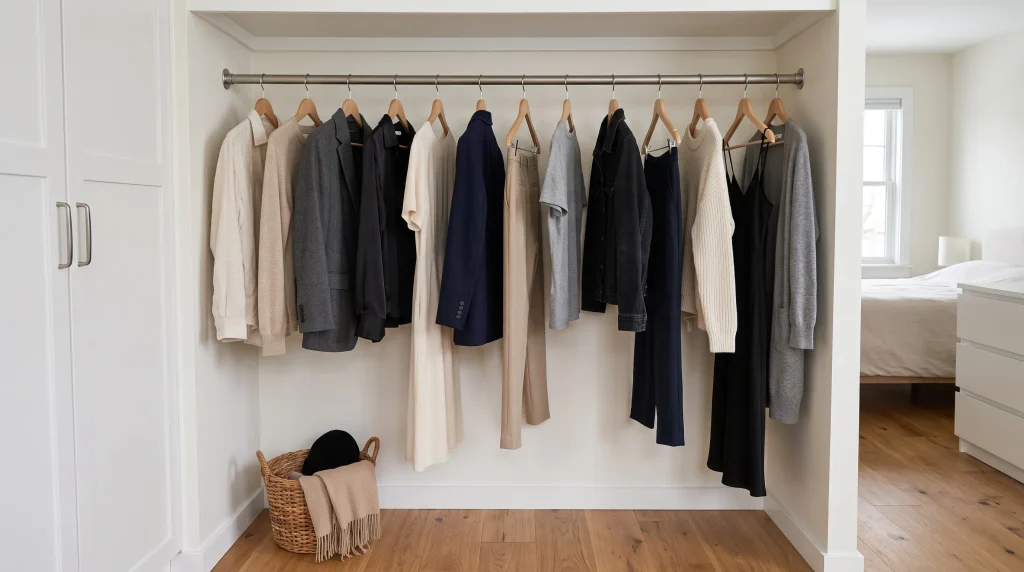
Minimalist Capsule Rail
A capsule rail is a dedicated section of the wardrobe reserved for the clothing you wear most often. The idea is to select a practical mix of tops, trousers, dresses, jackets, and layers that coordinate with each other easily, and hang them in one place with enough space between each hanger to see every garment clearly. This approach reduces decision fatigue because the most useful pieces are always immediately visible and accessible rather than buried in a full wardrobe.
Neutral tones like cream, gray, beige, black, and soft navy work naturally together, but the capsule concept suits any personal style as long as the pieces actually earn their place on the rail. Keep everyday items here and store occasional or seasonal clothing elsewhere. Even leaving just a little empty space between hangers makes the whole wardrobe feel calmer and more manageable. A small basket underneath for accessories completes the zone without adding clutter.
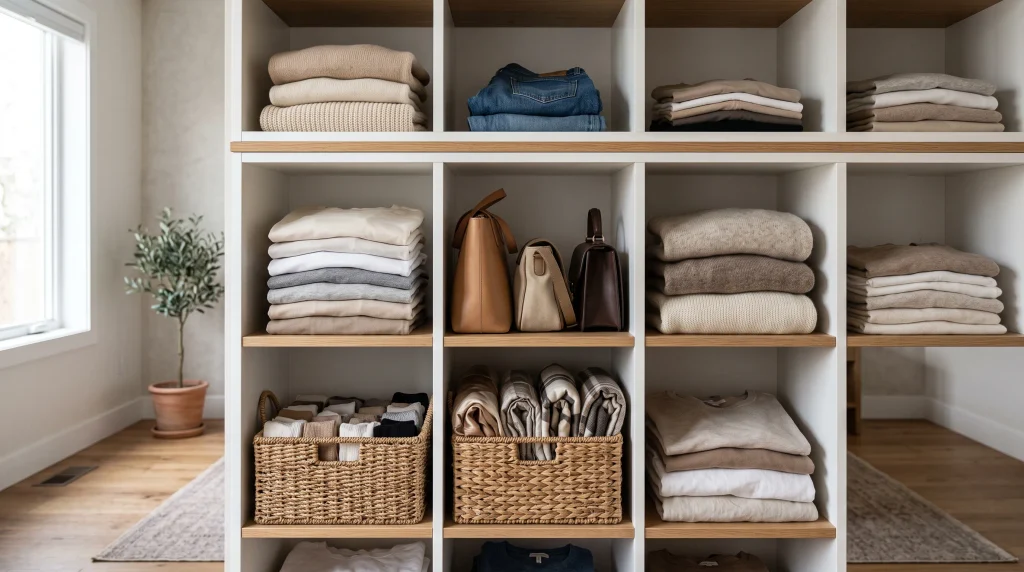
Open Cubby Sections
Open cubbies turn a wardrobe interior into a visual storage system where you can see exactly what you own the moment you open the doors. Give each compartment a single purpose — one for jeans, one for knitwear, one for handbags, one for everyday T-shirts — and the whole wardrobe becomes easy to navigate at a glance. This works especially well as an organized closet idea because there are no drawers to open, no boxes to rummage through, and no guesswork involved.
Keep the most frequently used categories between waist and eye level and use higher cubbies for seasonal pieces. Add a woven basket to any lower compartment that holds smaller items like socks or scarves. The key to making open cubbies look intentional rather than cluttered is restraint — leave a little empty space in each section rather than filling every inch. A neutral color palette of white, cream, and natural wood helps the whole system look cohesive and calm.
Read More:20 Apartment Inspiration Ideas for a Cozy & Stylish Home
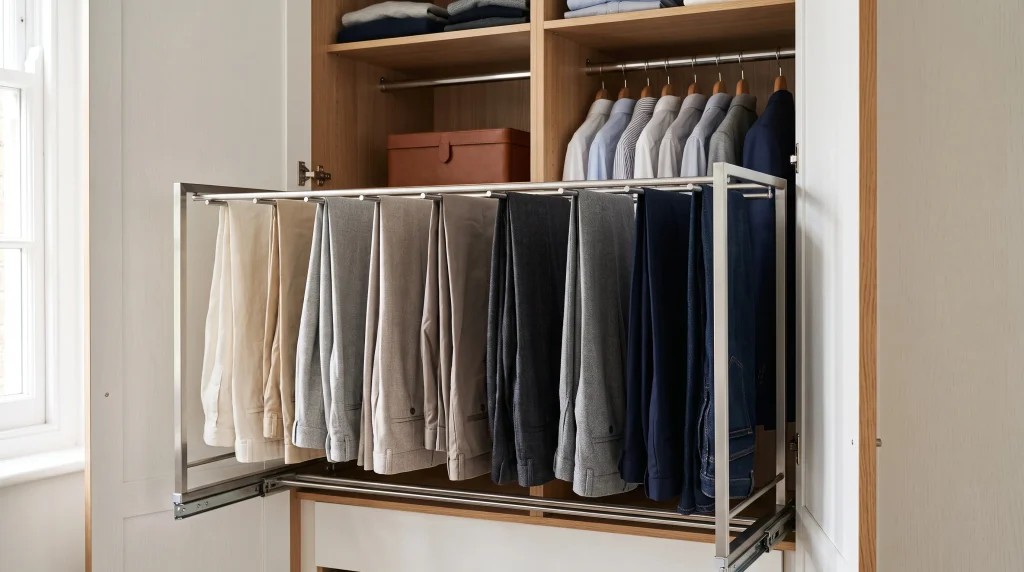
Pull-Out Trouser Rack
Trousers and pants are notoriously difficult to store neatly. Folded stacks collapse whenever one pair is removed. Shared hangers bunch fabric together and leave creases. A pull-out trouser rack solves both problems by giving each pair its own bar so they hang flat, stay visible, and can be removed individually without disturbing anything around them. Slide the rack forward and choose exactly the pair you need — it takes seconds rather than minutes.
This is a particularly efficient use of a narrow vertical section of the wardrobe, especially when positioned beneath shorter hanging garments like shirts or blazers. Choose a rack with smooth-gliding hardware and enough spacing between bars to prevent heavier fabrics from pressing together. Group trousers by color or occasion so the system is even easier to use. If you have been searching for a way to organize a wardrobe that keeps formal clothing in better condition, a dedicated pull-out rack is one of the most practical upgrades available.
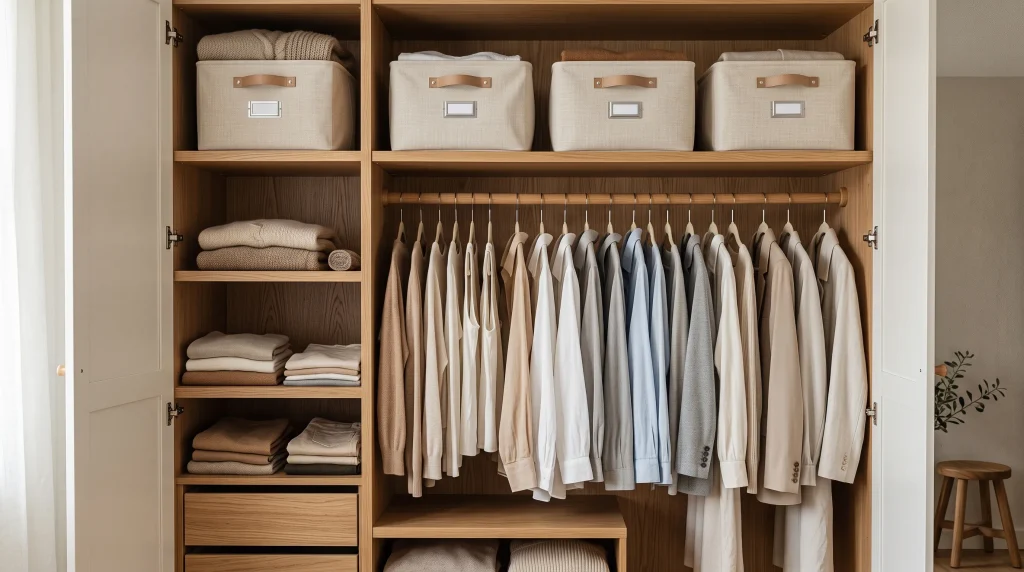
Seasonal Rotation Bins
A wardrobe that tries to hold every season at once will always feel overcrowded, no matter how well it is organized. Seasonal rotation bins solve this by creating a simple system — at the start of each new season, move out the clothing you will not need for the next three months and bring the current season forward. This single habit frees up a significant amount of rail and shelf space and makes the active wardrobe feel lighter and easier to use.
Use clearly labeled breathable containers and write the season and category on each one: “Winter Knitwear,” “Summer Dresses,” “Autumn Layers.” Store the off-season bins on upper shelves, under the bed, or in another low-traffic area. Avoid packing garments too tightly to prevent creasing and fabric stress. This approach is also one of the most effective ways to declutter naturally — each time a bin is reopened, you reassess what is inside and make fresh decisions about what genuinely belongs in your wardrobe.
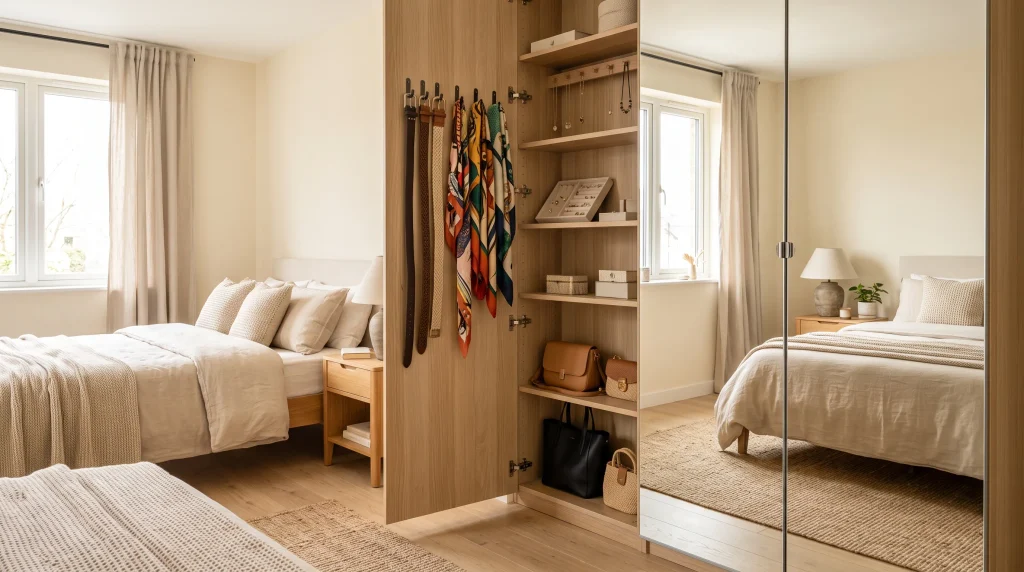
Mirror Door Storage
A mirrored closet door is one of the most practical dual-purpose additions to a bedroom because it provides a full-length dressing surface while concealing useful storage on the other side. Behind the door, slim shelves or narrow hooks hold jewelry, belts, scarves, and bags — the kind of small accessories that tend to pile up on dressers and bedside tables. The mirror itself reflects natural light, which makes compact bedrooms feel noticeably brighter and more open.
Keep the hidden compartments shallow so the door continues to open and close easily. Small labeled sections work far better than a single open area where everything accumulates together. A freestanding wardrobe with an integrated mirror is an excellent option for renters because no permanent installation is required and the piece can be taken to the next home. Pair the mirror door with neutral storage bins and slim hangers elsewhere in the wardrobe to create a clean, cohesive closet that handles both function and style.
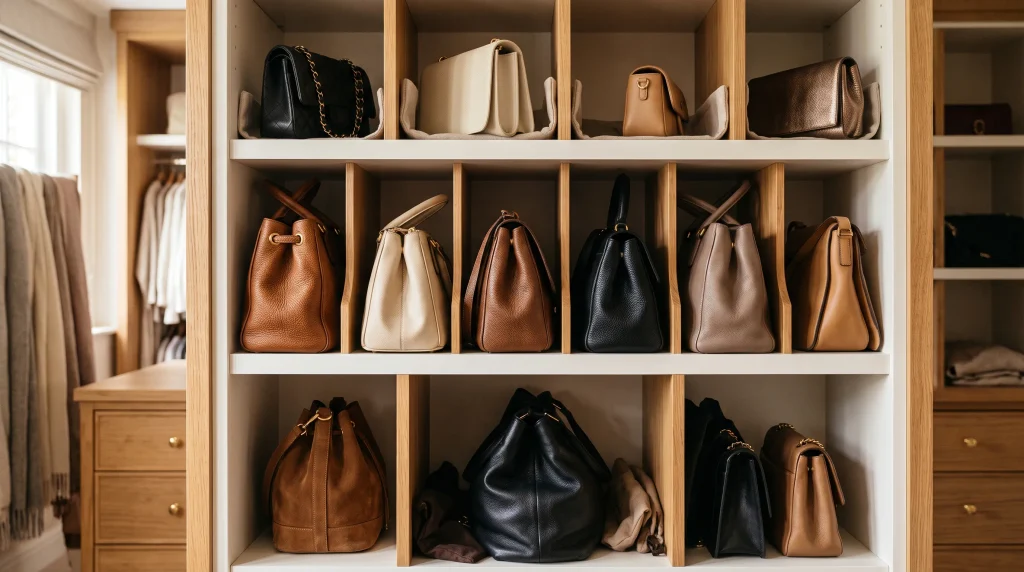
Handbag Display Shelves
Handbags are easier to care for and far more likely to be used when they are stored somewhere visible rather than stacked in a pile at the back of the wardrobe. Dedicated display shelves give each structured bag its own cubby so it stays upright, holds its shape, and is easy to grab without moving anything else. Softer bags benefit from a small basket or fabric insert that prevents them from slouching between uses.
Keep everyday bags at eye level and occasional pieces on higher shelves. A consistent arrangement makes the whole section look intentional — like a boutique wall rather than a storage problem. Measure your largest bags before installing shelves to make sure the cubbies are wide and tall enough. If the wardrobe is compact, a single vertical column of cubbies for bags takes up far less space than a basket on the floor where everything gets tangled together. Visible storage genuinely encourages you to use what you already own.
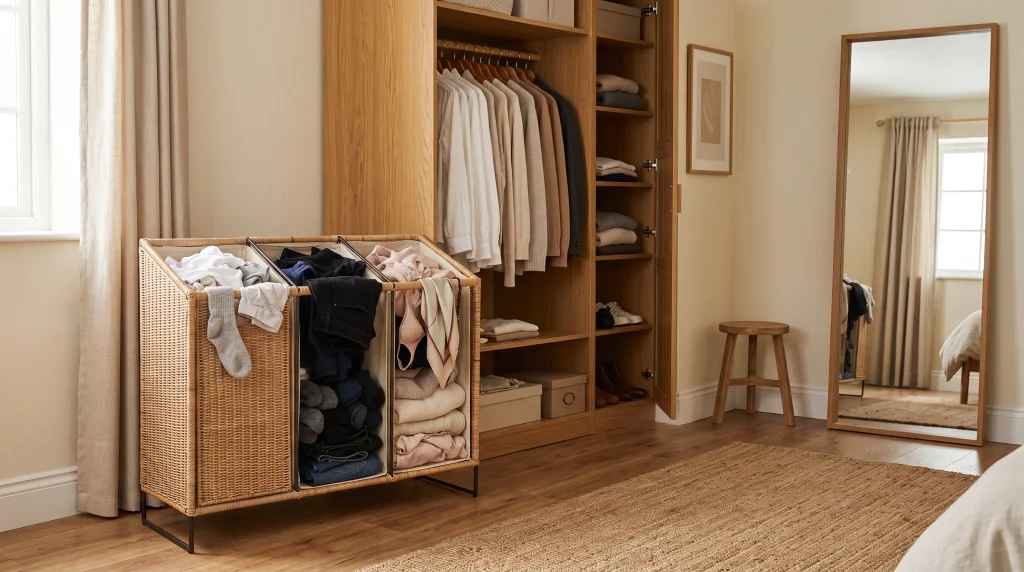
Laundry Sorting Baskets
One of the most common reasons a bedroom feels messy is not the wardrobe itself — it is the pile of worn clothing that builds up on chairs and the floor while waiting for laundry day. A well-placed sorting hamper with separate sections for lights, darks, and delicates removes this problem entirely. Clothes go directly into the right section the moment they come off, which means no sorting later and no floor pile building up through the week.
Choose a slim vertical design for a small closet or a wider woven hamper for a spacious walk-in. Neutral materials like rattan, seagrass, bamboo, or cotton canvas blend naturally with minimalist and natural home aesthetics. Place the hamper near the closet entrance or beside the dressing area so the habit feels effortless. Avoid sections that are too deep — an overflowing hamper defeats the purpose as quickly as clothes on the floor. This is one of the simplest bedroom closet organization upgrades with the most immediate visual impact.
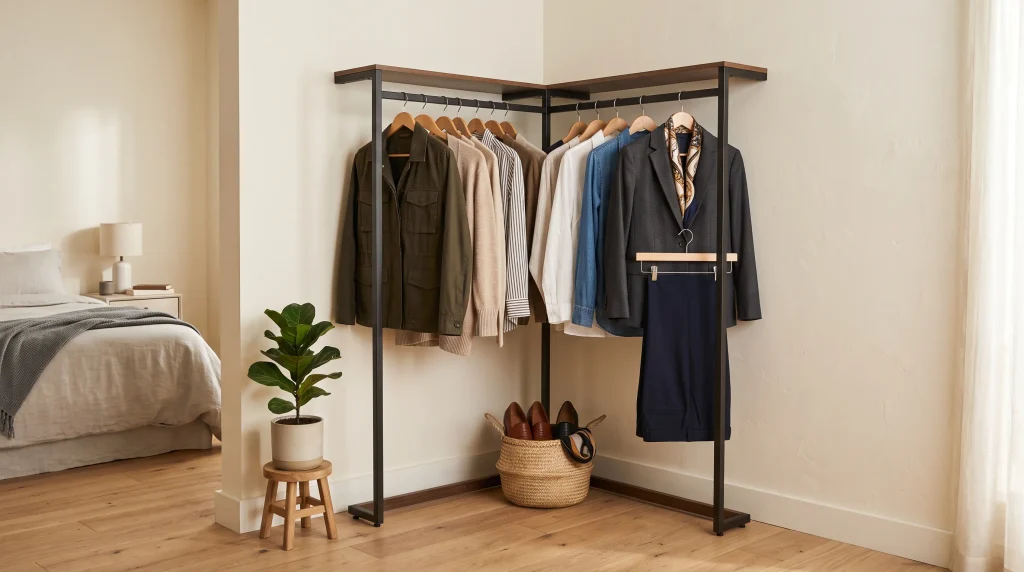
Corner Hanging Rack
Corners are often the most wasted areas in any bedroom, but a slim freestanding hanging rack can transform that awkward space into practical everyday storage. Use it for jackets, cardigans, shirts, or a pre-planned outfit without adding a full wardrobe unit. Because the rack stands independently, the floor below stays clear and the surrounding space feels open rather than cramped.
Choose a narrow profile that leaves a comfortable walking clearance on both sides. Matching wooden hangers in a single consistent style give the rack a curated look rather than a makeshift one. Keeping the rail selective is essential — one rack’s worth of everyday pieces, not an overflow zone for everything that did not fit elsewhere. A small woven basket or a shallow tray at the base adds a spot for shoes or accessories without creating a cluttered corner. For renters in particular, a corner rack provides real hanging capacity without a single wall fixture.
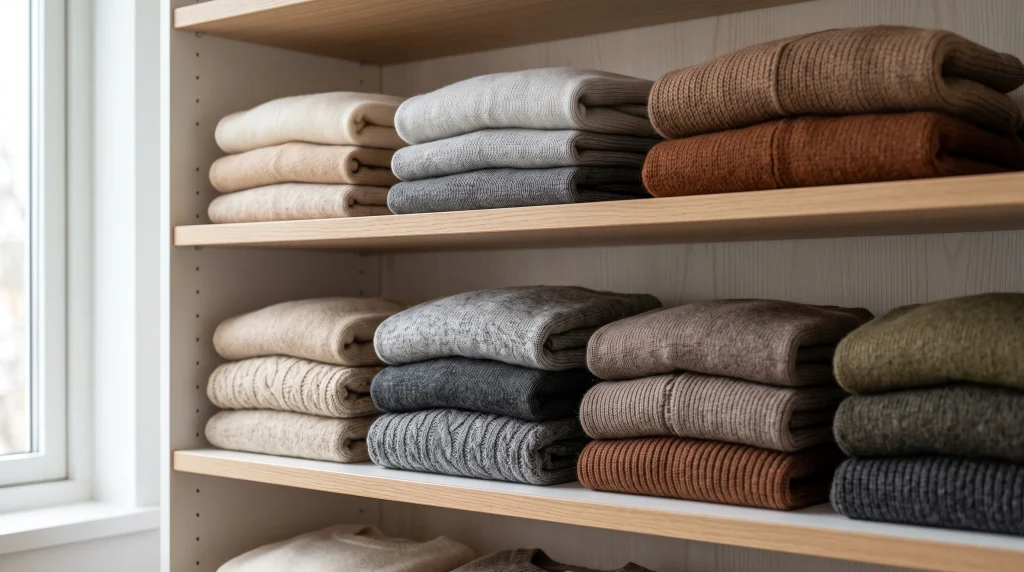
Folded Sweater Shelves
Hanging knitwear stretches the fabric at the shoulders over time, which is why dedicated folded sweater shelves are a better long-term storage solution for heavier knits. Fold each sweater into a compact rectangle and build short, stable stacks of two or three rather than tall towers that collapse whenever one piece is removed. Arrange colors from light to dark for a boutique-inspired effect, or group by weight — lighter knits at the front, heavier winter pieces toward the back.
Give everyday favorites a shelf at eye level so they are always easy to reach, and move bulkier winter pieces higher once warmer weather arrives. Leave enough space between stacks so you can remove a single sweater without disturbing the rest. Even basic shelving feels polished when the folding is consistent and the arrangement is deliberate. This approach protects fabric, saves hanging space for garments that genuinely need it, and keeps the wardrobe interior looking calm and considered.
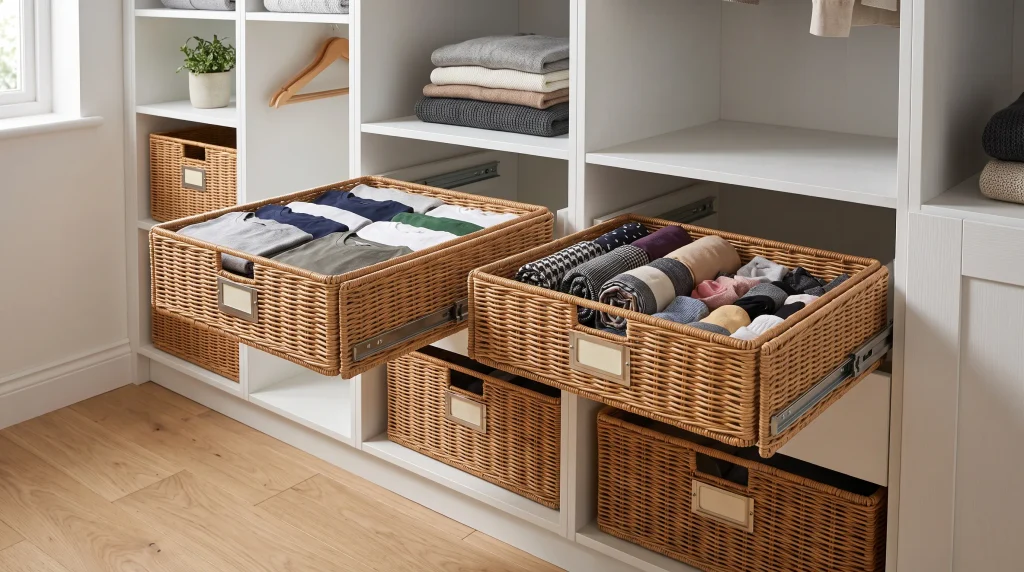
Sliding Basket Drawers
Deep shelves are one of the most frustrating features of an older wardrobe because everything at the back gets buried and forgotten. Sliding basket drawers fix this completely — instead of reaching into a dark corner to find something, the entire basket pulls forward and brings the contents with it. This makes every inch of deep shelf storage accessible without moving anything else out of the way.
Woven baskets add warmth and texture to a neutral wardrobe interior, while smooth wire baskets give a cleaner, more modern look. Label each one clearly and assign a single category to every basket so the system stays organized with minimal effort. Place the most frequently used baskets at a comfortable pulling height and reserve the upper shelves for seasonal or occasional storage. This is one of the most satisfying closet storage upgrades for deep wardrobes because the improvement in daily usability is immediate and obvious from the very first day.
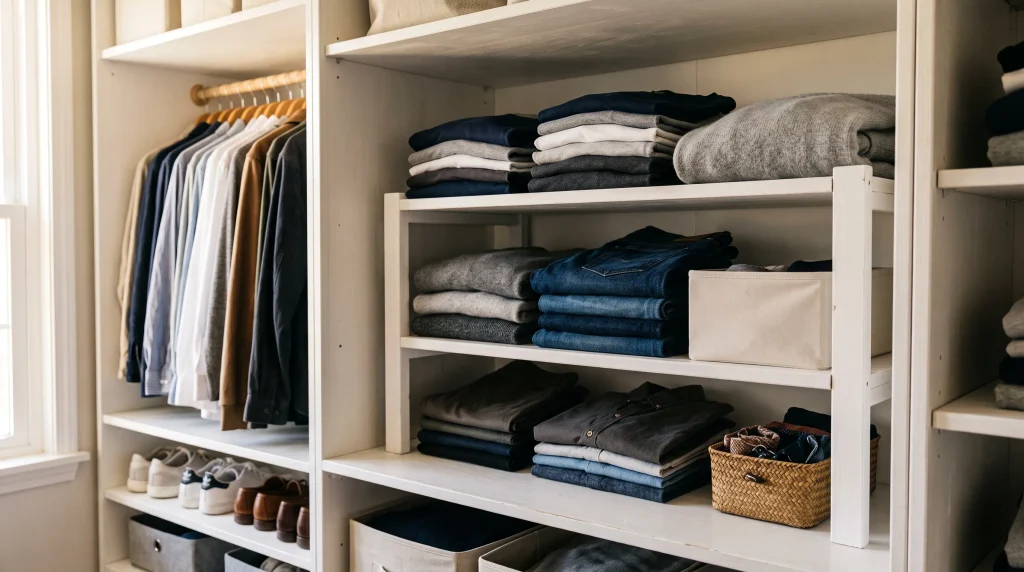
Vertical Shelf Risers
A shelf riser is one of the simplest and most affordable closet upgrades available — it sits inside an existing shelf and creates a second level above it, effectively doubling the usable storage in that section. Use it for folded sweaters, jeans, T-shirts, small bags, or lightweight boxes. This is particularly useful in small closet spaces because the extra level uses height that is already there rather than requiring more shelving units or wall space.
Choose a finish that coordinates with the existing shelving — white, natural wood, and brushed metal all work well in most wardrobe interiors. Keep each stack short so individual items can be removed easily without toppling the rest. One section might hold folded tops, the next denim, the next accessories. Risers are easy to move and adjust, which makes them ideal for anyone whose storage needs change regularly. They require no tools, no installation, and no commitment — just immediate, visible improvement.
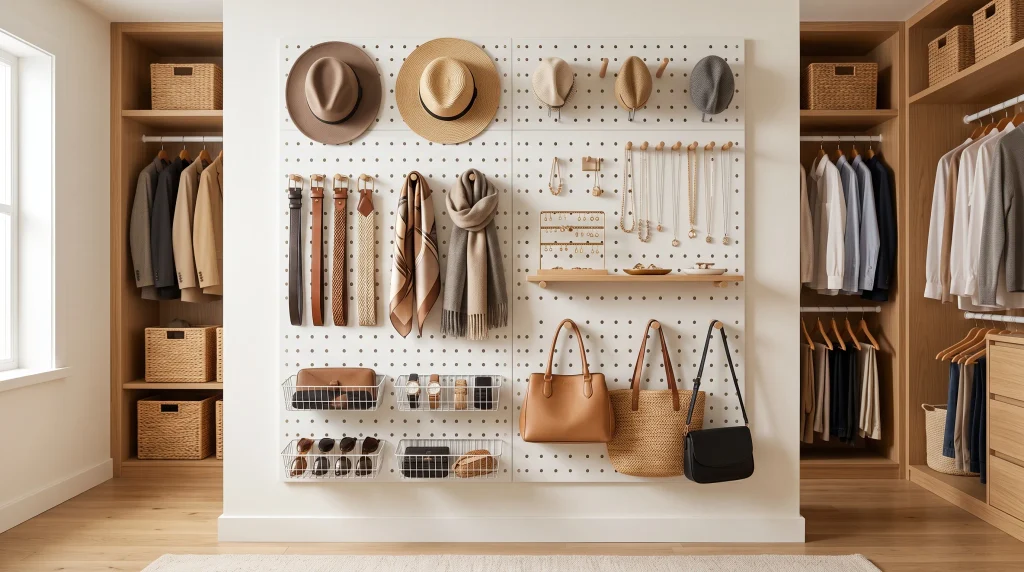
Pegboard Accessory Wall
A pegboard turns a blank wall inside a walk-in closet into a flexible, fully customizable storage display. Install it at eye level and add hooks, small shelves, and wire baskets to hold belts, hats, jewelry, bags, scarves, and styling accessories. Because the hooks can be moved at any time, the layout can change whenever the collection changes — no drilling new holes, no permanent commitment. This is one of the most genuinely adaptable DIY closet organization ideas for anyone who prefers storage that grows with them.
A white pegboard creates a clean, gallery-like background that suits minimalist and Scandinavian-inspired interiors. A natural wood board adds warmth to earthy or relaxed bedroom styles. Keep frequently used accessories between waist and eye level and reserve the upper sections for occasional pieces. Add small labeled wire baskets for hair accessories or loose jewelry so nothing gets lost. The best pegboard arrangements are selective rather than crowded — a thoughtful display that shows what you own without overwhelming the eye.
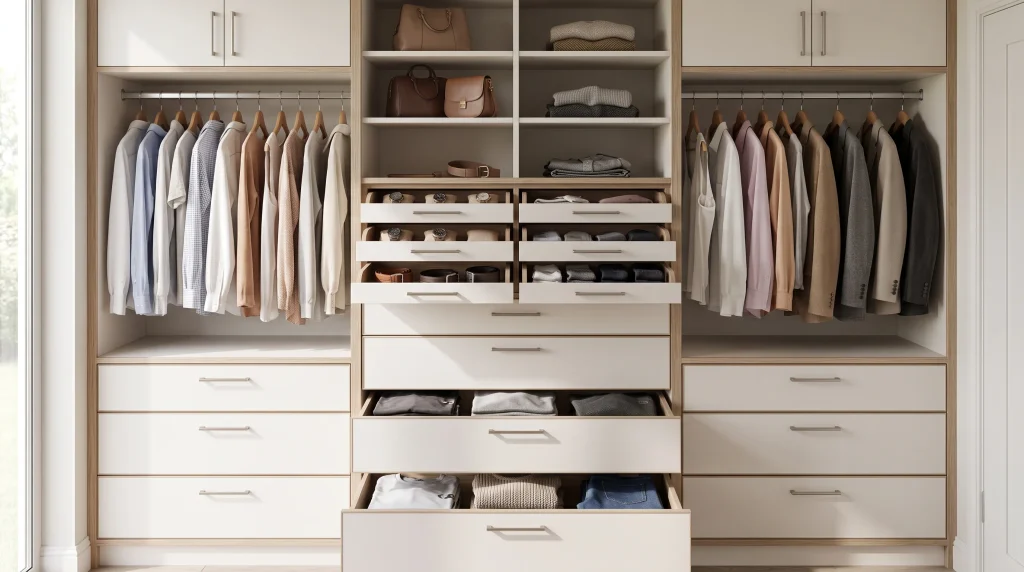
Built-In Drawer Tower
A built-in drawer tower brings the organized feeling of custom cabinetry to a wardrobe without requiring an entirely bespoke design. Use shallow top drawers for jewelry, watches, folded socks, and belts, then move to deeper drawers for knitwear, T-shirts, or jeans. The vertical layout uses wall height efficiently while keeping the floor completely clear. Positioned between two hanging rails, a drawer tower creates a natural centerpiece that makes the whole wardrobe feel balanced and considered.
Choose simple hardware and a neutral finish — white, warm oak, or soft gray — so the unit reads as part of the architecture rather than a separate piece of furniture. Open shelves above the drawers can display handbags or folded clothing, while lower sections can hold shoes or bins. Keep drawer categories consistent and avoid filling every compartment to the top. A little breathing room inside each drawer makes it faster to use in the morning and far easier to maintain throughout the rest of the week.
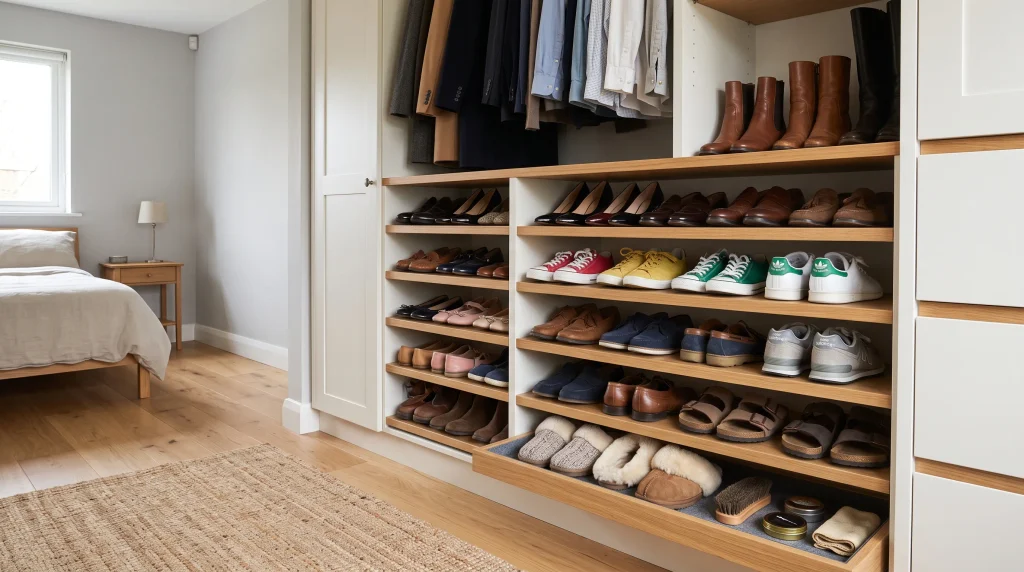
Slim Shoe Shelves
A slim dedicated shoe shelf along the base of the wardrobe brings immediate order to what is often the most chaotic part of any closet. Instead of kicking shoes into a pile on the floor, each pair has its own level and its own space. You can see every option at a glance, find what you need in seconds, and leave the house without searching. The defined boundary between footwear and clothing also makes the whole interior feel more structured and intentional.
Choose a shelf that matches or complements the existing cabinetry — matching white or warm wood both work well. Measure the spacing between levels carefully so your tallest boots fit without being forced. Place the pairs you wear most often at eye level and move special-occasion shoes to upper shelves. Add a shallow tray at the very base for slippers or shoe-care supplies. Avoid stacking shoes horizontally to save space — a single well-organized vertical display is always easier to use and maintain than a compressed pile.
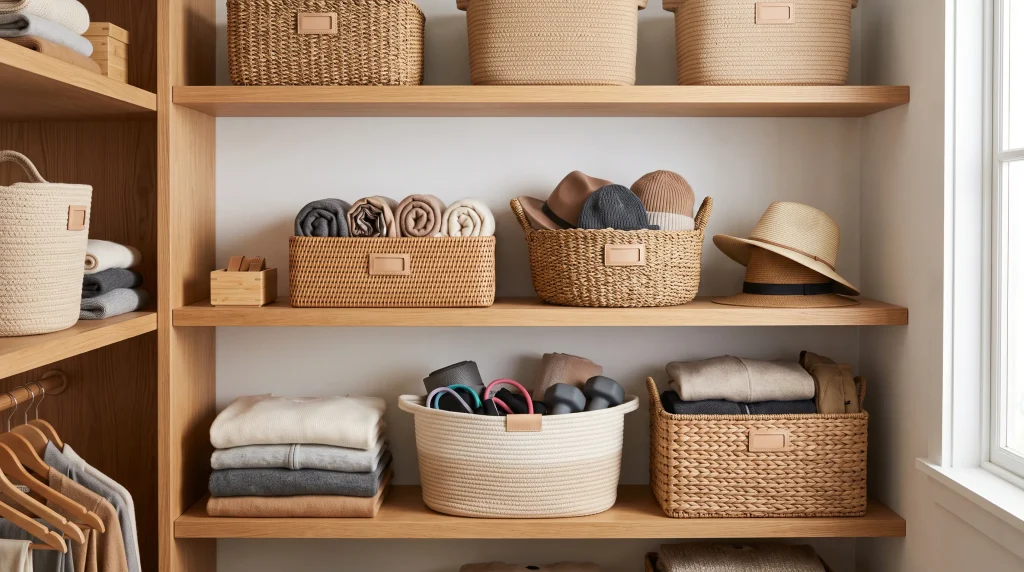
Woven Storage Baskets
Woven baskets bring natural texture and warmth to closet shelving while solving the very practical problem of keeping loose items contained and out of sight. Use one for scarves, another for hats, another for gym accessories, and another for seasonal pieces that need to be close but not on display. The organic material — seagrass, rattan, cotton rope, or water hyacinth — softens the look of a wardrobe interior and pairs naturally with linen, wood, and neutral palettes that suit modern, minimalist, and farmhouse-inspired bedrooms.
For best results, choose matching baskets in the same material and shade so the shelves look cohesive rather than collected. Place the ones you use most often at waist to eye level and keep seasonal pieces higher up. Simple labels make the system even more practical, especially when two baskets look identical from a distance. This approach is renter-friendly because baskets need no installation and move easily between spaces. A few coordinated baskets can transform a visually busy shelf into something that feels genuinely calm.
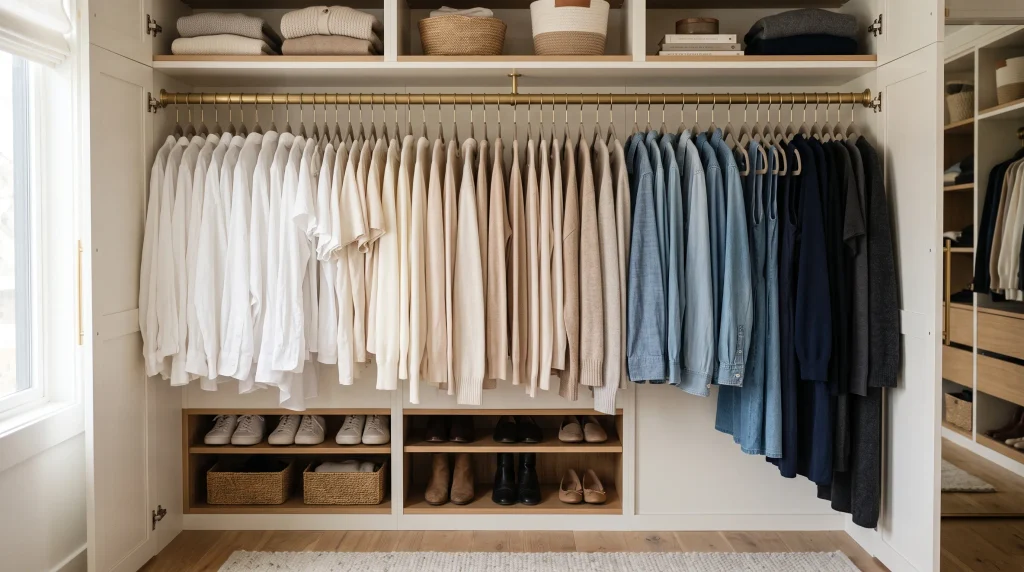
Color-Coded Hangers
Switching to a consistent set of matching slim hangers is one of the fastest ways to make a wardrobe look more organized without moving a single piece of clothing. Thin velvet hangers sit closer together than plastic ones, which immediately creates more hanging space and reduces the crowded, tangled feeling that comes from mismatched hardware. Once the hangers are consistent, try arranging clothing in a loose color order — whites and creams leading into neutrals, blues, and then darker shades.
This color flow makes the wardrobe easier to scan in the morning because the eye moves naturally along the rail rather than jumping between mismatched pieces. It also makes duplicates and rarely worn items much more obvious, which is useful during seasonal declutters. The arrangement does not need to be strict or complex — a rough gradient is enough to create the effect. Pair consistent hangers with clothing organized by type first, then color within each type, and the whole wardrobe will feel noticeably lighter and more considered.
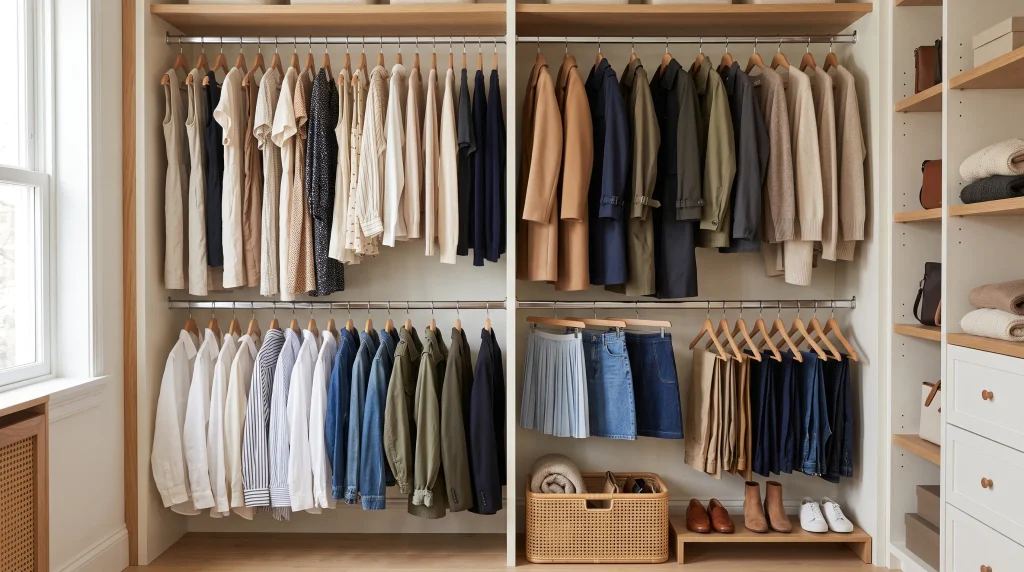
Double Hanging Rods
A second hanging rod is one of the most efficient uses of vertical wardrobe space because it immediately doubles the capacity for shorter garments without any structural changes. Position a lower rod beneath the upper one at a height that suits shirts, skirts, folded trousers, and jackets, while keeping the upper rod for longer dresses, coats, and anything that needs full-length hanging space. The two levels create a clear visual structure that makes the wardrobe feel more organized at a glance.
Use the lower rod for everyday pieces you reach for most often, and reserve the upper rod for occasional or formal clothing. Avoid packing hangers tightly — leaving a small gap between each garment makes it far easier to remove one item without pulling three others off with it. Slim matching hangers on both rods keep the arrangement looking consistent. Add a small shelf or basket at floor level between the two rods for shoes or folded accessories to make the section fully functional from top to bottom.
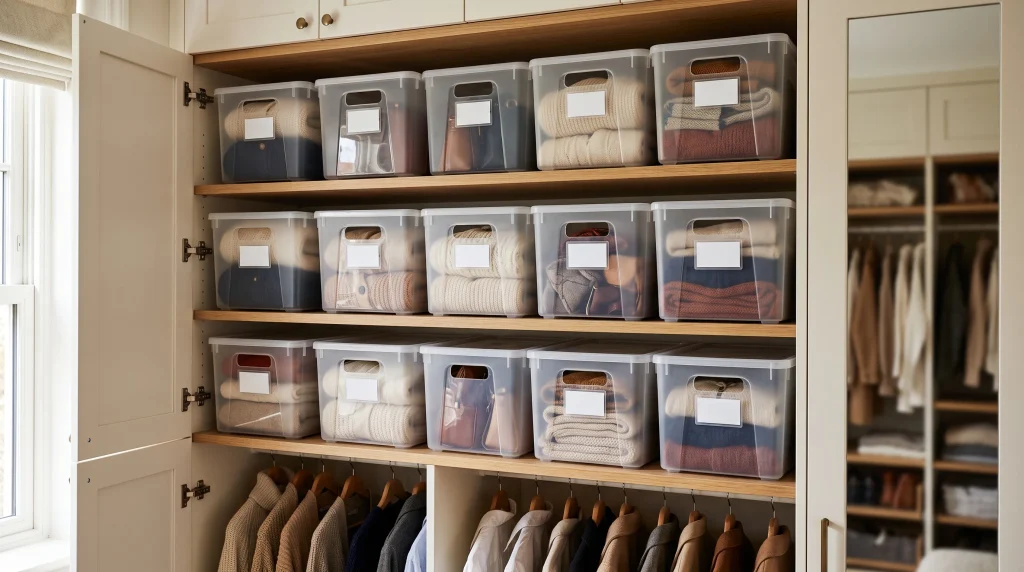
Clear Storage Bins
Clear storage bins bring a calm, unified look to closet shelving while making it genuinely easy to find what you need. Unlike opaque boxes where the contents remain a mystery until the lid comes off, a clear or lightly frosted bin lets you see folded knitwear, scarves, handbags, or seasonal accessories at a glance. Stack identical containers in a soft white or neutral finish and the shelves gain a sense of visual order that makes the whole wardrobe feel more considered.
Place the bins holding everyday items at comfortable reaching height and reserve the higher shelves for seasonal storage. Add a simple label on the front — a small printed card or a handwritten tag works fine — so the right bin is always obvious, especially when several look alike. Choose smooth-edged containers for delicate clothing to avoid snagging. Consistent bin sizes across multiple shelves create a stronger visual rhythm than a mix of different shapes and heights. The result is organized storage that looks intentional and stays that way.
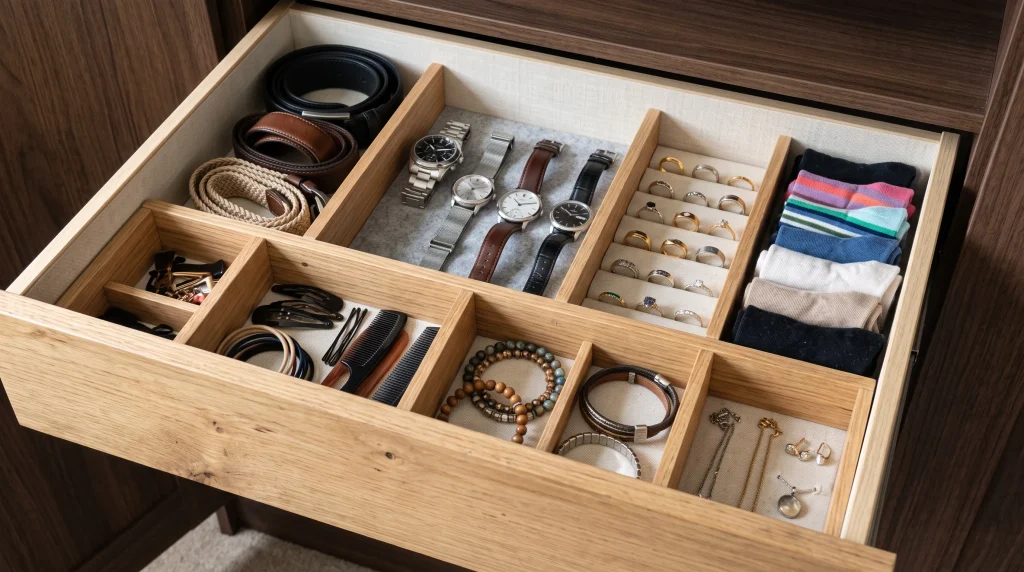
Wooden Drawer Dividers
Open a well-used accessory drawer without dividers and the contents will almost always be tangled, layered, and frustrating to sort through. A set of wooden drawer dividers changes this completely by giving every category of small item its own dedicated section. Belts, watches, rings, hair accessories, folded socks, and everyday jewelry each get a zone they return to automatically, which makes the drawer far faster to use and much easier to keep tidy.
Light oak or bamboo dividers look warm and natural against white, cream, or soft-gray cabinetry, giving the drawer an organized but not overly clinical appearance. Adjustable dividers offer flexibility when drawer dimensions are unusual; fixed wooden inserts give a more tailored, built-in finish. Leave a small amount of room around each category so items can be retrieved without everything shifting. Pair the dividers with a simple drawer liner to protect the bottom surface and add a refined finishing detail. This is a small upgrade that makes a disproportionately big difference to the morning routine.
Conclusion
A well-organized closet does not happen by accident — it comes from a series of small, intentional decisions that add up to something that genuinely works. These 30 closet organization ideas cover every part of the wardrobe, from the floor and door to the top shelves and back corners, so there is always somewhere practical to start. You do not need to tackle everything at once. Pick one idea that matches your biggest current frustration, make that change, and see how it feels before moving on to the next.
The closets that stay organized longest are the ones built around real daily habits rather than an idealized version of how life should look. A system that takes ten seconds to maintain will outlast one that requires effort every single day. Whether you are working with a tiny rented wardrobe or a spacious walk-in closet, these ideas are designed to help you create storage that is calmer, smarter, and more enjoyable to use. Save this post to your Pinterest home organization board and come back to it whenever a new closet organization project needs a fresh idea.