17 Living Room Decor Ideas for a Cozy, Modern Refresh (2026 Guide)
Your living room can feel completely different with just a few thoughtful changes. ✨
The right living room decor ideas can turn an ordinary space into a cozy, stylish, and functional retreat you actually love spending time in. Whether you’re working with a small living room, decorating on a budget, or simply want to catch up with modern living room decor trends for 2026, small updates can make a noticeable difference.
These ideas are designed around common real-home challenges — limited floor space, awkward layouts, weak lighting, and everyday storage needs — rather than staged showroom sets. The 17 ideas below cover warm neutral layers, natural wood accents, better lighting, smart living room furniture arrangement, greenery, and cozy textiles. Two extra sections follow: a budget-prioritization guide and an FAQ for quick answers. The most successful rooms are rarely the most expensive ones — they’re the ones where comfort, function, and personal style work together.
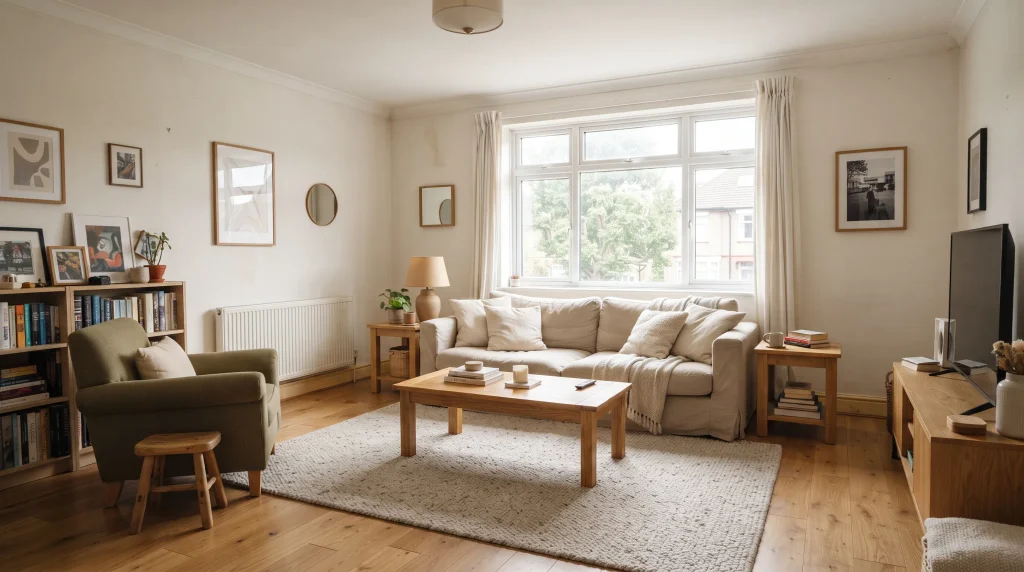
1. Warm Neutral Layers
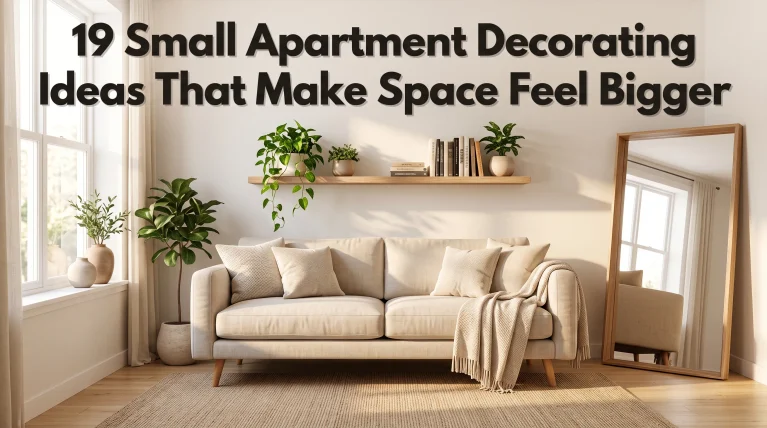
A light, layered palette makes a living room feel instantly larger and calmer. Start with warm white walls, a soft beige sofa, and natural wood accents, then add cream textiles and a few muted green details for gentle contrast. This works especially well in rooms with limited natural light, since pale surfaces bounce brightness around the space. Mixing several close neutral shades tends to look more polished than using one flat color everywhere — it’s a flexible backdrop that’s easy to update as your style evolves.
For a balanced layout, place the main sofa facing the room’s strongest focal point — a fireplace, media console, or large window. Add one compact coffee table, a textured rug, and two small side tables so the seating feels connected without blocking walking paths. Keep decorative pieces at different heights for visual rhythm while leaving open surface for everyday use. It’s a practical starting point for renters who want a noticeable refresh without structural changes.
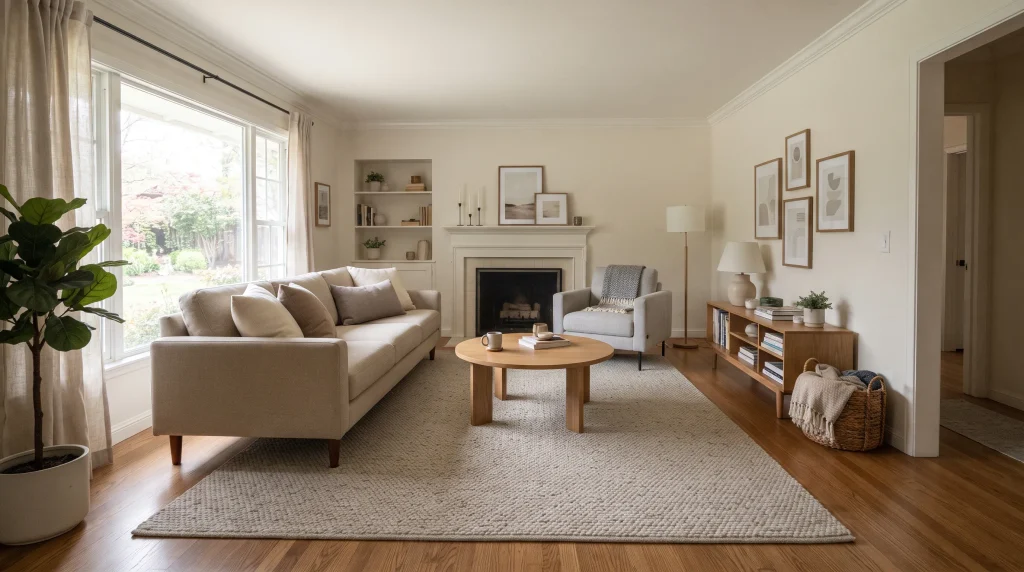
2. Textured Area Rug
The problem: furniture placed directly on bare flooring, with no rug at all, often looks scattered rather than arranged — even when the layout itself is fine.
The fix: a low-pile wool, cotton, or washable woven rug in oatmeal, taupe, or soft gray, sized so at least the front legs of the sofa and nearby chairs sit on it. This creates a visual “island” for the seating area instead of leaving pieces to float independently. If the room already has patterned curtains or cushions, a quieter rug keeps the overall design from competing with itself.
The result: the seating area reads as one connected grouping rather than separate pieces dropped into an empty room, and in smaller spaces, a correctly scaled rug can make the whole layout look larger.
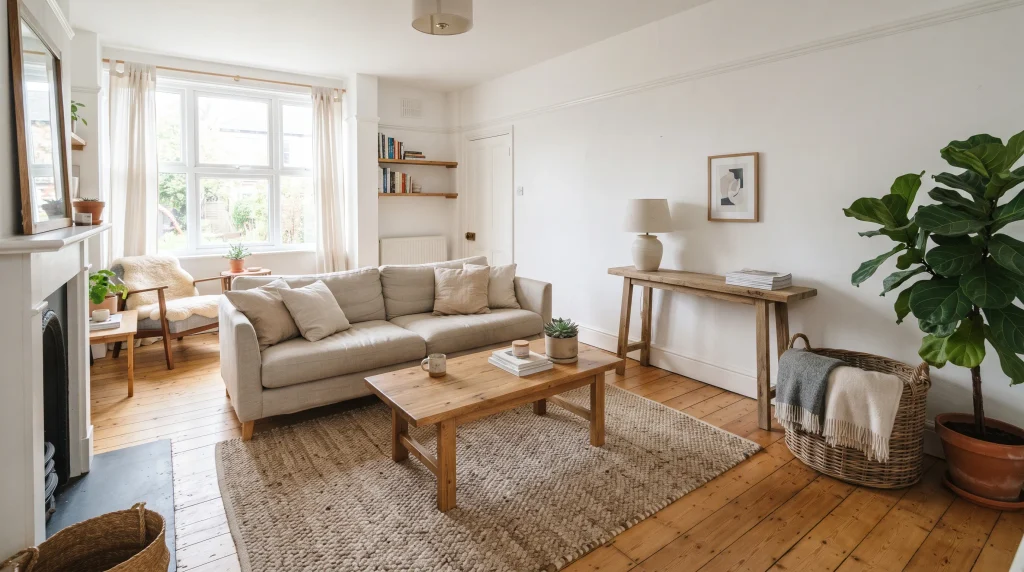
3. Natural Wood Accents
Natural wood brings warmth without making a room feel overly decorated. Pair a simple oak coffee table with a light sofa, woven basket, linen cushions, and a few leafy plants for an organic, relaxed look. Keep wood tones similar but not perfectly matched — slight variation makes the room feel collected rather than showroom-like. Even one substantial wood element can soften cooler finishes like white walls, black metal, or polished stone.
Build the look with a few functional pieces rather than filling every surface with accessories: a wooden console to anchor an empty wall, a woven basket for throws, a small plant near a window. Fabrics with visible texture — linen, cotton, boucle, jute — reinforce the natural theme without relying on many colors.
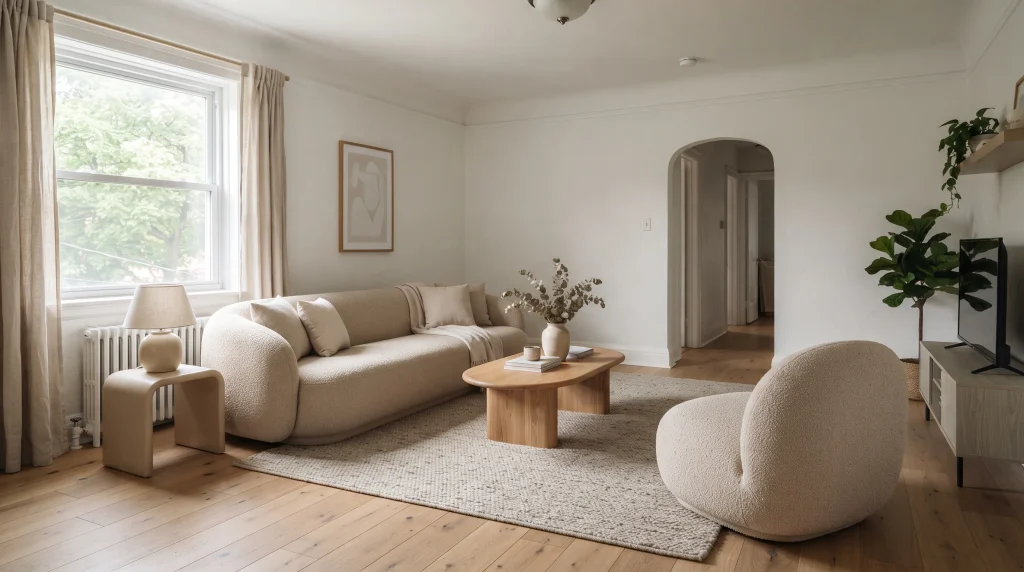
4. Curved Furniture
Curved furniture softens a room filled with straight walls, rectangular tables, and sharp architectural lines. A rounded sofa, boucle chair, or oval coffee table introduces gentle movement while staying practical. This works particularly well in contemporary spaces where you want warmth without adding lots of decorative accessories. Choose one main curved piece and keep the rest simple so the shape becomes the natural focal point.
Leave breathing room around curved pieces so their silhouette stays visible — an oval coffee table centered between a sofa and chairs, or a rounded accent chair in an unused corner near a window or floor lamp. A slightly floating arrangement, rather than furniture pushed tight against every wall, often creates better conversation flow.
5. Layered Wall Art
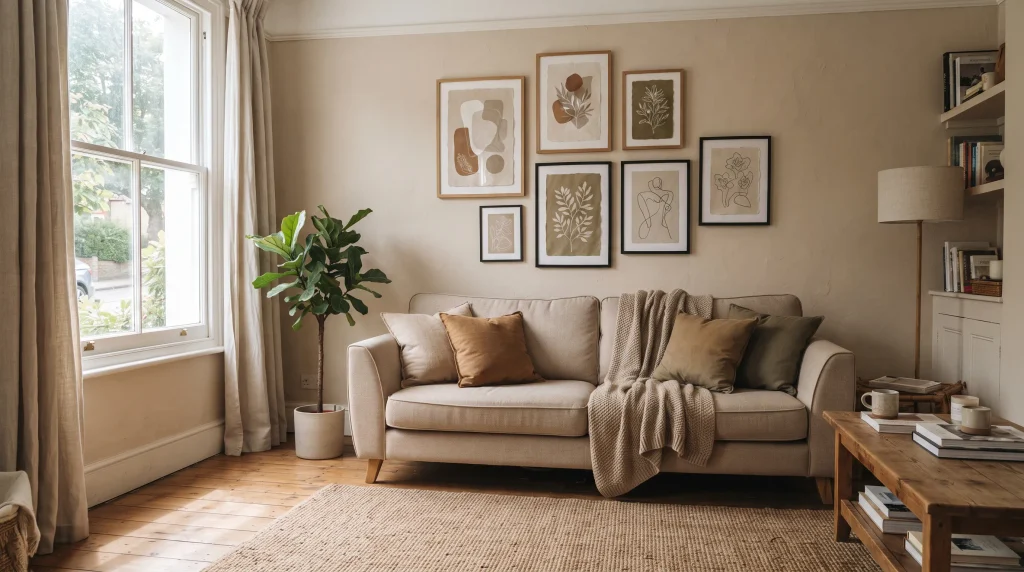
A blank wall can make an otherwise finished living room feel incomplete. Layered artwork is an easy fix: combine two or three frame sizes with abstract prints, botanical illustrations, photography, or line drawings that share similar colors. Mix light wood, black, or neutral frame finishes for a collected look rather than a matched set — the key is keeping some visual connection between pieces.
Before hanging anything, lay the artwork on the floor and photograph the grouping from a distance to check spacing and balance. Keep the center of the arrangement roughly at eye level, then build outward with smaller pieces. Repeating one color from the room across several prints is a simple trick that makes even a mixed gallery wall look intentional.
6. Soft Ambient Lighting
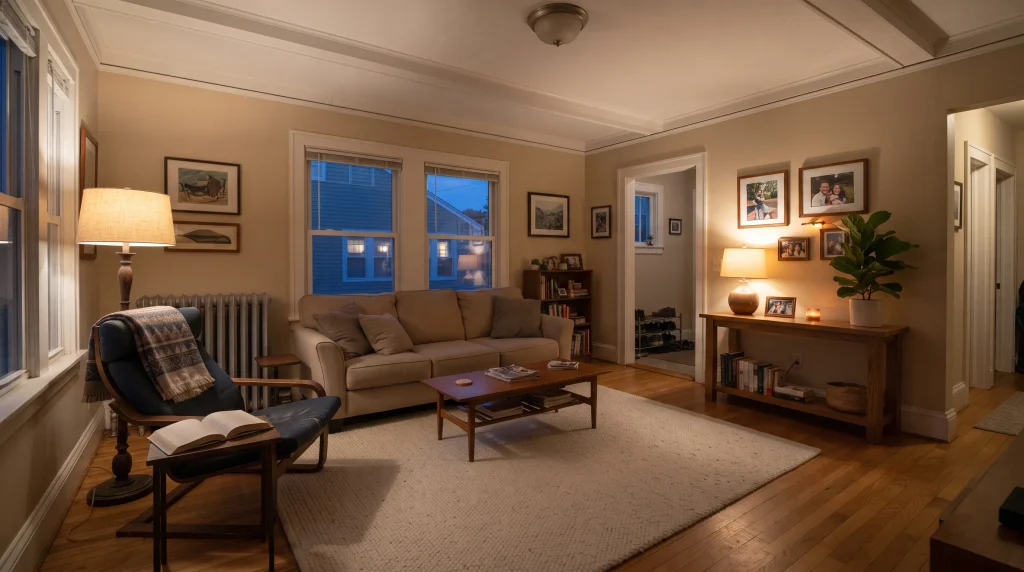
The problem: a single overhead fixture flattens a room after dark, washing out the warmth that neutral colors and wood tones create during the day.
The fix: combine a floor lamp, table lamp, wall light, or small accent light to create several gentle pools of light instead of one harsh source, using warm white bulbs so beige, cream, wood, and earthy colors keep their depth. Think in zones rather than fixture count — a floor lamp for a reading corner, a table lamp on a console, a small accent light on artwork or plants — and choose shades that soften the light rather than exposing bulbs directly.
The result: a room with dimension and shadow instead of flat, uniform brightness, and — if the space serves multiple purposes — dimmable bulbs let you shift between task lighting and a softer evening mood without buying separate fixtures. This kind of lighting-led living room furniture arrangement planning is often overlooked but changes the room more than any single piece of furniture.
7. Compact Sofa Layout (Small Living Room Decor)
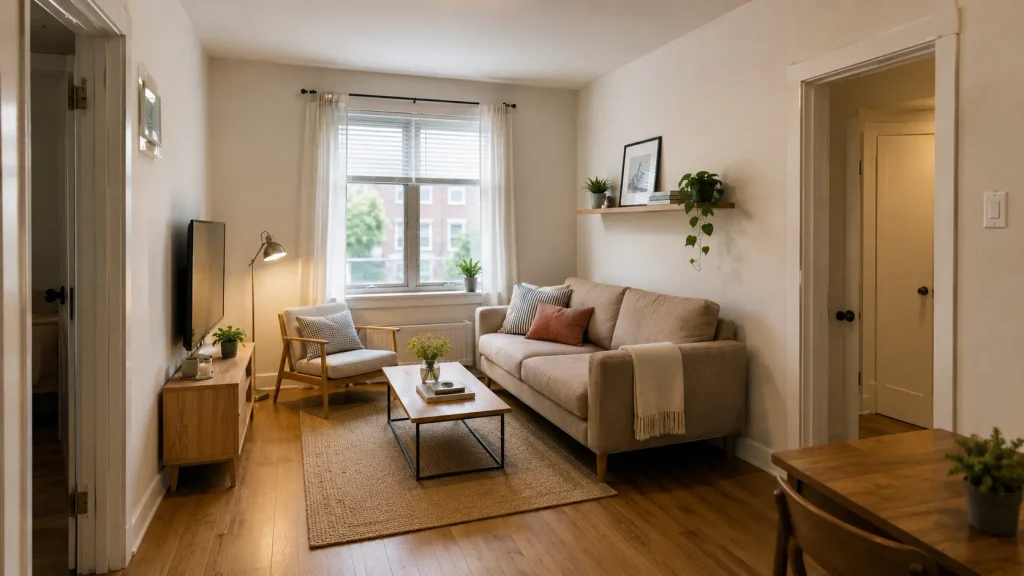
The problem: an oversized sofa in a small living room eats the walking path and makes the whole room feel cramped, even if the sofa itself is comfortable.
The fix: swap it for a streamlined frame with narrow arms and raised legs, so more flooring stays visible underneath, and pair it with a slim coffee table and one lightweight chair instead of several bulky pieces. Before buying anything, mark the sofa, table, and doorway dimensions on the floor with painter’s tape — it takes five minutes and shows exactly how much clearance you’ll actually have.
The result: a clearer walking path, more visible floor, and a seating area that still feels comfortable rather than squeezed in. Fewer, appropriately scaled pieces consistently beat cramming full-size furniture into a limited footprint.
8. Open Concept Seating
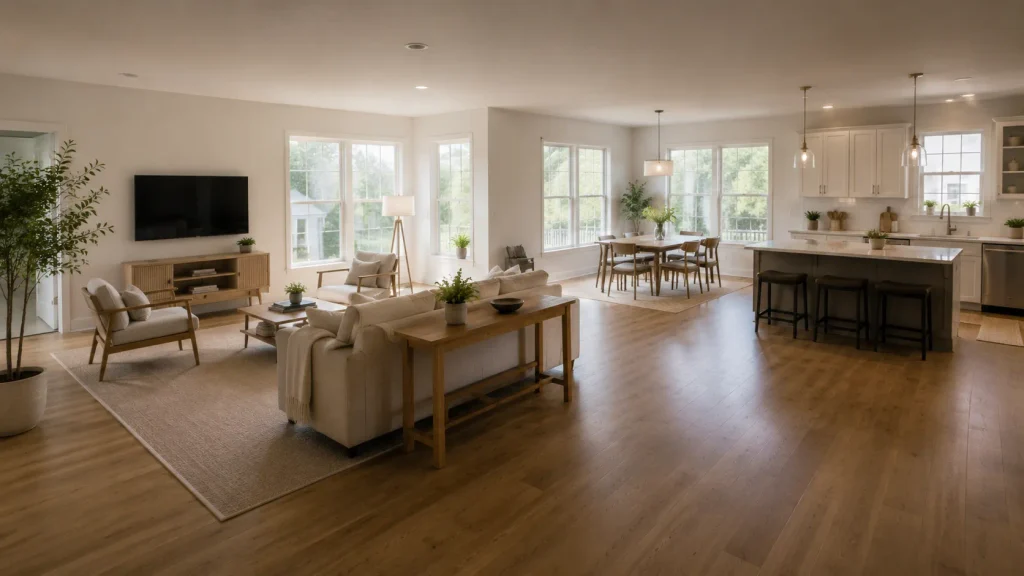
An open-concept living room needs definition without losing its sense of spaciousness. A large neutral rug can establish the seating zone, while a sofa positioned slightly away from the wall creates a natural boundary between the living area and nearby dining or kitchen space. A slim console behind the sofa adds subtle separation and storage. Keep colors and materials consistent across adjoining zones so the space feels connected rather than segmented.
Keep the main seating pieces facing inward so conversation feels natural, and leave clear pathways between the living area, kitchen, and dining space. Avoid placing tall furniture where it blocks sightlines, especially near large windows. Many designers recommend defining zones through furniture and lighting rather than adding unnecessary partitions.
9. Statement Coffee Table
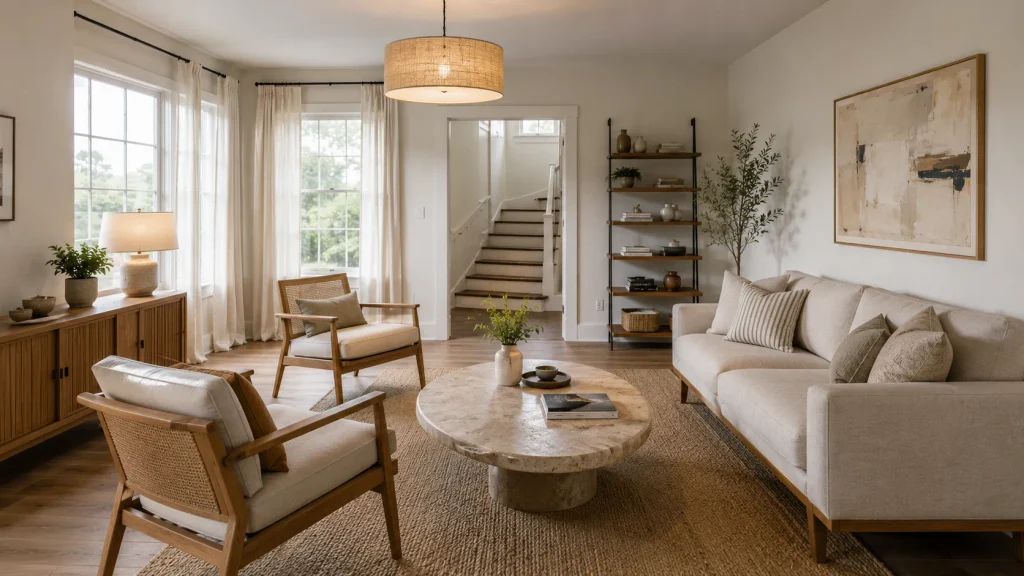
A statement coffee table gives a simple seating arrangement a strong focal point without much extra decoration. Choose a sculptural silhouette, rounded shape, natural stone surface, or a beautifully grained wood finish that complements the existing furniture, and keep surrounding pieces understated so the table can stand out. Repeating one of the table’s materials elsewhere — an oak frame, a stone accessory, a woven basket — pulls the room together.
Scale matters most: the table should be large enough to serve the seating area but leave room to walk around it. Rounded or oval shapes work well where circulation is tight, since they eliminate sharp corners. Keep tabletop styling simple — a small tray, a ceramic vase, a few books — rather than covering the entire surface.
10. Built-In Storage
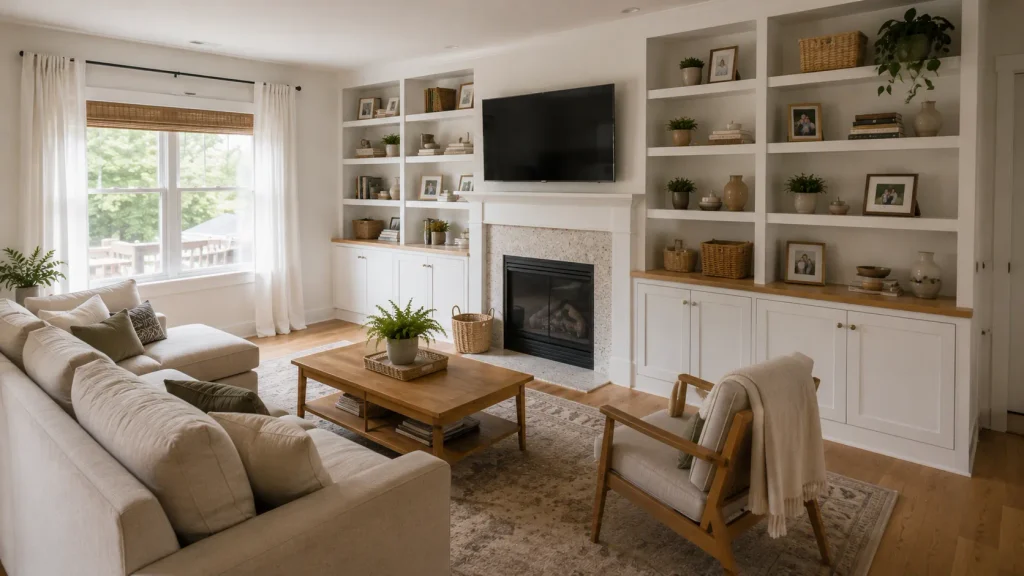
Built-in storage keeps a living room organized while giving a wall a finished, architectural look. Floor-to-ceiling shelves around a fireplace or media area hold books, baskets, ceramics, framed art, and everyday essentials. A mix of open shelving and closed cabinets lets practical items stay hidden while decorative pieces remain visible. This is especially valuable in smaller homes, since it uses vertical space instead of adding freestanding cabinets.
Place larger objects first, then add smaller accessories around them, leaving intentional empty spaces between groups. Store cables, games, and remotes behind doors or inside matching baskets. If permanent cabinetry isn’t an option, modular shelving creates a similar effect with less commitment.
11. Indoor Greenery
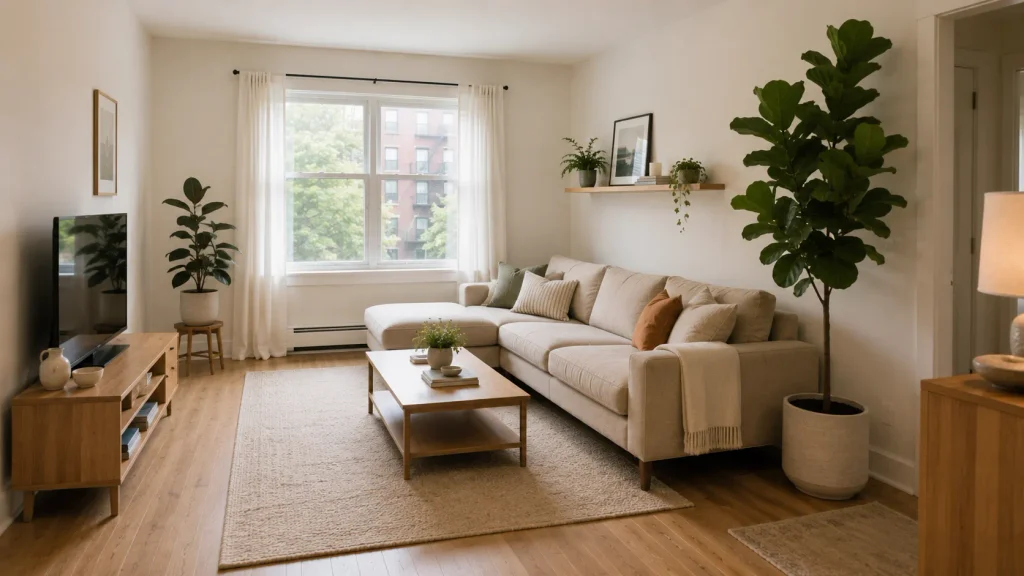
Indoor plants make a living room feel fresher and more connected to nature. A tall fiddle-leaf fig, olive tree, or rubber plant fills an empty corner and adds vertical interest beside a sofa or console, while smaller plants on shelves or side tables create layers at different heights. Simple terracotta, ceramic, or woven planters keep the greenery as the main feature rather than competing with it.
Choose plants based on the light your room actually gets, not just their looks — brighter varieties near windows, tolerant options for darker corners. Elevate smaller plants on stools or plant stands rather than buying tall furniture just for height. Three well-placed plants often create more impact than filling every surface.
12. Cozy Reading Corner
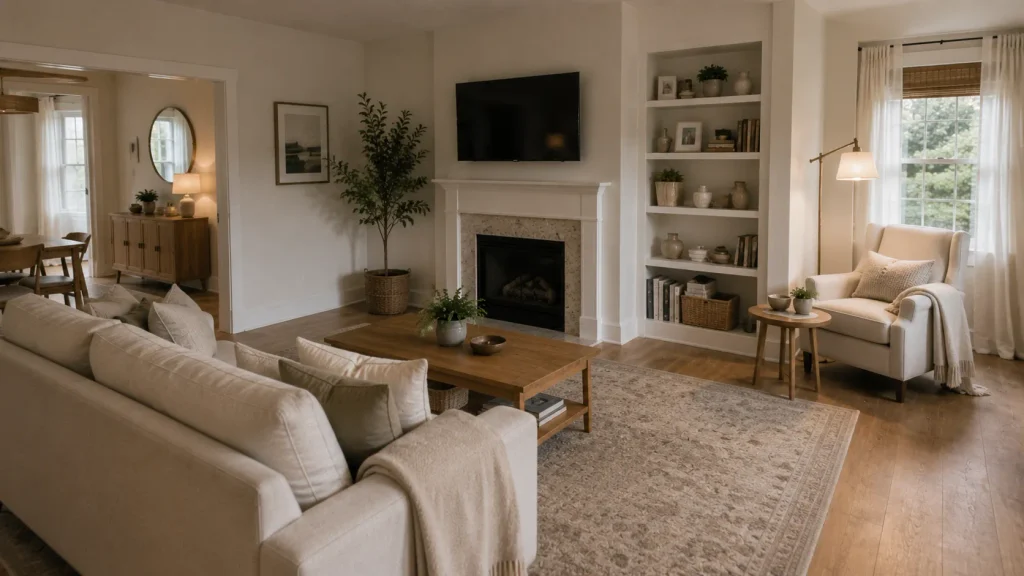
A quiet reading corner turns an overlooked part of the living room into one of its most-used spaces. Start with a comfortable armchair near a window, add a compact side table and a floor lamp for evening reading, and finish with a soft throw and a textured cushion. This works particularly well beside a bookshelf, fireplace, or an unused corner.
Keep the corner visually connected to the main seating area by repeating a color or material — a light oak table echoing the coffee table, a cream chair complementing the sofa. Make sure the lamp gives focused light without glare, and leave enough clearance around the chair for easy movement.
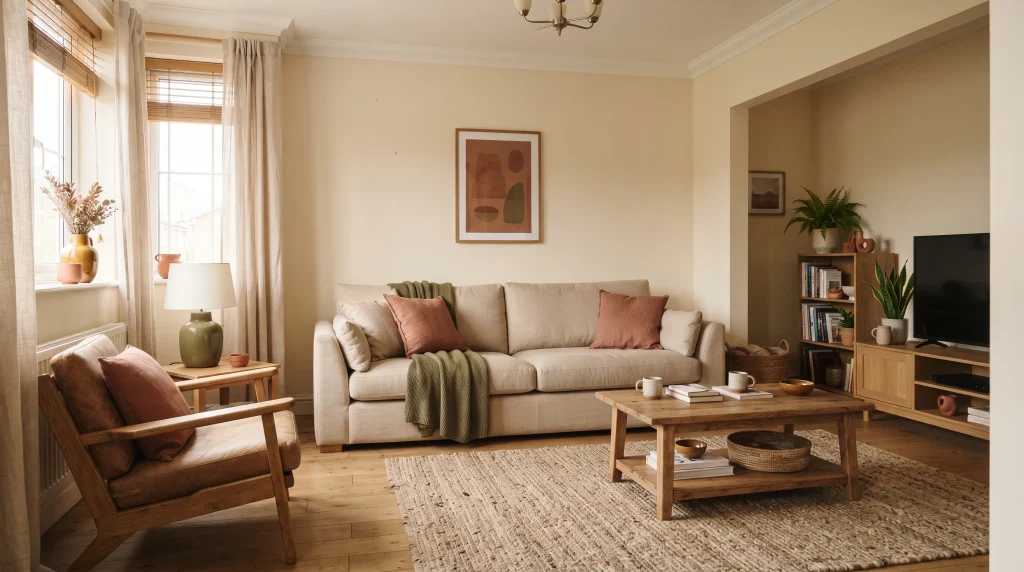
13. Earthy Accent Colors
Earthy accent colors bring warmth to a neutral living room without a full redesign. Start with a calm base of cream, beige, or warm white, then introduce terracotta, muted olive, clay, rust, or soft caramel through cushions, throws, artwork, and ceramics. Keeping larger furniture neutral and using smaller accessories for color lets the palette evolve without replacing expensive pieces.
Repeat each accent color at least twice in different areas — an olive cushion paired with a leafy plant, terracotta echoed through a vase or artwork. Muted versions of earthy shades are generally easier to live with long-term than highly saturated tones, since they blend naturally with wood, linen, stone, and woven materials.
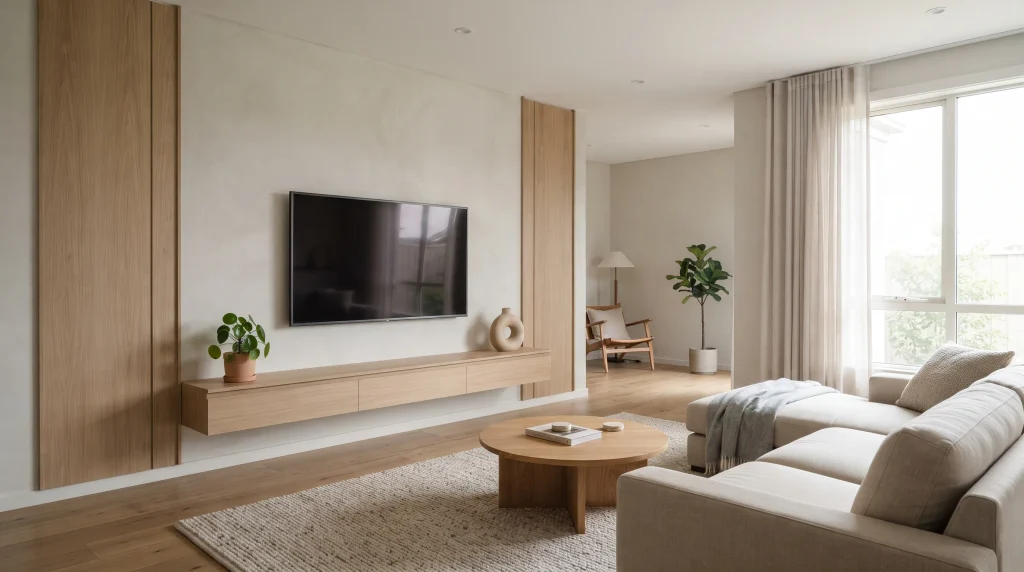
14. Minimalist Media Wall
A minimalist media wall keeps a living room feeling clean without letting the television dominate. Mount the screen at a comfortable viewing height and pair it with a slim console in a finish already used elsewhere in the room. Closed storage for cables, remotes, and electronics keeps the area visually calm, while a single piece of artwork or a plant softens the technology.
Check proportions before installing anything permanently — the console should relate to the width of the TV, and the sofa should sit at a practical viewing distance. Hide visible cables where possible. If the wall feels too plain, add texture through wood panels, limewashed paint, or one large neutral artwork rather than several small pieces.
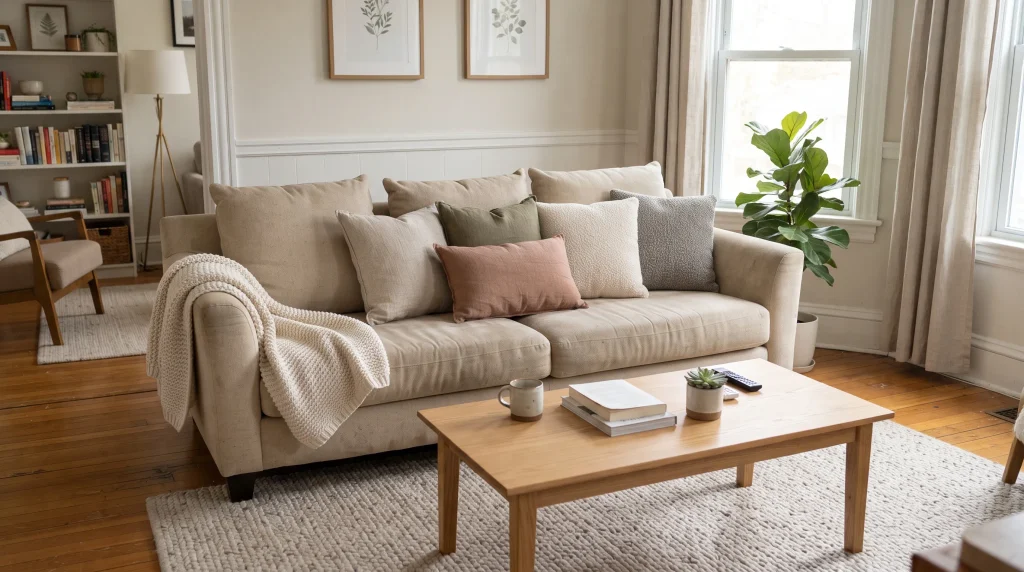
15. Layered Throw Pillows
Layered throw pillows are one of the easiest, most budget-friendly ways to refresh a living room. Start with larger square cushions at the back, add medium textured pillows in front, and finish with one smaller accent shape for contrast. Mixing linen, boucle, cotton, and knitted textures creates depth even when colors stay similar.
Avoid making every cushion identical — a little variation looks more natural. Use different sizes and textures while repeating one or two colors to keep things cohesive, and leave enough room to actually sit without shifting a pile of pillows. Rotating seasonal covers is an affordable way to introduce personality, especially useful in rental homes where larger furniture can’t be changed.
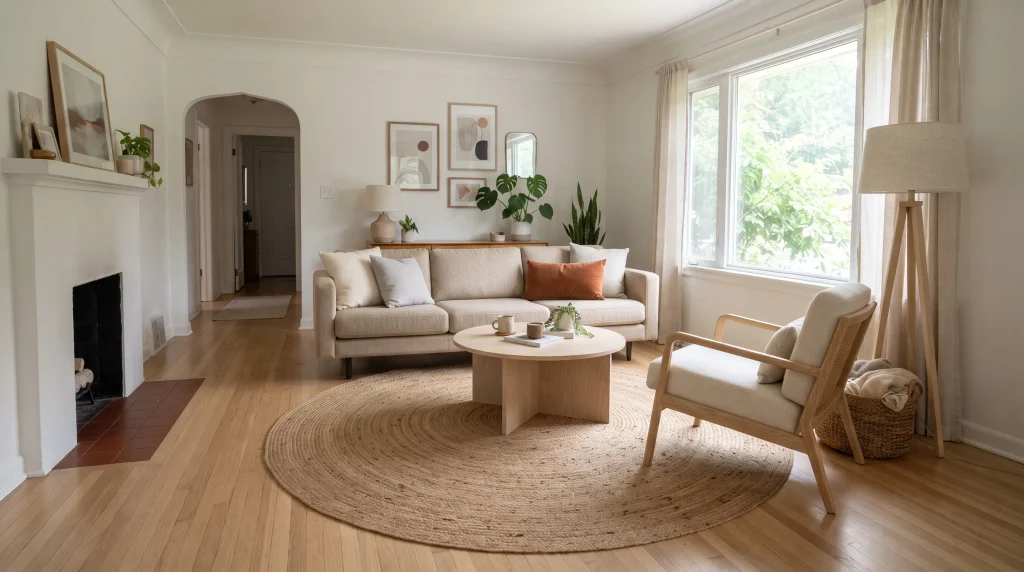
16. Accent Chair Pairing (Scandinavian & Boho Touches)
A well-placed accent chair adds seating without making the room feel heavy. A chair with a slim frame, open legs, or rounded silhouette adds function while preserving visual space. Position it opposite the sofa or at a slight angle for a natural conversation area. For a Scandinavian living room design, stick to pale wood legs and a single neutral upholstery tone; for a boho living room feel, look for rattan frames, woven textures, or a jewel-toned cushion layered on top.
Placement matters more than size — keep the chair close enough to the coffee table and sofa for easy interaction, with a clear path behind or beside it. If there’s a window nearby, the chair can double as a reading spot. Lightweight chairs are easier to reposition when the room needs to change for guests or seasonal decorating.
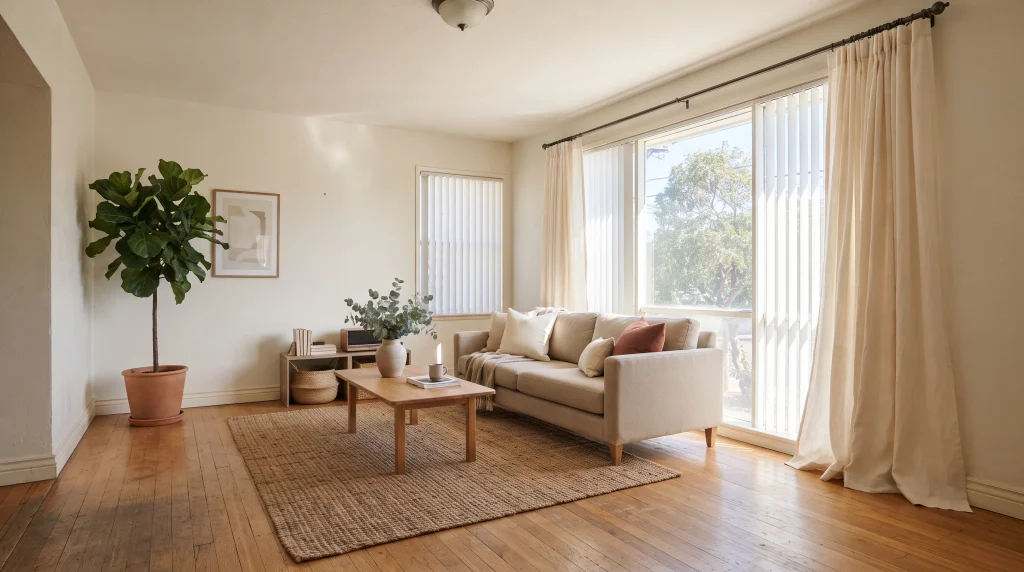
17. Floor-Length Curtains
A soft, layered window treatment makes a living room feel taller and more finished. Hang curtains slightly above the window frame and let them extend close to the floor for a longer visual line. Linen or cotton panels in cream, oatmeal, or soft beige give a relaxed look, paired with simple blinds when privacy or light control matters.
Panels should look full enough to create gentle folds when closed rather than appearing stretched. Extending the rod beyond the window edges lets open curtains reveal more glass and daylight. Improving window treatments is a surprisingly high-impact way to refresh an older living room, since it affects height, light, and texture without replacing the main furniture.
Budget-Friendly Living Room Decor Tips
Not every refresh needs new furniture. If you’re decorating on a tight budget, prioritize in this order:
- Textiles first — throw pillows, a rug, and curtains change the feel of a room faster than anything else and are the easiest to swap out later.
- Rearrange before you buy — pulling the sofa away from the wall or angling a chair can fix a flat layout for free.
- One statement piece over many small ones — a single well-chosen coffee table or art print reads as more intentional than a dozen small accessories.
- Secondhand and vintage finds — wood furniture especially takes well to mismatched, slightly worn pieces, which fits the natural-materials look in this guide.
- Lighting over paint — a $30 lamp often changes the mood of a room more noticeably than a new wall color, and it’s fully reversible if you rent.
FAQ
A few quick answers for common questions readers ask about this topic:
How can I make a small living room feel bigger?
Use a compact, raised-leg sofa, keep the color palette light and consistent, and choose one appropriately scaled rug rather than several small ones. Mirrors and vertical storage also help draw the eye up and out.
What are the best budget-friendly living room decor ideas?
Layered throw pillows, a new rug, and improved lighting give the most visible change for the lowest cost. Rearranging existing furniture before buying anything new is free and often solves layout problems on its own.
What colors work well in living room decor right now?
Warm neutrals such as cream, warm white, and taupe are a versatile, long-lasting choice, and they pair well with earthy accents like terracotta, olive, and rust layered over natural wood and woven textures — an easier palette to live with than bold, single-color schemes.
How do I style a living room in Scandinavian or boho style without a full redo?
For Scandinavian, lean into pale wood, plain textiles, and a limited neutral palette. For boho, layer in rattan, woven baskets, and one or two richer accent colors on top of a similar neutral base — both styles work with the same underlying furniture layout.
How much does a living room decor refresh typically cost?
It depends heavily on scope, but textiles, lighting, and rearranging furniture can meaningfully refresh a room for a modest budget, while new upholstered furniture or built-in storage sit at the higher end.
Conclusion
A beautiful living room doesn’t require a full renovation or an unlimited budget. The right combination of color, texture, lighting, furniture placement, and personal details creates a space that feels warmer and more useful every day. These living room decor ideas give you practical starting points, whether you’re refreshing a small apartment or updating a larger open-plan home. Start with one change that fits your space and budget, and build from there.
Save this post on Pinterest, try your favorite ideas, and share it with someone who needs fresh decorating inspiration.