
18 Cozy Bedroom Ideas for a Warm, Restful Retreat
Cozy is easy to say and surprisingly easy to get wrong. Pile on too many pillows, too many blankets, too many warm-toned accessories, and a bedroom stops feeling restful and starts feeling cluttered — the opposite of what cozy is supposed to do. The bedrooms that actually feel cozy usually have fewer things in them than people expect, chosen for how they feel to touch and how the light lands on them at night.
Design research on restful interiors consistently points to the same few levers: warm color temperature, layered natural textures, soft ambient lighting, and enough negative space for the eye to rest. A hygge-inspired bedroom or a snug reading corner doesn’t come from more objects — it comes from a small set of well-chosen elements working together, which is what separates a genuinely comforting sleep sanctuary from a room that simply looks styled in photos.
The 18 ideas below work the same way: most are small, and a few are bigger. Pick the ones that solve what’s actually missing from your room right now, whether that’s warmth, softness, better lighting, or simply less visual noise.
What Keeps Cozy From Turning Into Clutter
Every idea below works best in moderation, and that’s worth saying up front. Cozy done well is about a few carefully chosen soft, warm elements — not maximum blankets and pillows on every surface. A bed with twelve cushions and three throws isn’t cozier than one with four cushions and one throw; it’s just more to put back every morning, and visually it starts to feel busy rather than restful.
The pattern to aim for is the same one that runs through every section here: pick two or three textures, keep the color palette narrow and warm, and let empty space do some of the work. A cozy bedroom should feel like it invites you to sit down, not like it’s already full.
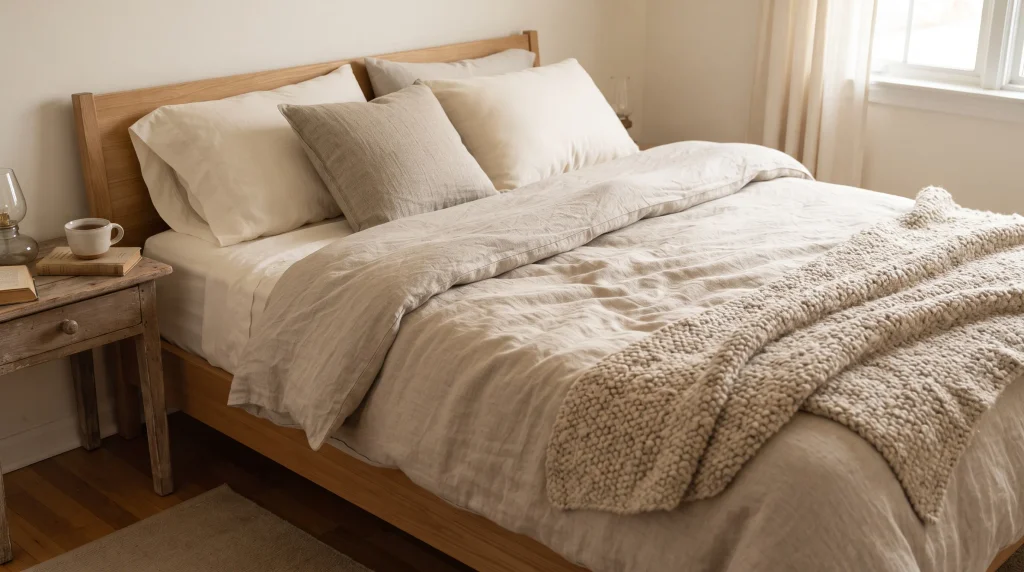
1. Layered Bedding
Bedding is the single fastest way to change how a bedroom feels, because it’s the surface you actually touch every night. Start with a breathable base sheet, add a duvet with real weight to it, then fold one textured throw at the foot of the bed. The goal is a bed that looks like it would be genuinely warm to get into, not just styled to look that way.
Mixing textures matters more than matching colors exactly. A smooth cotton sheet under a slightly nubby knit throw, with one linen-covered pillow among smoother ones, gives the bed depth that an all-matching set doesn’t. Stick to two or three closely related tones — cream, oatmeal, warm gray — so the layering reads as intentional rather than mismatched.
Best for: any bedroom, any budget. Avoid: stacking more than four or five pillows total — past that point it usually adds laundry, not comfort.
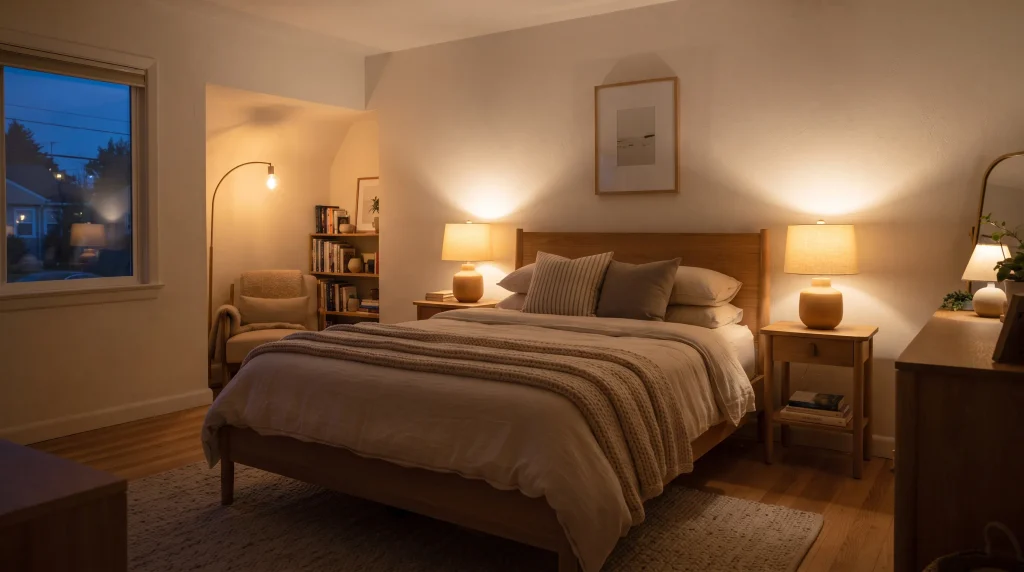
2. Warm Ambient Lighting
Lighting temperature changes how cozy a room feels more than almost any other single factor. A bulb above 3000K reads as bright and slightly clinical; a bulb around 2700K or lower gives off the warm, golden glow that makes a room feel like evening even during the day. This is worth checking even in a bedroom that already has “warm” decor — the wrong bulb temperature can undercut everything else in the room.
Use at least two light sources rather than one central overhead fixture, which tends to flatten a room and leave the corners in harsh shadow by comparison. A lamp on each side of the bed, plus one additional source — a floor lamp or a plug-in sconce — creates the layered, uneven light that actually feels cozy, as opposed to one bright, evenly lit box.
A dimmer switch or a dimmable smart bulb is worth the small cost if your fixtures don’t already have one; bedrooms need different brightness levels for getting dressed versus winding down, and a single fixed setting rarely serves both well.
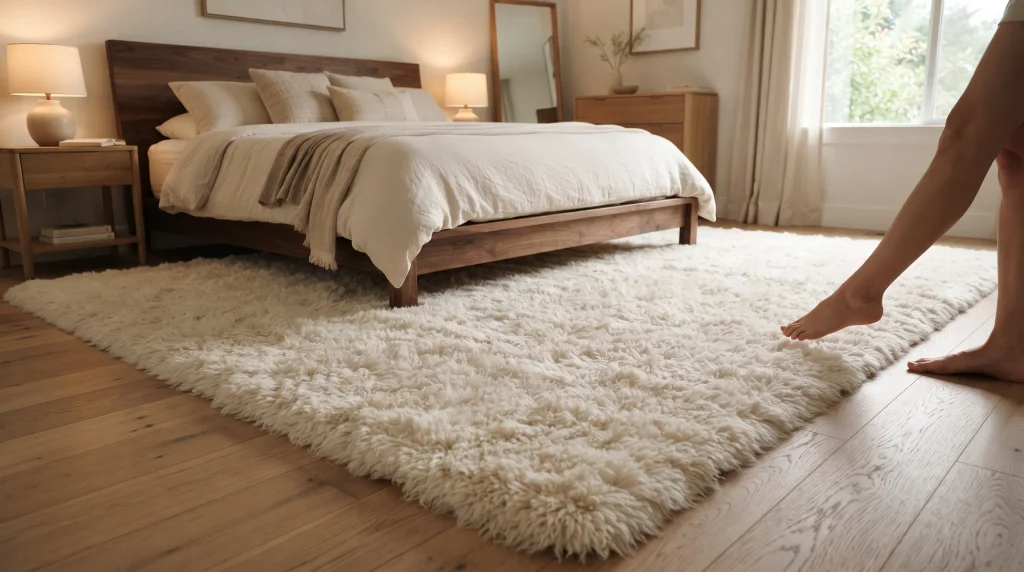
3. A Plush Area Rug
Few small changes make a bedroom feel warmer, literally, than a genuinely soft rug underfoot. A low-pile rug looks fine but doesn’t do much for comfort; something with real plush depth — a shag, a thick wool, or a high-quality faux-fur blend — changes the first few seconds of every morning, which is a small thing that adds up.
Size the rug generously enough to extend well beyond both sides of the bed and toward the foot, rather than a small mat that only the center of the bed touches. A too-small rug is one of the more common styling mistakes in bedrooms generally, and it undercuts the cozy effect specifically, since half the floor around the bed stays bare and cold underfoot.
Best for: bedrooms with hard flooring (wood, tile, laminate). Avoid: choosing color over texture — a plain, soft rug does more for coziness than a patterned, thinner one.
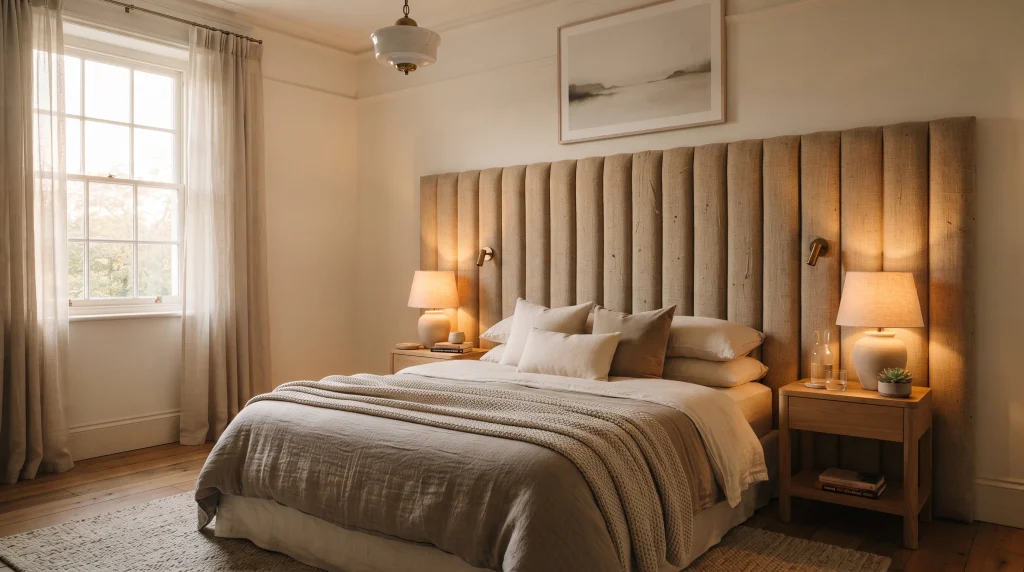
4. An Upholstered Headboard
A soft, upholstered headboard changes the whole feel of the bed wall, both visually and physically — it’s genuinely more comfortable to lean against while reading or scrolling on your phone than a hard wood or metal frame. Boucle, velvet, and linen are the most common cozy-leaning fabrics, each with a slightly different feel: boucle reads texturally rich, velvet reads more formal and warm, linen stays the most casual and relaxed of the three.
Consider the headboard height relative to your ceiling and bed size — a tall, channel-tufted headboard makes a strong style statement in a room with generous ceiling height, while a lower, simpler upholstered panel suits a smaller or lower-ceilinged bedroom better without overwhelming it.
Fabric choice matters for upkeep as much as looks. Velvet shows watermarks and can be harder to spot-clean than a tightly woven linen blend, which is worth factoring in if pets or kids regularly climb onto the bed.
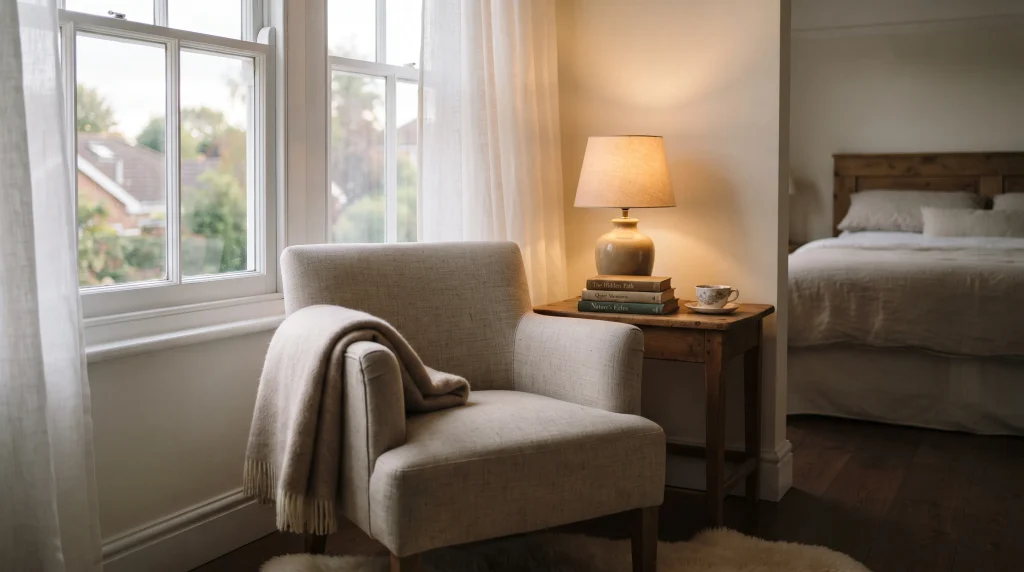
5. A Reading Nook
A dedicated reading spot gives a bedroom a second, smaller zone that feels intimate rather than just an extension of the bed. A compact armchair or a cushioned window seat, positioned near natural light during the day and a warm lamp at night, turns an unused corner into one of the coziest spots in the room.
Keep the footprint small and simple: one chair, one side table, one lamp, and a folded throw within reach. This isn’t meant to be a second living room inside the bedroom — the goal is a single comfortable spot, not a full furniture arrangement competing with the bed for attention.
Best for: bedrooms with an underused corner or window nook. Avoid: placing it directly in a walking path — a chair you have to step around stops feeling relaxing fast.
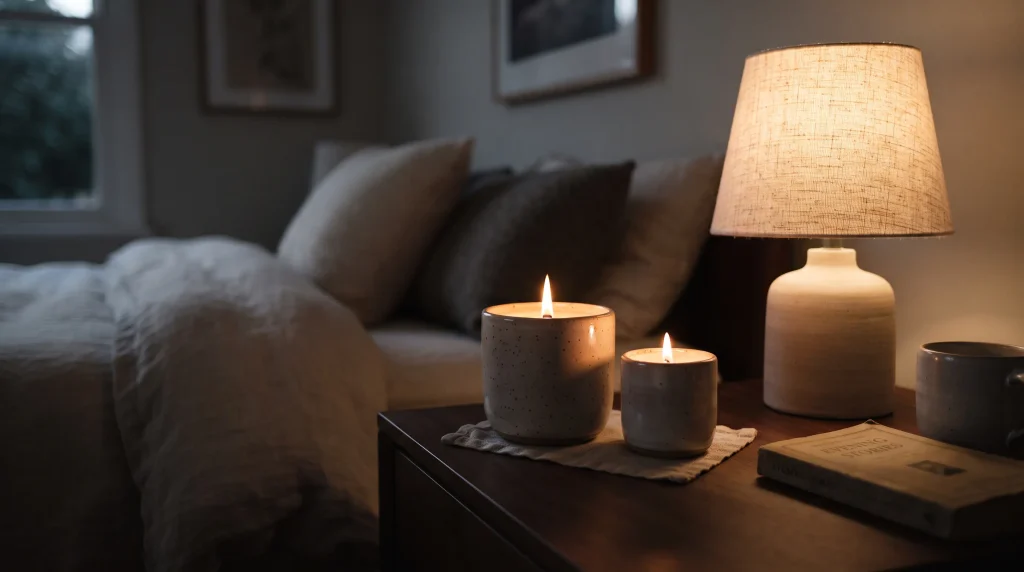
6. Candles and Layered Scent
Scent is an easy element to overlook in visual decorating advice, but it does real work in how “cozy” a room feels the moment you walk in. A warm-scented candle — vanilla, sandalwood, cedar, or a soft amber — burned in the evening builds an association between the room and relaxation over time, in a way that purely visual choices can’t replicate on their own.
If an open flame isn’t practical, a diffuser or a flameless candle with a similar scent gets most of the same effect without the fire-safety consideration, which matters more in a bedroom than almost any other room in the house, given how often people fall asleep with something lit nearby.
Stick to one or two scents in the bedroom specifically, rather than layering several different candles at once — competing fragrances tend to read as chaotic rather than cozy, undoing some of the calming effect you’re going for.
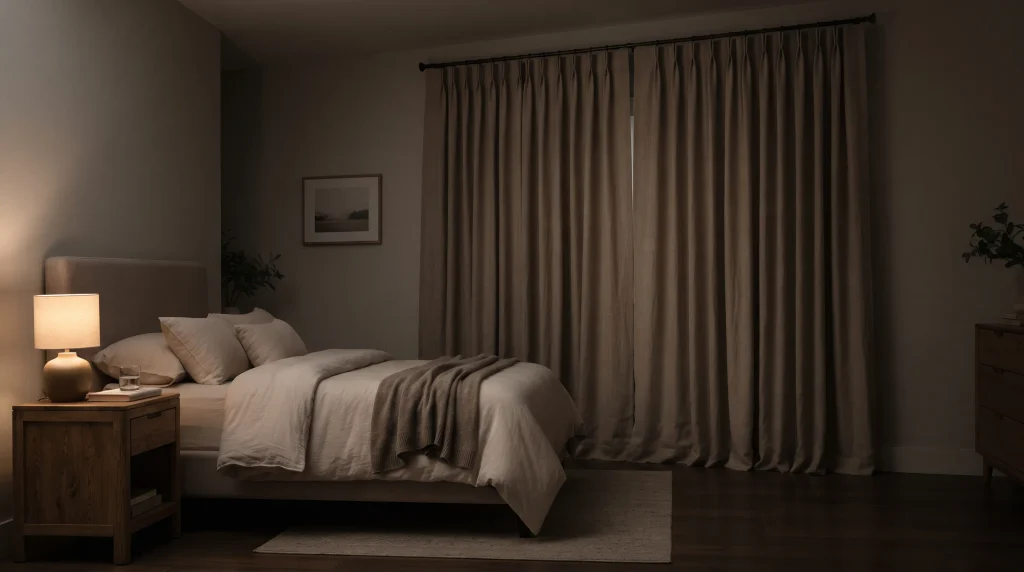
7. Blackout Curtains
Blackout curtains solve a real function — actual darkness for better sleep — while also adding the same visual softness that any full-length curtain provides. A heavier fabric in a warm neutral (taupe, terracotta, deep oatmeal) reads as more substantial and cozy than a thin, lightweight panel, even before you factor in the light-blocking benefit.
Mount the rod close to the ceiling and choose panels wide and long enough to fully cover the window when closed, with a few extra inches on each side so light doesn’t leak in around the edges — a common issue with curtains sized to match the window exactly rather than sized generously to overlap it.
This is a genuinely useful upgrade for anyone whose bedroom faces early morning light or a streetlight at night, where the sleep benefit matters as much as, or more than, the visual softness the fabric adds to the room.
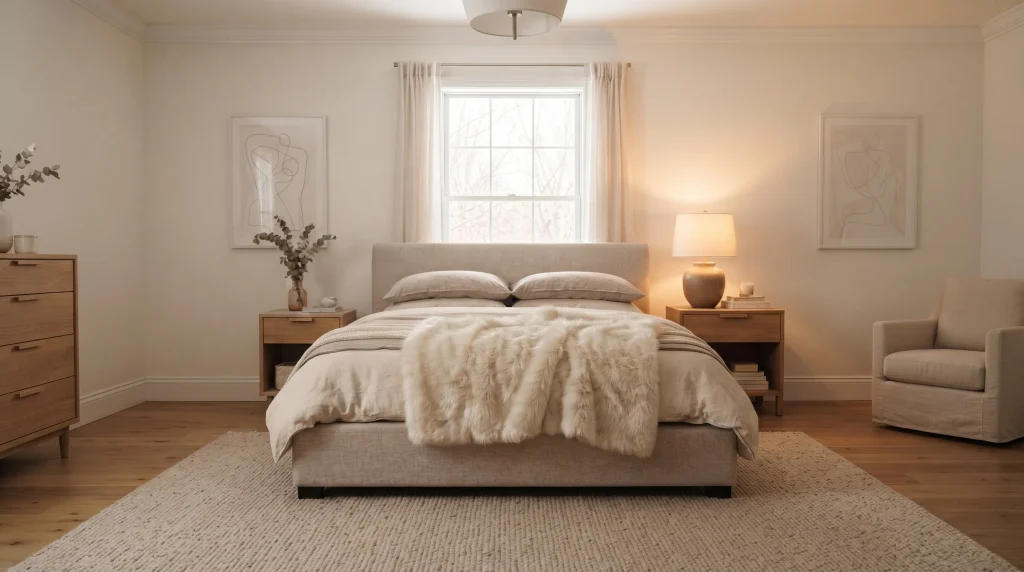
8. A Faux Fur Throw
A faux fur throw adds an immediately tactile layer that’s hard to replicate with any other single textile — it’s one of the few materials that people reach out and touch almost on instinct when they walk past it. Draped over the foot of the bed or across an armchair, it introduces texture without needing a bold color or pattern to make its point.
Keep it to one piece rather than scattering faux fur across multiple items in the same room; used sparingly, it reads as a considered accent, while multiple fur pieces together can start to feel more like a theme than a texture choice.
Quality varies significantly in this category — a cheap, thin faux fur tends to shed and flatten within a season, while a denser, higher-pile version holds its shape and softness considerably longer, which is usually worth the higher price if you plan to keep it for more than one winter.
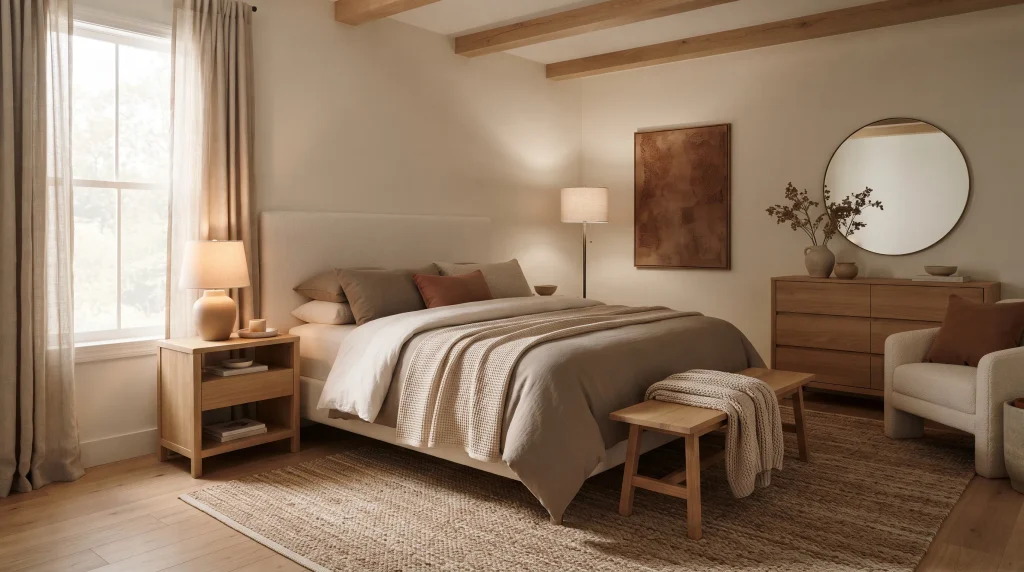
9. A Warm Neutral Palette
A tightly edited warm palette does more for a cozy bedroom aesthetic than any single object can, because it’s the backdrop everything else sits against. Build the room around ivory, beige, warm taupe, and terracotta rather than cooler grays or stark white, which tend to read as clean and modern but not especially warm on their own. This kind of warm neutral palette is the foundation most hygge-style and cozy minimalist bedrooms share, regardless of the specific furniture or accessories layered on top.
This doesn’t mean avoiding contrast entirely — a small amount of deeper brown, rust, or charcoal keeps the room from feeling flat. The key is keeping those darker accents limited to a couple of spots (a lamp base, a picture frame) rather than spreading them evenly, which would shift the room’s overall temperature rather than just adding definition.
Best for: a foundational choice made early, since it’s harder and more expensive to change walls and large furniture than smaller accents later.
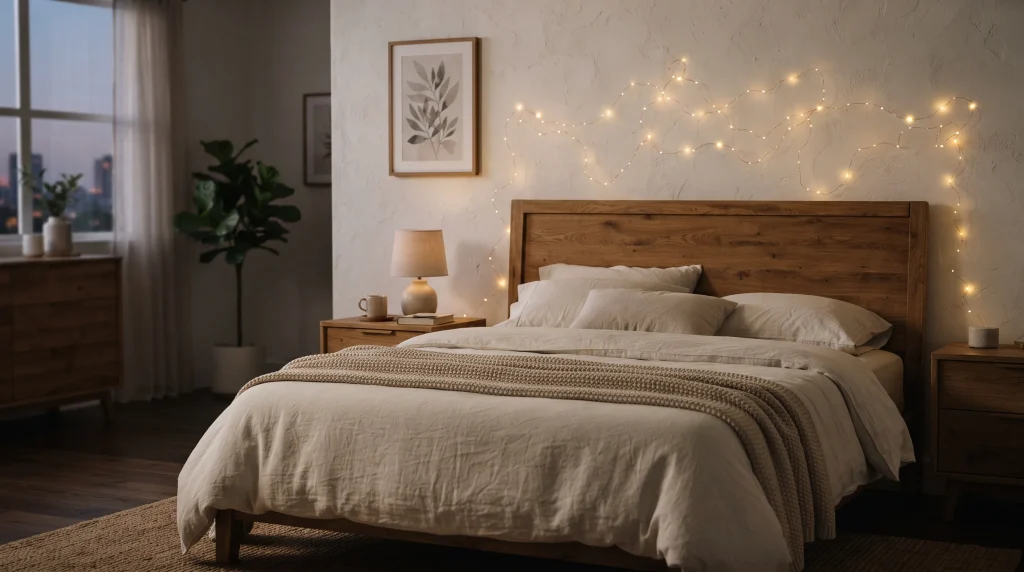
10. String Lights
String lights add a soft, low-level glow that’s genuinely different from a lamp — the multiple small points of light create a scattered, twinkling effect that reads as relaxed rather than functional. Drape them along a headboard wall, around a window frame, or loosely across a canopy frame if you have one, rather than in a tight, uniform line, which can look more like holiday decor than a permanent lighting layer.
Choose warm white bulbs specifically — cool white or multicolor string lights shift the effect toward festive rather than cozy, which isn’t the tone most bedrooms are going for outside of a specific holiday season.
Battery-powered or USB-powered strings with a built-in timer are worth the slightly higher cost over plug-in-only versions, since they’re easier to position anywhere in the room without worrying about outlet placement or visible cords running across the wall.
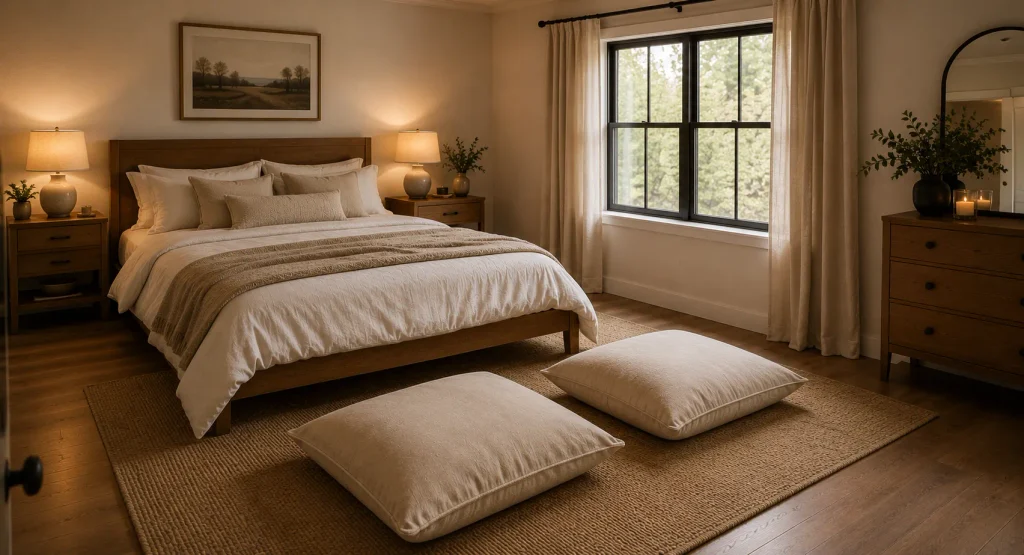
11. Oversized Cushions
A couple of oversized floor cushions add a low, casual seating option that a bedroom chair doesn’t quite replicate — somewhere to sit while putting on shoes, folding laundry, or just sprawling out with a book. They also add visual softness at floor level, filling space that would otherwise stay empty and slightly cold-looking.
Two cushions are usually enough; more than that starts to eat into usable floor space in a bedroom, which tends to be smaller than a living room to begin with. Choose a durable, easy-to-clean fabric like a cotton canvas or a performance-weave textile if the cushions will see regular use, since a delicate fabric on the floor wears out faster than the same fabric on a bed or chair.
Best for: bedrooms with enough open floor space to actually use them. Avoid: placing them in a walkway, where they become a tripping hazard rather than a comfort feature.
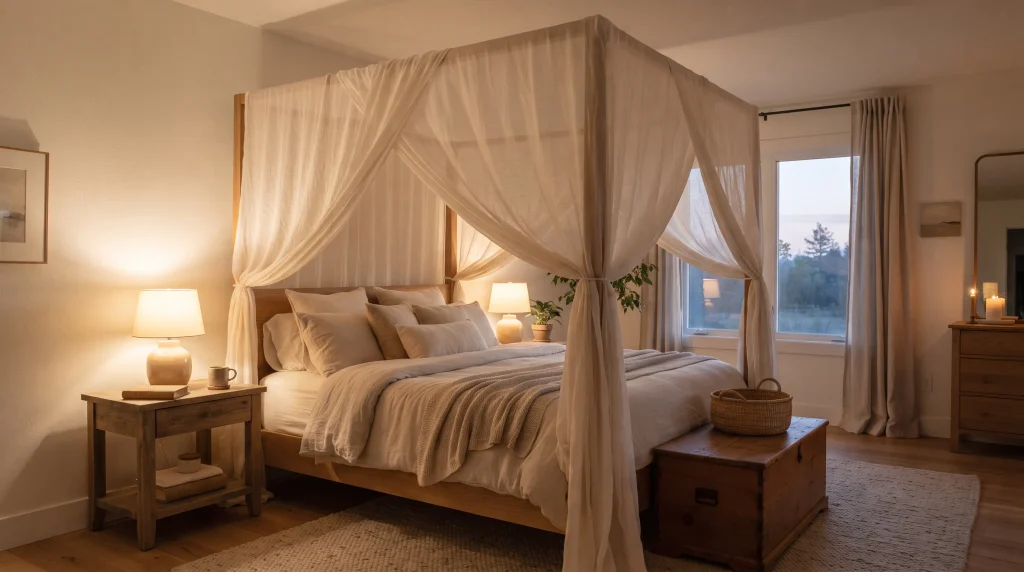
12. Canopy Bed Drapery
Draped fabric above the bed creates an enclosed, protected feeling that a bare bed frame doesn’t have — there’s a reason canopy beds have stayed a design fixture for centuries, since the effect of soft fabric overhead genuinely does make a bed feel cozier and more private. A sheer, lightweight fabric keeps the look airy rather than heavy; a denser linen or cotton canopy creates a more enclosed, cocoon-like effect.
If you don’t have an existing four-poster frame, a ceiling-mounted canopy ring above the bed achieves a similar look without requiring a full frame replacement — just make sure the mounting hardware is rated for the fabric weight and installed into a stud or appropriate anchor, since it’s positioned directly above where you sleep.
Keep the drapery loosely gathered rather than pulled taut for the softest look; a canopy that’s too tightly stretched loses some of the relaxed, textile-forward quality that makes this idea feel cozy in the first place.

13. Natural Wood Furniture
Wood furniture brings a grounding warmth that metal or high-gloss finishes don’t, simply because of how light interacts with the natural grain — it softens rather than reflects, which suits a cozy room better than a sleek, mirror-polished surface. Oak, walnut, and pine all read as warm in slightly different ways: oak leans golden, walnut leans deep and rich, pine stays the lightest and most casual of the three.
Repeating the same wood tone across two or three pieces — a nightstand and a bench, for instance — creates more cohesion than a single matched furniture set, and it’s usually a more affordable way to build the look gradually rather than buying an entire bedroom collection at once.
Best for: balancing out a room with a lot of cool-toned or metal decor elsewhere. Avoid: mixing more than two distinctly different wood tones in the same room, which tends to look mismatched rather than intentionally varied.
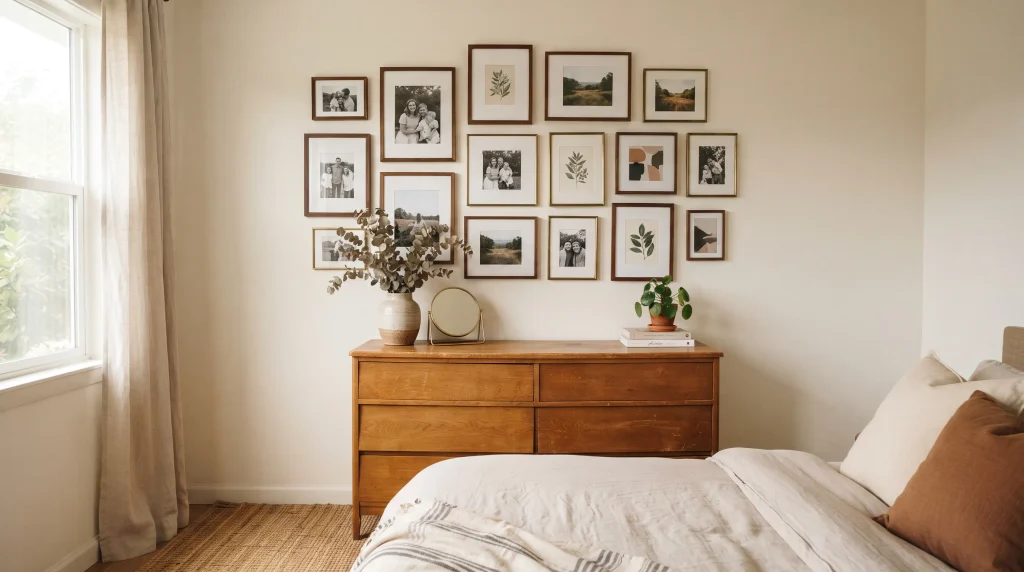
14. A Personal Gallery Wall
A cluster of personal photos, prints, or small artwork makes a bedroom feel specifically like yours rather than a generic styled room, and that sense of personal history is part of what makes a space feel emotionally cozy, not just visually warm. Mix frame finishes in the same wood or metal family (all warm wood, or all aged brass) so the collection reads as considered rather than randomly assembled.
Keep the arrangement to one wall or one defined area rather than spreading frames across the whole room, which can start to feel cluttered rather than personal. A loose grid with consistent spacing between frames looks more intentional than an entirely random scatter, even if the individual pieces vary in size.
This is one of the more affordable ideas on this list, since it can be built gradually from photos and prints you likely already have, rather than requiring new purchases all at once.
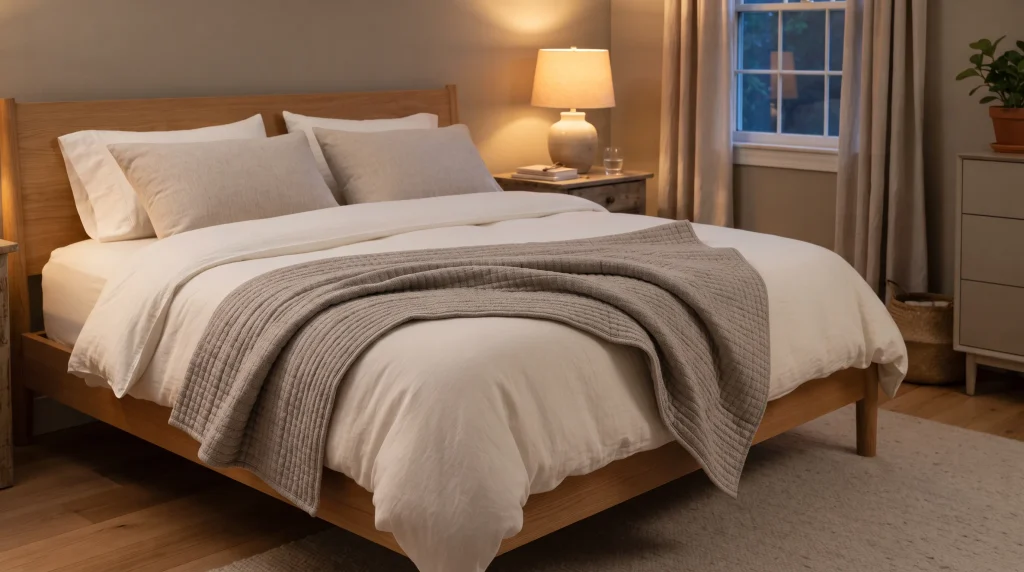
15. A Weighted Blanket
A weighted blanket adds genuine physical comfort alongside its visual role as another textured layer on the bed — the gentle, even pressure is something many people find calming, beyond just how the blanket looks draped over the duvet. Choose a weight roughly 10% of your body weight as a general starting guideline, and check with a doctor first if you have any respiratory or circulatory conditions that weighted pressure could affect.
Look for a removable, washable cover in a texture that matches the rest of your bedding — knit, quilted, or a soft minky fabric are common options — so the practical benefit doesn’t come at the cost of visual cohesion with the rest of the room.
Best for: anyone who specifically struggles to wind down at night. Avoid: using it as the primary blanket in warmer months, since the added weight can trap more heat than a standard duvet.
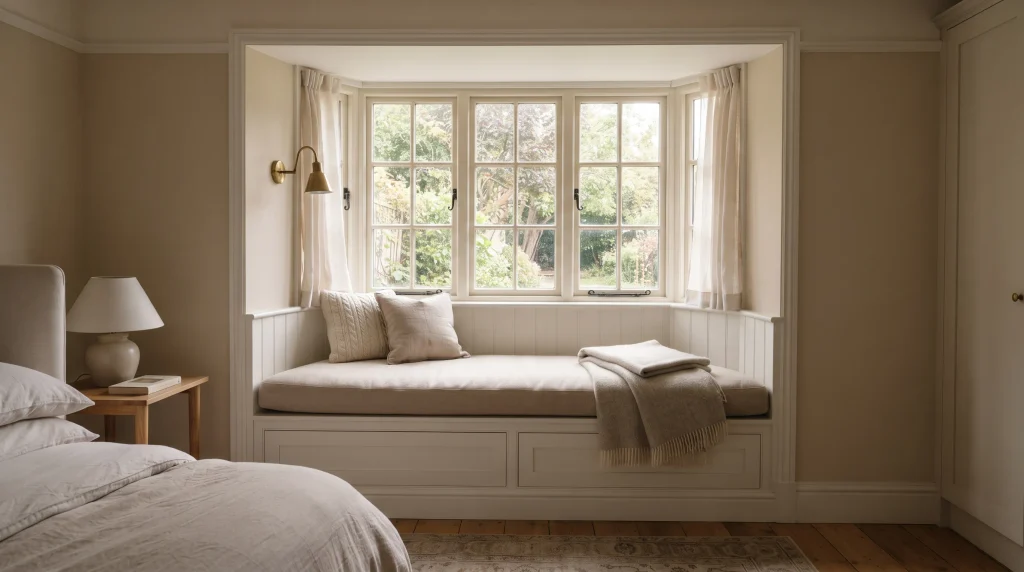
16. A Window Seat
A window seat turns an architectural feature into one of the coziest spots in the room, combining natural daylight during the day with a quiet, enclosed feeling at night once curtains are drawn around it. If your bedroom has a bay window or a deep window ledge, a built-in or simple cushioned bench transforms otherwise wasted space into genuinely usable seating.
Choose a dense, supportive cushion rather than a thin decorative one if the seat will actually be used regularly — a cushion that’s comfortable to look at but not to sit on defeats the purpose fairly quickly. Add two or three smaller pillows and a folded throw within reach for cooler evenings.
Best for: bedrooms with an existing window ledge or bay window. Avoid: building one purely for the look if the space won’t realistically get used — it’s a bigger investment than most ideas on this list.
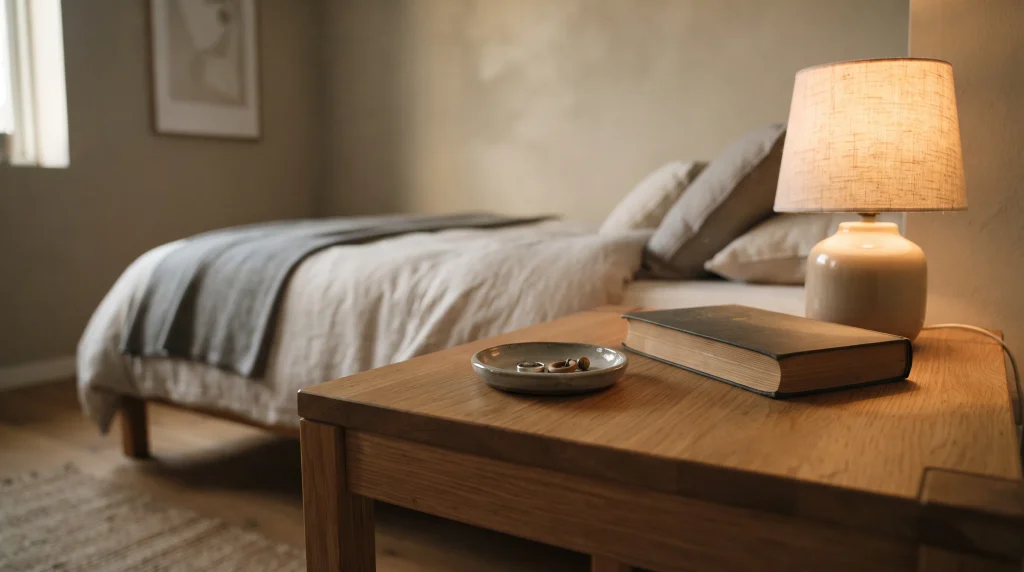
17. Decluttered, Edited Surfaces
This is the least visual, most important idea on the list: a genuinely cozy, restful bedroom needs empty space as much as it needs soft textures and warm light. A nightstand crowded with chargers, half-read books, and loose jewelry doesn’t feel restful no matter how good the bedding looks; the same nightstand with one lamp, one book, and a small dish for the everyday items you actually use does. This kind of edited, cozy-minimalist styling is what separates a true sleep sanctuary from a room that’s simply full of warm-toned decor.
This isn’t about minimalism for its own sake — it’s specifically about making room for the cozy elements to register. A rug, warm lighting, and soft bedding all get visually diluted in a room where every surface is already busy with clutter competing for attention.
Best for: every bedroom, regardless of style. Avoid: treating this as a one-time cleanup — it works best as a habit of putting things away rather than a single decluttering session.
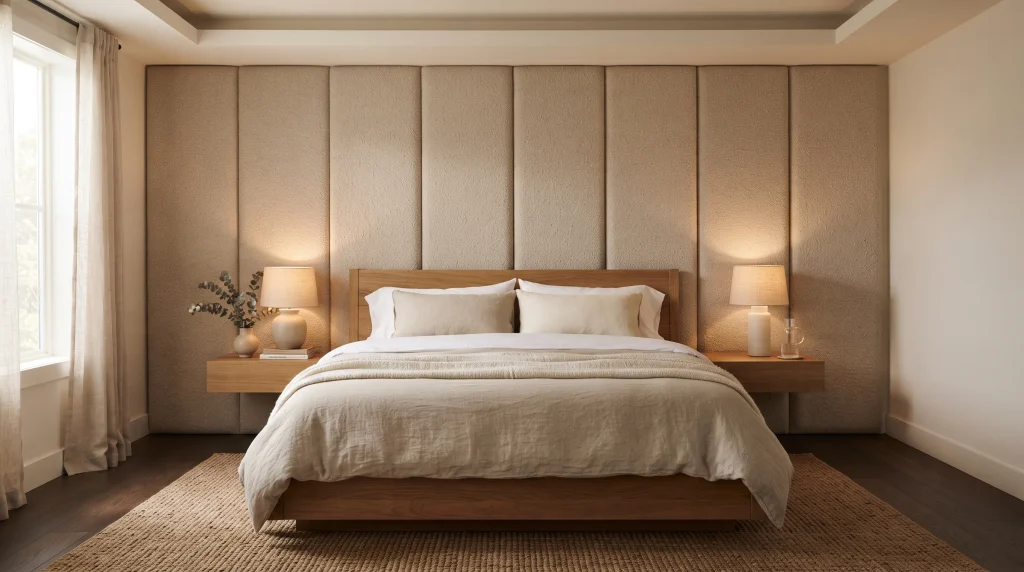
18. Upholstered Fabric Wall Panels
Fabric-covered wall panels bring the same soft, tactile quality as an upholstered headboard, but applied more broadly across the wall behind the bed, which changes the acoustics of the room slightly in addition to how it looks — fabric absorbs sound in a way that a painted wall doesn’t, which can make a bedroom feel quieter and more enclosed.
Choose a padded, textured fabric like boucle or a nubby linen weave over something flat and smooth, since the texture is doing most of the visual work here. Full-wall installations are a bigger project, so testing the idea with two or three individual panels behind the headboard first is a reasonable way to see whether you like the effect before committing to more wall coverage.
Best for: bedrooms on a busy street or with poor sound insulation, where the acoustic benefit adds real value beyond the visual softness.
How to Pull the Look Together: Budget and Small Rooms
If you’re not sure where to start, these two shortcuts pull out the most relevant ideas depending on your situation.
If you’re decorating on a budget, start with the cheapest, most reversible changes: swap your bulbs for warm 2700K ones, add a folded throw and one faux fur accent, declutter your nightstand, and layer in one warm-scented candle. Together these cost a fraction of a rug or upholstered headboard and make a noticeable difference within a single evening.
If your bedroom is small, prioritize differently: one plush rug sized generously, warm layered lighting instead of a single overhead fixture, one focal soft element (an upholstered headboard or a faux fur throw, not both), and genuinely edited surfaces. Skip the window seat, canopy drapery, and floor cushions in a tight room — in small spaces, empty floor space itself becomes part of what makes the room feel calm rather than cramped.
Frequently Asked Questions
What makes a bedroom feel cozy rather than just decorated? Warmth and restraint together — warm lighting, soft textures, and a narrow color palette, combined with enough empty space that the room doesn’t feel cluttered. A bedroom with too many pillows, blankets, and accessories can look styled without actually feeling restful.
What colors make a bedroom feel cozy? Warm neutrals form the base — ivory, beige, taupe, and warm gray — often paired with deeper accents like terracotta, rust, or chocolate brown in smaller doses. Cooler tones like stark white or blue-gray tend to read as clean rather than warm, even when the room is otherwise well-designed.
How do I make a small bedroom feel cozy without making it feel cramped? Focus on lighting and one or two textures rather than adding more furniture or decor. A generously sized rug, warm bedside lighting, and decluttered surfaces do more for a small room than additional cushions or accessories, which tend to make a tight space feel fuller rather than warmer.
Is a cozy bedroom expensive to create? Not necessarily. Bulb temperature, a folded throw, a candle, and a decluttered nightstand cost very little and make a real difference. Bigger investments like a plush rug or an upholstered headboard are optional upgrades rather than requirements for the overall feeling.
How many pillows and blankets is too many for a cozy bed? As a general guideline, four to six pillows and one or two blankets or throws is usually the upper limit before a bed starts to look cluttered rather than inviting. More than that tends to add daily upkeep without adding real comfort.
Is cozy bedroom design the same as hygge? They overlap significantly. Hygge is a Danish concept centered on warmth, comfort, and contentment, and it shares the same core principles as cozy bedroom design — soft textures, warm ambient light, and a calm, uncluttered space. Cozy bedroom styling can be thought of as the practical, room-by-room application of hygge principles.
Conclusion
The coziest bedrooms aren’t the most decorated ones — they’re the most edited. A few warm textures, better lighting, and enough empty space to actually notice them tend to do more than a room packed with cozy-adjacent objects. Start with whichever idea addresses what’s actually missing from your bedroom right now, and let the room build up gradually rather than all at once.
Save this guide before your next bedroom refresh, so you can return to the ideas that fit your space, budget, and season when you’re ready to apply them. Whether the goal is a full cozy bedroom makeover or a single small upgrade, these bedroom coziness tips are designed to build a calm, inviting sleep sanctuary one intentional change at a time.





3 Comments