15 Romantic Moody Bedroom Ideas for a Cozy, Dreamy Retreat
A bedroom can feel completely different after sunset with the right colors, textures, and lighting.
If your space feels plain, cold, or lacking personality, these ideas can change that.
This romantic moody bedroom inspiration brings together rich colors, soft fabrics, warm lighting, and thoughtful styling to create a space that feels cozy, intimate, and beautifully personal. You’ll find practical ideas ranging from charcoal walls and velvet headboards to layered lighting, floral wallpaper, earthy accents, and elegant curtains.
Each approach can be adapted to different room sizes and budgets, so you don’t need a complete renovation to create a noticeable transformation. In my experience, small changes in lighting and texture often make the biggest difference. As you explore these ideas, look for one detail you can easily recreate in your own bedroom.
1. Deep Charcoal Walls
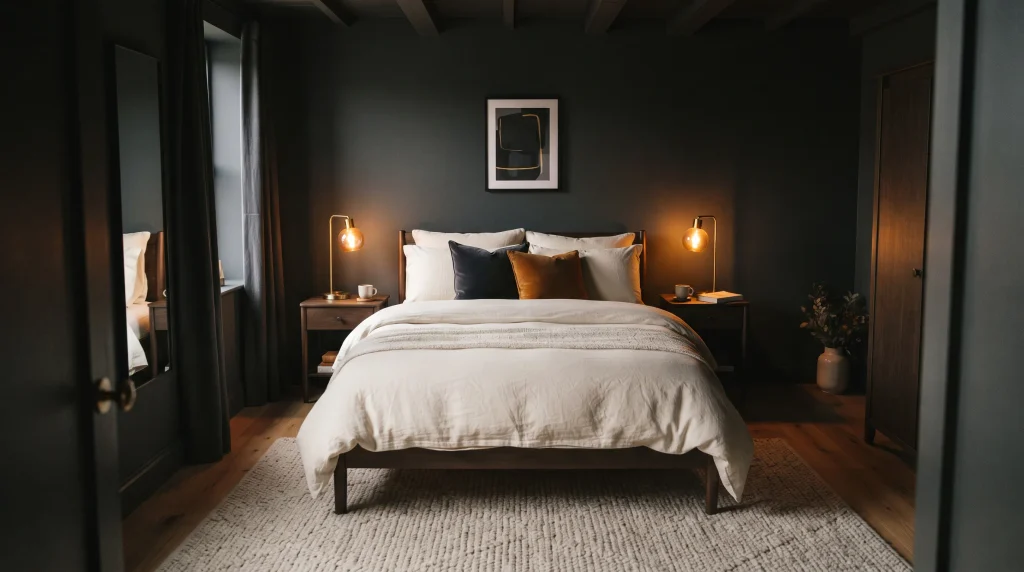
Deep, dramatic color can make a bedroom feel instantly more intimate without making it gloomy. Choose charcoal, espresso, deep plum, or muted burgundy for the walls, then soften the palette with warm ivory bedding and natural wood furniture. Matte finishes help absorb harsh light and create a refined backdrop for layered textures. In my experience, darker walls look especially inviting when the room has several small light sources rather than one bright ceiling fixture. Keep the floor visually quiet with a neutral rug or warm timber, allowing the rich wall color to remain the main feature.
A moody palette works best when every element feels connected rather than simply dark. Pair deep walls with linen bedding, velvet cushions, brushed brass details, and a softly textured rug to create contrast without losing the intimate atmosphere. Place the bed centrally against the strongest wall, leaving enough breathing room around the nightstands. Warm bedside lamps can highlight the bedding and make the darker surfaces feel softer at night. This approach also suits rental bedrooms because you can recreate the effect with removable wallpaper, dark textiles, framed art, and layered lighting instead of permanent changes.
2. Draped Canopy Bed
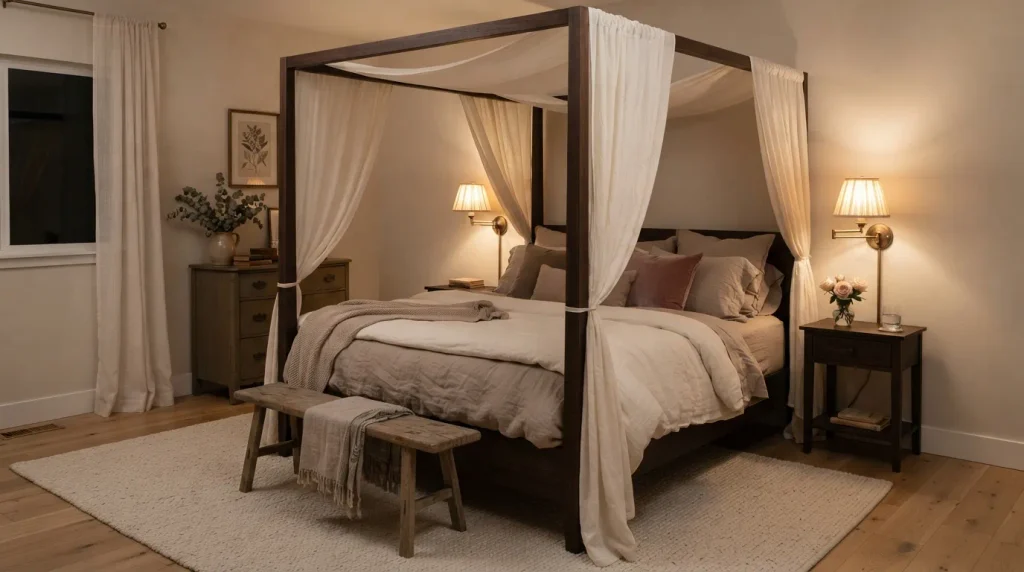
A softly lit canopy bed can make a bedroom feel intimate, polished, and beautifully layered. Choose a simple four-poster or canopy frame in dark wood, black metal, or aged brass, then drape lightweight ivory or taupe fabric loosely around the top. Keep the bedding relaxed with linen sheets, a plush duvet, and a few muted pillows. In my experience, the canopy does not need heavy curtains to feel romantic; airy fabric creates enough softness while keeping the room open. Add warm bedside lamps and a textured rug to ground the arrangement without competing with the bed.
The beauty of this setup comes from framing the sleeping area without making it feel enclosed. Position the canopy bed where it becomes the natural focal point, preferably against a quiet wall with minimal visual clutter. Layer cream, dusty rose, mushroom, and chocolate tones for gentle contrast, while small brass accents add warmth. A woven bench at the foot of the bed can provide useful seating and storage for blankets. If your room is compact, choose a slim canopy frame and keep surrounding furniture streamlined. The result feels special, balanced, and practical enough for everyday living.
3. Burgundy Velvet Accents
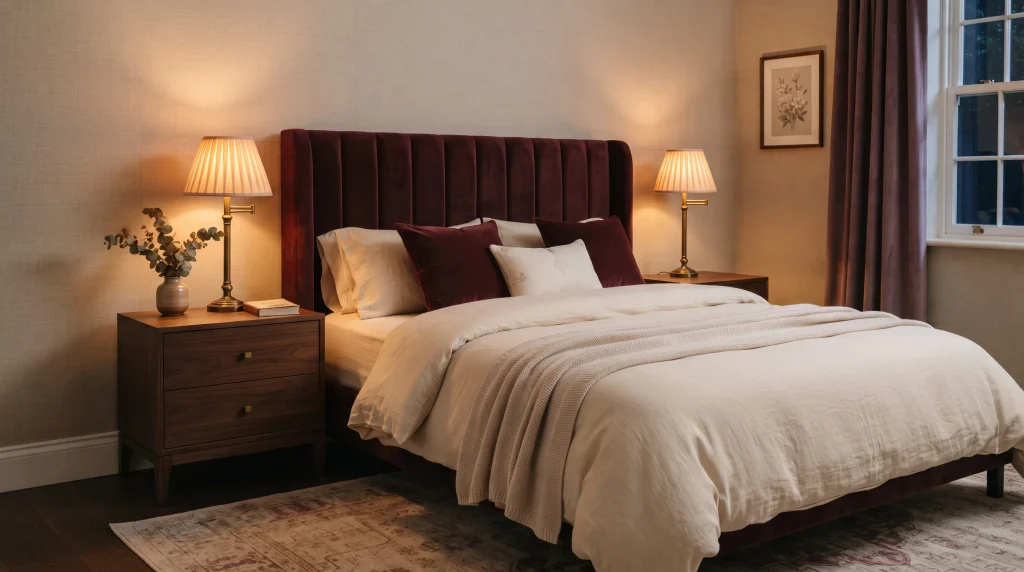
Burgundy velvet is one of those details that can completely change the mood of a bedroom without making the space feel overly decorated. Its deep wine-inspired color adds warmth and drama, while the soft velvet texture brings a subtle sense of luxury. A burgundy velvet headboard is a beautiful statement piece, but you can create a similar effect with smaller touches such as velvet pillows, a quilted bench, curtains, or a cozy throw at the end of the bed. These accents work especially well in a dark feminine bedroom because they add richness while keeping the overall atmosphere intimate and inviting.
For a balanced look, pair burgundy velvet with softer shades that allow the color to stand out naturally. Warm white, cream, beige, taupe, charcoal, and chocolate brown all complement burgundy beautifully. You can also introduce aged brass or gold through bedside lamps, picture frames, mirrors, or decorative hardware for an elegant finishing touch. If your bedroom already has darker walls, choose just one or two burgundy pieces rather than repeating the color throughout the room. This creates contrast and prevents the space from looking visually heavy.
The best part about using burgundy velvet is that you do not need to redesign the entire bedroom to get the effect. Start with a single accent pillow or a small velvet bench and build from there based on how the room feels. Layering different fabrics—such as linen bedding, knitted throws, cotton sheets, and velvet accents—can make the bedroom feel much more personal and comfortable. When combined thoughtfully with warm lighting and a few meaningful decorative pieces, burgundy velvet creates a cozy, sophisticated atmosphere that feels stylish without looking overly staged.
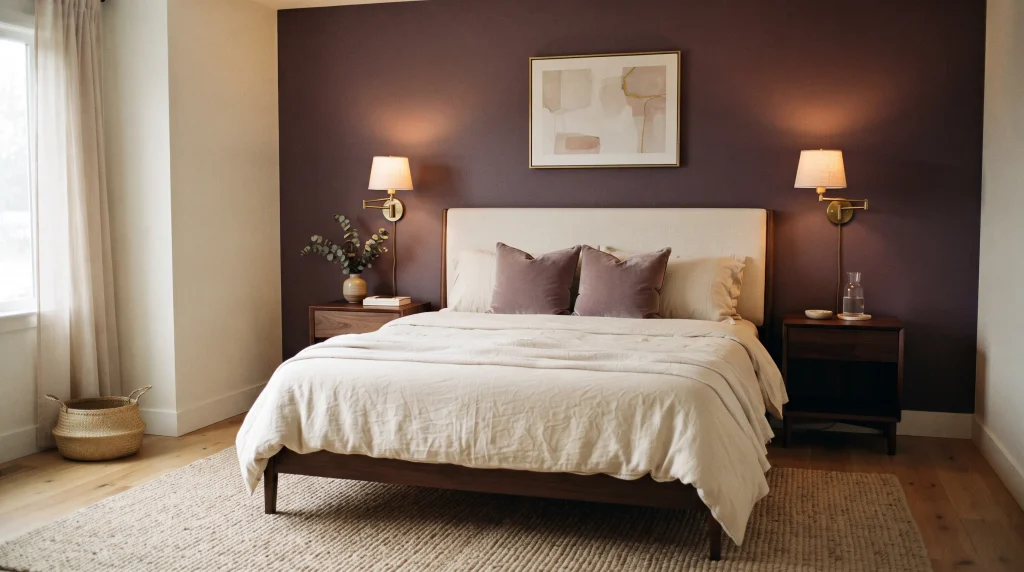
4. Plum Accent Wall
A deep plum accent wall can bring warmth and character to a bedroom while keeping the overall design controlled. Paint the wall behind the bed rather than covering every surface, then repeat small touches of plum through cushions, artwork, or a throw. This creates a coordinated look without making the room feel visually crowded. The rich color works particularly well with cream, taupe, walnut, and antique brass. If you have a small bedroom, I’ve noticed that concentrating the darker shade behind the headboard creates depth while allowing the other walls and furnishings to keep the space feeling open.
Lighting makes a major difference when working with saturated wall colors. Choose warm bulbs in bedside sconces or table lamps so the plum surface develops a soft, inviting appearance after sunset. During daylight, natural light will reveal subtle variations in the paint and keep the room from appearing flat. Add tactile bedding, a woven rug, and simple curtains to balance the strong backdrop. For a cohesive finish, repeat the accent shade only two or three times around the room. This restrained approach keeps the design sophisticated while giving the sleeping area a distinctly intimate character.
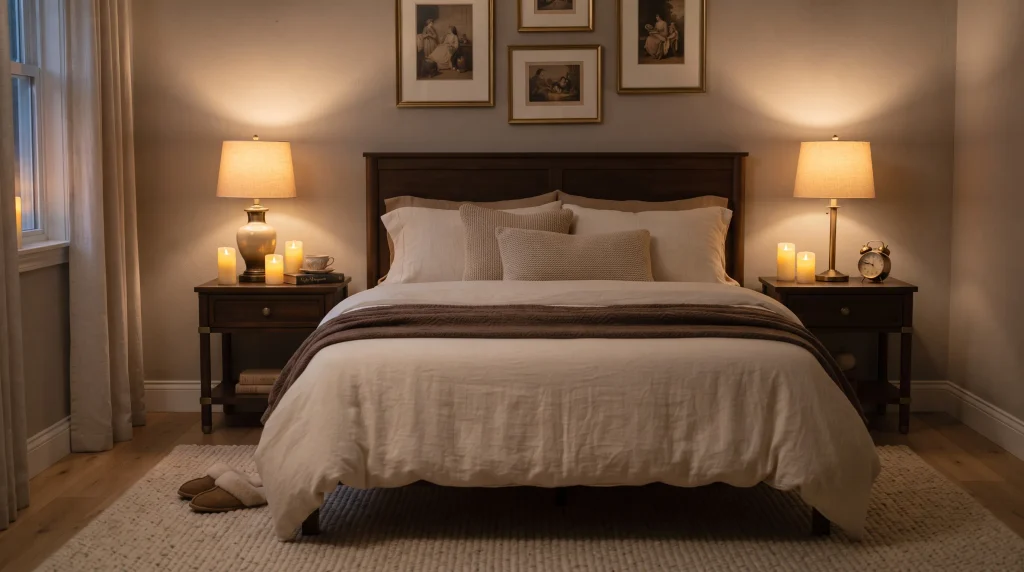
5. Candlelit Bedside Styling
Soft bedside illumination can completely change how a bedroom looks after sunset, making ordinary furniture and textiles feel warmer and more inviting. Start with table lamps or wall sconces using warm bulbs, then add flameless candles at different heights for gentle points of light. Keep the arrangement simple: one lamp, a small candle grouping, and one useful object such as a book or ceramic tray. The goal is layered illumination rather than excessive decoration. In my experience, this small lighting change can make a bigger difference to the room’s atmosphere than buying several new accessories.
For the best result, keep brighter overhead lighting switched off whenever you want a more intimate setting. Place the main lamp slightly behind or beside the bed so the light spreads across the headboard and bedding instead of shining directly toward the pillows. Warm ivory, brown, muted mauve, and aged brass work beautifully under this type of illumination. If you share the room with someone, matching bedside lights also provide practical individual lighting. The finished space feels calmer and more intentional, while the layered glow highlights textures that may disappear under a strong ceiling fixture.
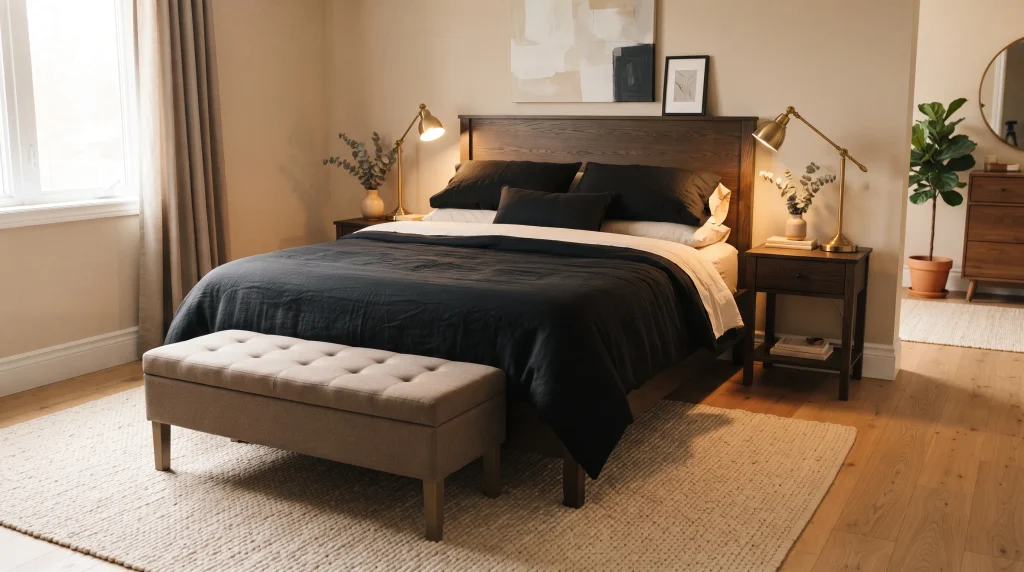
6. Black Linen Bedding
Black bedding can create a striking focal point while still feeling soft and comfortable when balanced with lighter textures. Choose washed linen rather than a glossy fabric because its natural creasing gives the bed a relaxed, lived-in appearance. Layer black or charcoal pillows over warm ivory sheets, then add a taupe or chocolate throw for subtle tonal variation. This combination works especially well with natural wood, aged brass, and woven materials. Rather than decorating every surface, let the bedding provide the strongest contrast and keep surrounding accessories restrained.
The key is balancing visual weight throughout the room so the dark bed does not feel disconnected. Repeat small black details in a picture frame, curtain rod, lamp base, or decorative object to create continuity. Then introduce lighter elements such as a cream rug, beige walls, or pale linen curtains to preserve brightness around the sleeping area. I’ve seen this approach work particularly well in bedrooms with plenty of natural daylight because the changing light reveals the texture of the linen. At night, warm lamps make the black fabric look softer and more dimensional.
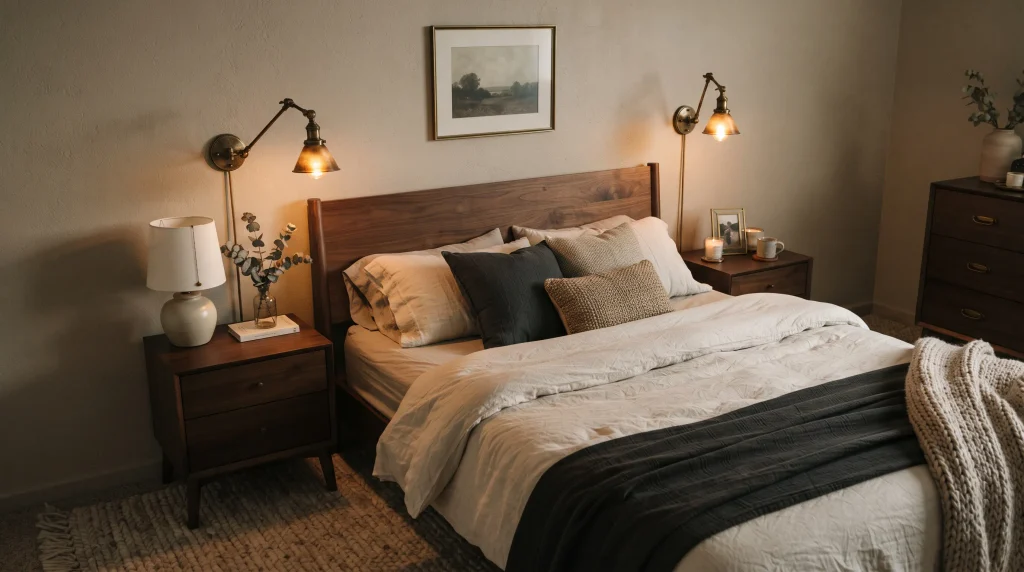
7. Antique Brass Lighting
Antique brass lighting adds warmth to darker bedroom palettes without requiring major furniture changes. Choose wall sconces with aged or brushed finishes and position them symmetrically on either side of the headboard. The slightly weathered metal catches warm light beautifully and creates a subtle glow against charcoal, brown, plum, or deep green surfaces. This is especially useful when a room feels visually cold after adding dark colors. A simple linen shade can soften the illumination further. For everyday practicality, choose fixtures with adjustable switches so the lighting can shift from bright enough for reading to comfortably dim.
The surrounding decor should support the lighting rather than compete with it. Pair brass fixtures with walnut furniture, cream bedding, muted textiles, and a few vintage-inspired details for a cohesive appearance. Avoid mixing too many metallic finishes because the room can quickly feel busy. Instead, repeat the same brass tone in drawer pulls, a mirror frame, or a small decorative object. If installing wall fixtures is not practical, brass table lamps can create a similar effect. The finished arrangement feels warmer and more intentional, while providing useful bedside illumination without relying entirely on overhead lighting.
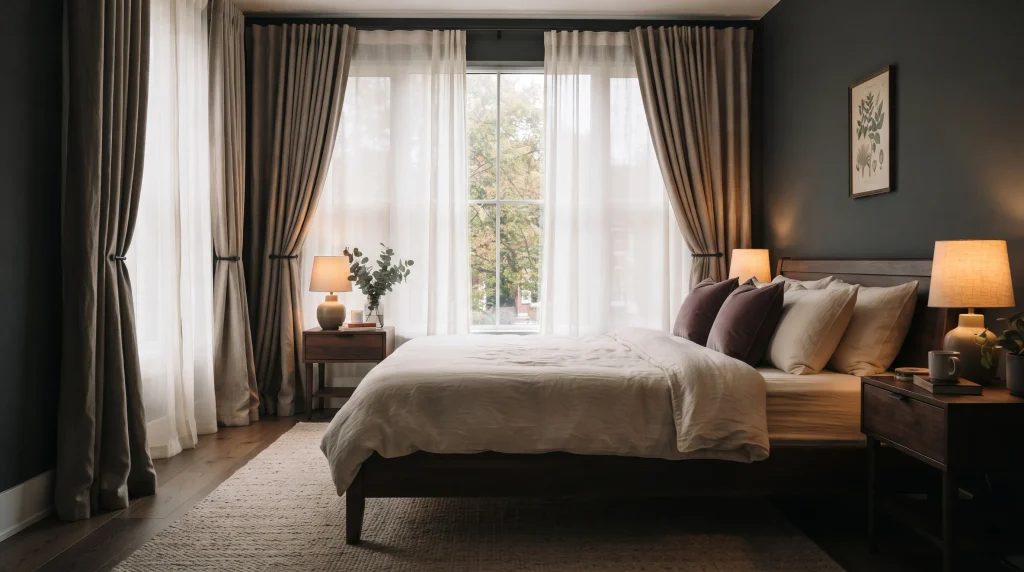
8. Sheer Layered Curtains
Window treatments can make a surprisingly large difference in a dark, intimate bedroom, especially when you combine sheer and heavier fabrics. Start with lightweight ivory sheers that filter daytime sunlight, then add taupe, mushroom, or chocolate blackout panels for evening privacy. Hang both layers from a rod positioned slightly above the window frame and extend the panels close to the floor. This creates a longer visual line and makes the room feel more finished. I’ve noticed that sheer curtains are particularly effective because they soften daylight without removing the natural brightness that darker interiors need.
The fabric combination also gives you flexibility throughout the day. Leave the sheers open in the morning for filtered daylight, then close the heavier panels when you want a quieter nighttime setting. Choose linen-look or cotton-blend fabrics with visible texture rather than shiny synthetic materials for a more relaxed appearance. Coordinate the curtains with bedding or accent cushions rather than matching them exactly. This approach keeps the palette layered and natural. In a romantic moody bedroom, soft window treatments can frame the bed beautifully while improving privacy, light control, and overall comfort.
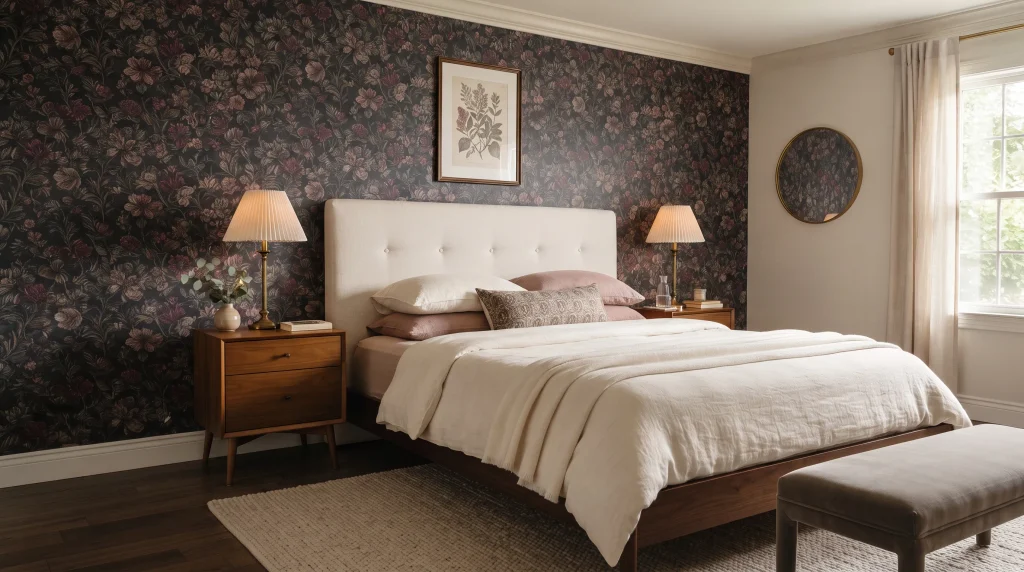
9. Dark Floral Wallpaper
Dark floral wallpaper can bring pattern, depth, and personality to a bedroom while keeping the overall palette sophisticated. Look for botanical designs with muted burgundy, dusty rose, plum, olive, or cream details rather than extremely bright colors. Applying the wallpaper behind the bed creates a natural focal wall and keeps the remaining surfaces visually calm. Pair it with an upholstered headboard in cream, taupe, or warm gray to prevent the pattern from becoming overwhelming. The result gives the sleeping area a finished appearance without needing dozens of decorative accessories.
The scale of the floral pattern matters, particularly in smaller rooms. A medium or slightly oversized botanical print can make a compact wall feel intentional, while very tiny patterns may look visually busy from a distance. Keep the bedding relatively simple, using solid linen or subtle texture to let the wallpaper provide the main visual interest. Add warm lamps and natural wood furniture to soften the darker background. If you rent, removable wallpaper offers a practical alternative. This setup creates an intimate retreat while giving the room a distinctive design detail that photographs beautifully for Pinterest.

10. Chocolate Brown Layers
Chocolate brown is an easy way to create a rich bedroom palette that feels intimate without becoming overly dramatic. Use several shades rather than one exact brown, combining espresso furniture with caramel throws, cocoa cushions, and warm beige textiles. Cream or ivory bedding creates a lighter center around the bed and keeps the overall arrangement balanced. In my experience, layered brown tones feel especially welcoming because they resemble natural wood, leather, and earthy materials already found in many homes. The key is introducing different textures so the darker colors look dimensional rather than flat.
Furniture and accessories can reinforce the warmth without making the room feel dated. Choose walnut or medium-dark wood for the bed and nightstands, then add woven baskets, a wool rug, and soft linen curtains. Small brass details can provide another warm layer without competing with the earthy palette. Keep the walls slightly lighter than the furniture if the bedroom is compact, helping the boundaries remain visually clear. A chocolate-toned throw folded across the lower third of the bed can also create an effortless focal point. The finished room feels grounded, comfortable, and intentionally layered.
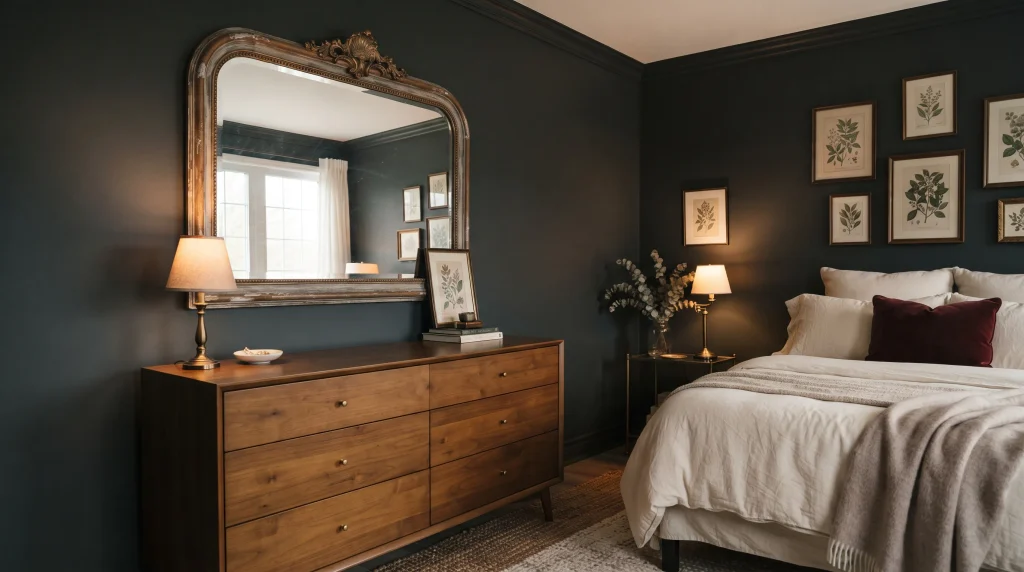
11. Moody Mirror Arrangement
A well-placed mirror can make a darker bedroom feel more spacious while adding an elegant decorative layer. Choose an oversized arched, rectangular, or vintage-style mirror with a dark wood, aged brass, or distressed frame. Position it where it can reflect daylight or the warm glow from a lamp rather than an empty wall. This creates movement across the room and prevents deeper colors from absorbing all the available light. A mirror above a dresser also provides a practical spot for getting ready, making the feature useful as well as visually appealing.
For a balanced arrangement, keep the dresser styling simple so the reflection does not become cluttered. A ceramic vase, small lamp, jewelry tray, or single framed print is usually enough. If the bedroom already has several strong patterns, select a quieter mirror frame and let its shape provide the interest. I’ve noticed that rounded or arched mirrors can also soften rooms dominated by straight furniture lines. When paired with warm textiles, dark walls, and subtle metallic accents, the reflective surface adds brightness and depth while preserving the room’s intimate character.
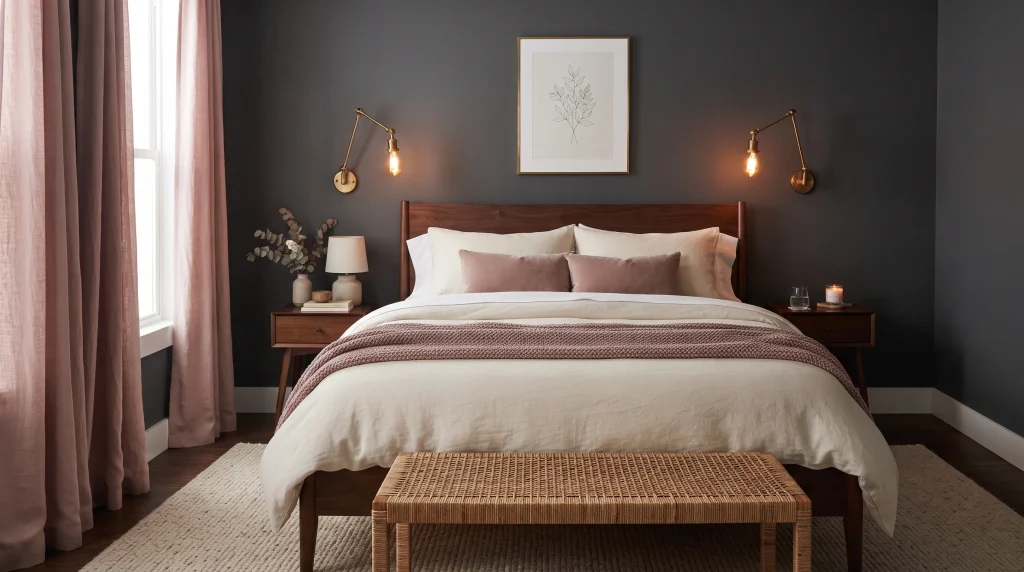
12. Soft Blush Accents
Soft blush accents can introduce a gentle feminine touch while keeping a darker bedroom sophisticated and grown-up. Instead of covering the room in pink, use dusty rose, muted blush, or mauve through cushions, a throw, curtains, or a small upholstered piece. These subdued shades pair beautifully with charcoal, chocolate brown, walnut, cream, and antique brass. The contrast gives the room warmth without creating a sugary appearance. For the bed, keep the main bedding neutral and let the blush accessories provide controlled color. This makes seasonal updates easier because individual accents can be replaced without redesigning everything.
Texture is particularly important when using delicate pink tones in a darker setting. Combine washed linen, velvet, knitted fabrics, and softly woven materials so the colors feel layered rather than decorative for decoration’s sake. A dusty rose cushion beside an ivory pillow can create a simple transition between dark and light elements. Add warm bedside lighting to bring out the muted undertones after sunset. If you prefer a subtle look, use only two or three blush pieces throughout the room. This keeps the palette cohesive while giving the sleeping area a softer, more inviting finish.
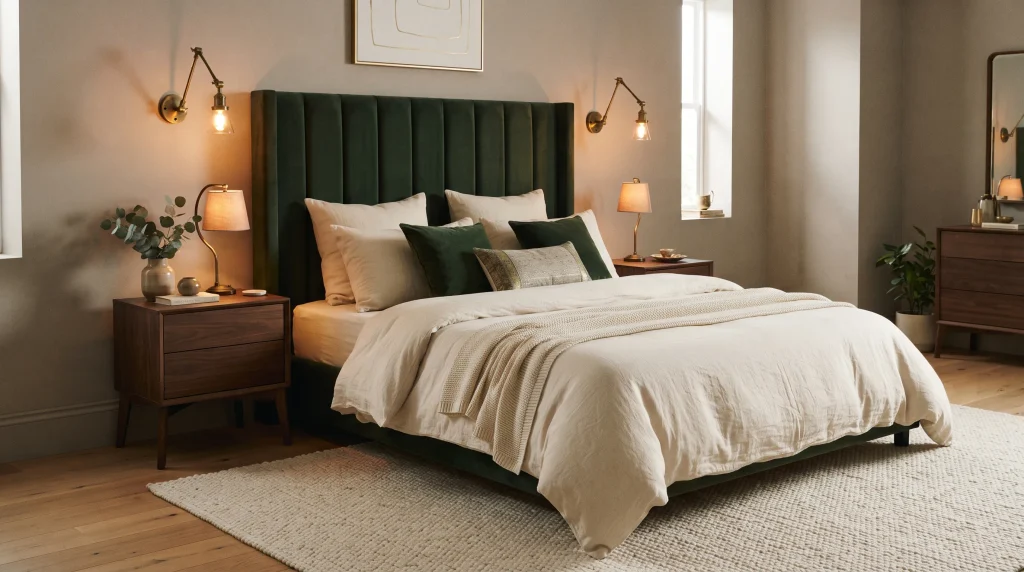
13. Velvet Headboard
A tall velvet headboard can instantly give a bedroom a richer, more finished appearance while creating a strong focal point behind the bed. Choose deep green, burgundy, navy, chocolate, or charcoal depending on the surrounding palette. Velvet reflects light differently across its surface, creating subtle tonal variation that makes darker colors feel dimensional. Keep the bedding lighter in cream, oatmeal, or soft beige so the headboard remains visually prominent. A tall silhouette can also make the ceiling appear higher, which is particularly useful when the room feels visually compressed by heavy furniture.
The surrounding pieces should remain relatively simple so the upholstered headboard does not compete with too many focal points. Pair it with slim walnut nightstands, warm brass sconces, and a textured rug beneath the bed. Linen sheets and relaxed cushions can soften the polished look of velvet, keeping the space comfortable for everyday use. If your bedroom is small, select a headboard with clean lines rather than excessive tufting or decorative details. The combination creates a cozy retreat with enough structure to feel elegant, while maintaining the layered softness that suits a romantic moody bedroom.
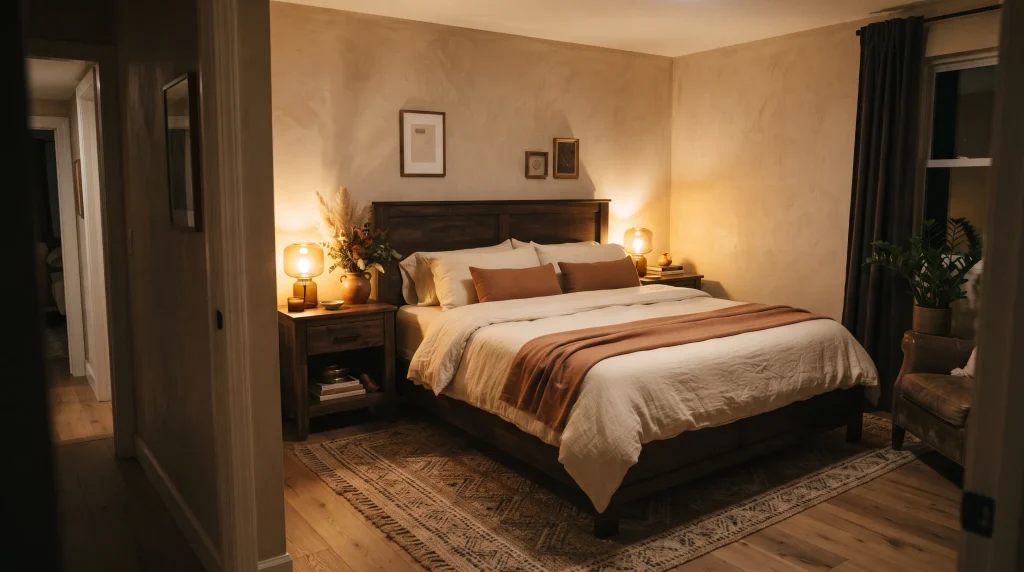
14. Warm Terracotta Glow
Terracotta can warm up a darker bedroom with earthy color that feels natural rather than overly decorative. Use it through a lumbar pillow, knitted throw, ceramic lamp base, artwork, or small rug detail instead of painting every surface orange. The muted clay tone works especially well beside chocolate brown, charcoal, cream, olive, and natural wood. Warm lighting strengthens its earthy quality after sunset, giving the room a gentle glow. If your existing bedroom already feels cool, adding just two or three terracotta elements can noticeably change the visual temperature without requiring a complete makeover.
Balance the richer accents with quiet materials and soft neutrals. Cream linen bedding, beige curtains, woven baskets, and unfinished wood help the terracotta pieces feel connected to the rest of the room. Choose matte ceramics and textured fabrics instead of glossy accessories for a more relaxed finish. I’ve noticed that warm earthy colors are particularly effective when repeated at different heights, such as a cushion on the bed, artwork above it, and a ceramic piece on the nightstand. This creates visual rhythm while keeping the palette cohesive, comfortable, and easy to live with.
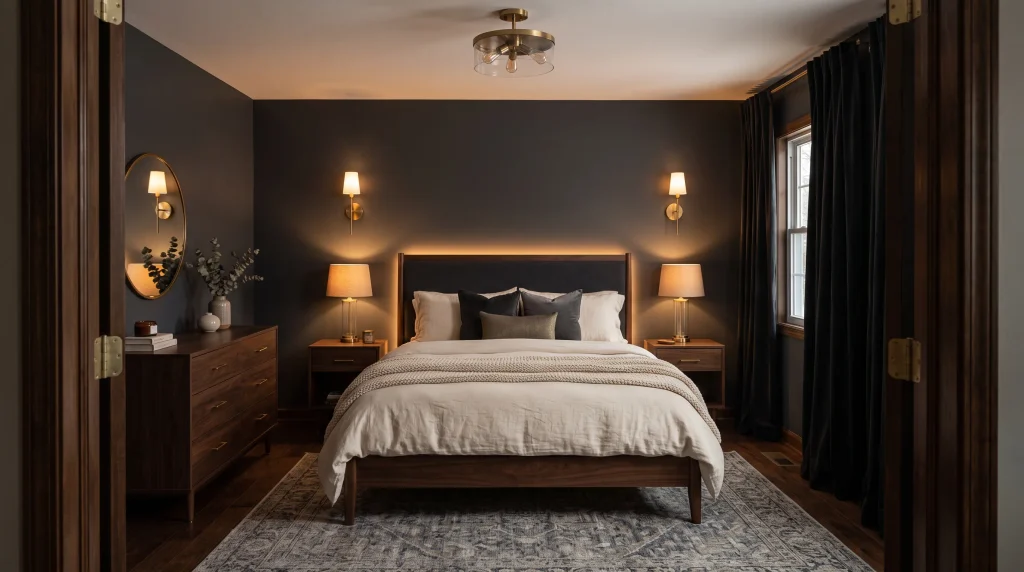
15. Layered Bedroom Lighting
Layered lighting is one of the most effective ways to make a darker bedroom feel comfortable at different times of day. Instead of depending on one ceiling fixture, combine bedside lamps, wall sconces, floor lighting, and subtle indirect illumination. Use warm bulbs throughout so the different sources feel connected rather than mismatched. Brighter task lighting can support reading or getting dressed, while dimmer ambient sources create a softer setting later. The exact romantic moody bedroom effect comes from controlling contrast: enough illumination to reveal textures, but not so much that every surface looks equally bright.
Start by identifying the activities that happen in your room, then give each one an appropriate light source. Bedside lamps can handle reading, sconces can frame the headboard, and a dimmable ceiling fixture can provide general illumination when cleaning or organizing. A small floor lamp can brighten a dark corner without taking up much surface space. Keep bulbs within a similar warm color temperature for consistency. This layered approach improves both appearance and functionality, allowing the bedroom to shift from practical daytime space to a calm, intimate retreat when the main lights are dimmed.
Conclusion
Creating a beautiful bedroom doesn’t require replacing everything at once. The right colors, textures, lighting, and focal pieces can completely change how your space feels. A romantic moody bedroom can be as dramatic or subtle as you like, whether you choose deep walls, soft blush accents, velvet, warm wood, or layered lighting. Start with one idea that fits your room and build from there. I’ve seen how small styling changes can make a space feel more inviting and personal. Save this post on Pinterest for your next decorating project, try your favorite ideas, and share it with someone who loves cozy bedroom inspiration.