
20 Warm Bedroom Aesthetic Ideas for a Cozy & Relaxing RetreatMeta Description
Your bedroom should feel like the easiest place in your home to slow down, relax, and recharge. A warm bedroom aesthetic can turn a plain or overly cool space into a cozy retreat with just a few thoughtful changes.
From creamy neutrals and natural wood to soft lighting, layered bedding, earthy accents, and tactile fabrics, these ideas show how small details can completely change the atmosphere of a room. You do not need a major renovation or an expensive makeover to create a warmer space. In my experience, simple changes such as switching harsh lighting, adding textured bedding, or introducing warmer wood tones can make a bedroom feel noticeably more inviting. Whether your room is large, small, modern, or minimalist, these ideas can help you create a comfortable space that feels personal, peaceful, and beautifully styled.
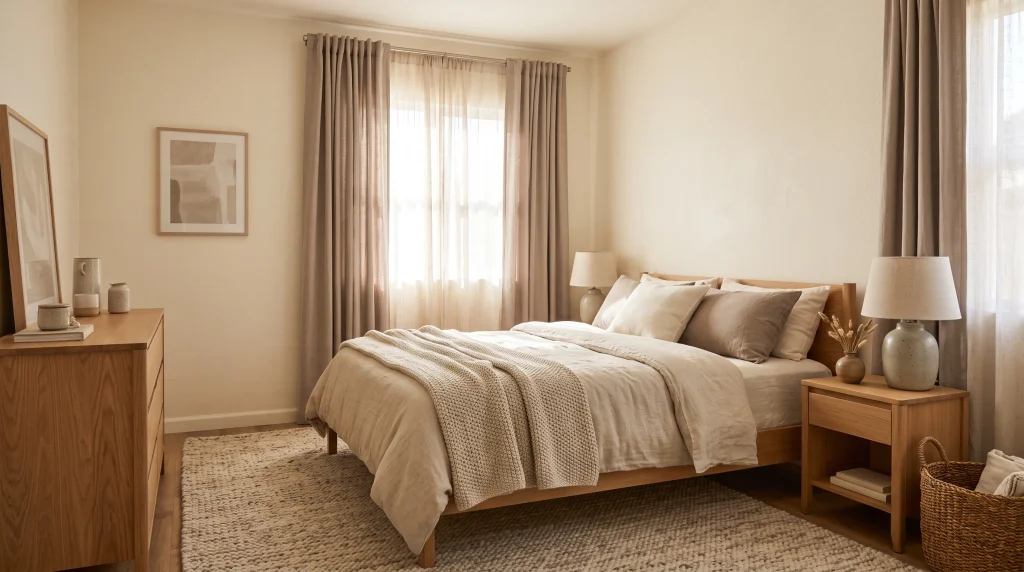
1. Warm Neutral Palette
The fastest way to create a warm bedroom aesthetic is to start with soft cream walls and let natural materials add depth. Choose oatmeal bedding, ivory curtains, and a taupe rug to build gentle contrast without making the room feel busy. Add a simple oak nightstand, woven basket, and linen curtains for texture. In my experience, keeping the largest surfaces light makes a smaller bedroom feel more open while still creating warmth. Finish with one earthy accent, such as a clay vase or muted brown cushion, so the palette feels collected rather than overly matched.
A warm neutral palette creates a calm foundation that makes everyday bedroom styling feel effortless. Start with cream, beige, sand, and soft brown across the walls, bedding, rug, and curtains, then introduce subtle tonal changes instead of sharp contrast. Natural fibers help prevent neutral rooms from looking flat, especially linen, cotton, wool, and woven materials. I’ve noticed this approach works particularly well in bedrooms that receive limited daylight because the gentle colors reflect available light while preserving a cozy feeling. Keep decorative accents restrained, allowing texture to provide most of the visual interest.
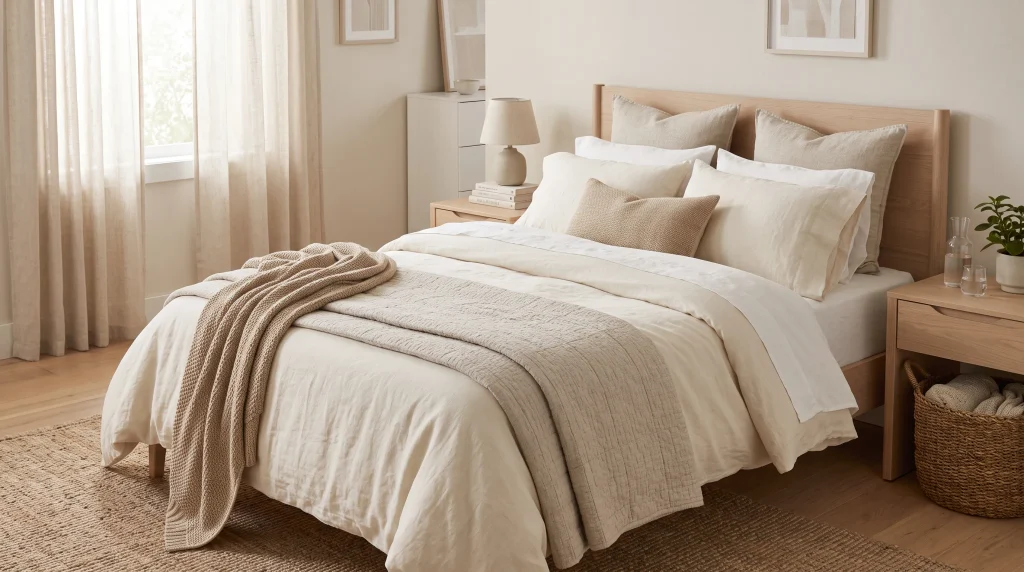
2. Cream Linen Bedding
The fastest way to soften a bedroom is to start with cream linen bedding and let texture do the decorating. Choose an ivory duvet cover, slightly rumpled linen sheets, and a warm beige quilt folded across the lower third of the bed. Add two oversized pillows and one smaller lumbar cushion for an effortless layered look. In my experience, natural linen looks especially beautiful in morning light because its subtle creases create depth without adding visual clutter. Keep surrounding furniture simple, using pale wood and woven accents to maintain a relaxed, breathable composition.
Layered bedding can make a plain room feel thoughtfully designed without requiring a major makeover. Linen brings a relaxed texture, while cotton sheets and a lightweight quilt create practical comfort for changing temperatures. Choose closely related shades rather than identical pieces, such as cream, oatmeal, and warm taupe. This tonal approach makes the bed look fuller and more inviting while keeping the palette peaceful. For a polished Pinterest-style finish, fold the top blanket neatly instead of spreading every layer evenly. A casually placed throw at the foot adds softness and a lived-in touch.
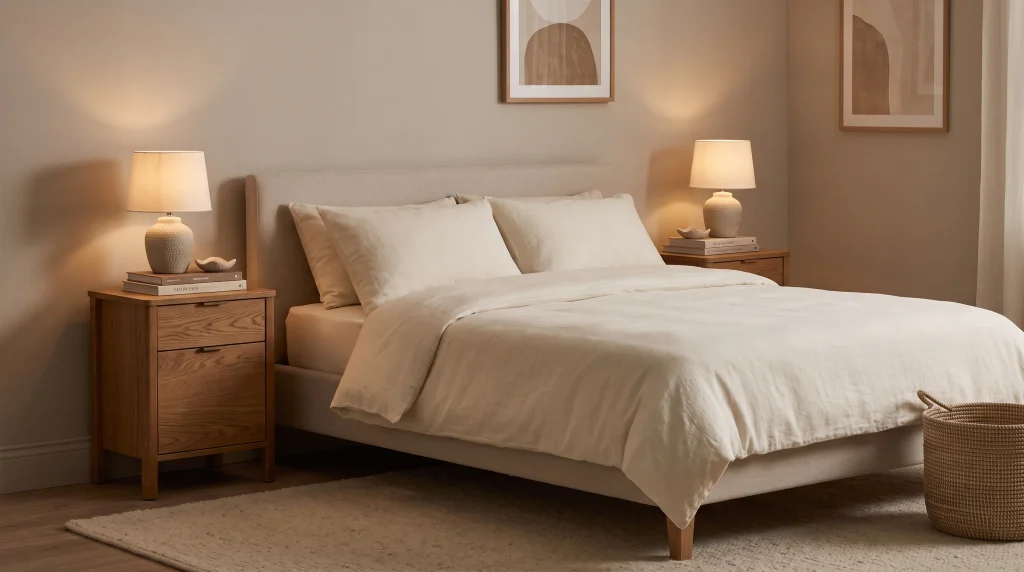
3. Natural Wood Nightstands
A simple wooden nightstand can change the entire feeling of a bedroom by bringing warmth and natural character beside the bed. Choose oak, walnut, or another medium-toned wood with a clean silhouette, then style the surface with a small ceramic lamp, one favorite book, and a low-profile vase. Avoid filling every inch because negative space keeps the arrangement calm. I’ve seen this work well in many homes where painted or glossy furniture felt too cold. The wood grain adds subtle visual movement, making neutral walls and bedding feel richer without introducing a complicated color scheme.
Natural wood also gives a bedroom practical warmth that painted furniture often cannot provide. Look for rounded edges, visible grain, or a lightly matte finish rather than highly polished surfaces. If your room is small, choose a narrow bedside table with one drawer and an open lower shelf for useful storage. Pairing it with woven baskets or a rattan tray creates a cohesive natural-material story. Keep metal accents minimal and repeat the wood tone elsewhere, perhaps through a bench or picture frame. That repetition helps the room feel intentional while still relaxed and comfortable.
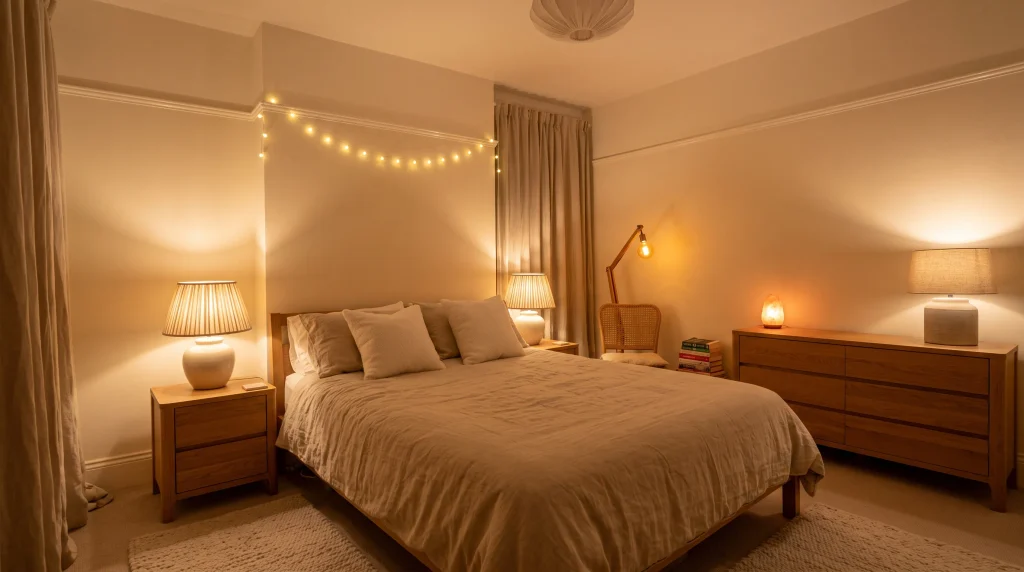
4. Soft Ambient Lighting
Nothing changes a bedroom atmosphere faster than soft lighting placed at the right levels. Instead of relying on one bright ceiling fixture, combine bedside lamps, a small floor lamp, and subtle accent lighting to create layers. Choose warm-white bulbs around 2700K for a comfortable evening glow, especially near the bed. In my experience, fabric or ceramic shades make the light feel softer because they diffuse harsh brightness. Keep the fixtures visually simple so the illumination becomes part of the room rather than competing with bedding, furniture, or wall decor.
Good bedroom lighting should feel flexible throughout the day, not simply decorative at night. Use brighter natural light during mornings, then switch to bedside lamps and softer sources as evening arrives. Position one lamp on each side of the bed when possible to create balance and make reading easier. A dimmable fixture is especially useful because you can lower the intensity before sleep. Avoid cool blue-toned bulbs, which can make warm furnishings appear dull. Instead, choose gentle warm illumination that complements cream, brown, beige, wood, and other earthy finishes throughout the room.
5. Layered Earthy Textures
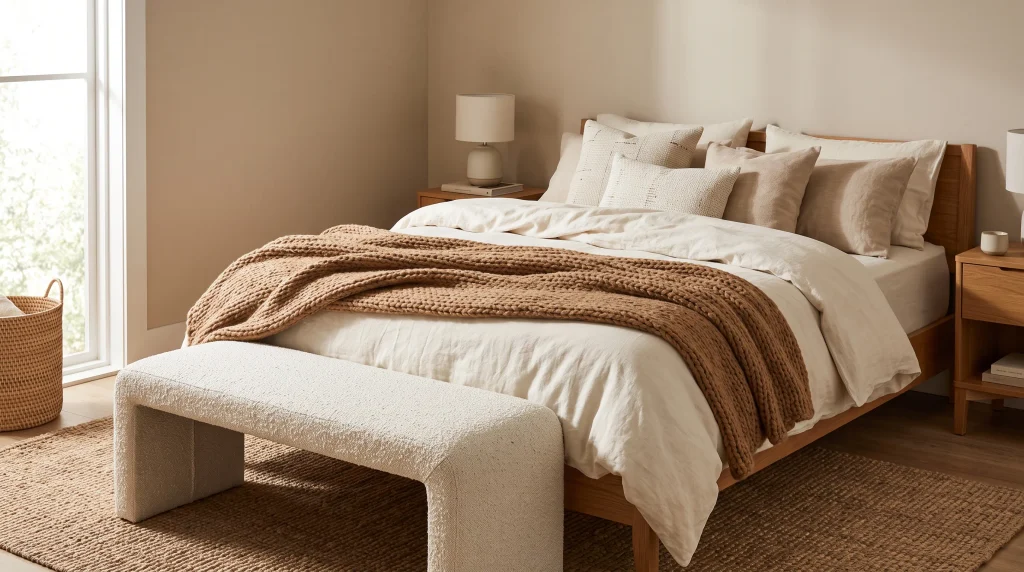
Texture is what makes a neutral bedroom feel inviting instead of unfinished. Start with smooth cotton sheets, then introduce crinkled linen, a chunky wool throw, a woven rug, and one boucle or textured cushion. Each material catches light differently, creating subtle layers even when the color palette remains restrained. I’ve noticed that mixing textures is particularly effective when you want a cozy warm bedroom without adding many decorative objects. The result feels richer because the eye discovers small differences across the bed, floor, seating, and accessories rather than seeing one uninterrupted neutral surface.
When layering textures, balance rough and smooth materials so the room remains comfortable rather than visually heavy. A jute rug can ground softer bedding, while a woven basket adds structure beside a plush upholstered bench. Keep the colors within a narrow earthy range, such as cream, caramel, tan, and muted brown. This makes the materials feel connected even when their finishes differ. You also do not need expensive pieces to achieve the effect. A thrifted wool blanket, cotton pillowcase, or simple woven basket can introduce enough tactile variation to make an ordinary bedroom feel thoughtfully styled.
6. Warm Brown Accents
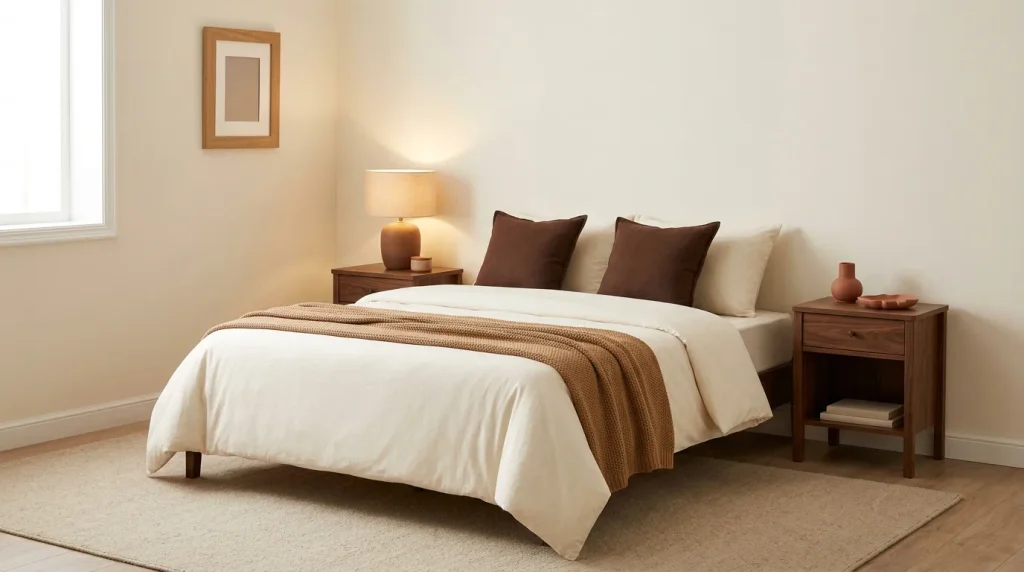
Brown accents can instantly give a pale bedroom more depth while keeping the overall atmosphere soft and comfortable. Try walnut nightstands, chocolate cushions, a caramel throw, or a small leather bench rather than covering the room in dark furniture. The goal is controlled contrast, not a heavy color scheme. Repeat one or two brown tones across the room so the eye naturally moves between them. A warm brown headboard can also become a strong anchor against cream walls, especially when paired with light bedding and soft curtains.
The beauty of brown is its versatility across different decorating styles. Deep chocolate works well in moody spaces, while caramel and chestnut feel lighter and more relaxed. If your room already has wood furniture, use accessories to repeat those undertones rather than introducing a completely different brown. This creates visual continuity without making everything match. For a small bedroom, keep darker shades closer to the lower half of the room through rugs, baskets, or furniture. Lighter walls and bedding can then preserve an airy feeling while the deeper accents provide warmth and definition.
Rear more 15 Romantic Moody Bedroom Ideas for a Cozy, Dreamy Retreat
7. Terracotta Accents
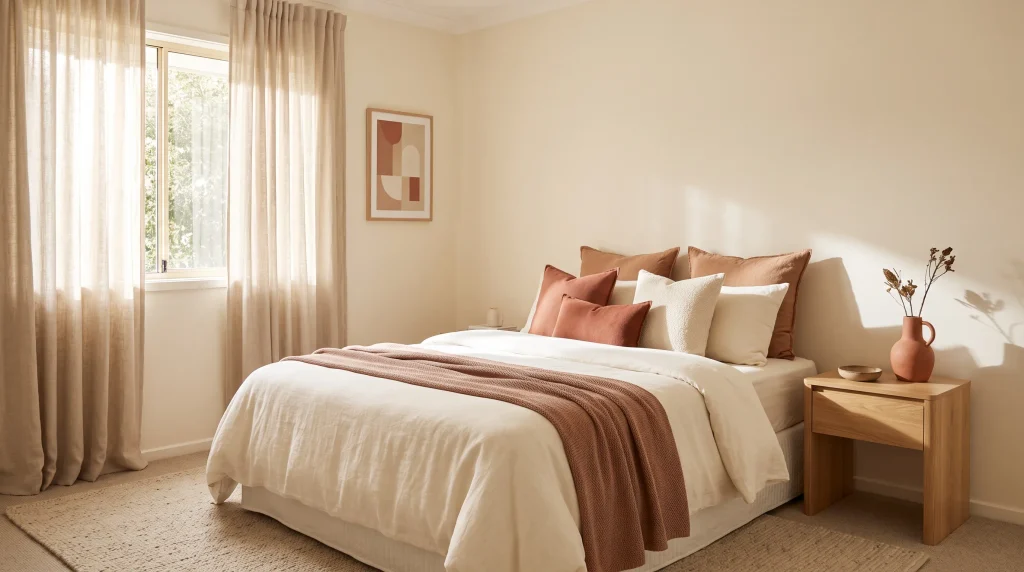
A few terracotta accents can bring surprising warmth to an otherwise neutral bedroom. Choose muted clay, rust, or burnt sienna rather than bright orange, then introduce the color through cushions, ceramics, artwork, or a folded throw. Against cream walls and beige bedding, these earthy shades create gentle contrast without overwhelming the space. I’ve noticed that matte terracotta finishes feel especially natural because they resemble handmade pottery and pair beautifully with wood and linen. Keep the strongest color concentrated in two or three places so the room looks coordinated rather than overly decorated.
Terracotta works particularly well when you want an earthy bedroom aesthetic with personality but still prefer a calm sleeping environment. Start small with a ceramic vase or decorative bowl, then repeat the tone in a cushion or abstract print. If you have wooden furniture, the warm undertones naturally connect with clay shades and create a cohesive palette. Avoid combining too many competing warm colors at once. Cream, sand, terracotta, and muted brown are usually enough to create depth. This restrained approach keeps the room visually interesting while preserving the relaxed quality you want around the bed.
8. Woven Natural Accents
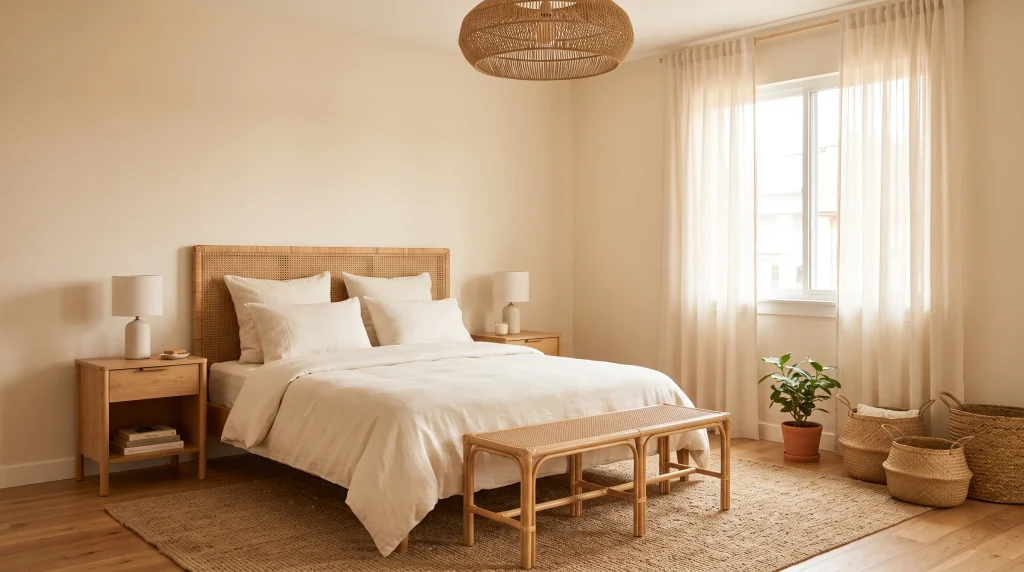
Woven accents add instant character because they bring natural texture into places where smooth furniture and plain walls can otherwise feel flat. Try a rattan headboard, seagrass basket, cane bench, or jute rug to introduce organic detail without adding another strong color. Baskets are particularly useful because they combine decoration with practical storage for blankets, books, or everyday items. In my experience, repeating one woven material in two or three locations makes the room feel more cohesive. Pair these pieces with linen and wood to create a relaxed natural foundation.
Natural fibers can also make a modern bedroom feel less formal and more comfortable. A woven pendant above the bedside area creates texture at eye level, while a jute rug grounds the lower part of the room. If your bedroom is small, choose one larger woven feature instead of several small accessories that can create clutter. Keep the surrounding colors warm and restrained, using cream, tan, beige, and soft brown. The combination creates a cozy minimalist bedroom that feels visually layered without sacrificing the clean lines and open space that make smaller rooms comfortable.
9. Cozy Reading Nook
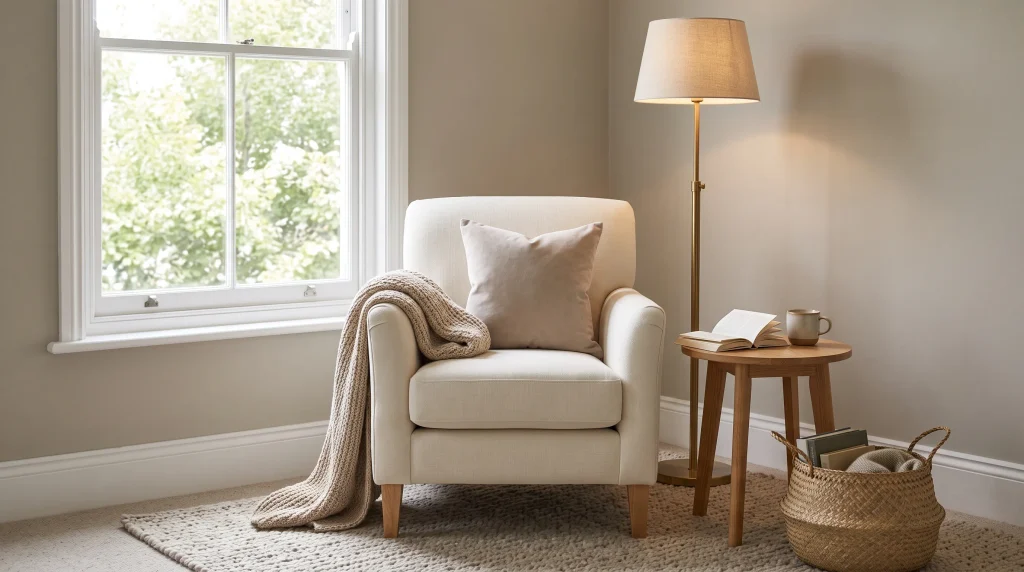
A small reading nook can make a bedroom feel more functional while adding another layer of cozy personality. Place a comfortable upholstered chair near a window, then add a compact wooden side table for books and a warm floor lamp for evening reading. Choose fabrics in cream, oatmeal, or soft beige so the corner blends naturally with the rest of the room. A knitted throw draped casually over the chair adds softness without requiring extra decoration. This setup works especially well in larger bedrooms where an unused corner would otherwise feel empty.
You do not need a large room to create a useful relaxation corner. In a compact space, choose a slim accent chair or armless lounge seat and pair it with a narrow table that leaves enough walking clearance. Keep the furniture proportionate so the nook feels intentional rather than squeezed into leftover space. A small basket underneath the table can hold books or blankets, adding hidden organization. When the chair, rug, lighting, and bedding share similar warm tones, the entire bedroom feels connected, giving the space a more complete and thoughtfully planned appearance.
10. Wood Slat Headboard
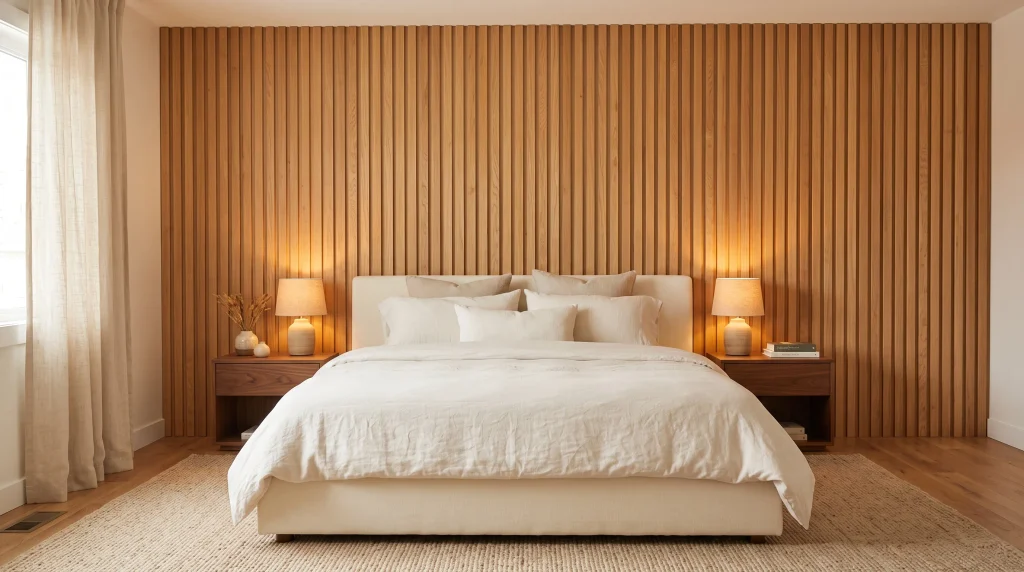
A wood slat headboard can transform a plain wall into a warm architectural feature without filling the bedroom with unnecessary decoration. Choose natural oak, walnut, or medium-toned wood, then let the vertical lines create visual height behind the bed. Keep the bedding simple in cream, ivory, or beige so the wood remains the main focal point. I’ve noticed vertical slats work particularly well when a bedroom has low ceilings because they naturally draw attention upward. Add soft bedside lighting to highlight the grain and create a more dimensional evening atmosphere.
Beyond its visual appeal, a slatted headboard can help establish a clear focal point in an otherwise simple room. If a full built-in installation is outside your budget, consider a freestanding slatted panel or modular wooden headboard instead. Keep the surrounding furniture streamlined so the room does not feel crowded. Repeating the same wood tone on nightstands, a bench, or picture frames can make the design feel intentional. For a softer result, combine the hard vertical lines with linen bedding, a textured rug, and rounded accessories that balance the structured backdrop.
11. Moody Chocolate Walls
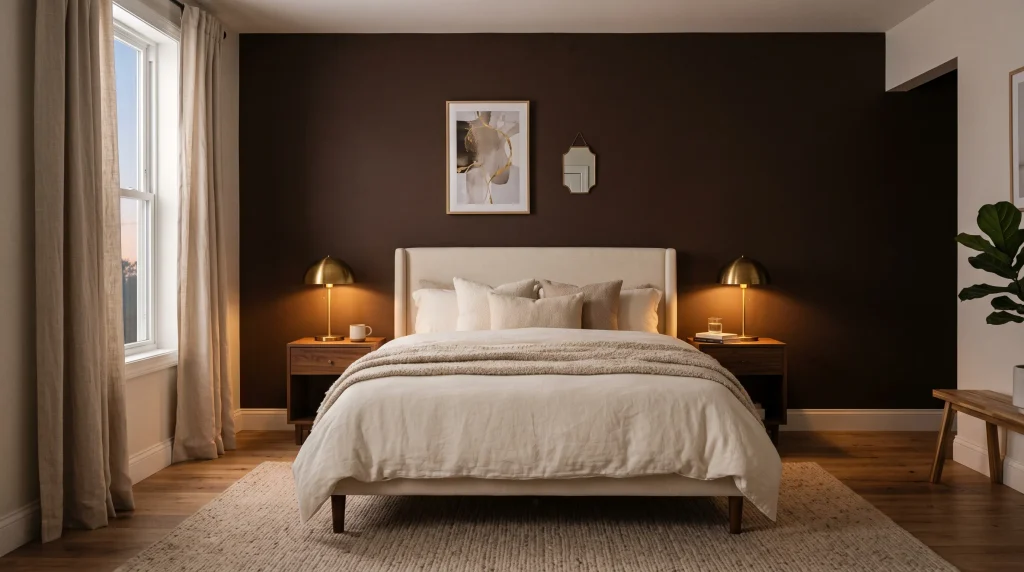
A chocolate brown feature wall can create a cocooning atmosphere while keeping the rest of the bedroom light and balanced. Instead of painting every surface dark, start with the wall behind the bed and pair it with cream bedding, warm wood, and beige textiles. The contrast makes the bed feel more grounded and visually important. Choose a matte finish because it absorbs light gently and gives the color a softer appearance. Warm bedside lamps can then create a beautiful glow against the darker backdrop, especially during evenings.
Dark walls do not automatically make a bedroom feel smaller when they are balanced with lighter furnishings and thoughtful lighting. Keep the ceiling and nearby walls lighter if you want to preserve openness, then use ivory curtains and a pale rug to reflect available daylight. Natural wood furniture adds warmth without creating harsh contrast, while brass or aged-metal details provide small highlights. If you are unsure about committing to a full wall, test the paint in morning and evening light first. The color can change noticeably throughout the day depending on your room’s exposure.
12. Soft Upholstered Bed
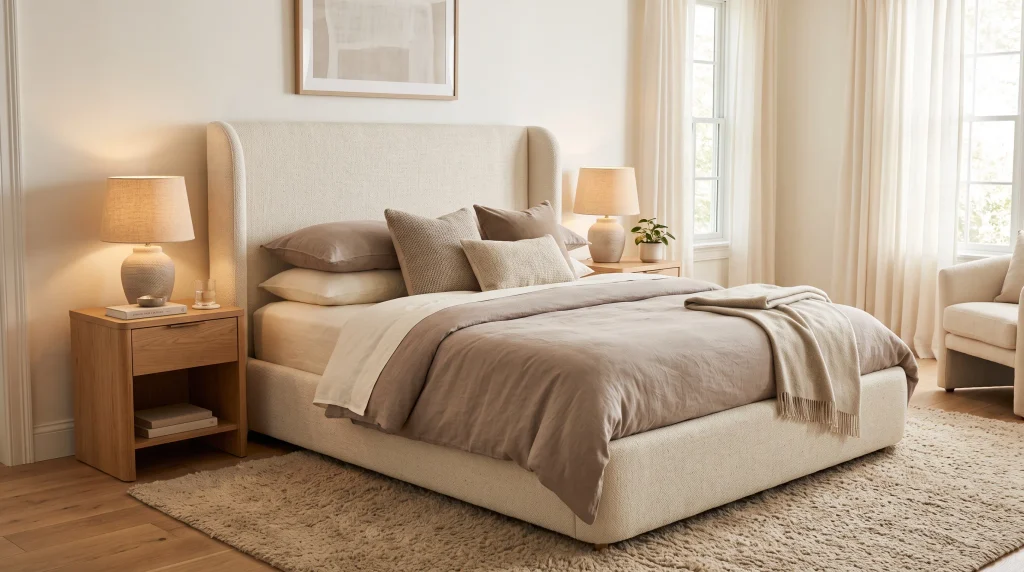
A soft upholstered bed can make the entire bedroom feel more comfortable because its fabric surface introduces warmth right where the eye naturally focuses. Choose cream, oatmeal, taupe, or warm beige upholstery and pair it with relaxed linen bedding for a layered appearance. A taller headboard creates more presence, while rounded edges can soften rooms filled with straight lines. In my experience, a neutral upholstered bed is also one of the easiest larger furniture choices to style repeatedly because you can change cushions, throws, and accent colors without replacing the main piece.
The key is choosing upholstery that looks inviting while remaining practical for everyday life. Performance fabric or tightly woven textiles can be useful if the bed receives frequent contact, while removable cushion covers make maintenance easier. Keep the bedding slightly lighter or darker than the headboard to create subtle contrast rather than a perfectly matching set. Add warm wood beside the bed and a textured rug underneath to reinforce the natural palette. A simple upholstered frame can then become the foundation for everything from cozy minimalist styling to earthy, modern, or softly rustic bedroom designs.
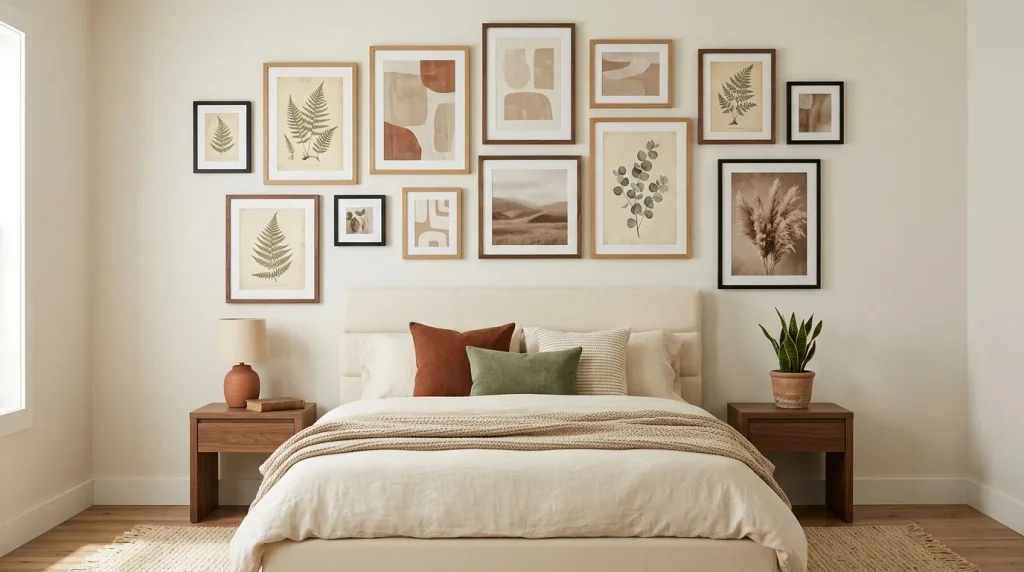
13. Earthy Gallery Wall
An earthy gallery wall gives a neutral bedroom personality without requiring bold furniture or complicated decoration. Choose botanical prints, abstract shapes, landscapes, or simple photography in cream, brown, rust, muted green, and beige tones. Mix frame sizes to create movement, but keep the color palette consistent so the arrangement still feels calm. I’ve noticed that using natural wood frames makes artwork feel warmer than a collection of glossy black frames. Hang the center of the arrangement slightly above eye level from the bed so the wall feels connected to the furniture below.
A successful gallery wall does not need to be perfectly symmetrical, but it should have visual balance. Start by arranging the frames on the floor before putting anything on the wall, leaving similar spacing between pieces. Keep the largest artwork near the center and place smaller prints around it. For a relaxed bedroom, avoid filling every available section of wall. The artwork should complement the bedding rather than compete with it. Repeating one accent color, such as muted terracotta or olive green, can quietly connect the gallery wall to cushions, ceramics, or throws.
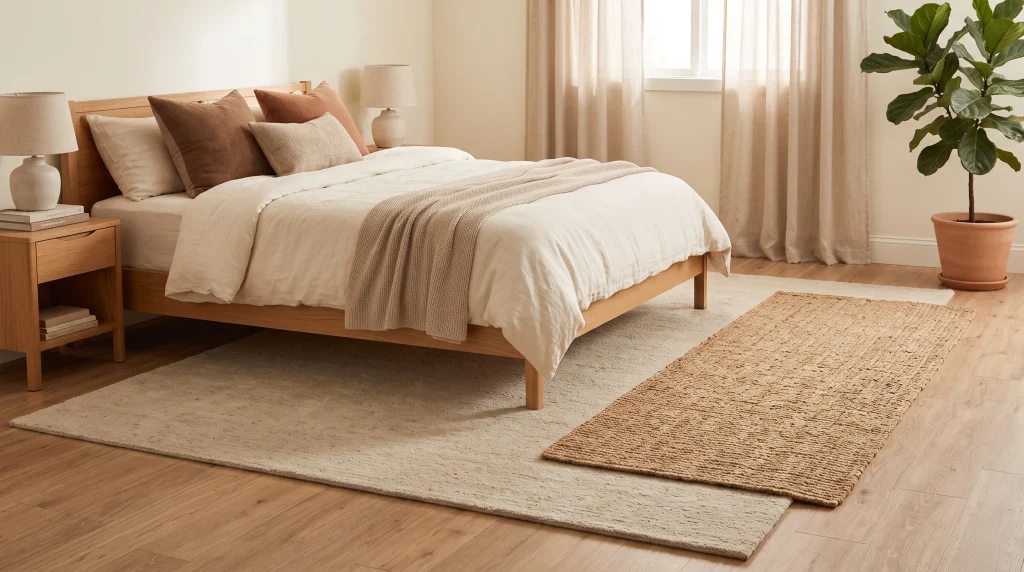
14. Layered Area Rugs
Layered rugs can make a bedroom feel noticeably warmer underfoot while adding visual depth across the floor. Start with a larger neutral wool or low-pile rug beneath the bed, then introduce a smaller woven runner beside the bed for additional texture. Keep both rugs within a similar palette of beige, oatmeal, tan, or soft brown so they complement rather than compete. This approach works especially well in rooms with hard flooring because the added textiles soften the acoustics and make the space feel more comfortable.
When layering rugs, proportion matters more than quantity. The larger rug should visually anchor the bed and extend beyond its sides, while the smaller piece can define a walking or bedside area. Avoid placing too many patterns together because they can make a restful bedroom look busy. Natural fibers such as wool, jute, and cotton create useful texture without relying on bold prints. If you have a small room, one appropriately sized rug may be enough. A carefully positioned runner can then add warmth without reducing the sense of open floor space.
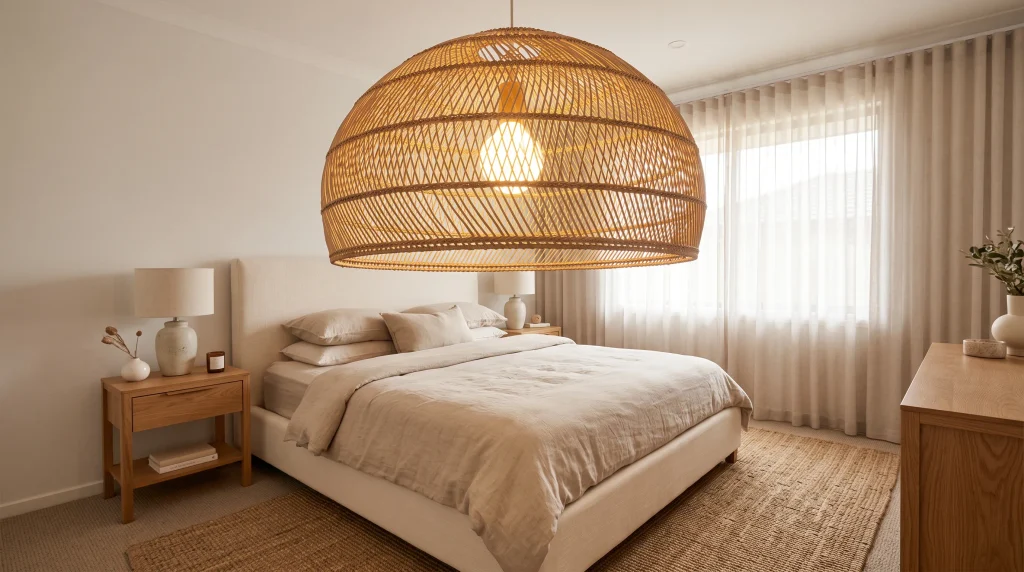
15. Rattan Pendant Light
A rattan pendant light can become a beautiful focal point while adding natural texture overhead. Position it centrally above the bed or in the main open area, then choose a woven shade that allows warm light to filter gently through the fibers. The irregular pattern creates subtle shadows on nearby walls and ceilings, giving the room more depth after sunset. Pair the fixture with cream bedding, light wood, and beige textiles so the natural material feels integrated rather than isolated. A simple silhouette usually works best when the bedroom already contains several textured surfaces.
The pendant should provide atmosphere without becoming the only source of illumination. Combine it with bedside lamps or wall sconces so different areas can be lit independently. Choose a warm-white bulb and, when possible, use a dimmer to adjust brightness throughout the evening. For lower ceilings, select a flush or semi-flush woven fixture instead of a long-hanging pendant. This keeps the room visually open while retaining the organic character. Repeating rattan through a basket or small decorative tray can further connect the overhead feature with the rest of the bedroom.
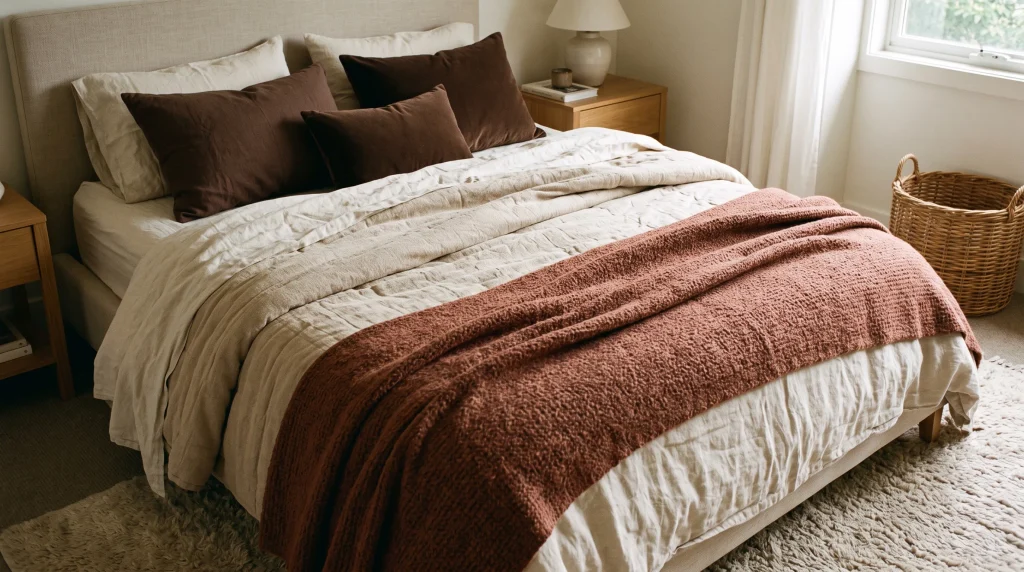
16. Earthy Bedding Layers
A beautifully layered bed can become the visual centerpiece of a warm bedroom without relying on excessive decoration. Begin with breathable cream sheets, add a beige quilt or duvet, then place a few pillows in complementary shades such as oatmeal, caramel, and soft brown. Finish with a muted rust or cinnamon throw folded across the foot. The different fabric weights create depth while keeping the palette cohesive. I’ve noticed that slightly relaxed bedding often looks more inviting than perfectly arranged layers because small folds and natural texture make the room feel genuinely lived in.
For everyday comfort, focus on layers that are easy to remove, wash, and rearrange. Lightweight cotton or linen works well as a base, while wool or knitted throws can provide extra warmth during cooler months. Avoid adding too many decorative cushions because they can make the bed difficult to use. Instead, choose a few pieces with noticeably different textures or shapes. Keeping colors within a warm neutral range allows you to refresh the room seasonally by changing only one throw or cushion, making this approach both practical and visually versatile.
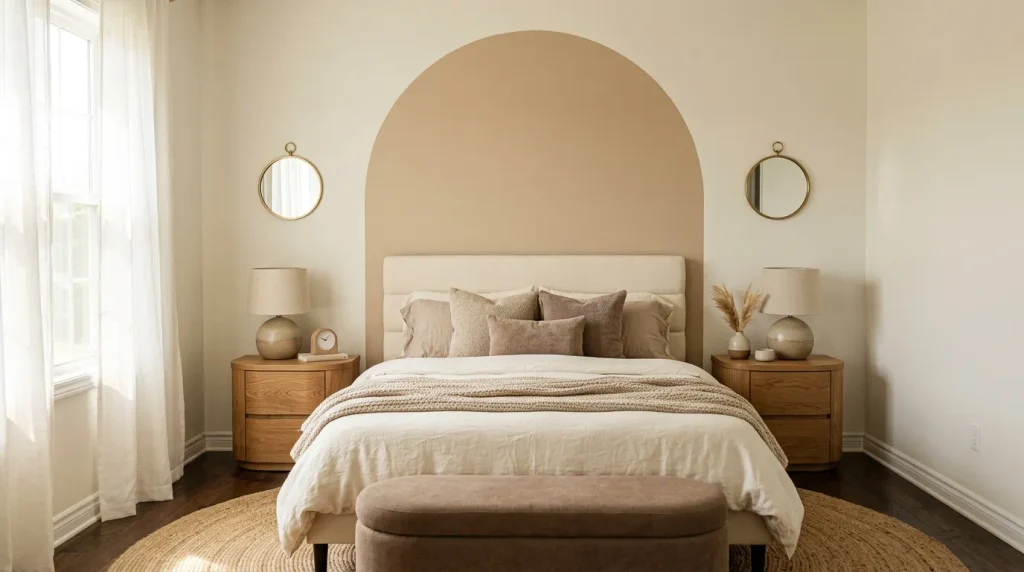
17. Arched Wall Detail
An arched wall detail can give a simple bedroom a custom-designed appearance without requiring expensive architectural changes. Paint a large curved shape behind the bed using warm beige, muted taupe, clay, or soft brown, then keep the surrounding wall lighter for gentle contrast. The curved outline naturally softens the room and creates a clear focal area. In my experience, this technique works particularly well when a bedroom lacks an architectural feature because the painted shape visually defines the bed without adding bulky furniture.
You can make the effect more cohesive by repeating rounded forms elsewhere in the room. A curved mirror, circular lamp base, rounded nightstand, or softly shaped bench can echo the arch without making the theme feel overly obvious. Keep the rest of the decoration simple so the wall treatment remains the main feature. If you are renting, consider removable wallpaper or a temporary mural instead of permanent paint. Warm lighting placed on either side of the bed can further emphasize the curve and make the accent feel especially inviting after sunset.
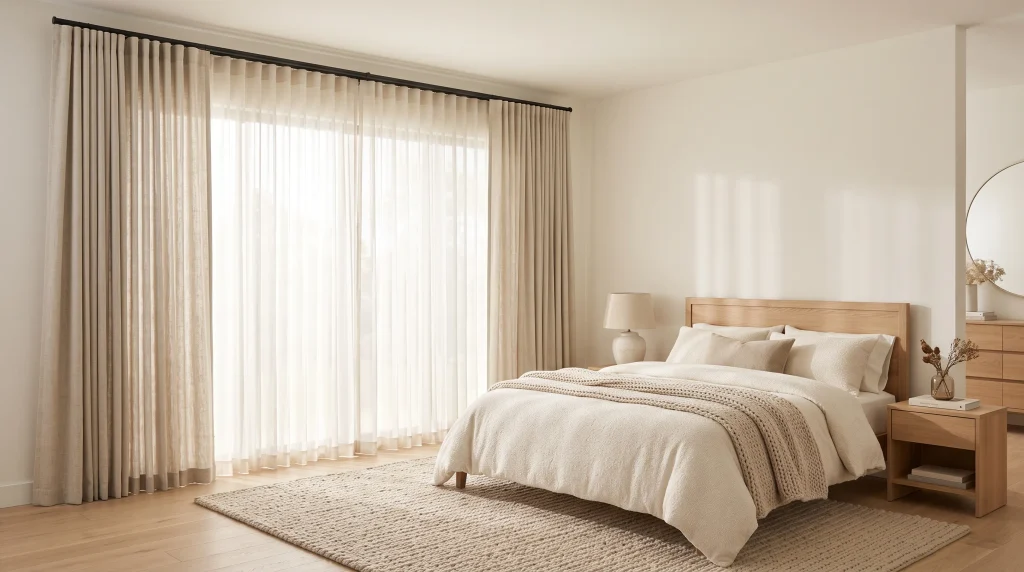
18. Soft Curtain Layers
Soft curtains can change both the appearance and atmosphere of a bedroom by controlling daylight while adding another layer of fabric. Start with sheer ivory panels that allow gentle morning light through, then add heavier oatmeal or beige curtains for privacy and evening warmth. Hang the panels close to the ceiling and let them fall near the floor to create a taller, more finished appearance. This simple adjustment can make windows feel larger and help the entire room look more thoughtfully styled without changing the furniture.
The best curtain choice depends on how your bedroom receives natural light throughout the day. Sheer fabric works beautifully in darker rooms because it preserves daylight while reducing harsh glare, whereas thicker linen blends provide more privacy and insulation. Choose warm neutrals that connect with the bedding and rug rather than introducing a completely separate color. Keep the curtain rod and hardware visually quiet so attention stays on the fabric. When the curtains gently frame the window, they can make the bedroom feel softer, calmer, and more comfortable from morning through evening.
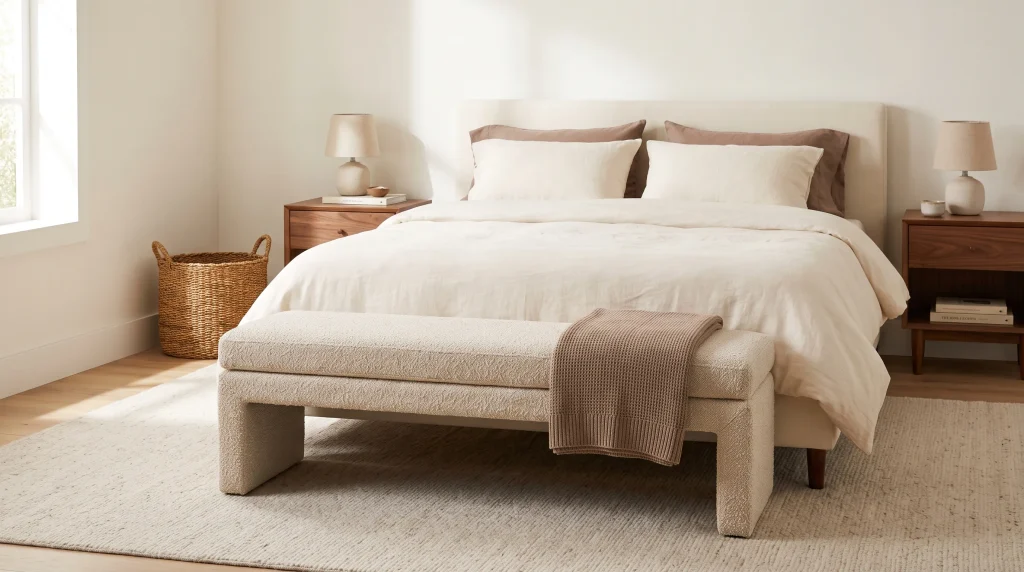
19. Cozy Bench Seating
A cozy bench at the foot of the bed adds function while making the room feel more complete. Choose a low-profile design upholstered in oatmeal, cream, boucle, or textured linen, then position it so there is comfortable walking space around both sides. The bench becomes useful for putting on shoes, folding a blanket, or simply sitting while getting ready. I’ve noticed that benches work especially well in bedrooms where the bed feels visually dominant because they create a second horizontal layer that balances the furniture without competing with the headboard.
For a polished look, choose a bench that is slightly narrower than the mattress rather than extending beyond its edges. A simple upholstered design keeps the room relaxed, while a wooden frame can introduce another natural material. Avoid turning the bench into permanent storage for clothing because visible clutter can quickly reduce the calm feeling. Instead, place a folded throw across one side or leave the surface mostly clear. In smaller bedrooms, a narrow bench with open legs can provide useful seating while maintaining visual openness beneath it.
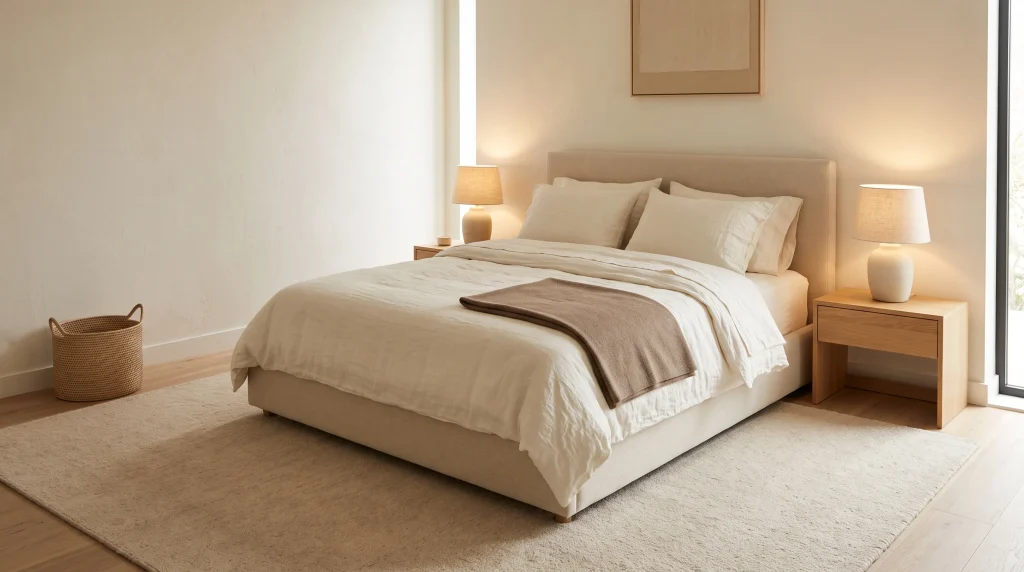
20. Minimal Cozy Styling
A warm bedroom aesthetic does not require filling every surface with decorative pieces; thoughtful restraint can make the room feel even more inviting. Start with comfortable bedding, natural wood, soft lighting, and one or two tactile accessories, then remove anything that does not serve a purpose. Leave some empty space around the nightstands and walls so the eye has room to rest. This approach makes the bedroom feel calm rather than crowded. The strongest rooms often rely on a few well-chosen materials and colors instead of a long collection of unrelated decorations.
Minimal styling is also easier to maintain, which matters in a room used every day. Keep bedside surfaces limited to practical essentials such as a lamp, book, or small ceramic object, and use baskets or drawers to hide everyday clutter. Repeat warm tones through the bedding, rug, wood, and accessories so everything feels connected. If the room starts looking too plain, add texture before adding more objects. A woven basket, linen throw, or wool rug can provide visual interest without sacrificing the peaceful, uncluttered quality that makes a bedroom comfortable.
Conclusion
Creating a cozy bedroom does not have to mean starting over. The right colors, textures, lighting, furniture, and natural accents can gradually transform an ordinary room into a relaxing retreat. A thoughtful warm bedroom aesthetic gives you plenty of flexibility to personalize the space while keeping it comfortable and visually balanced. Start with one simple change, such as layered bedding, warmer lighting, or a natural wood accent, then build from there. I’ve seen how small styling changes can make a room feel completely different. Save this post on Pinterest, try your favorite ideas, and share it with someone planning a cozy bedroom makeover.