
15 Black Bedroom Ideas That Feel Cozy, Not Cold
Black can completely change the character of a bedroom, but the secret is knowing how to balance it with light, texture, and warmer materials. Done well, a black bedroom feels bold, cozy, and sophisticated rather than gloomy or cold. Done poorly, it can feel flat, heavy, or like an unfinished basement.
Testing different combinations of paint finish, wood tone, and lighting temperature shows that black works best in a bedroom when it’s paired with something warm — oak or walnut furniture, cream or beige textiles, and lighting in the 2700K range. From matte black walls to layered bedding and warm brass details, these 15 black bedroom ideas offer practical, real-world ways to bring dark styling into an actual home, whether your space is compact or generous.
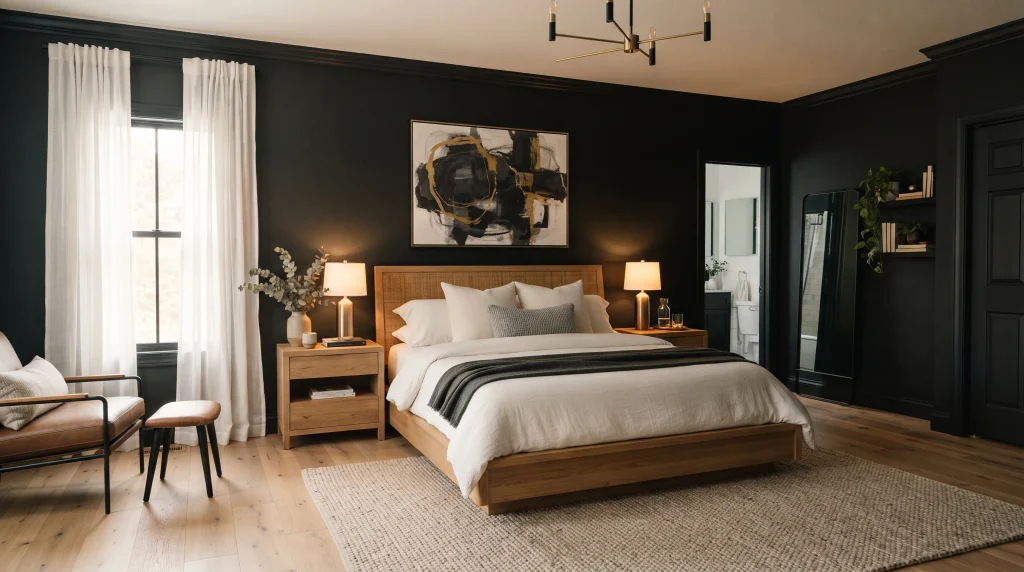
1. Matte Black Walls
Black walls feel surprisingly inviting when the finish and lighting are chosen carefully. A matte black backdrop absorbs harsh reflections and gives the room a calm, cocoon-like quality without making every surface look flat or lifeless. Pair it with warm oak furniture, crisp bedding, and a few soft textiles to create contrast that reads as intentional rather than accidental. In smaller bedrooms, keeping the ceiling and trim a shade lighter preserves visual height and stops the room from feeling boxed in.
For the most polished result, choose a true soft black or charcoal-black paint rather than a glossy jet black, which tends to show every imperfection on the wall surface. Matte or eggshell finishes generally look richer because they minimize distracting reflections and let nearby materials — wood grain, linen weave, brushed metal — stay visible instead of getting lost in glare. Warm bedside lamps around 2700K soften the darkness after sunset, while sheer curtains let daylight layer in naturally each morning. This is what makes a black bedroom feel sophisticated instead of just dark.
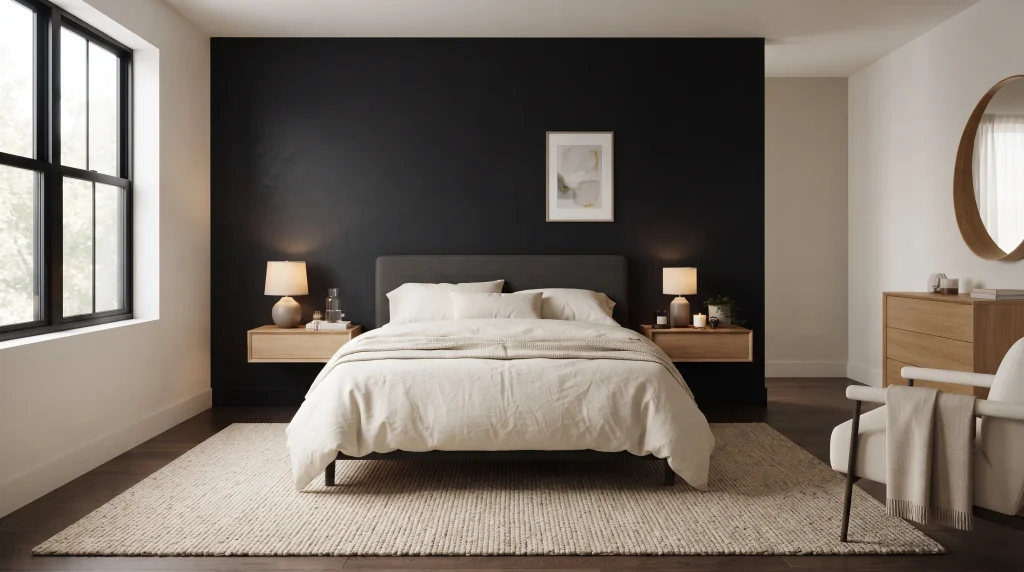
2. Black Accent Wall
A black accent wall creates drama without requiring every surface in the room to go dark. Placing it behind the bed frames the room’s main focal point with the strongest color, while the remaining walls stay in warm white, pale beige, or soft greige. This balance makes the bedroom feel layered rather than visually crowded, and it’s one of the lowest-commitment ways to test a dark palette before painting an entire room.
Choose a simple upholstered headboard, light bedding, and streamlined nightstands so the wall carries the visual weight. The contrast also helps smaller rooms feel more open, since the darker surface has a clear job to do rather than competing with everything else in the space. Natural linen bedding, a textured rug, and light oak furniture add softness without weakening the wall’s impact. If the wall faces a window, watch how the light changes across the day before finalizing the paint shade — black can shift noticeably between morning and evening light.
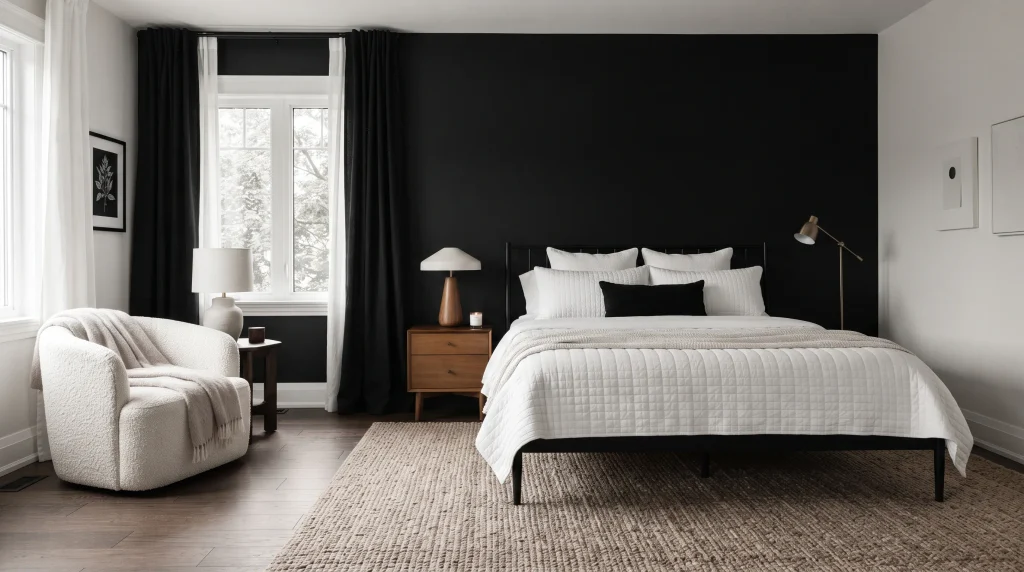
3. Black and White Layers
Black and white layers make a dark bedroom feel crisp, graphic, and genuinely timeless rather than trend-driven. Start with one strong black element — the wall, the bed frame, or floor-length curtains — then use white bedding and lighter upholstery to build in visual breathing room. This contrast keeps the palette from turning muddy while giving architectural details, like crown molding or window trim, more definition than they’d have against an all-neutral backdrop.
To keep the contrast comfortable rather than stark, mix several white textures instead of relying on one flat white fabric. Quilted bedding, linen curtains, boucle upholstery, and a woven rug make the lighter areas feel warmer and more dimensional. Warm wood also helps bridge the two extremes, particularly in rooms with limited daylight where pure black-and-white can start to feel cold. Treating black and white as a flexible base palette, rather than a strict formula, tends to work better in practice — adding one muted neutral, like beige or taupe, softens the whole room without diluting the contrast.
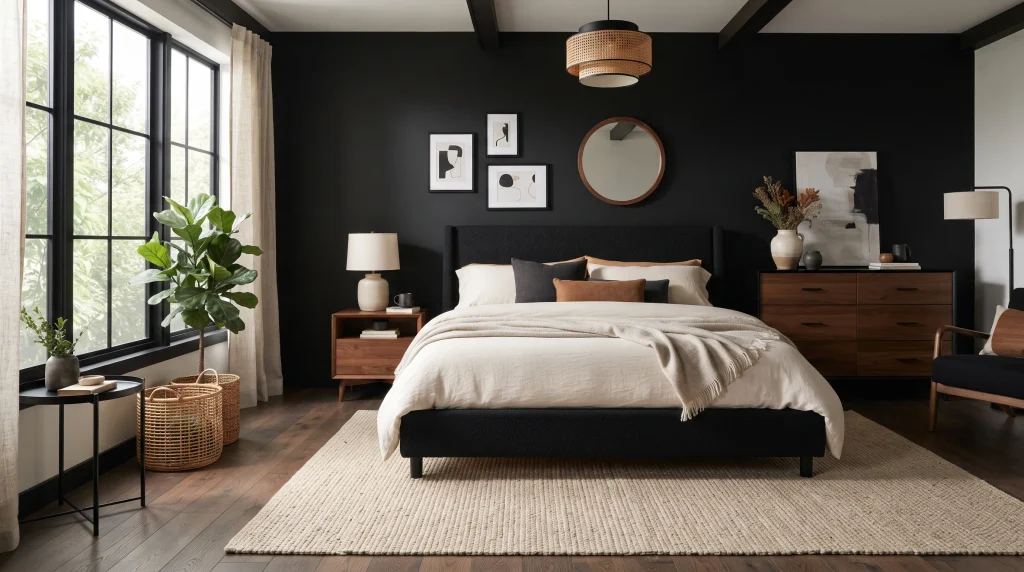
4. Wood and Black
Warm wood changes how a dark bedroom feels almost instantly, adding natural softness to an otherwise dramatic palette. Use black on the walls, bed frame, or cabinetry, then bring in oak, walnut, or reclaimed wood through the furniture itself. The natural grain creates visual movement and keeps the space from reading as overly polished or showroom-flat. Light bedding and a woven rug soften the contrast further, which matters most in bedrooms with limited natural light.
The wood tone should be chosen based on how much daylight the room actually gets — pale oak brightens a dim space, while walnut creates a richer, more luxurious feel in rooms with larger windows. Limiting the room to two wood finishes, rather than three or four, keeps everything looking coordinated instead of assembled piece by piece. This combination works especially well with linen bedding, woven baskets, and simple ceramic accessories, where black provides the structural backbone and wood supplies the warmth and lived-in texture that keep the room from feeling staged.
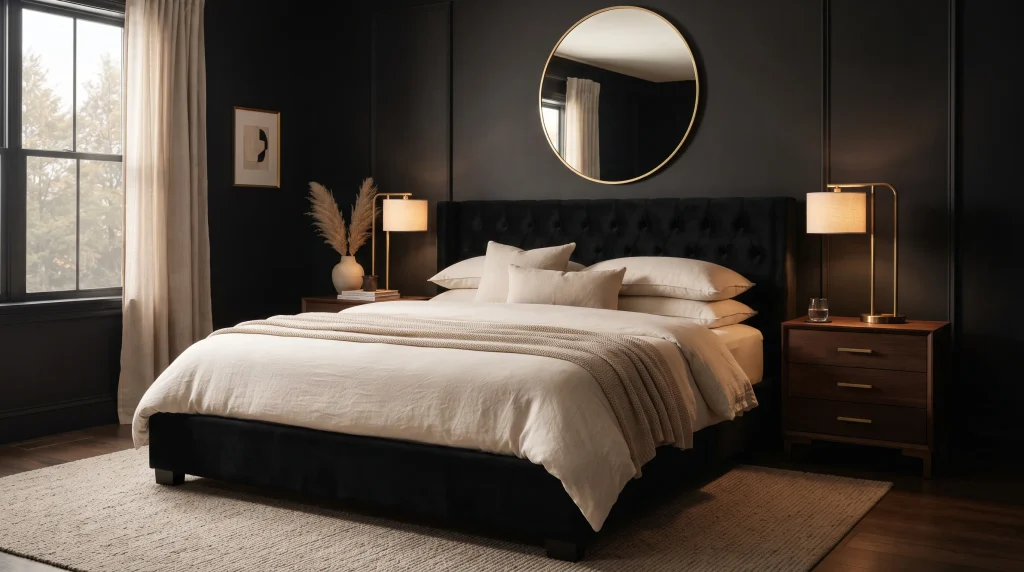
5. Black and Gold Accents
Black and gold accents create a polished bedroom without requiring an expensive-looking overhaul. The key is restraint — brushed brass or muted antique gold on lighting, drawer pulls, mirrors, or picture frames does more for the room than covering every surface in shiny metal. Against a deep black background, these small details catch the light and create pinpoints of warmth that keep the space from feeling flat or one-dimensional.
Warm gold or aged brass reads more natural than highly reflective yellow gold, which can look costume-like against matte black. A pair of matching bedside lamps establishes symmetry, while one framed mirror or a few repeated hardware details tie the metallic finish together throughout the room. Warm bulbs around 2700K make brass look softer after dark instead of harsh or clinical. Three or four repeated metallic touches is typically enough — more than that starts to compete rather than complement. Combine them with ivory, velvet, or linen so the room has tactile variety instead of relying on shine alone for visual interest.
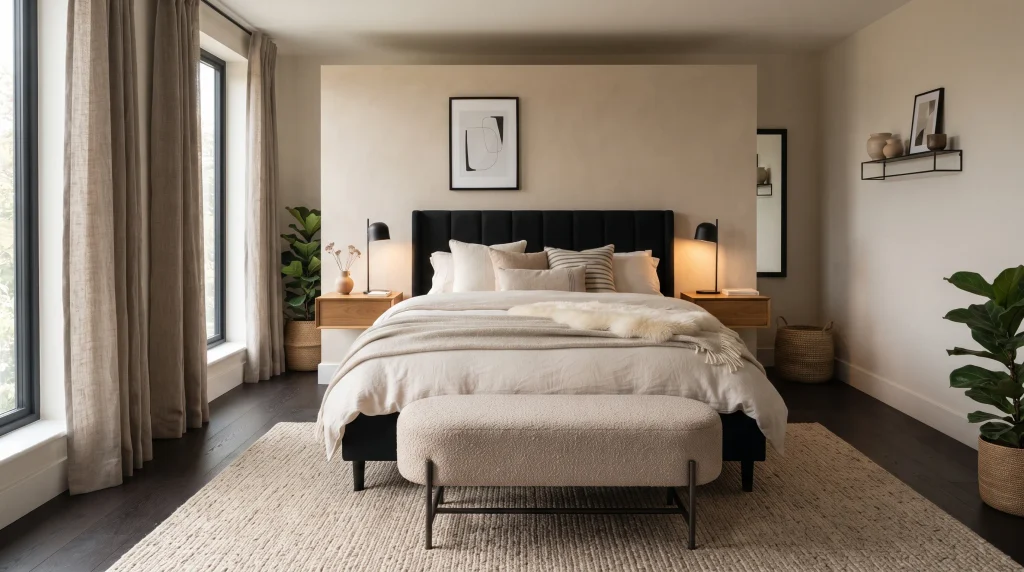
6. Black and Beige Layers
Black paired with beige is one of the easiest ways to soften a dark bedroom without losing its depth. Instead of high-contrast black and white, use creamy bedding, taupe curtains, beige upholstery, and warm neutral accessories to bring the intensity down a notch. The warm tones reduce the visual weight of black while keeping its structure, and layering two or three shades of beige adds depth without making the palette feel complicated to put together.
Warm-undertone beige generally works better here than cool gray-beige, since it sits more naturally next to black and avoids making the room feel cold. Texture is what keeps this combination from going flat — linen bedding, a woven rug, a boucle bench, and a softly upholstered headboard all add dimension without introducing new colors. Natural wood bridges the two tones nicely. This palette suits bedrooms of almost any size because the lighter neutrals preserve a sense of openness while black provides enough definition to keep the room from feeling generic.
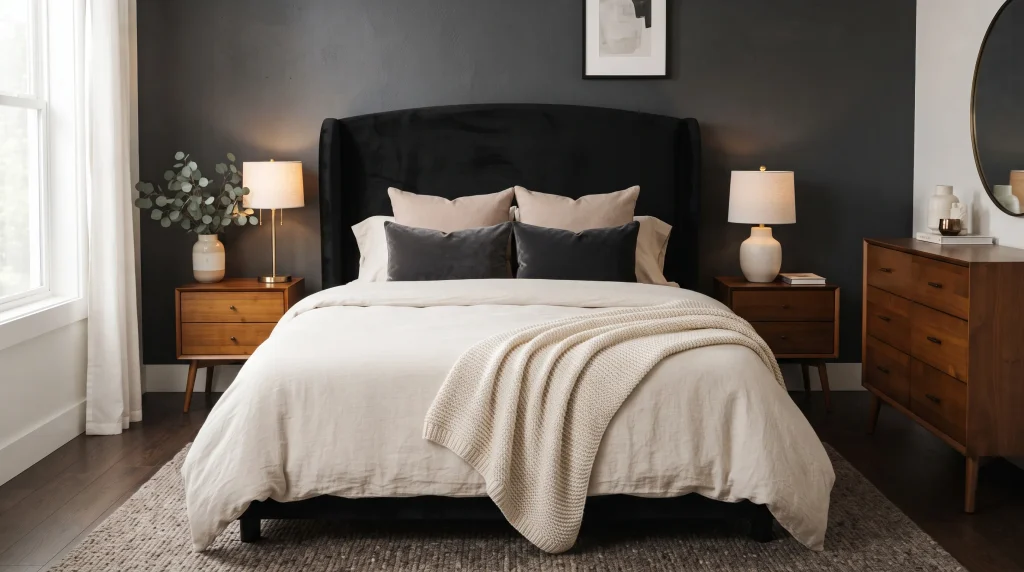
7. Velvet Black Headboard
A black velvet headboard gives a bedroom instant depth while keeping the darkest element concentrated around the bed rather than spread across every wall. The soft surface catches daylight and lamp glow differently depending on the angle, creating subtle texture shifts that flat painted walls simply can’t produce. A tall or gently curved headboard makes the bed feel more substantial, and balancing it with ivory, cream, or beige bedding keeps the overall composition from feeling too heavy.
Velvet reads as luxurious without becoming overly formal when the rest of the room stays relaxed rather than matchy. Layer the bed with washed linen, a chunky knit throw, and a few pillows in muted neutrals instead of coordinating everything to the headboard exactly. Warm wood nightstands soften the black and add an organic counterpoint. Placing bedside lighting slightly above mattress height gives the velvet a gentle wash of light that shows off its texture. Here, texture does more visual work than added decoration — the headboard is the statement, and everything else stays quiet.
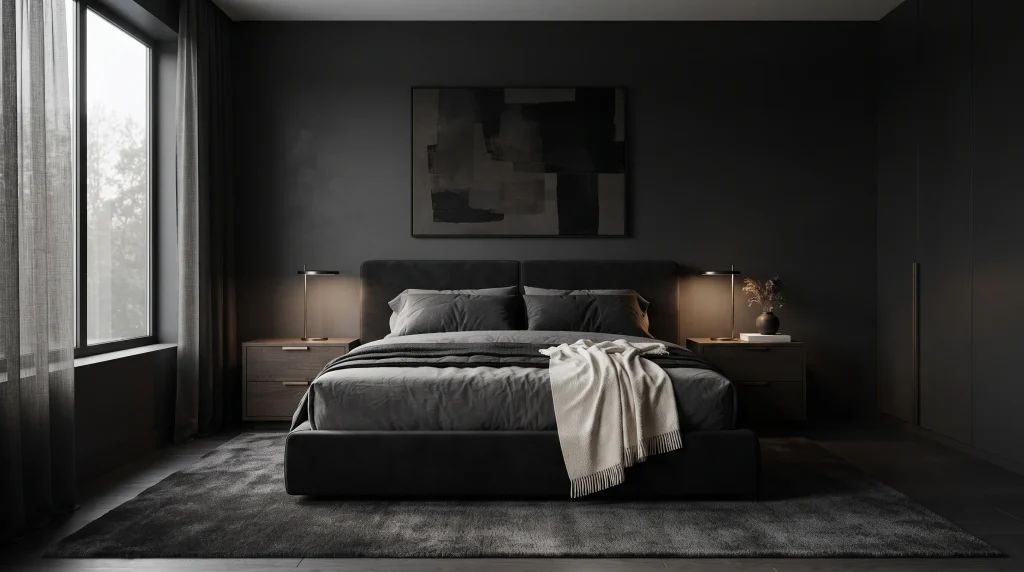
8. Charcoal Black Palette
A charcoal-black palette offers the drama of a dark bedroom with a slightly softer visual effect than pure black. Instead of one flat black throughout, layer charcoal walls with deeper black furniture, smoky gray bedding, and dark gray textiles. The subtle differences between tones create depth without relying on stark contrast, which makes this approach particularly useful in bedrooms with limited daylight, where true black can occasionally feel too intense or heavy.
Texture is what makes several dark shades work together instead of reading as one flat block of color. Matte paint, washed linen, wool, smoked wood, and brushed metal all absorb or reflect light differently, which keeps the eye moving across the room rather than landing on a single dark mass. Adding one or two lighter elements — an ivory throw, a pale rug — creates breathing room while keeping the atmosphere rich. This layered approach tends to look most sophisticated when the furniture has clean, simple lines, since the restrained palette lets silhouettes and materials carry the design rather than color alone.
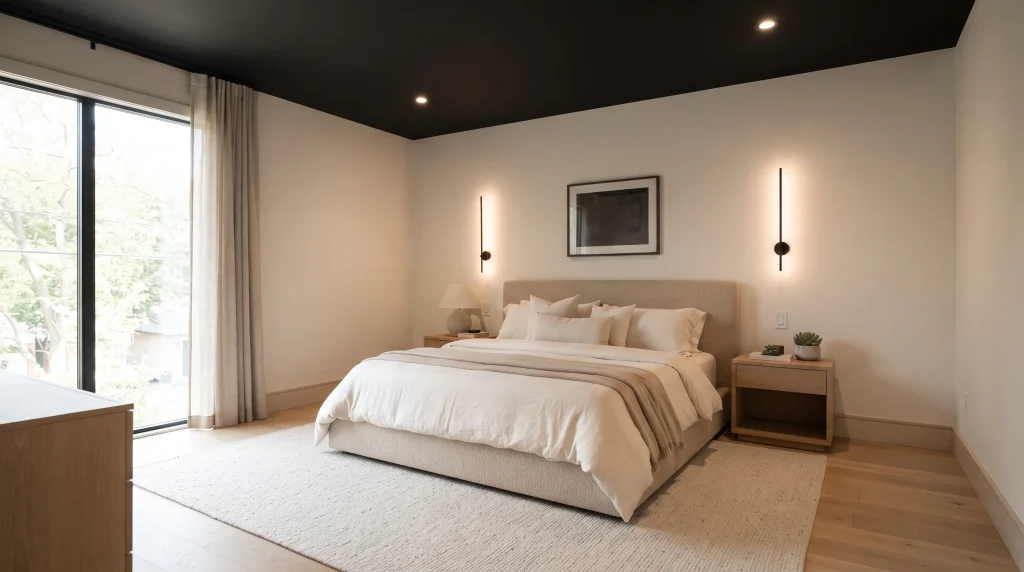
9. Black Ceiling Detail
A black ceiling turns an overlooked surface into a striking architectural detail. Rather than painting every wall dark, keep the walls warm white, greige, or soft beige, and use matte black overhead instead. The contrast draws the eye upward and creates an intimate, enveloping feeling around the bed — a technique that works particularly well in bedrooms with higher ceilings or interesting architectural lines that would otherwise go unnoticed.
Lighting becomes more important once the ceiling goes dark, since black absorbs illumination rather than bouncing it back into the room. Recessed lights, slim pendants, or wall sconces create several gentle light sources instead of relying on one central fixture that has to work twice as hard. Warm bulbs around 2700K soften the room at night, while daylight keeps the dark ceiling from dominating during the day. If the bedroom already has low ceilings, using black within a defined architectural section — rather than the whole ceiling — delivers the same design impact without making the room feel compressed.
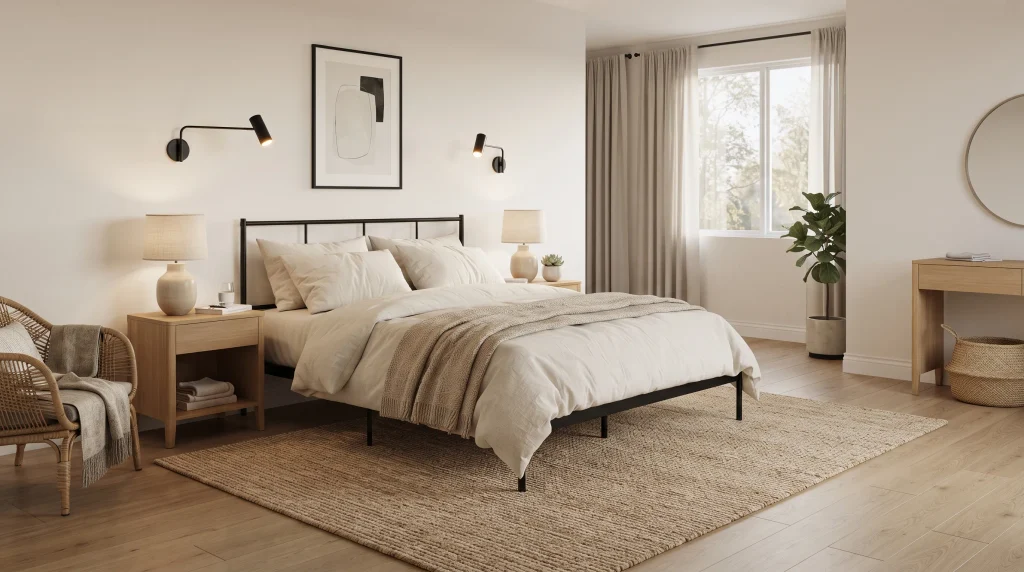
10. Black Bed Frame
A black bed frame gives the bedroom a strong focal point without requiring dark walls at all, which makes it one of the most flexible entries on this list. Its defined silhouette naturally draws attention to the sleeping area, useful when you want drama but prefer to keep the surrounding architecture light. A slim metal or streamlined upholstered frame works best in smaller rooms, since a lighter visual profile helps preserve a sense of openness that a bulky frame would undercut.
Pairing the frame with cream, white, or beige bedding keeps the bed from becoming one solid dark shape in the room. A simple rug underneath further separates the furniture from the floor visually. For a more layered result, repeat small amounts of black elsewhere — a wall sconce, a picture frame, a curtain rod — rather than matching every piece of furniture to the bed frame exactly. Natural oak or woven accessories add warmth and soften the strong silhouette, making dark furniture feel approachable rather than heavy-handed.
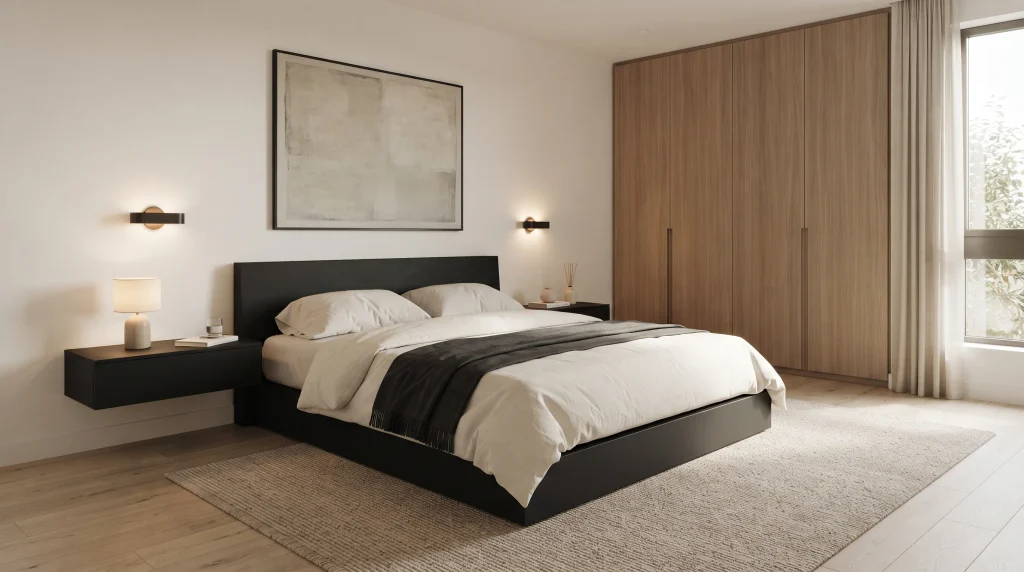
11. Minimalist Black Bedroom
A minimalist black bedroom works best when every visible element earns its place. Start with a simple black platform bed, streamlined nightstands, and uncluttered walls, then introduce one lighter color through bedding or flooring to keep the room from feeling too closed-in. The reduced number of objects lets the dark palette feel intentional rather than crowded, and clean furniture silhouettes help preserve a sense of space, which matters most in smaller bedrooms with limited square footage.
Storage plays a bigger role here than in more decorated rooms. Bedside tables with drawers, under-bed storage, or built-in cabinetry keep everyday items out of view, which is what actually makes a minimalist room look effortless rather than sparse. Warm wood, linen, and one subtly textured rug prevent the space from feeling flat. Keeping artwork to a single large piece, rather than a full gallery wall, lets the architecture and color palette stay visible. Layered lighting — bedside sconces, indirect illumination, and natural daylight — tends to make these rooms feel comfortable rather than stark.
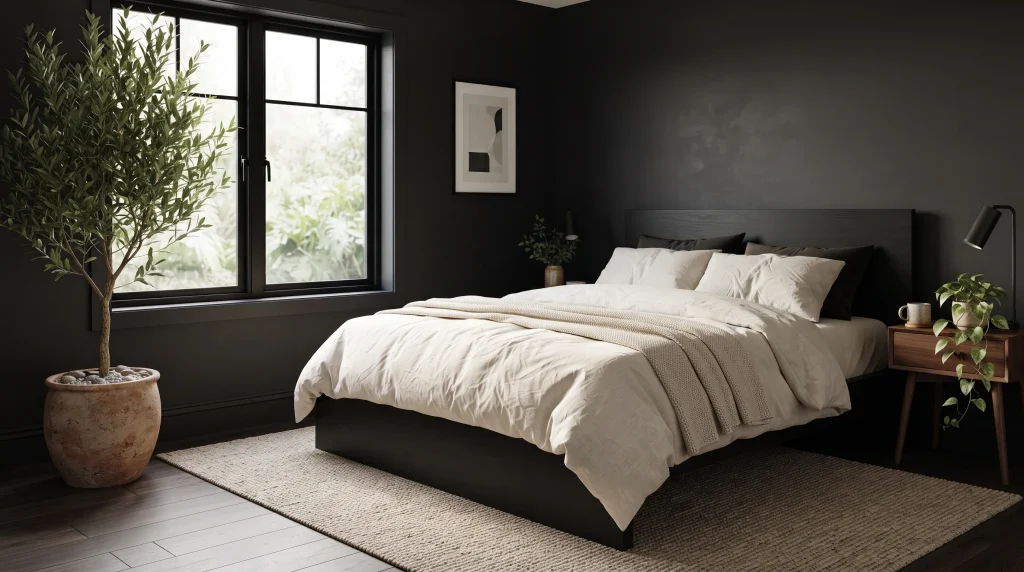
12. Black with Greenery
Greenery makes a dark bedroom feel instantly fresher by introducing natural color and organic shapes that painted surfaces can’t replicate. Against black walls or furniture, green leaves become a subtle focal point without needing bright artwork or extra decorative accessories. One larger plant beside the window, or a few smaller varieties on shelves and nightstands, is usually enough — the goal is a natural accent, not a full indoor garden.
Choose plants based on the light your bedroom actually gets, not just how they look in photos. A low-maintenance variety is more practical than one requiring constant direct sun, especially in a room with limited daylight. Terracotta, ceramic, or woven baskets as planters complement the room’s other natural materials without adding another loud color. A tall plant can soften a sharp corner, while a small trailing plant adds movement to a nightstand. Greenery works best in black bedrooms when the pots and baskets stay neutral, letting the foliage supply freshness while black remains the dominant color.

13. Luxury Black Bedding
Black bedding gives a bedroom a rich, sophisticated look, especially when the rest of the palette stays controlled and doesn’t compete for attention. Start with a black linen or cotton duvet, then layer cream, taupe, or charcoal pillows to break up the large dark surface. A textured throw folded across the foot of the bed adds another visual layer without introducing an unnecessary new color. This is one of the easiest updates on this list — a full room transformation without repainting or replacing furniture.
Fabric choice matters more with black bedding than with lighter colors, since black reveals lint, wrinkles, and uneven texture more easily. Washed linen, cotton percale, or textured quilted material makes the darker color look relaxed rather than overly formal or stiff. Warm bedside lamps and a neutral rug create contrast around the bed, and a little variation between accessories — rather than matching everything exactly — makes the room feel more natural. Combining black bedding with warm neutrals is what gives the strongest result: the dark textile feels luxurious while the lighter layers keep the sleeping area visually comfortable.
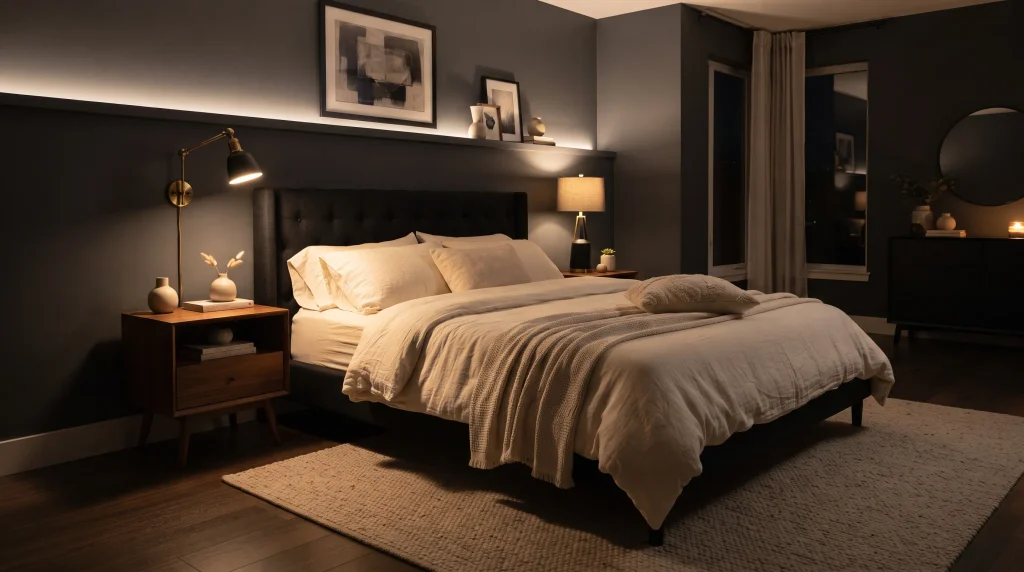
14. Warm Bedroom Lighting
Warm lighting changes how a dark bedroom looks after sunset more than almost any other single choice on this list. Instead of relying on one bright ceiling fixture, build several softer layers around the room using bedside lamps, wall sconces, and indirect accent lighting. Warm bulbs around 2700K generally create a comfortable evening atmosphere and help black, charcoal, and dark wood surfaces feel richer rather than harsh or flat under direct light.
Placing lights at different heights gives the room gentle pools of illumination instead of one flat wash from above, which is what makes many dark bedrooms feel two-dimensional. Fixtures with shades or diffusers soften the light, particularly beside the bed where glare becomes uncomfortable at close range. Brass, bronze, black metal, and warm wood finishes all work well with a dark palette, depending on the room’s overall style. Keep task lighting bright enough for reading while ambient fixtures handle the broader atmosphere — this layered approach often changes the feel of a room more than adding decoration ever could.
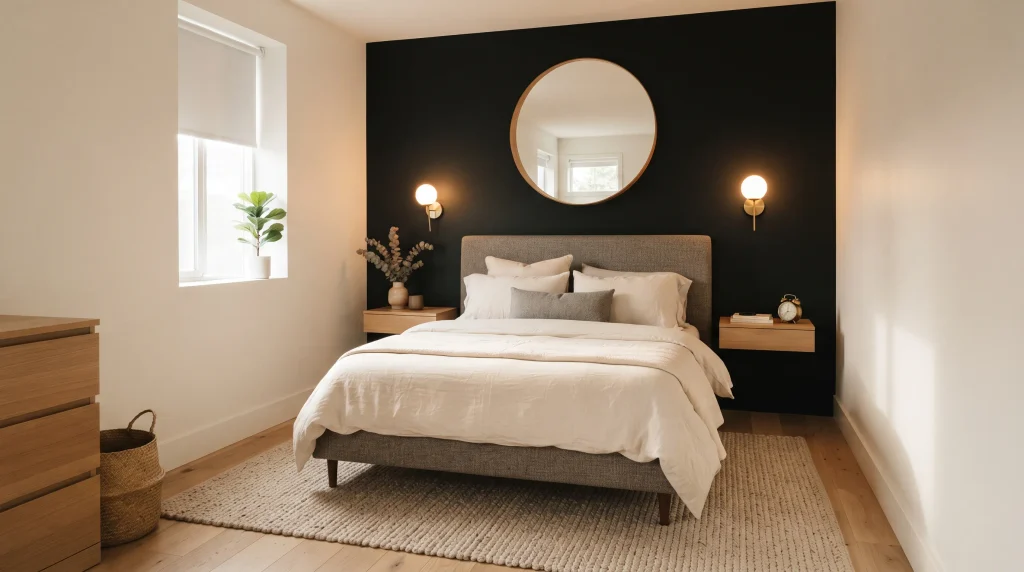
15. Small Space Contrast
A small bedroom can absolutely handle dark color when the layout stays simple and the contrast is carefully controlled. Instead of covering every wall in black, use one dark focal surface behind the bed and keep the remaining walls lighter. Furniture with slim profiles, visible legs, or wall-mounted designs leaves more floor area visible, which matters more in a compact room than the color choice itself does.
A large mirror reflects daylight and makes the room feel more open, while light bedding keeps the sleeping area from becoming visually dense. The goal isn’t to avoid dark tones in a small room — it’s to give them enough surrounding space to breathe. A black headboard, accent wall, or fitted wardrobe provides enough drama without overwhelming the space, especially when curtains stay close to the wall color and only one appropriately sized rug is used. Warm lamps at both sides of the bed help when natural light is limited. Small spaces generally benefit more from one well-placed dark element than from scattered dark accessories throughout the room.
Frequently Asked Questions
Is black a good color for a small bedroom?
Yes, when used as a single focal surface rather than across every wall. A black accent wall or headboard paired with slim furniture and one mirror can make a small room feel more intentional without shrinking it visually.
Does a black bedroom make the room feel smaller?
Not inherently. Black recedes visually when balanced with lighter trim, ceilings, or bedding, and layered lighting prevents the room from feeling closed in after dark.
What is the best paint finish for black bedroom walls?
Matte or eggshell finishes generally work best, since they absorb light rather than reflecting it unevenly, which is more noticeable on black than on lighter colors.
What lighting works best in a black bedroom?
A warm 2700K bulb is a practical choice for a softer evening atmosphere. It keeps black, charcoal, and dark wood feeling rich rather than cold or clinical after sunset.
How do I keep a black bedroom from feeling cold or heavy?
Balance black with warm materials — wood, linen, brass, and cream or beige textiles — and limit the room to three or four total finishes so the look stays intentional rather than overwhelming.
Conclusion
A black bedroom doesn’t have to feel cold, heavy, or intimidating. With the right balance of texture, lighting, warm neutrals, and thoughtful contrast, these 15 black bedroom ideas can turn an ordinary room into a stylish, inviting retreat. Start small with a black bed frame, accent wall, or layered bedding, then build the rest of the room around what actually suits your space.
Save this article for your next decorating project, try the idea that fits your room best, and pass it along to anyone who loves bold, cozy bedroom design.





One Comment