16 Boho Bedroom Decor Ideas That Feel Cozy, Relaxed & Personal
Boho decor gets reduced to a checklist a lot — macramé, plants, beige — but the rooms that actually feel boho are less about a specific shopping list and more about a feeling: relaxed, layered, a little imperfect, and clearly personal to whoever lives there. The materials that show up again and again — rattan, linen, jute, warm wood — matter less on their own than how they’re combined and how much of the room reflects things you actually collected rather than bought as a set.
The sixteen ideas below cover the full range: color, texture, furniture, storage, and the small styling calls that separate a boho bedroom that looks intentional from one that looks like clutter with a plant in the corner. For each one, you’ll find not just what to add, but why it works and how to actually use it without the room tipping into visual chaos.
16 Boho Bedroom Decor Ideas
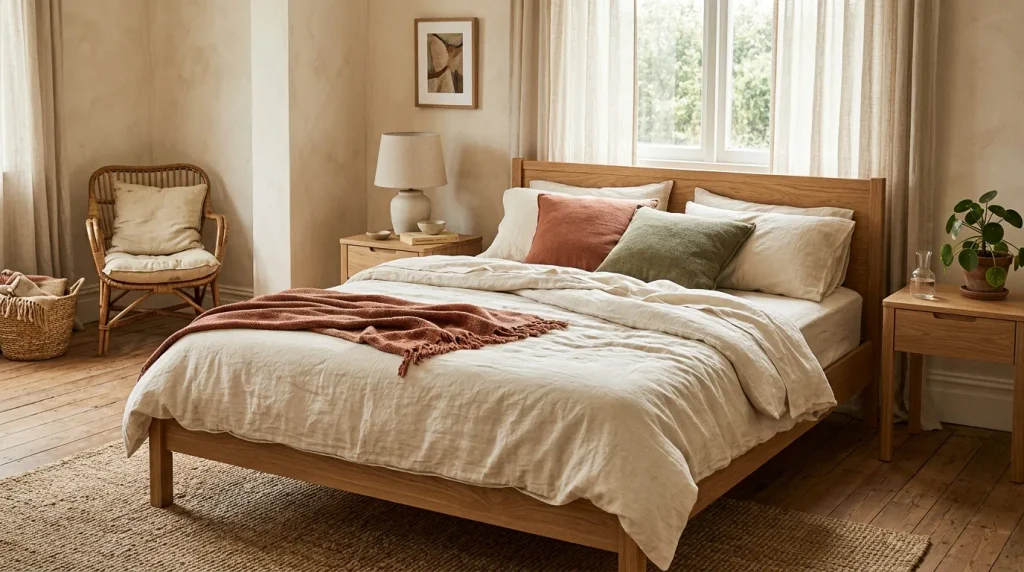
1. Start With a Warm, Earthy Color Palette
A boho bedroom’s color palette does a lot of the room’s emotional work before a single piece of furniture goes in. Warm neutrals — cream, oatmeal, tan, warm white — give the space a relaxed, sunlit feeling that cooler grays and stark whites don’t, and they act as a calm base that lets textured materials and layered patterns stand out instead of competing with a busy wall color.
The palette works because it mimics natural, sun-worn materials rather than manufactured ones — think aged linen and raw wood rather than crisp, cool-toned paint. Use the warm neutral as your wall color or largest surface, then let one or two richer earthy tones — terracotta, rust, olive — show up in smaller doses through pillows, a throw, or a rug. If the whole room stays in the same warm neutral family without any deeper tone anywhere, it can start to feel flat rather than cozy, so don’t skip the accent layer even in a mostly neutral room.
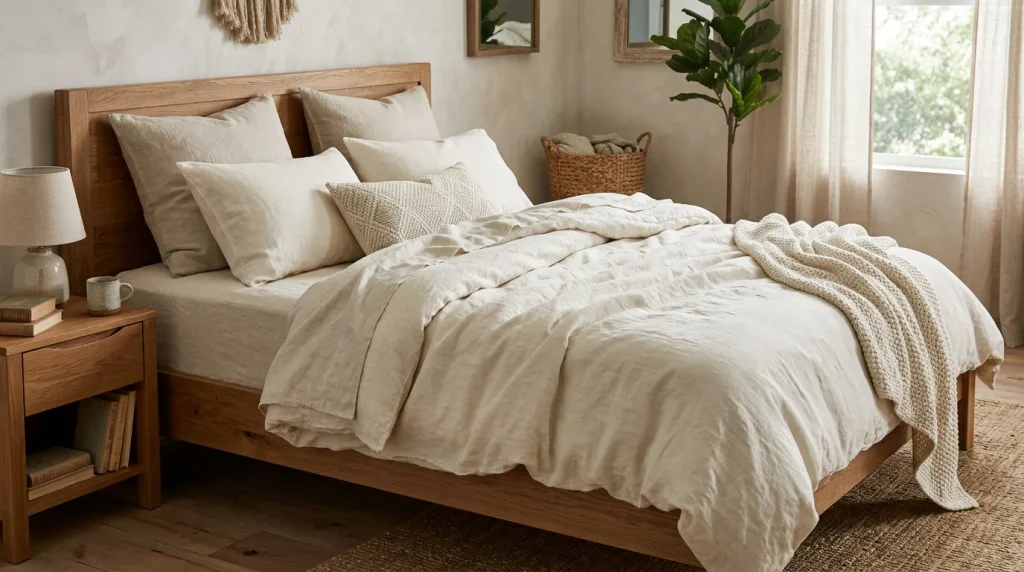
2. Layer Linen Bedding for a Relaxed Look
Crisp, perfectly pressed bedding looks hotel-formal, which works against the relaxed, lived-in feeling boho decor is built around. Linen, with its natural wrinkle and slight texture, does the opposite — it looks comfortable and inviting even when it’s not perfectly smoothed out, which is exactly the point.
Layering matters as much as the fabric choice: a linen duvet in a warm neutral, topped with a textured throw and a mix of pillow sizes, gives the bed real depth instead of one flat surface. Mix in one patterned or textured pillow among solid ones rather than making every pillow a statement piece — too many competing patterns on the bed alone can undercut the relaxed effect you’re going for. If linen feels like too much upkeep, a linen-cotton blend gets a similar look and texture with less wrinkling and easier care.
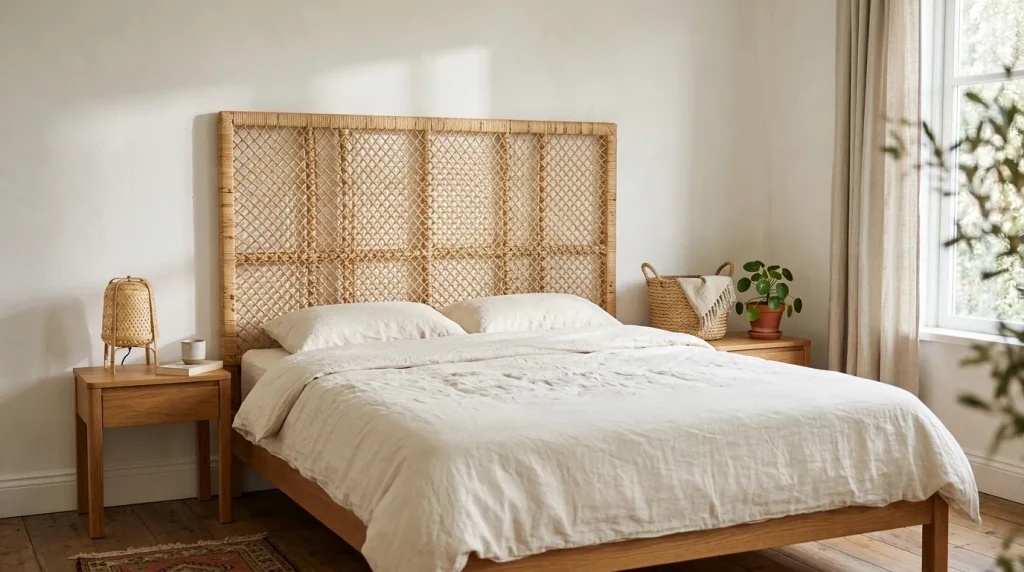
3. Add a Rattan or Woven Headboard
A rattan or cane headboard introduces natural texture and gives the bed a strong focal point without making the room feel heavy the way a solid upholstered headboard can. The open weave also lets light pass through slightly, which keeps a boho bedroom feeling airy even with a fairly substantial piece of furniture at its center.
Pair it with linen bedding, warm wood furniture nearby, and one or two other woven accessories — a basket, a woven lampshade — so the headboard’s texture feels connected to the rest of the room rather than an isolated statement. If the headboard itself has a strong, visible weave pattern, keep the bedding relatively simple and let the headboard carry the visual interest; a heavily patterned duvet against an already-textured rattan headboard tends to compete rather than complement.
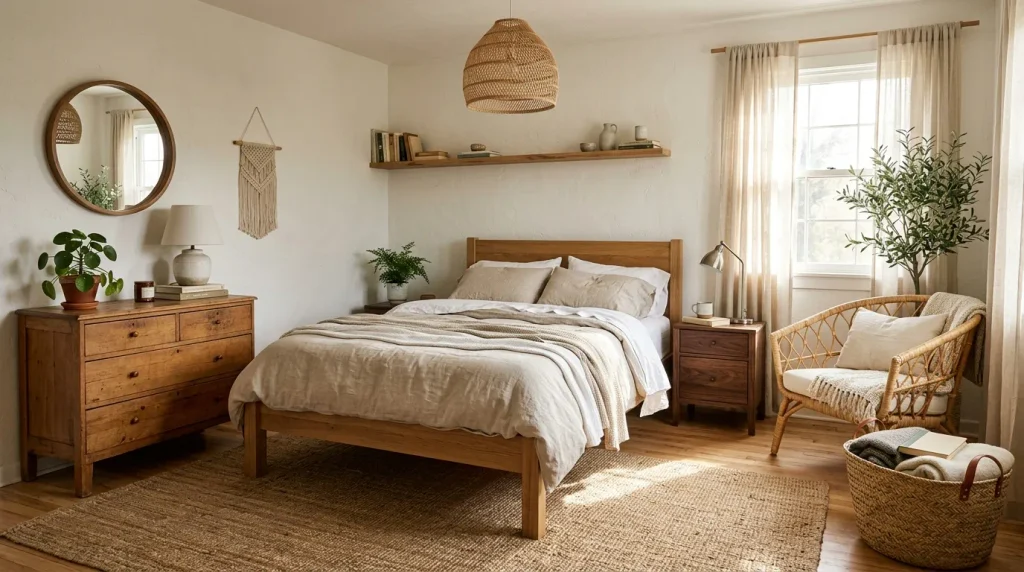
4. Mix Natural Wood With Woven Textures
Natural wood furniture — a dresser, nightstands, a bed frame — gives a boho bedroom a grounded, warm base that woven and textile elements can layer on top of. The combination of solid wood and open weave creates a visual rhythm the room needs; without it, an all-woven room can start to feel a little flat and one-note.
Mixing wood tones is genuinely fine here, more so than in most decorating styles — a warm oak dresser next to a darker walnut nightstand looks collected rather than mismatched, as long as the tones stay in a similar warm family rather than swinging between very orange and very gray woods in the same small space. Bring the woven texture in through a chair, a basket, or a light fixture, so the wood and weave alternate around the room rather than clustering all of one material on a single wall.
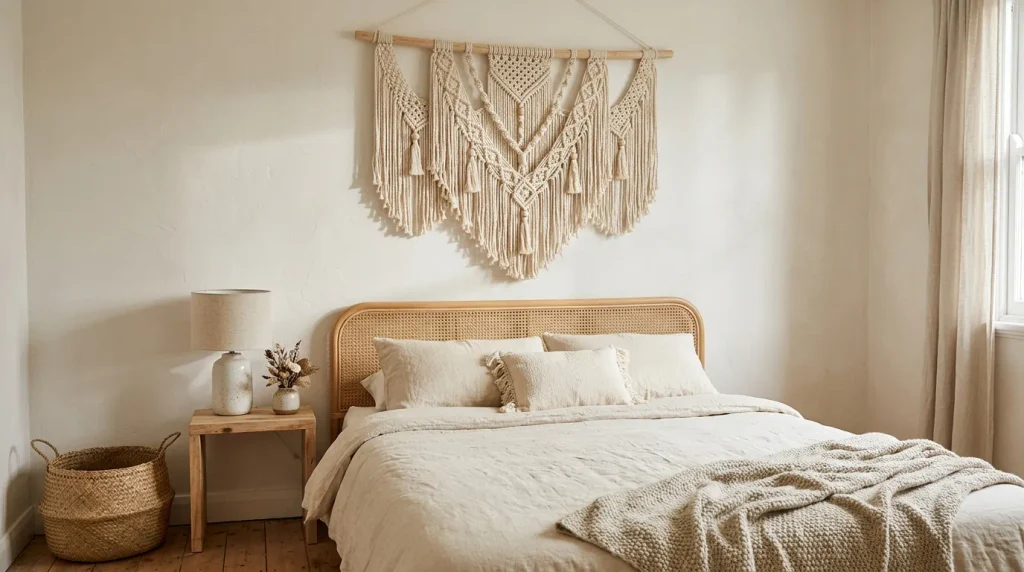
5. Hang a Macramé or Textile Piece Above the Bed
A macramé wall hanging or a woven textile piece above the bed fills the wall space a headboard alone often leaves bare, and it adds soft, dimensional texture in a spot that would otherwise just be flat paint or a couple of small framed prints. It’s one of the more distinctly bohemian details on this whole list.
Scale matters more than people expect — a small macramé piece can look lost above a full-size headboard, while one sized to roughly two-thirds the width of the bed comes across as an intentional focal point rather than an afterthought. If the headboard itself already has visible texture or pattern, choose a simpler, more open-weave hanging so the two don’t compete for attention in the same sightline; save the more intricate, densely woven pieces for a plainer headboard or a different wall entirely.
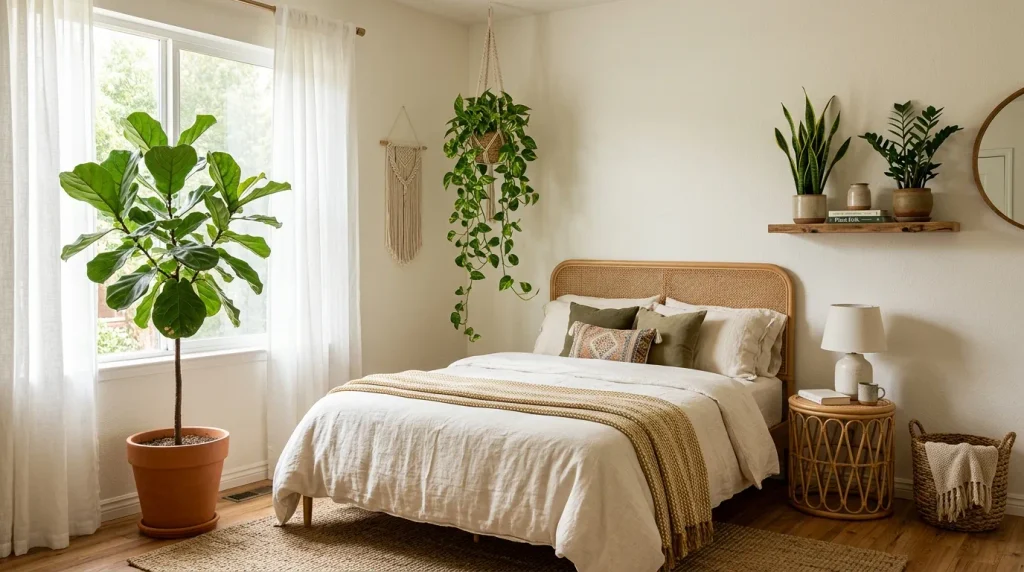
6. Bring in Plenty of Greenery
Plants are one of the most reliable ways to bring life and softness into a boho bedroom, and they connect the room’s natural-material theme — wood, rattan, linen — to something that’s actually alive and changing rather than static. A trailing pothos, a tall fiddle leaf fig, or a cluster of smaller plants on a shelf all work, depending on the room’s available light and floor space.
Match the plant to your actual light conditions rather than what looks best in photos — a bedroom with limited natural light will keep a low-light plant like a pothos or snake plant alive far more reliably than something that needs bright, direct sun, and a struggling plant undercuts the room’s warmth faster than having no plant at all. Hanging planters or a plant stand at varying heights adds more visual interest than several pots lined up at the same level, and it keeps floor space clear in a smaller room.
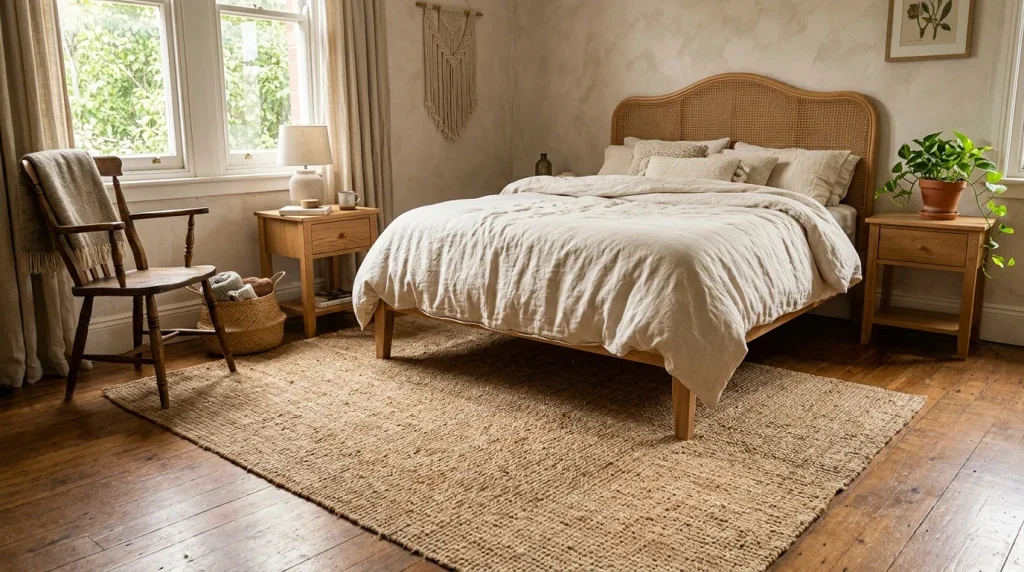
7. Ground the Room With a Jute or Vintage Rug
A rug is what actually grounds a boho bedroom — without one, even a well-furnished room can feel a little unanchored, especially over hardwood or a plain neutral floor. A jute or other natural-fiber rug adds exactly the kind of texture the rest of the room is built around, while a vintage or Moroccan-style rug brings in pattern and history at floor level instead of only on the walls or bed.
Size the rug generously enough that at least the front legs of the bed and any nearby furniture sit on it — a rug that’s too small actually makes the room feel less grounded, not more, since the furniture ends up floating on bare floor around its edges. If the bedding is already patterned, a quieter, more textural rug keeps the room from feeling like every surface is competing for attention; save the boldest patterned rugs for a room with otherwise simpler bedding and walls.
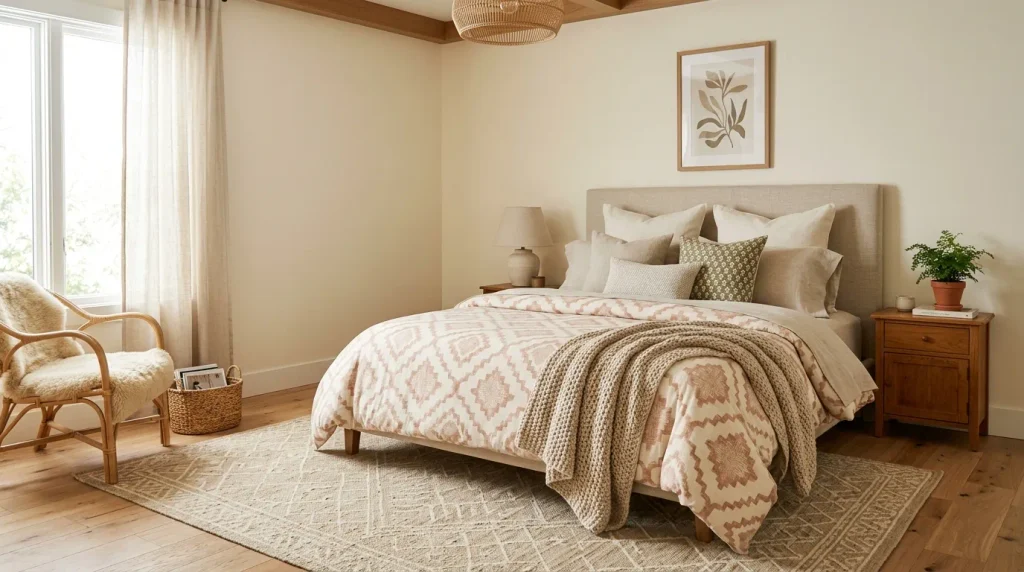
8. Mix Patterns Without Making the Room Feel Busy
Boho decor is unusually pattern-friendly compared to most styles, but “mix patterns” as advice on its own isn’t very useful without a rule to actually follow. A workable formula: one dominant pattern — on the bedding or a large rug — paired with one or two smaller, quieter patterns elsewhere, rather than letting every textile in the room compete at the same visual volume.
If the bedding is already patterned, keep the rug quieter and bring texture through a woven basket or a chunky knit throw instead of another bold print. That keeps the room layered without making every surface compete for attention. Solid-colored walls also matter more than people expect when patterns are doing a lot of work elsewhere — a patterned wallpaper behind an already busy bed and rug is where a boho room tips over into visually overwhelming rather than richly layered.
9. Use Warm Lighting for a Cozy Glow
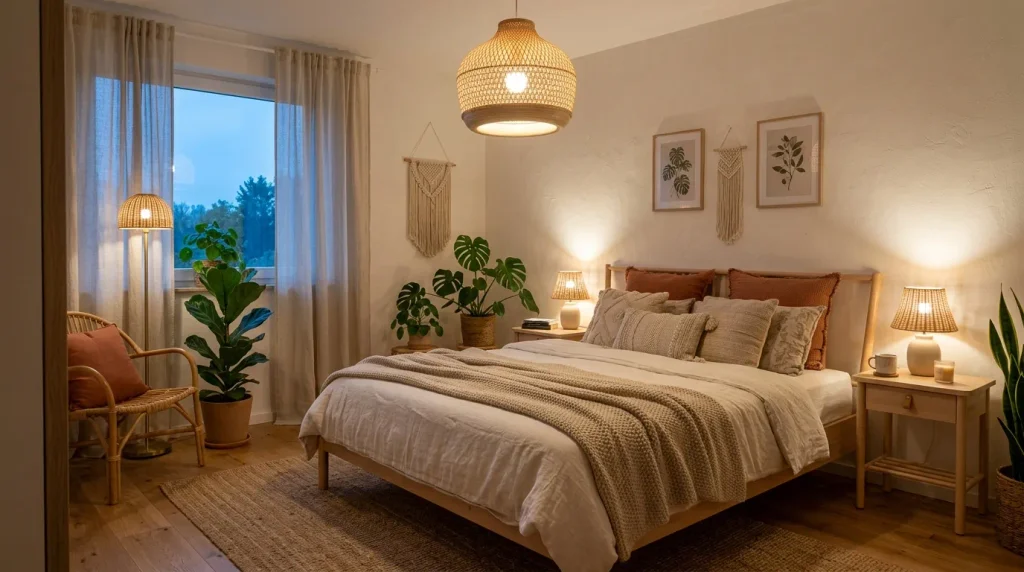
Lighting sets the mood in a boho bedroom as much as any material choice does, and cool-white bulbs work directly against the warm, relaxed feeling the rest of the room is built around. Warm-white bulbs, generally in the 2700K to 3000K range, give off the soft, amber-toned glow that suits earthy colors and natural textures far better than a bright, blue-white light would.
A rattan or woven pendant light doubles as both a light source and a textural decor piece, tying the lighting into the room’s broader material palette rather than treating it as a separate category. Layer in at least one bedside lamp beyond whatever overhead fixture is already there — a single ceiling light leaves a boho bedroom feeling flat no matter how well the rest of the room is styled, since the layered, cozy effect depends on multiple smaller light sources rather than one bright overhead wash.
10. Add Vintage and Thrifted Pieces
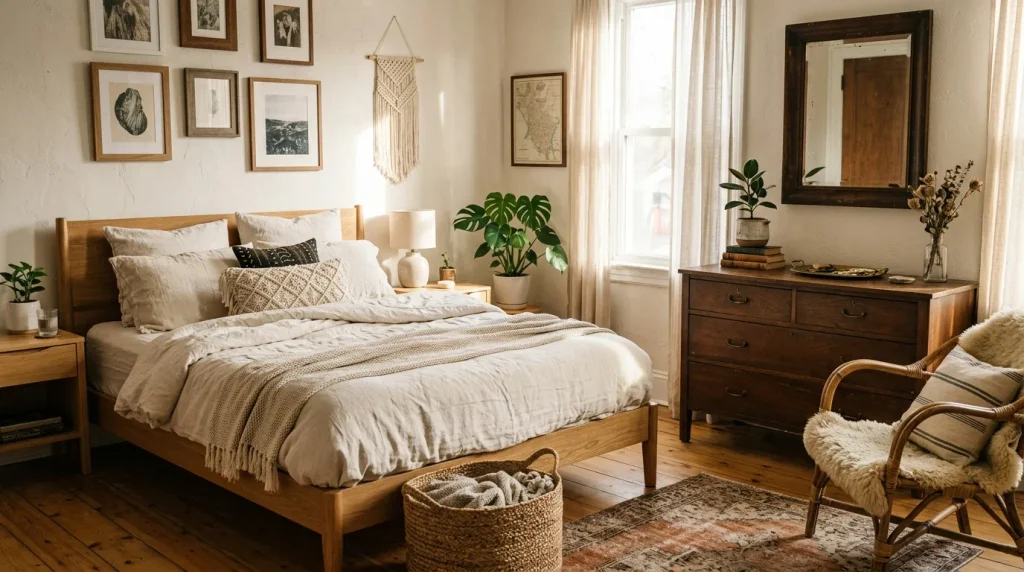
A boho bedroom built entirely from new, matching furniture tends to look more like a showroom than a truly personal space, which works against the whole point of the style. Vintage and thrifted pieces — a weathered dresser, an old wooden mirror, a secondhand rattan chair — bring in the sense of history and collected character that new furniture simply can’t replicate.
You don’t need every piece to be secondhand; even one or two vintage finds mixed among newer furniture can shift the whole room’s feeling from “purchased as a set” to “gathered over time.” Look for pieces with real material character — visible wood grain, natural wear, an interesting original hardware detail — rather than anything that just looks generically old, since it’s the character that feels intentional rather than the age itself. This is also one of the more budget-friendly ideas on the list, since secondhand furniture is often considerably cheaper than new pieces with comparable material quality.
11. Create a Cozy Boho Reading Corner
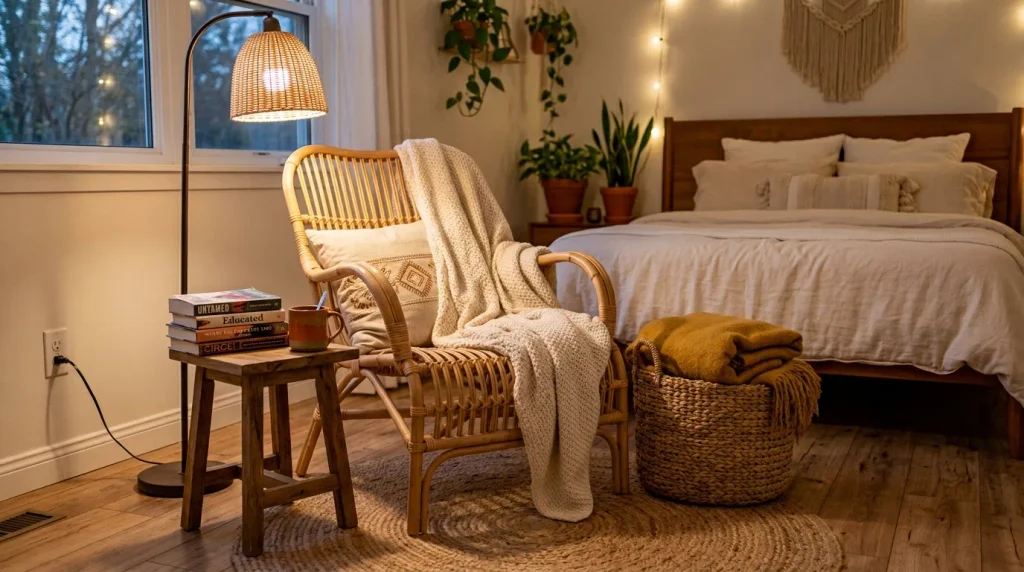
An underused corner of a boho bedroom is a natural spot for a small reading nook — a comfortable chair, a floor cushion, or even just a well-placed pouf with a soft throw and a small side table nearby. It gives the room a second, quieter zone beyond the bed, and it’s a practical, real use of space that might otherwise sit empty.
Layer in a floor lamp with a warm bulb, since this corner’s job is coziness rather than bright task lighting, and add a soft rug or floor cushion underfoot to extend the room’s textural theme into the seating area. A small woven basket beside the chair, holding a blanket or a couple of books, finishes the corner without adding a full side table if space is tight — the goal is a spot that feels inviting enough to actually sit in, not just another display surface.
12. Use Woven Baskets for Beautiful Storage
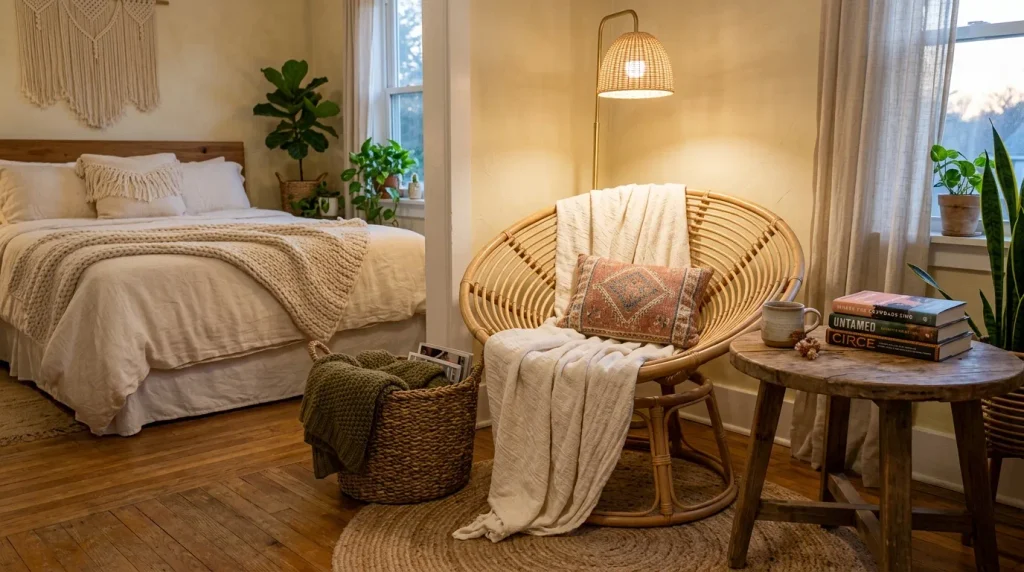
Woven baskets solve a real practical problem — where do blankets, spare pillows, and loose items actually go — while adding exactly the kind of natural texture a boho bedroom is built around. Unlike plastic bins or closed cabinetry, a basket’s texture works as decor even while it’s doing storage duty.
Use a few varying sizes rather than one uniform set: a large basket at the foot of the bed for extra blankets, a smaller one on a shelf for miscellaneous items, another beside a reading chair. This mix of scale looks more collected than a matched set bought all at once, and it means you’re not stuck with only one basket size for very different storage needs. Baskets with lids work best for anything you want fully hidden away, while open baskets are better suited to items you want to grab quickly or that look fine on display, like folded throws.
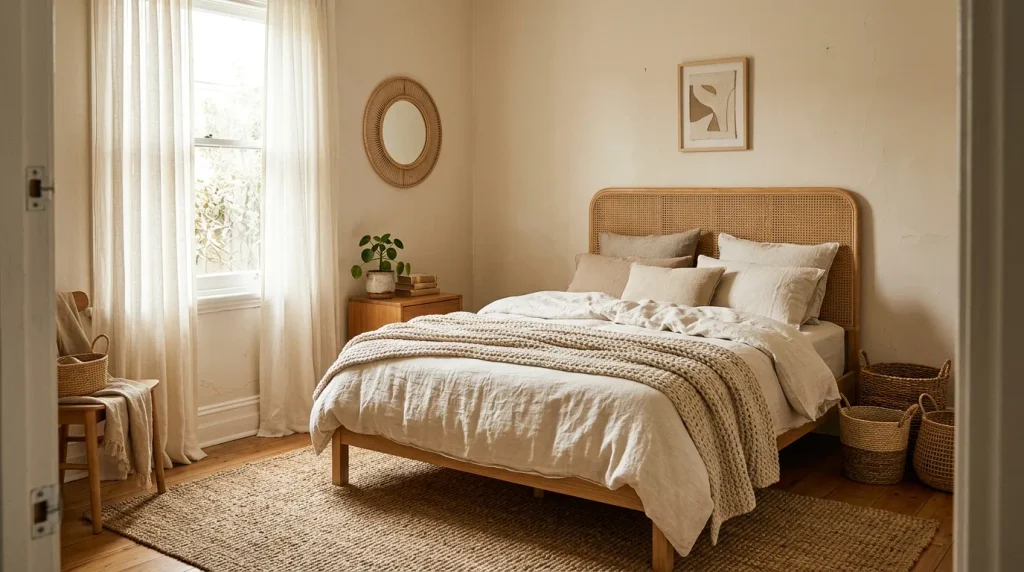
13. Try a Neutral Boho Bedroom
Boho decor doesn’t require bold color to feel boho — texture and material carry the style just as much as color does, which means a neutral palette built from cream, beige, and warm white can feel just as authentically boho as a more colorful room, as long as the textures are doing real work.
In a neutral scheme, texture becomes the main source of visual interest rather than color contrast: mix linen, jute, rattan, and wood so the room has enough tactile variation to avoid feeling flat despite the limited color range. This approach tends to suit a small bedroom particularly well, since a neutral palette can make a compact room feel more open, while still delivering the relaxed, natural character that makes a room feel boho in the first place.
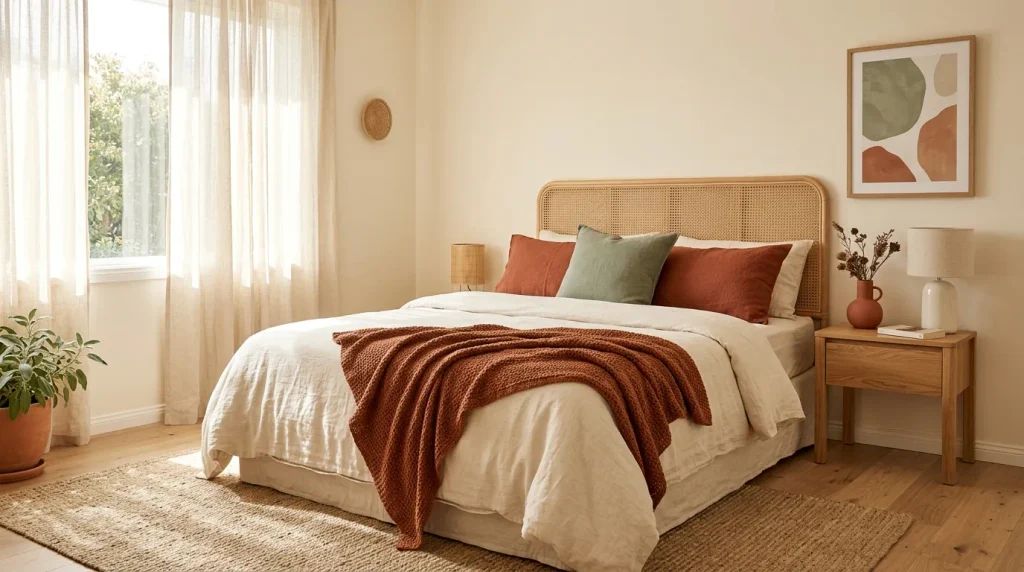
14. Add Terracotta, Rust, or Sage Accents
If a fully neutral palette feels a little flat, earthy accent colors — terracotta, rust, sage green, deep clay — bring in warmth and depth without pulling the room away from boho’s natural, sun-worn color story. These tones read as pulled from nature rather than a paint chip, which keeps them feeling grounded even when used boldly.
Introduce these colors through smaller, easily changed items first — pillows, a throw, a piece of art — before committing to a full accent wall, since it’s a lower-risk way to test whether the tone actually works with your room’s light and existing furniture. One or two accent colors used consistently across a couple of items reads as more intentional than five different earthy tones each appearing once; repetition, not variety, is what makes an accent color feel like a deliberate choice.
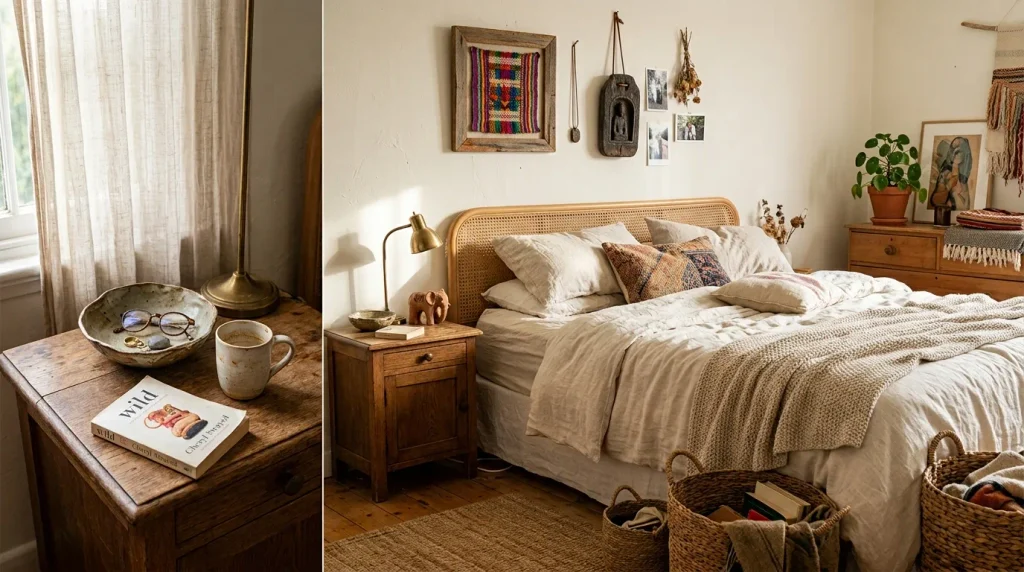
15. Mix Handmade Decor With Personal Pieces
The details that make a boho bedroom feel truly personal rather than copied from a photo are usually the ones with real meaning behind them — a handmade ceramic piece, art from a trip, an object passed down or found somewhere memorable. These pieces don’t need to match anything else in the room to belong there; their personal significance is what gives them a place.
Rather than styling a room entirely from a single retailer’s boho collection, mix in whatever meaningful objects you actually own alongside the more standard decor elements — the contrast between a mass-produced pillow and a one-of-a-kind handmade bowl is part of what makes the room feel lived-in rather than staged. This is the detail that separates a boho bedroom that looks like a photo you copied from one that looks like it’s actually yours.
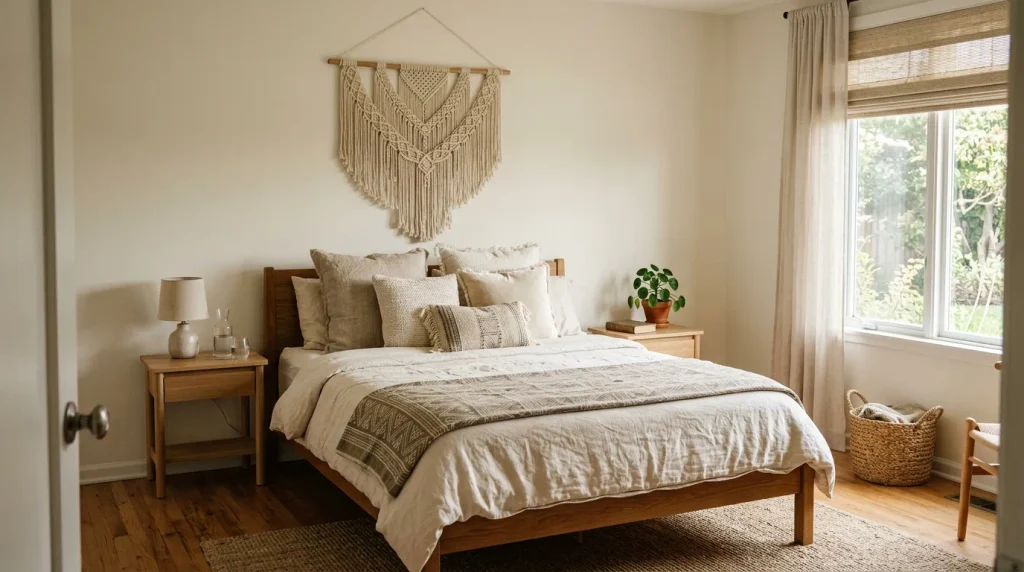
16. Keep the Look Collected, Not Cluttered
This might be the most important idea on the entire list, because a lot of boho bedrooms go wrong by treating “more” as the whole strategy — more pillows, more plants, more baskets, more pattern, until the room feels chaotic rather than richly layered. Layered and cluttered are not the same thing, even though boho decor sits closer to that line than most other styles.
The difference usually comes down to restraint somewhere in the room even as other areas get more elaborate — if the bed is heavily layered with texture and pattern, let the walls stay relatively simple; if the walls carry a macramé piece and a gallery of art, keep the bedding quieter. Give the eye at least one resting point somewhere in the room rather than filling every surface and wall with something. A boho bedroom that feels genuinely collected almost always has a few areas of visual quiet balancing out the busier ones, not maximum decoration everywhere at once.
How to Make a Bedroom Look Boho
Making any bedroom look boho comes down to a handful of consistent elements working together rather than any single dramatic change: natural materials like rattan, jute, and warm wood; layered textiles in linen and cotton; earthy, warm colors; plants; and at least a few vintage or handmade pieces mixed in among newer furniture.
The through-line across all of it is texture over polish — a boho bedroom generally looks more relaxed and slightly imperfect than a sleek, matched furniture set, and that’s intentional rather than a shortcoming. Start with whichever element your current bedroom is missing most — often lighting warmth or layered bedding, since both are relatively inexpensive changes — and build outward from there rather than trying to overhaul the whole room in one purchase.
How to Make a Boho Bedroom Cozy
Coziness in a boho bedroom comes from a fairly reliable formula: warm lighting, layered bedding, a grounding rug, curtains with some real weight or texture, natural materials throughout, greenery, and a few personal objects that make the room feel like yours rather than a showroom display.
None of these elements does the job alone — a room with beautiful bedding but only one harsh overhead light still won’t feel cozy, and warm lighting in an otherwise sparse room won’t get you all the way there either. It’s the combination that creates the effect, which is part of why boho rooms that feel truly cozy usually took some time to assemble rather than being bought and arranged in a single trip.
Small Boho Bedroom Ideas
A small boho bedroom deals with the same texture-and-warmth goals as a larger one, just with less room to fit everything in. Vertical storage — tall narrow shelving, wall-mounted baskets — and multifunctional furniture, like a bed with drawers built in, matter more here than in a spacious room where floor space isn’t as precious.
Floating nightstands and under-bed storage keep the floor clear without sacrificing the storage a boho bedroom’s woven baskets and personal objects need somewhere to live. A mirror, ideally with a natural wood or rattan frame to stay on theme, helps bounce light around a smaller space and makes it feel more open. Leaning toward lighter, neutral colors and fewer, larger decor pieces rather than many small ones also helps a small boho bedroom avoid feeling cluttered — the same “collected, not cluttered” principle matters even more when there’s less square footage to absorb visual noise.
Modern Boho Bedroom Ideas
A modern boho bedroom keeps the natural materials and warm palette that define the style while pulling back on pattern density and ornamentation — cleaner-lined furniture, a more restrained color palette, and fewer competing patterns than a maximalist boho room would use.
Natural materials still carry the boho identity here — rattan, wood, linen — but they show up in simpler, more streamlined forms: a plain woven headboard rather than an elaborately carved one, solid linen bedding instead of a heavily patterned quilt. Modern lighting fixtures with clean lines, paired with one or two vintage accent pieces for warmth and character, keep the room feeling boho rather than sliding fully into generic minimalism, which is the balance this particular variation is built around.
Boho Bedroom Color Ideas
Rather than scattering color guidance throughout the whole article, it’s worth having one clear reference. Warm neutrals — cream, beige, oatmeal, tan, warm white — form the base most boho bedrooms build on, giving the room a calm, sunlit backdrop for texture and pattern to stand out against.
Earthy tones — terracotta, rust, clay, olive, sage — are the classic boho accent colors, pulled straight from natural, sun-worn materials rather than anything synthetic-looking. For a room that wants more personality without losing the boho feel, richer, more expressive colors like plum, deep green, mustard, or a warm blue can work as accents, especially in smaller doses through pillows, art, or a single accent wall, rather than as the room’s dominant color. Boho decor doesn’t require staying beige — it just asks that whatever color you choose feels warm and grounded rather than stark or synthetic.
Boho Bedroom Lighting Ideas
Lighting in a boho bedroom needs to be warm above all else — a rattan or woven pendant light doubles as both a fixture and a texture piece, tying the light source directly into the room’s material palette instead of treating it as separate from the decor.
Bedside lamps with woven or textured shades add task lighting while keeping the natural-material theme consistent, and wall sconces are a good option in a smaller room where nightstand surface space is limited. Warm bulbs, generally in the 2700K to 3000K range, matter more than the fixture style itself — a beautiful rattan pendant with a harsh, cool-white bulb still undercuts the room’s mood. During the day, sheer curtains let natural light filter through softly rather than blocking it out, keeping the room bright and airy without losing privacy.
Frequently Asked Questions
What is a boho bedroom?
A boho bedroom is built around natural materials, layered textures, warm earthy colors, and a relaxed, collected feeling — it’s less about a specific shopping list and more about combining texture, pattern, and personal objects in a way that feels gathered over time rather than bought as a matching set.
How do I make my bedroom look boho?
Focus on natural materials like rattan and wood, layer in linen bedding and textured throws, add plants and warm lighting, and mix in at least a few vintage or personally meaningful pieces rather than furnishing the whole room from one collection.
What colors work best in a boho bedroom?
Warm neutrals like cream, beige, and oatmeal work as a base, with earthy accents like terracotta, rust, and sage adding depth — richer colors like plum or mustard can work too, as long as they’re used in smaller doses rather than dominating the room.
How do you make a boho bedroom cozy?
Combine warm lighting, layered bedding, a grounding rug, natural materials, and a few personal objects — no single element creates coziness on its own, it’s the combination working together that gives the room its relaxed, warm feeling.
What materials are used in boho decor?
Rattan, cane, jute, linen, cotton, wood, and macramé are the core materials, chosen because they feel natural and slightly imperfect rather than manufactured, which supports the relaxed feeling boho decor is built around.
How do you decorate a small boho bedroom?
Prioritize vertical storage and multifunctional furniture over floor-based pieces, use a mirror to open up the space visually, and lean toward fewer, larger decor pieces rather than many small ones so the room doesn’t feel cluttered despite its smaller footprint.
How do you mix patterns in a boho bedroom?
Choose one dominant pattern, usually on the bedding or a large rug, and pair it with one or two smaller, quieter patterns elsewhere rather than letting every textile in the room compete at the same visual volume.
How do you keep boho decor from looking cluttered?
Balance busier areas of the room with quieter ones — if the bed is heavily layered, keep the walls simple, and if the walls carry a lot of decor, let the bedding stay calmer — so the eye has somewhere to rest rather than encountering pattern and texture on every surface at once.
Final Thoughts
Boho decor works best when a room feels collected rather than copied — built from materials and objects that actually mean something to the person living there, layered with enough restraint that the space still feels calm rather than chaotic. Start with whichever idea addresses what your bedroom is missing most, whether that’s warmth, texture, storage, or simply more personal character, and let the room develop over time rather than trying to assemble the whole look in a single shopping trip.

3 Comments