14 Retro-Inspired Autumn Decor Ideas
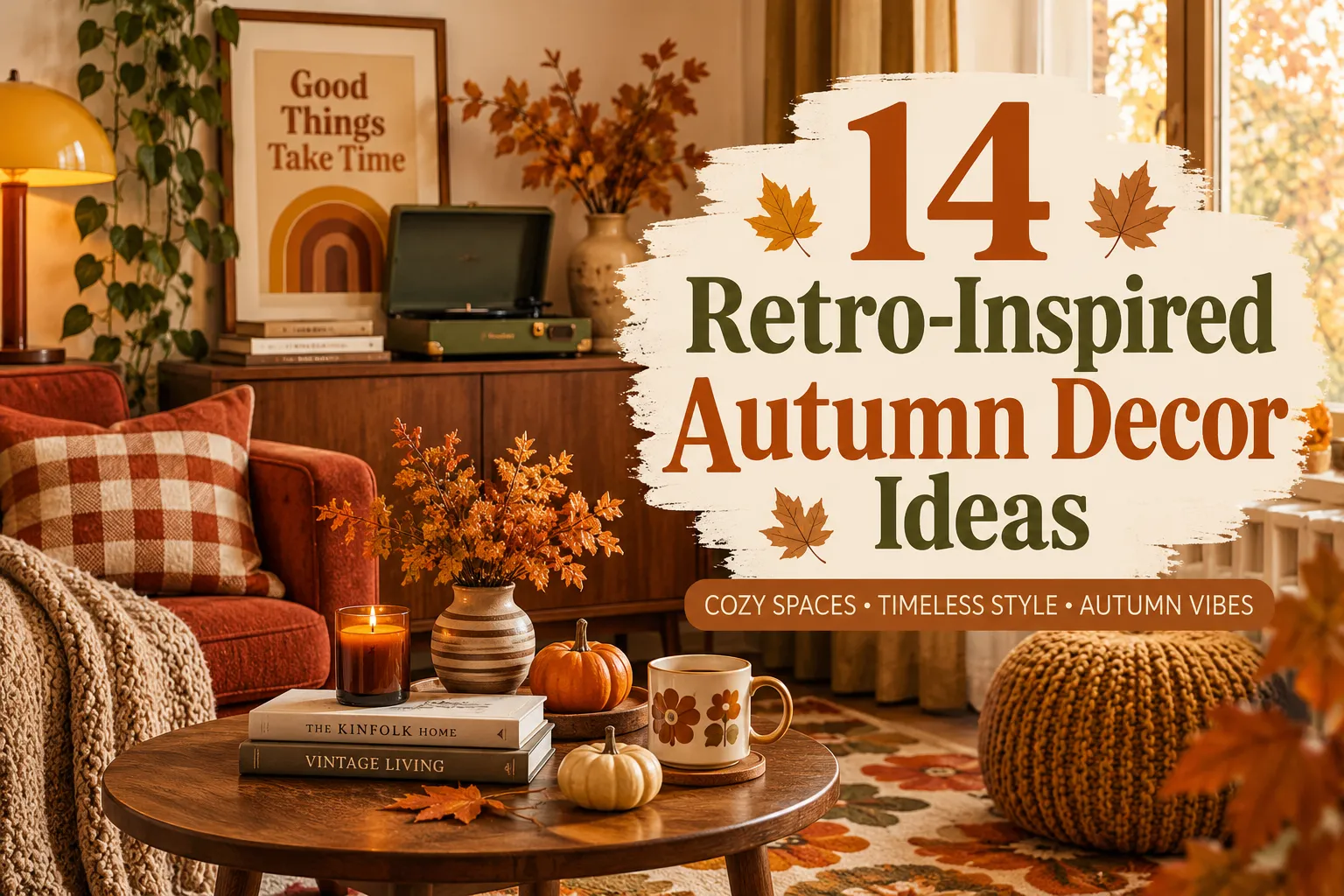
A Retro-Inspired Autumn Decor Cushions doesn’t need to look like a time capsule. The easiest way to get the look is to borrow a few elements from mid-century and vintage interiors — warm colors, aged-looking glass, natural wood, patterned textiles — and mix them with the pieces you already own.
Think terracotta, mustard, olive green, walnut wood, amber glass, and cozy vintage textiles. You don’t need to redecorate the whole house, either. A few thoughtful changes can make a room feel warmer and more collected for autumn without turning it into a themed display. You can also keep the look simple and lean on pieces you already own — that tends to make seasonal decorating feel more intentional than wasteful.
The ideas below focus on practical ways to bring that nostalgic character into everyday spaces, whether you’re decorating a living room, bedroom, kitchen, or dining area.
Quick guide: which ideas fit you best?
| If you want… | Start with… |
|---|---|
| A low budget | Cushions, botanical prints, glassware |
| Something rental-friendly | Cushions, prints, textiles, peel-and-stick paneling |
| The biggest visual impact | A wool rug or a wood accent wall |
| Decor that’s also functional | Canisters, a bar cart, a credenza |
| A strongly vintage feel | Glassware, quilts, botanical prints |
A Mid-Century Color Palette
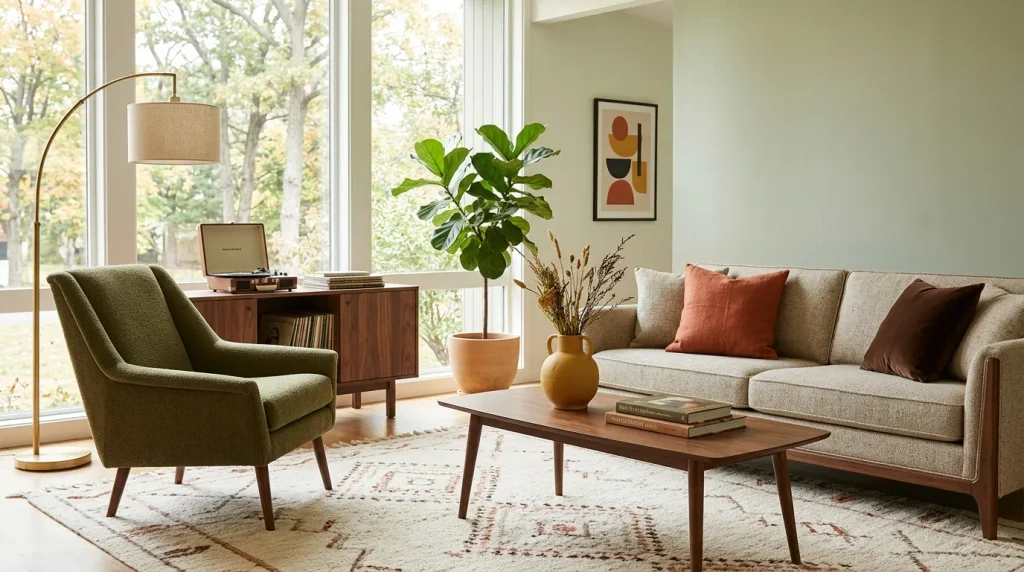
Most autumn color schemes default to maple-leaf red and pumpkin orange, but a retro approach borrows from a different source entirely — the sun-drenched, desert-inspired palette associated with mid-century design. Terracotta, mustard, olive green, and chocolate brown carry all the warmth associated with the season without leaning on the orange-and-black combination that reads as more costume than decor.
Picking just two or three of these tones as a foundation, rather than incorporating the entire palette across every room, keeps the look cohesive rather than scattered. If the home already has walnut or teak furniture, these warm earth tones tend to sit naturally alongside the existing wood undertones.
A simple rule of thumb: look at the wood and metal tones already present in a room before choosing your retro palette — colors that complement existing undertones will feel intentional rather than added on top.
Retro Glassware Display
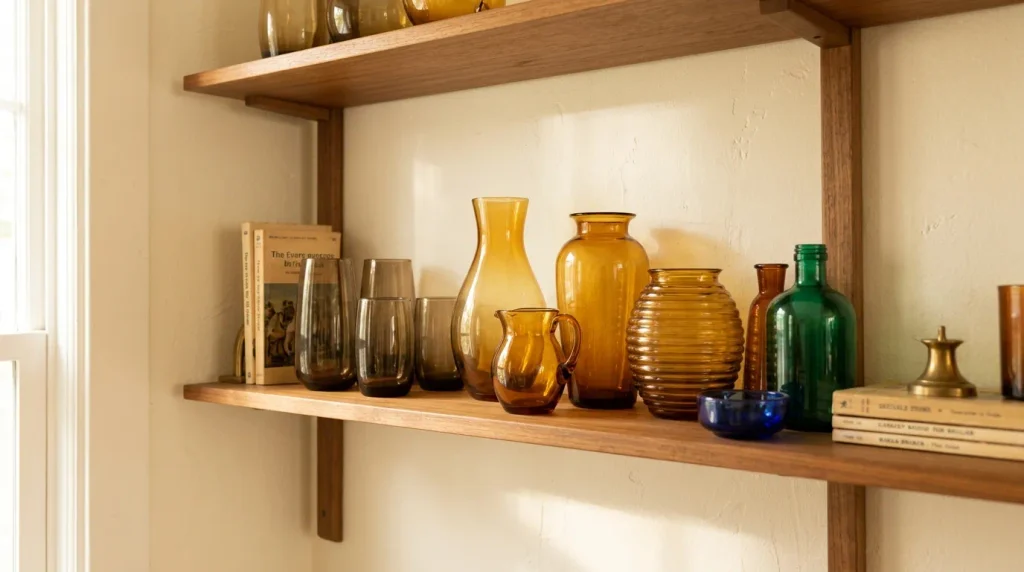
Colored glassware is one of the most immediately recognizable retro decor elements, and it happens to suit an autumn palette naturally — amber, smoked brown, and deep jewel tones all read as warm and seasonal without needing any additional styling. A cluster of vintage glasses or vases on open shelving brings texture and color to a room that might otherwise rely entirely on textiles for its seasonal feel.
Because vintage glass varies piece to piece, a collection built gradually from thrift stores and estate sales tends to look more interesting than a matched set bought new. Slight variation in shade and shape reads as authentic rather than accidental.
Worth the hunt: vintage glass in good condition is often less expensive secondhand than a comparable new piece, making this one of the more budget-friendly ways to add retro character to a room.
Vintage-Pattern Kitchenware
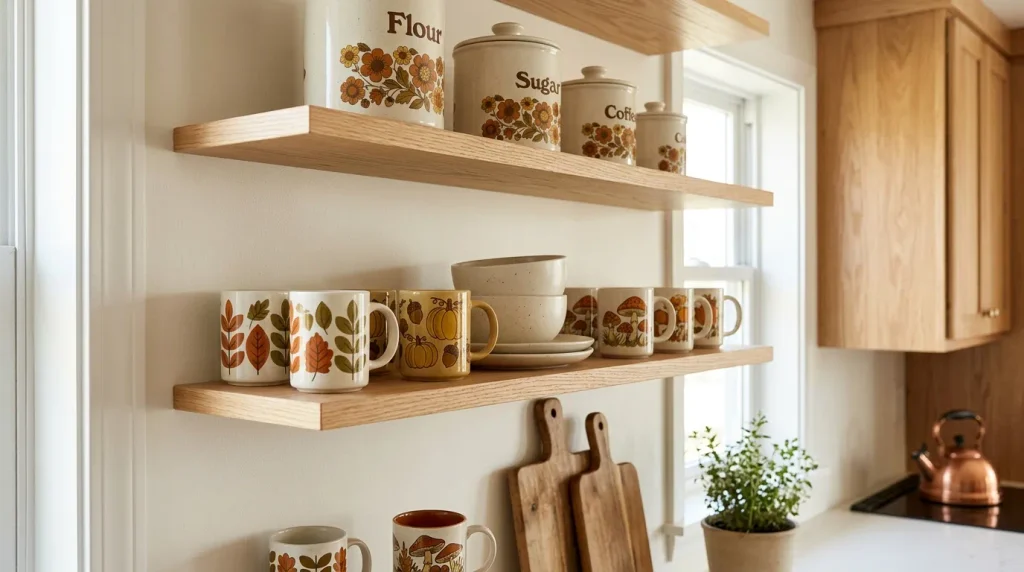
Printed kitchenware from past decades often featured harvest-inspired patterns — wheat sheaves, autumn leaves, warm plaid — that were designed specifically for the season and have aged into charming vintage pieces. Both authentic vintage finds and modern reproductions of these patterns can often be found without too much searching, which makes this one of the more accessible retro decor categories to start collecting.
Balancing patterned pieces with plain stoneware keeps a shelf from feeling too busy, especially if you’re mixing several different vintage patterns together rather than sticking to one specific set. Displaying these pieces somewhere visible, rather than in a closed cabinet, is really the whole point — a pattern nobody sees isn’t adding much to the room.
A quick tip: search for the pattern name specifically when shopping online, since collectors and vintage sellers often catalog pieces by their original pattern name rather than a general description.
A Retro Bar Cart
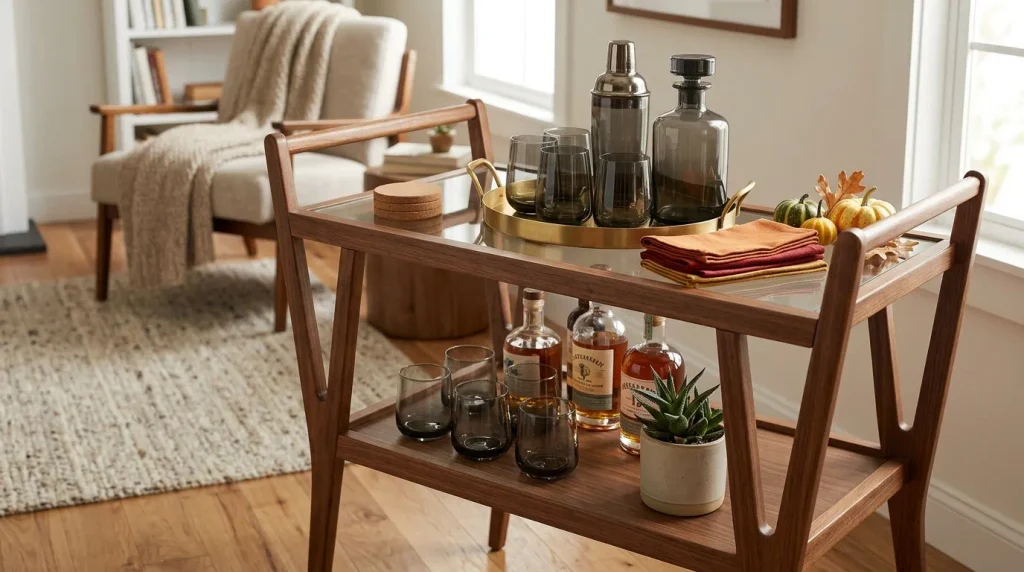
The bar cart is a distinctly mid-century piece of furniture, and styling it for the season is an easy way to bring retro character into a space you’re likely already using regularly. A few autumn-toned napkins, a small stack of coasters, and one seasonal accent — a mini pumpkin, a dried stem — is usually enough; a bar cart overloaded with decor stops being functional.
Smoked or amber glass barware reinforces the retro aesthetic while doing double duty as something you’ll actually use when the cart is out. Because this piece serves a function beyond decoration, it’s one of the few items on this list that earns its keep well past the end of the season.
Best for entertaining: keep the cart lightly styled rather than fully decorated, so it’s still practical to actually use when guests come over.
Vintage Botanical Prints
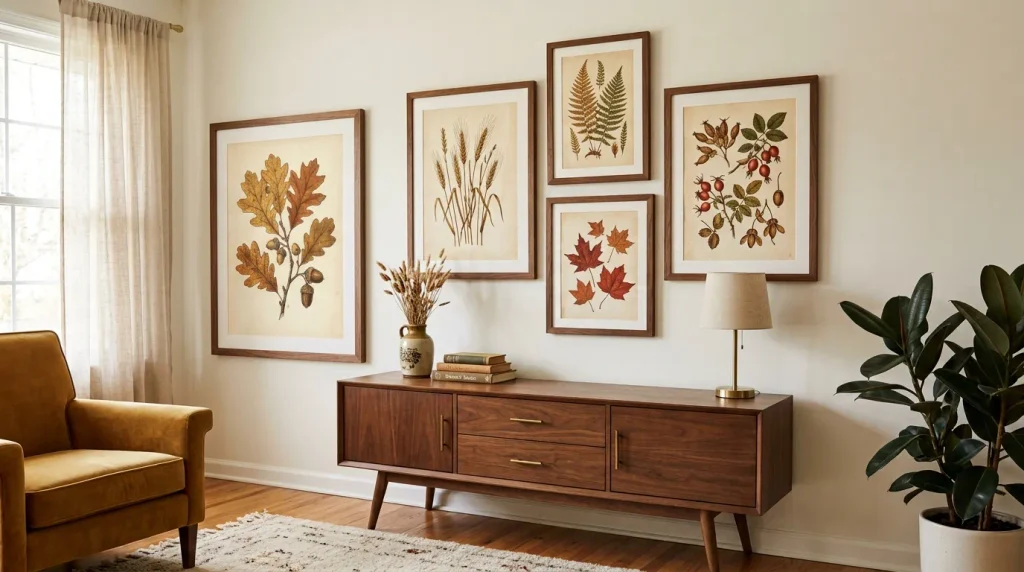
Vintage-style botanical illustrations bring a quiet, collected feeling to a room without requiring any large furniture changes. Wood-framed prints, in particular, suit a mid-century aesthetic more naturally than sleek modern frames, echoing the same warm materials found elsewhere in retro-styled interiors.
A small grouping of three or four prints, arranged together rather than spaced individually around a room, reads as a more intentional gallery moment. Choosing illustrations with an autumn subject — wheat, seed pods, changing leaves — ties the display to the season without needing any text or obvious seasonal signage.
A lower-cost alternative: printable vintage botanical illustrations can often be found online and can be framed inexpensively, achieving a similar look without sourcing original vintage prints.
Geometric Wool Rugs
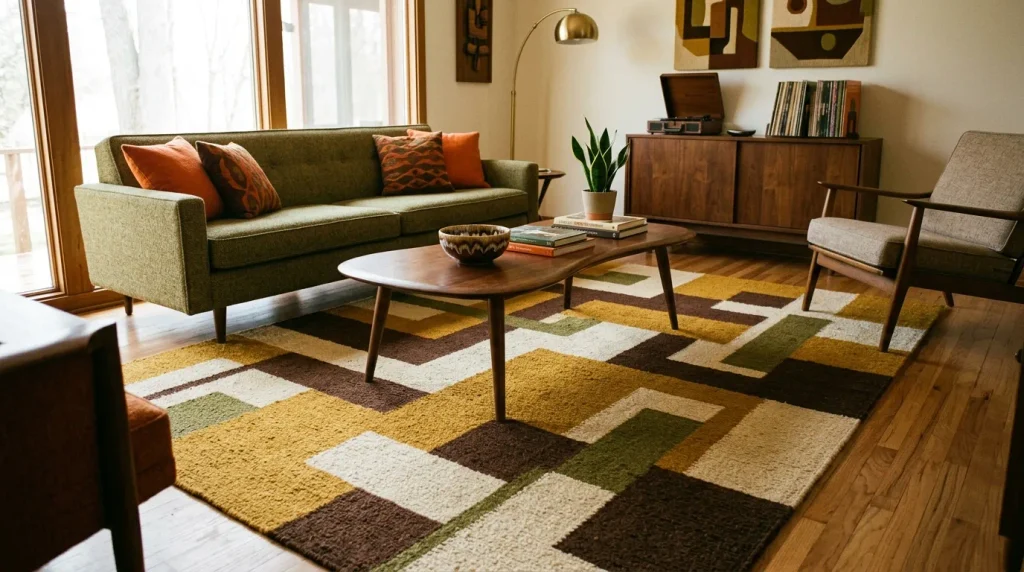
Mid-century textile design leaned heavily on bold geometric patterns and abstract shapes, and a rug is often the easiest way to bring that pattern language into a room at a meaningful scale. Placed under a coffee table or dining set, a geometric wool rug in mustard, rust, or olive tones adds both warmth underfoot and a strong visual anchor to the space.
Unlike many items on this list, a well-chosen rug isn’t really a seasonal decoration — it’s a furnishing that happens to suit the autumn palette particularly well, which makes it one of the better investments if you’re building toward a retro aesthetic that lasts beyond a single season.
If you’re going to spend more on one piece, make it the rug — a good wool rug gets daily use year-round rather than sitting in storage for eight months.
Brass and Copper Accents
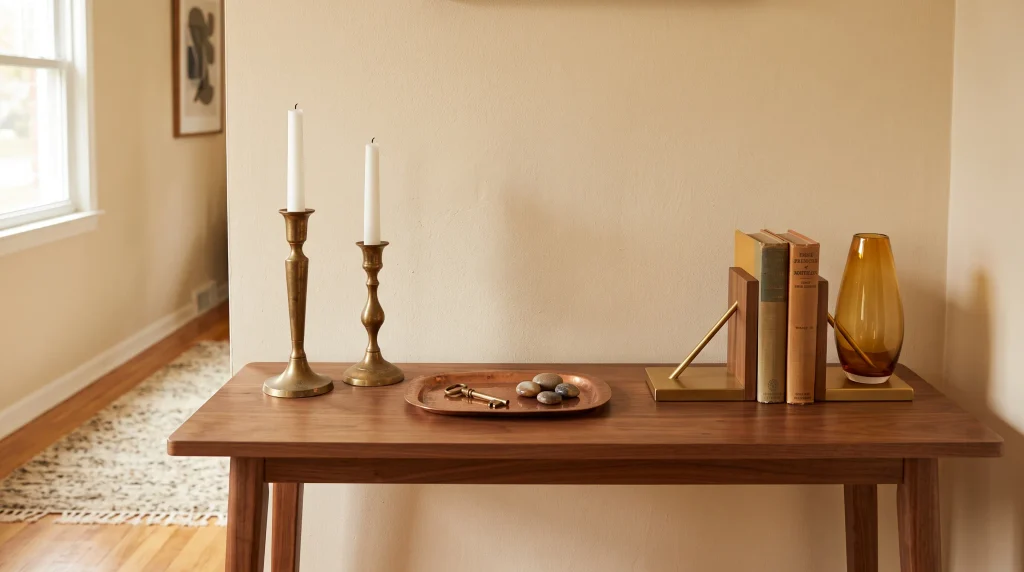
Warm metals were a defining material choice in mid-century design, and they happen to suit an autumn color palette just as naturally now as they did then. Brass candlesticks, a small copper tray, or a pair of sculptural metal bookends add character to a shelf or console table without introducing any new colors or requiring much additional styling. If a room already has walnut or teak furniture, a few brass accents tend to warm it up without introducing a second, competing metal tone into the mix.
Aged or unlacquered brass tends to have more visual warmth than a bright, polished finish, and it also hides fingerprints and everyday handling better over time. Paired with amber or smoked glass, these warm metals reinforce a cohesive retro palette across a room’s smaller details.
One thing to watch: consistency across metal finishes matters more than the specific piece — mixing brass with silver or chrome tends to undercut the cohesive, collected feeling that makes this style work.
Vintage Quilts and Throws
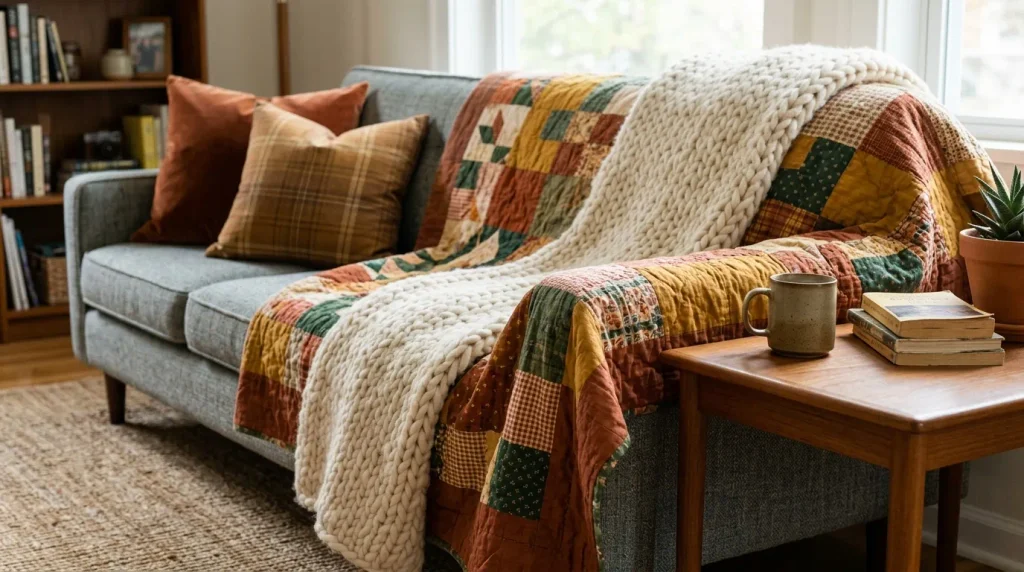
An older, authentic quilt carries a kind of texture and character that a new decorative throw generally can’t replicate — slight fading, hand-stitched details, and a pattern that was clearly made rather than printed. Layering a vintage quilt with a newer knit throw combines that history with modern comfort, giving a sofa or bed a collected look rather than a matched set.
Because these textiles were made for daily use in an earlier era, well-made pieces can be surprisingly durable, but condition varies a lot from piece to piece. Check the fabric, stitching, fading, stains, and any previous repairs before buying, especially if you plan to use the piece regularly rather than just display it.
A lower-cost alternative: thrifted quilts, even ones with some visible wear, are often significantly less expensive than new decorative throws while offering considerably more character.
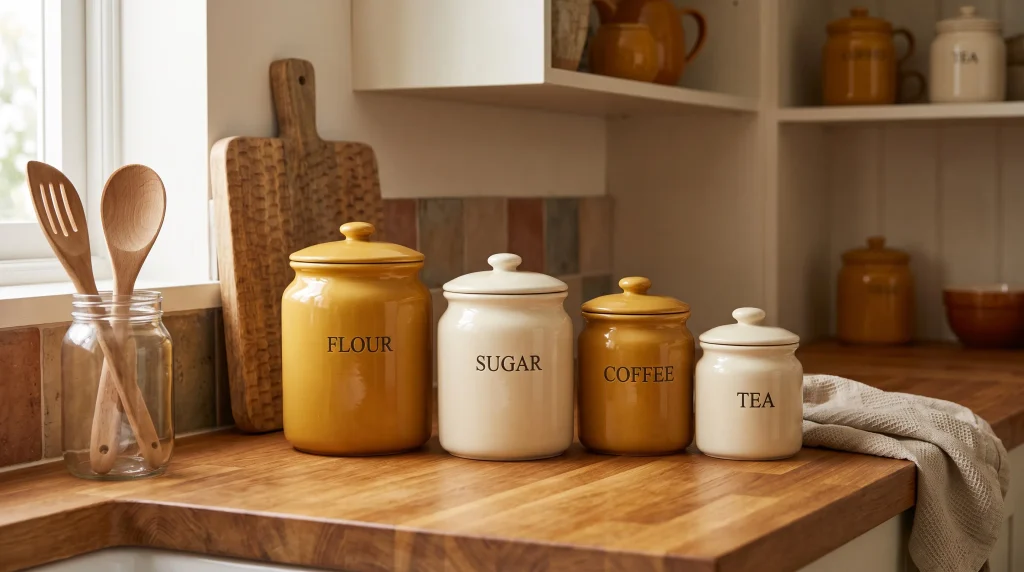
A Retro Kitchen Canister Set
A matching canister set does genuine double duty — it’s practical kitchen storage that also happens to bring cohesive retro color into a space used every single day. Metal canisters with rounded lids lean more mid-century, while ceramic sets with a slightly textured glaze suit a softer, more farmhouse-adjacent retro look, so the material choice is worth matching to your home’s broader style.
Grouping canisters by size on a counter, rather than tucking them into a cabinet, keeps flour, sugar, and other staples within easy reach while adding a considered, styled element to the kitchen. This is one of the more practical items on this list precisely because it earns its counter space through daily function.
Best for busy kitchens: choosing canisters you’ll actually use for their intended purpose means this decor choice never feels like clutter, since it’s doing a real job alongside looking good.
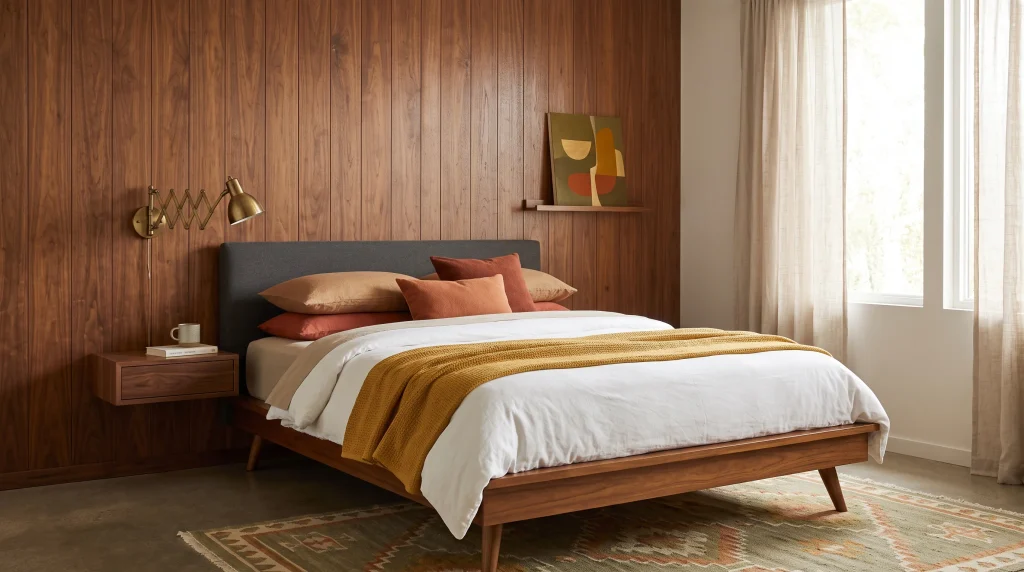
Wood Paneling and Warm Trim Accents
Most of this list focuses on decor that can be added or removed easily, but wood paneling works differently — it changes the architecture of a room rather than sitting on top of it. A paneled accent wall, even a modest one behind a headboard or along a hallway, brings genuine mid-century warmth into a space in a way that feels architectural rather than decorative.
Because this is a bigger, more permanent commitment than swapping out textiles or glassware, it makes more sense as part of a longer-term room refresh than a purely seasonal update. That said, it pairs naturally with an autumn palette already in use elsewhere, extending the retro feeling year-round rather than just for a few months.
Best for renters: peel-and-stick wood panel or wallpaper options can achieve a similar visual effect without any permanent construction, making this idea accessible even without a full renovation.
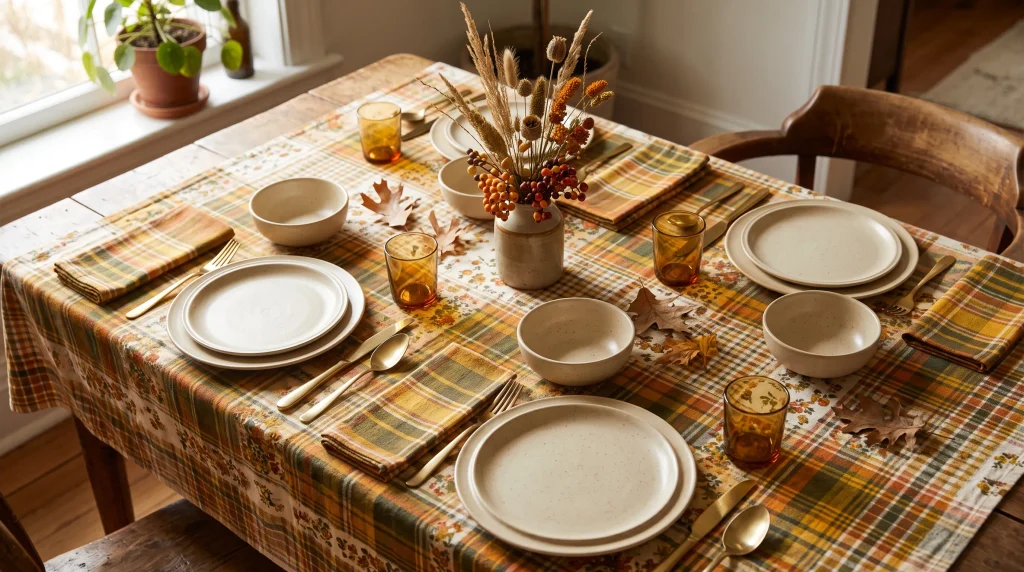
Retro Table Linens
Printed table linens were a defining feature of mid-century dining, and vintage tablecloths and napkins in warm plaids, checks, or small florals bring that same character to a table now. Because the tablecloth itself carries the pattern, keeping the plates and glassware relatively plain lets the linens do the visual work without the table feeling overcrowded with competing patterns.
These pieces are also fairly easy to find secondhand, since vintage table linens were produced in large quantities and often turn up at estate sales and thrift stores for very little. Being washable and reusable, they can also be a practical alternative to disposable seasonal table settings, especially if you’ll use them for years rather than just one dinner.
Avoid this mistake: don’t mix more than one strong pattern at the table — a patterned cloth with patterned dishware tends to compete rather than complement, even when the individual pieces are lovely on their own.
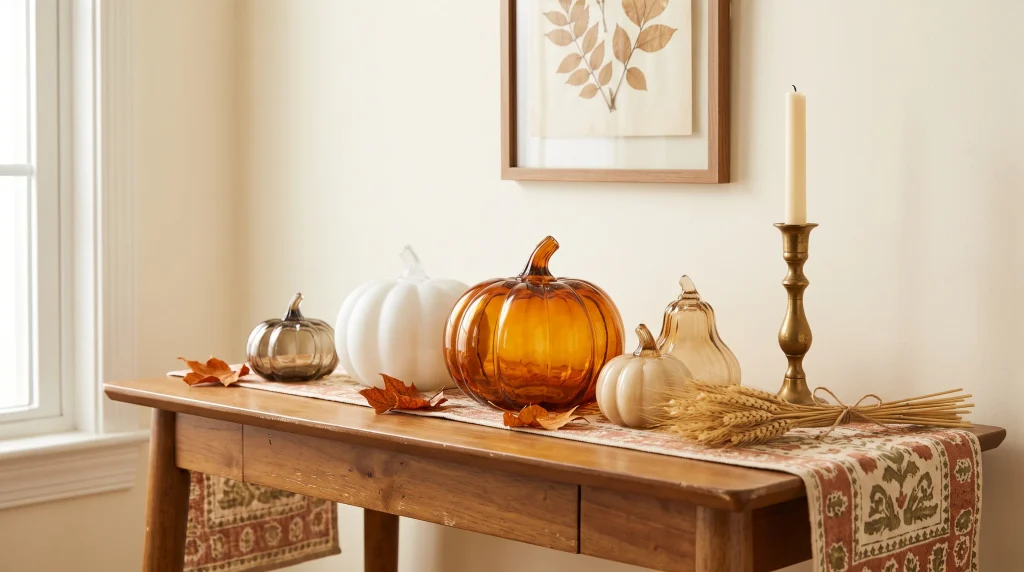
Vintage-Style Glass Pumpkins
Glass pumpkins bridge the gap between traditional seasonal decor and the retro glassware aesthetic already common in mid-century-styled homes. An amber or smoked glass version reads as vintage and collectible in a way a standard decorative pumpkin doesn’t, and it fits naturally alongside other colored glass already in the room.
Because glass pumpkins are reusable and don’t degrade the way real ones eventually do, they’re also one of the more practical seasonal purchases on this list — the same pieces can come out again in future years without needing to be replaced.
A smaller-scale option: even one or two glass pumpkins, mixed in among existing glassware on a shelf, brings a seasonal touch without needing to build an entirely new display.
A Styled Credenza or Sideboard
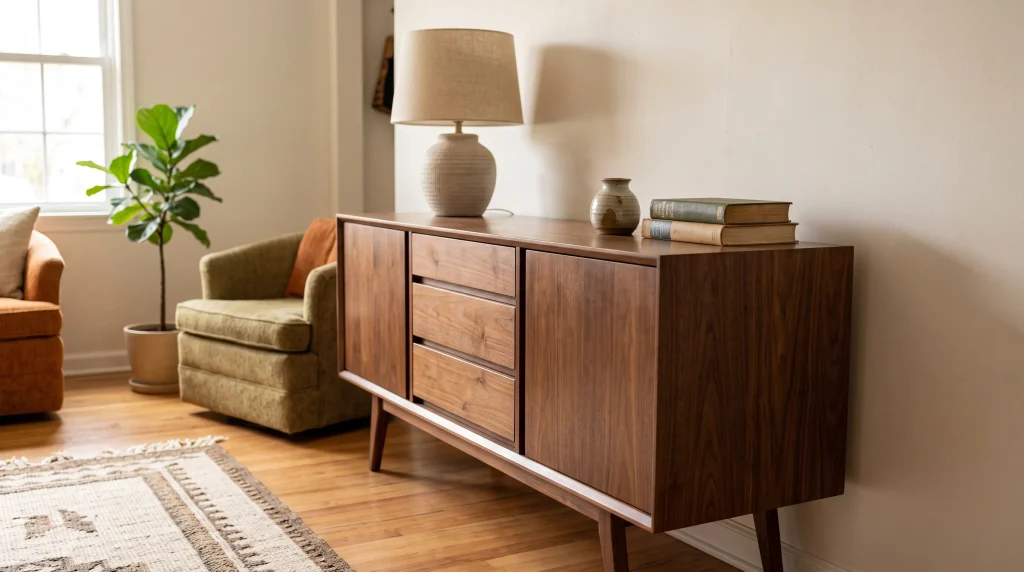
A credenza or sideboard is one of the more recognizable pieces of mid-century furniture, valued as much for its clean lines and tapered legs as for its storage capacity. Styled minimally on top — a lamp, a single vase, a small stack of books — it becomes a natural focal point that carries the retro aesthetic without requiring the room to be reorganized around it.
Restraint matters more here than on a smaller surface like a console table, simply because a credenza’s top is often quite large and can quickly look cluttered if every available inch gets filled. A few well-chosen objects, with real breathing room between them, tend to look far more intentional.
Where this pays off most: a credenza already doing double duty as storage means the styling effort goes toward a piece that earns its keep daily, not just for a season.
Retro-Patterned Cushions
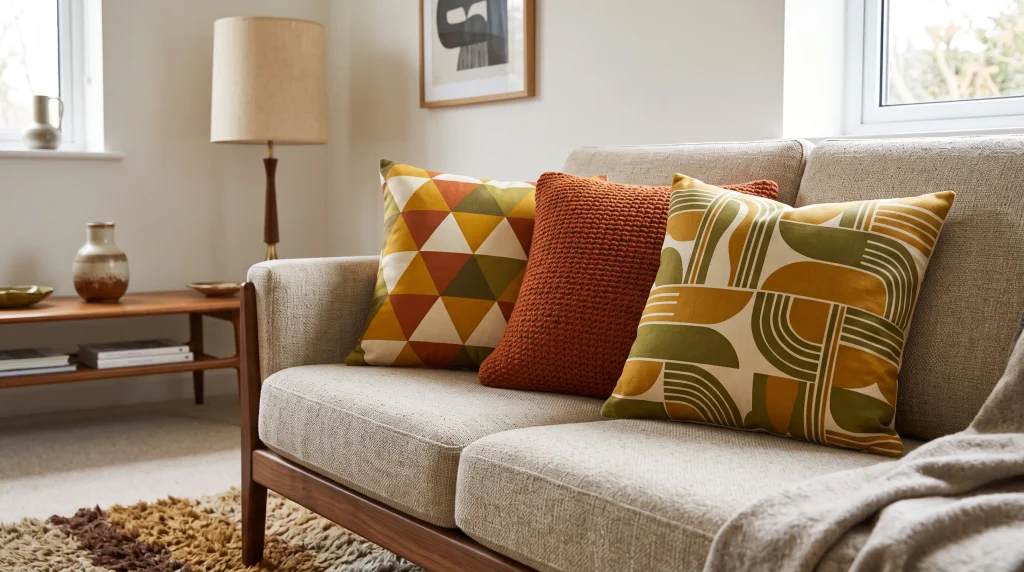
Cushion covers are one of the lowest-commitment ways to test a retro aesthetic before investing in larger furniture or permanent changes. A bold geometric or abstract floral pattern in warm autumn tones brings genuine mid-century character to a sofa, and because covers are inexpensive and easy to swap, this is a good starting point for anyone unsure how strongly they want to commit to the overall look.
Balancing one or two patterned cushions with a plain, textured one keeps the arrangement from feeling too busy, particularly on a smaller sofa where too many competing patterns can overwhelm the space.
Best for testing a new style: if you’re not sure whether a full retro room refresh is right for your home, cushions are the cheapest, most reversible way to find out before committing to a rug, furniture, or paneling.
Conclusion
Retro-inspired autumn decor works best when it feels like part of your home rather than a seasonal theme layered on top of it. Start with one or two changes — a warm color palette, a piece of vintage glassware, a patterned cushion, or a cozy rug — and see how they work with what you already have.
You don’t need to buy everything at once. Mixing older pieces with everyday furniture and modern textures can make a room feel collected without becoming overly themed. Choose pieces you’ll genuinely enjoy using beyond autumn, and the look will have staying power long after the season changes.