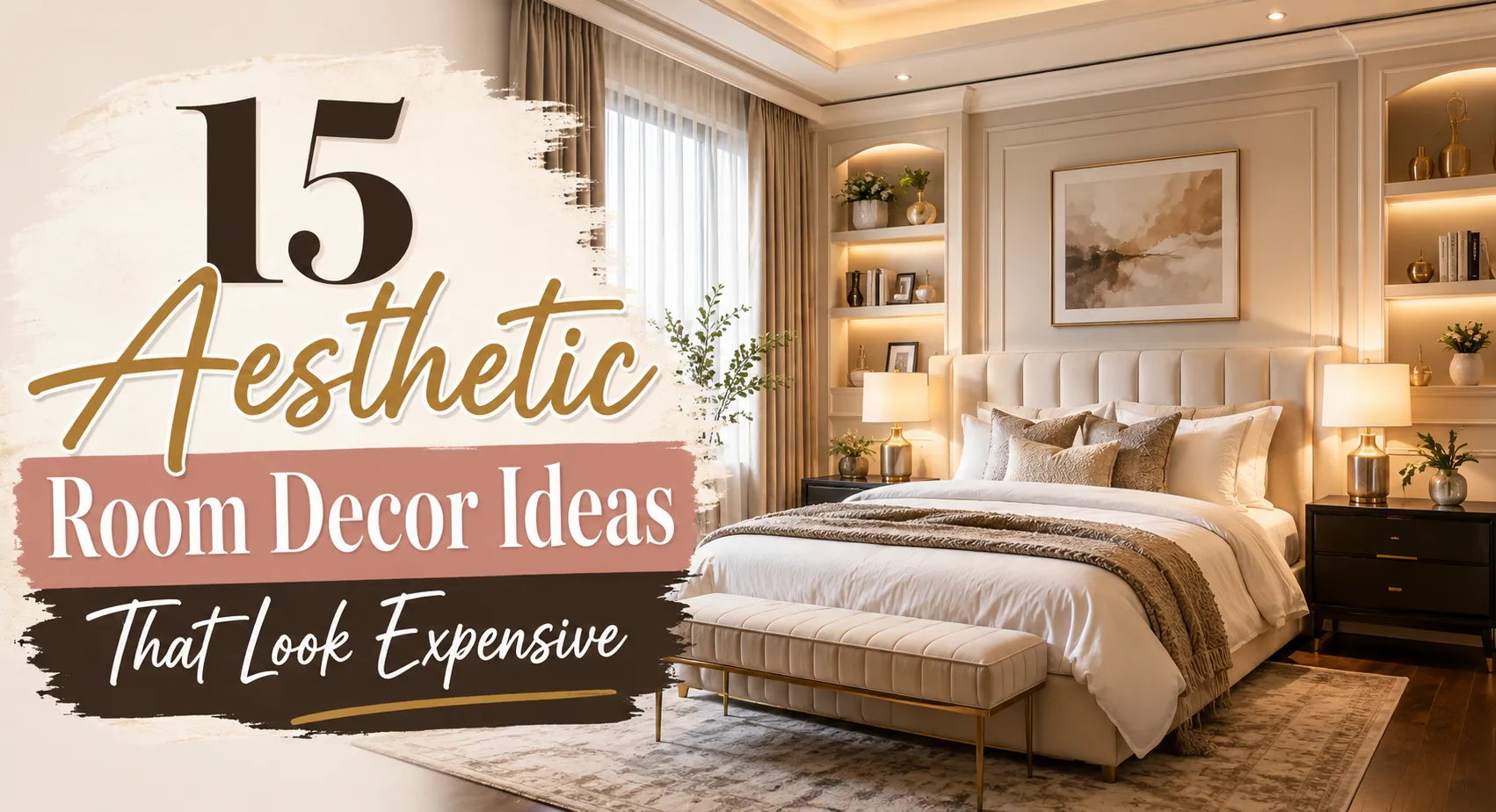
15 Aesthetic Room Decor Ideas That Look Expensive
What Makes a Room Look Expensive?
There’s a specific difference between a room that looks decorated and a room that looks expensive, and it usually has nothing to do with how much was actually spent. Expensive-looking rooms share a handful of traits: a restrained color palette instead of a dozen competing tones, layered lighting instead of one harsh overhead bulb, real texture you can feel across the fabrics and surfaces, and — probably the most underrated factor — a lack of visual clutter.
A room with three carefully chosen pieces almost always reads richer than a room with fifteen scattered ones.
The other piece people miss is scale. A single oversized piece of art or one generously sized mirror does more for a room than five small decorations spread across the same wall, because it reads as a deliberate choice rather than an accumulation of purchases.
I’ve furnished budget apartments that looked more expensive than rooms with double the decor spend, and the difference every single time came down to restraint, lighting, and texture — not price tags. The ideas below break that principle down into specific, repeatable moves you can apply to almost any bedroom or living space.
15 Aesthetic Room Decor Ideas That Look Expensive
1. Layer Your Bedding for a Designer Look
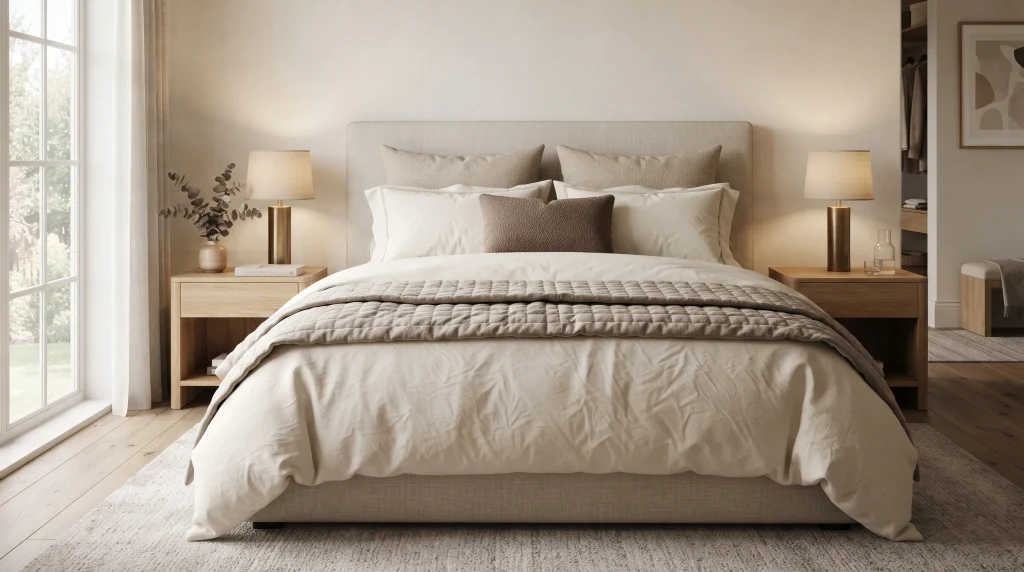
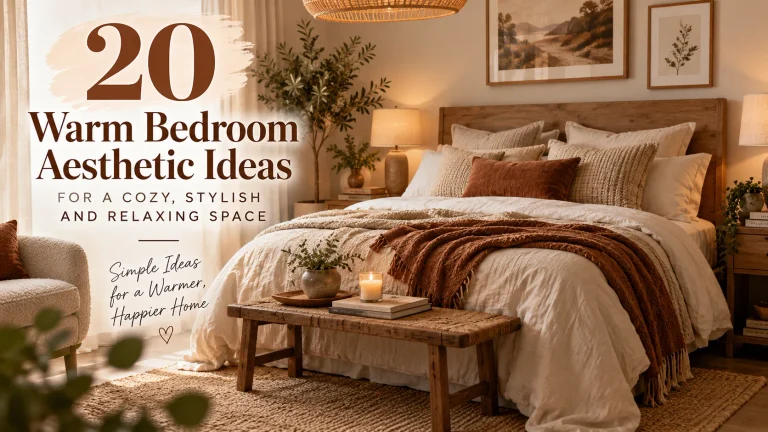
A flat duvet on its own reads like a hotel that’s trying too hard, but layered bedding reads like an actual designer walked through the room. Start with a fitted sheet and duvet in a solid, neutral tone, then add a folded quilt or coverlet across the foot of the bed, and finish with a mix of pillow sizes — two standard sleeping pillows, two larger Euro shams behind them, and one smaller accent pillow in front.
The mistake I see most often is buying pillows that all match perfectly. A slightly imperfect mix — two similar-toned shams with one contrasting texture, like a boucle or velvet accent pillow — looks considerably more expensive than a matched three-piece set from a single collection.
Keep the palette to two or three tones total so the layering reads as intentional rather than busy, and resist the urge to over-stuff the bed with more than five or six pillows; past that point it starts looking like a showroom display nobody actually sleeps in.
2. Use Warm, Layered Lighting
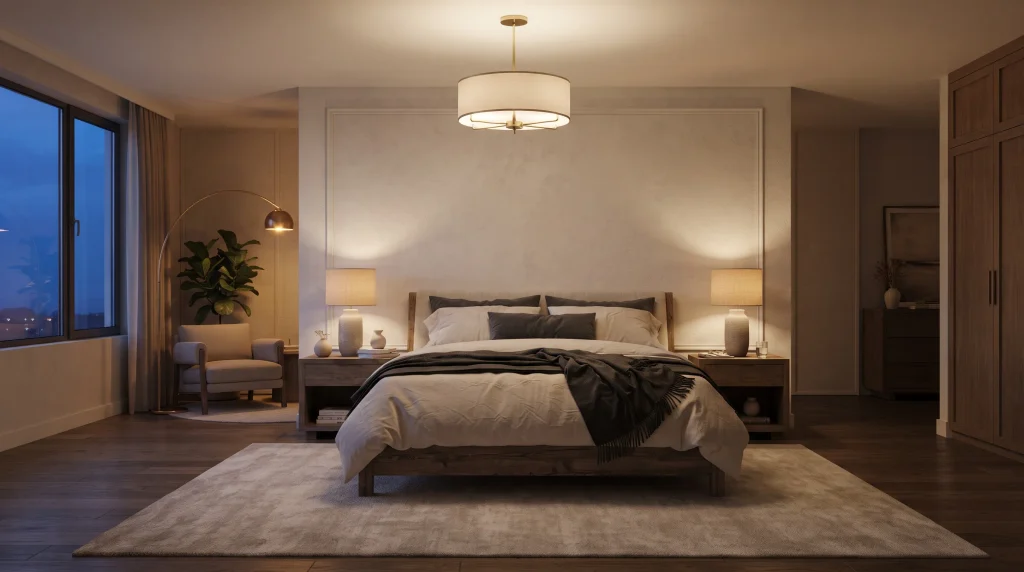
Overhead lighting alone is probably the single biggest reason a decorated room still feels flat and cheap. A genuinely expensive-looking bedroom usually has at least three light sources working together: the ceiling fixture for general light, a bedside lamp on each nightstand, and one additional ambient source — a floor lamp in the corner, LED strip lighting behind the headboard, or a small accent light on a dresser.
Bulb temperature matters more than most people realize here. A warm white bulb, somewhere around 2700K, reads as cozy and considered, while a cooler, bluer bulb can make even beautifully decorated rooms feel closer to an office than a bedroom.
If your budget only stretches to one lighting upgrade, make it the nightstand lamps — they’re the light source you actually sit next to in the evening, and a mismatched pair of thrifted lamps rewired with the same warm bulbs will do more for the room’s mood than an expensive ceiling fixture ever will.
3. Stick to a Sophisticated Color Palette
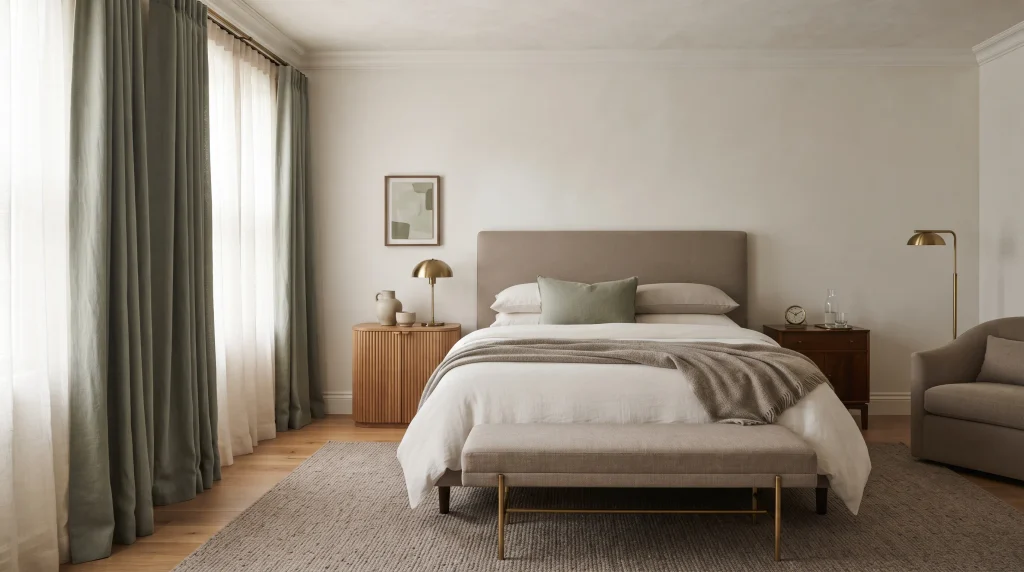
Color is where a lot of otherwise well-decorated rooms lose the “expensive” feeling. A wall in one bold, saturated color paired with unrelated accent colors across the bedding, rug, and curtains reads as busy no matter how nice each individual piece is.
Expensive-looking rooms tend to lean on two or three tones total — often a neutral base like warm white, greige, or soft taupe, with one deeper accent color repeated across two or three items in the room.
This doesn’t mean the room has to be boring or entirely beige. A deep sage, dusty terracotta, or muted navy used consistently — on the curtains and one accent pillow, say, rather than scattered randomly — reads as a deliberate design choice rather than a collection of unrelated purchases. I’d genuinely rather see a room with one confident accent color used three times over a room with five different colors used once each; the restraint is what actually signals intention to anyone walking in.
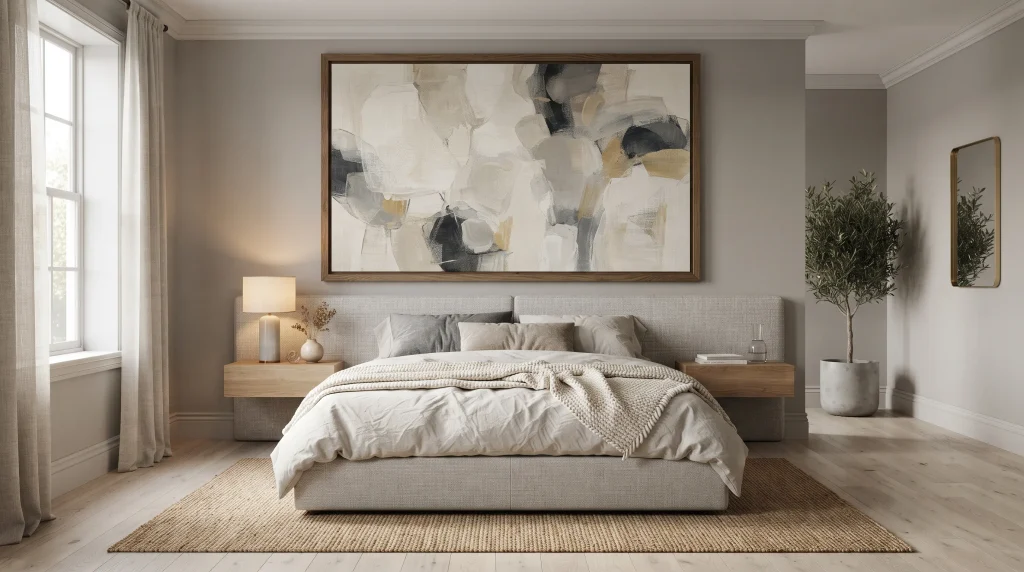
4. Make a Statement With Oversized Wall Art
Small framed prints scattered across a wall almost always read as an afterthought, even when each individual piece is nice. One large piece of art — genuinely large, not just slightly bigger than average — instantly gives a wall the kind of presence you’d expect from a much pricier room. As a general guideline, art spanning roughly two-thirds the width of whatever it’s hung over, which tends to be wider than most people instinctively choose.
Height is the detail that trips people up most. Art hung too high, closer to the ceiling than to the furniture below it, is one of the fastest ways to make an otherwise well-chosen piece look off.
Center the art around eye level relative to the furniture, roughly six to eight inches above a headboard or console, and one oversized piece will do more for the room than a gallery wall assembled from a dozen smaller ones — with a fraction of the framing and hanging hardware involved.
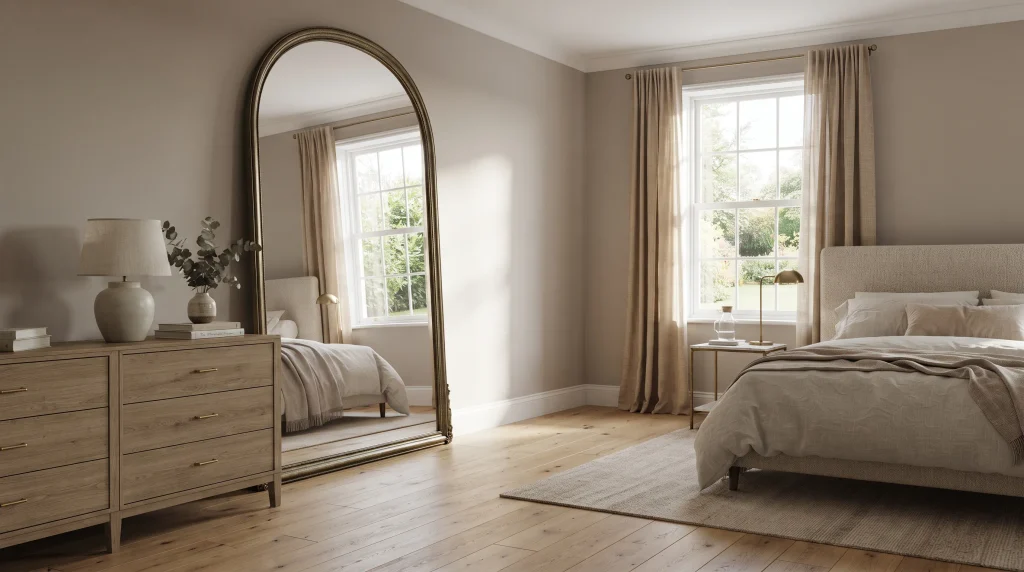
5. Add a Large Mirror for Light and Elegance
A well-placed mirror does two things at once: it adds real elegance to a wall, and it bounces whatever natural light the room has into corners that would otherwise stay dim. An arched or gently curved frame in brass or antique gold tends to read more expensive than a plain rectangular mirror, even at a similar price point, because the shape itself reads as more considered.
Placement is everything here — a mirror hung across from a window will noticeably brighten the room, while the same mirror hung facing a blank wall does almost nothing for the light and just becomes another decoration.
I’d also lean toward one substantial mirror over several small ones; a single generously sized piece leaning against a wall or hung above a dresser has more presence than a cluster of smaller mirrors, and it’s usually the detail people notice first when they walk into a room that feels expensive.
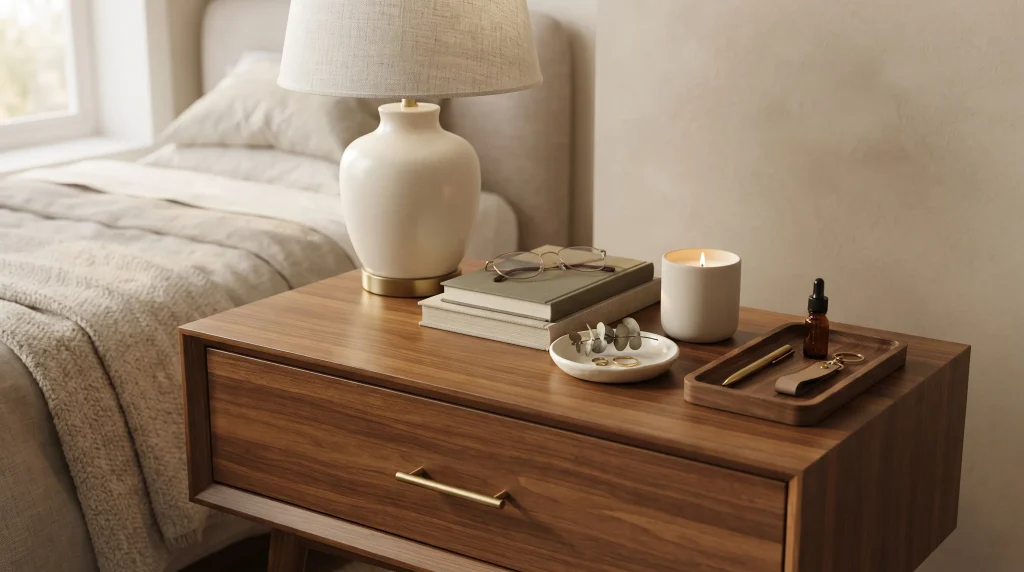
6. Style Your Nightstand With Intention
A nightstand covered in phone chargers, half-empty water glasses, and random receipts undercuts an otherwise beautifully decorated room faster than almost anything else, because it’s right at eye level next to the bed. Styling it properly doesn’t take much — a small lamp, a stack of two or three books, one small decorative object like a ceramic dish or a candle, and that’s genuinely enough.
The trick that makes the biggest visual difference is hiding the functional clutter rather than eliminating it. A small tray or dish for jewelry and loose items keeps the necessary stuff contained instead of scattered, and a nightstand with a drawer or shelf underneath gives chargers and daily items somewhere to disappear to.
I’ve styled nightstands for photos plenty of times, and the honest truth is the “designer” look is less about adding beautiful objects and more about giving the ordinary, unglamorous stuff a place to hide.
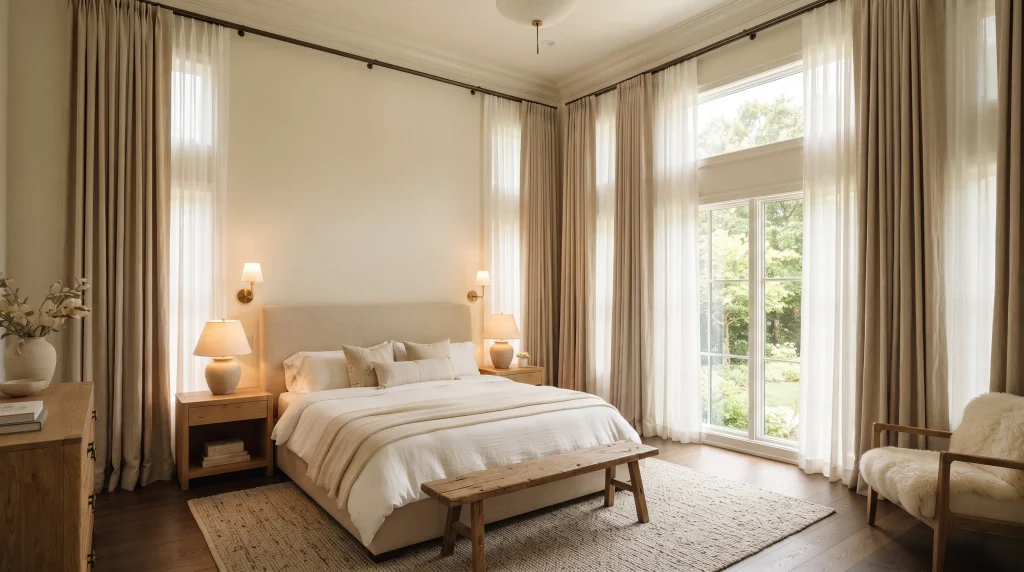
7. Hang Curtains Higher to Make the Room Feel Taller
Curtains hung directly above a window frame make the whole room feel shorter and cheaper than it actually is — it’s one of the most common styling mistakes in otherwise well-furnished rooms.
Mounting the curtain rod closer to the ceiling, even eight to twelve inches above the window frame, and letting the curtains fall all the way to the floor, makes the ceiling read as noticeably taller and the whole room feel more expensive without touching a single wall.
Fabric weight matters here too. A lightweight, gauzy curtain lets more light through but can look a little flimsy on its own; a heavier linen or velvet curtain, or a layered combination of a sheer panel underneath a heavier drape, reads as considerably more substantial and hotel-like.
Whatever fabric you choose, make sure the curtains actually reach the floor — curtains that hover an inch or two above it, or worse, stop short of it entirely, undercut the whole effect this trick is meant to create.
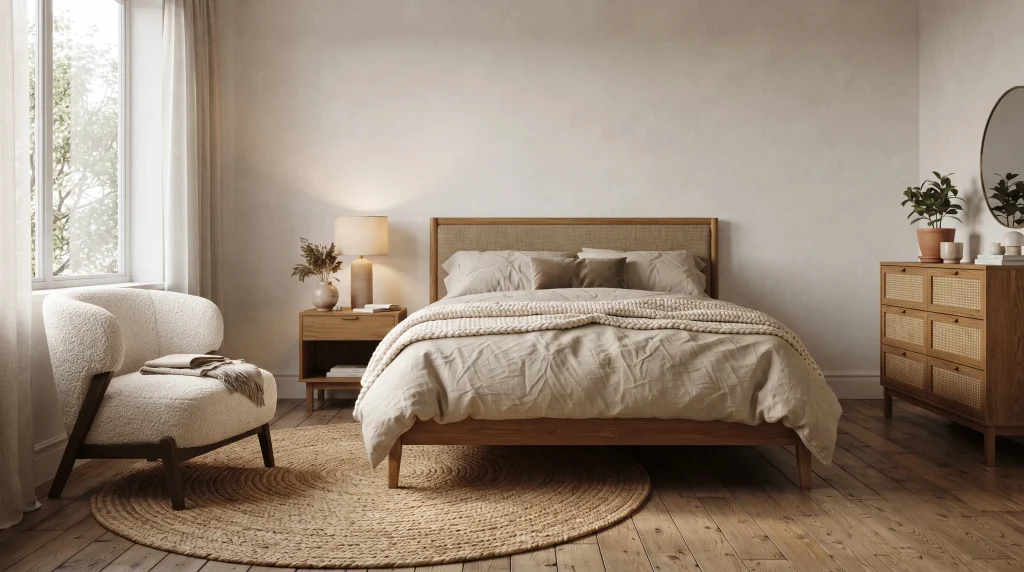
8. Layer Rich Textures Throughout the Room
A room built entirely from smooth, flat surfaces — cotton bedding, a plain painted wall, a synthetic rug — can look fine in photos but feels noticeably flatter in person than a room with real texture variation. Mixing in velvet, boucle, linen, and a natural material like rattan or woven jute gives the eye more to register, and that variation is a big part of what separates a “nice” room from an expensive-feeling one.
You don’t need to overhaul every surface to get this effect — one velvet or boucle accent chair, a linen duvet cover, and a woven or jute rug underneath is usually enough to carry an entire room.
I’d prioritize texture over pattern if you have to choose one; a room with three different neutral textures layered together often reads as more sophisticated than a room with one bold pattern and everything else left flat and smooth.
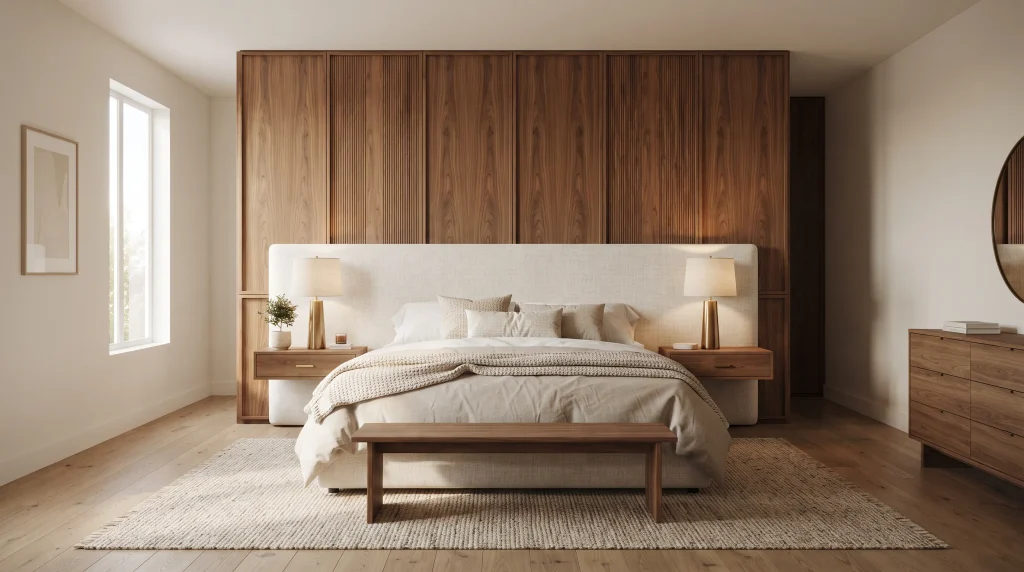
9. Create a Statement Wall Behind the Bed
The wall behind the bed gets more visual attention than almost any other surface in a bedroom, simply because it’s what you face every time you’re lying down or walking in the door. An upholstered headboard, a wood-paneled accent wall, or even a bold paint color contained to just that one wall gives the room an anchor point the rest of the styling can build around.
This doesn’t have to mean a full headboard purchase if the budget doesn’t allow for one. A large arched mirror leaned behind the pillows, a piece of statement wallpaper on just that wall, or even wood molding painted a contrasting color can create a similar anchoring effect for a fraction of the cost. Whatever direction you go, keep the wall on either side of the bed relatively plain — the statement wall only reads as intentional if it has some quieter space around it to contrast against.
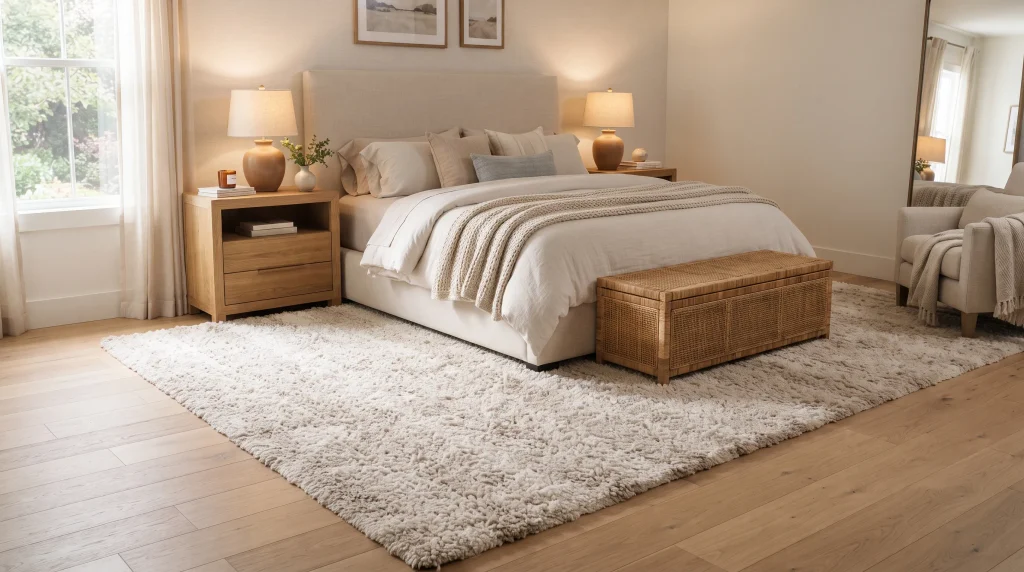
10. Ground the Room With a Properly Sized Rug
Bare flooring next to a bed, even nice flooring, tends to make a bedroom feel colder and less finished than one with a rug underfoot. A plush rug — something you’d actually want to step onto barefoot — grounds the furniture visually and adds warmth both literally and in how the room reads overall.
Sizing is where most people go wrong. A rug that only peeks out from under the bed frame looks like an afterthought; a common guideline is letting the rug extend somewhere around eighteen to twenty-four inches beyond each side of the bed, so your feet are more likely to land on it when you get up in the morning. If a full room-sized rug is outside the budget, two smaller matching rugs placed on either side of the bed like runners can achieve a similar effect for considerably less than one large piece.
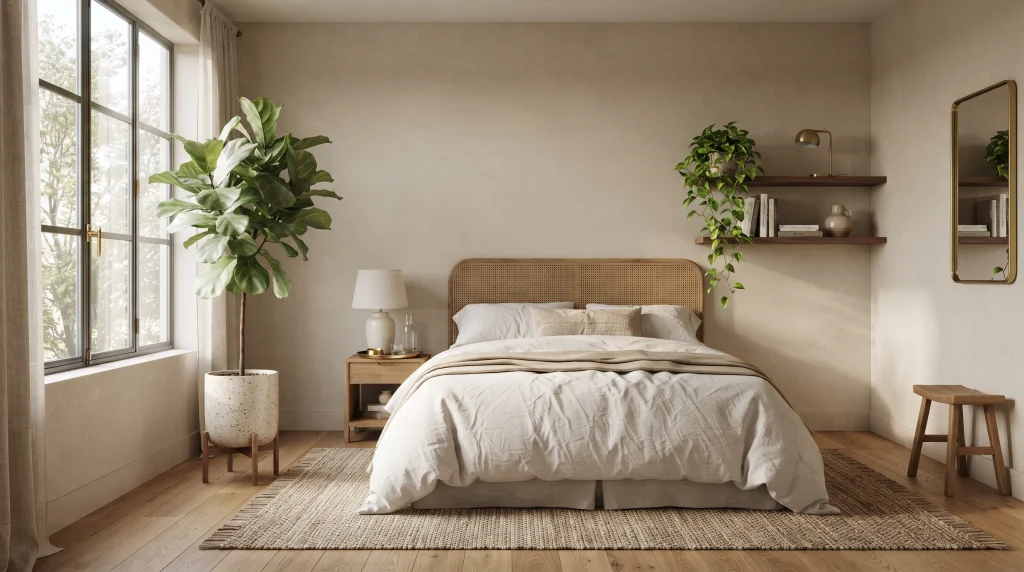
11. Add Greenery and Natural Materials
A room without a single living or natural element in it can start to feel a little sterile no matter how well everything else is styled. One or two plants — a trailing pothos on a shelf, a taller fiddle leaf fig in a corner — bring in color and texture that nothing manufactured quite replicates, and they soften whatever hard surfaces and straight lines are already in the room.
Match the planter to the room’s existing materials rather than grabbing whatever plastic pot the plant came in — a simple ceramic, woven, or matte black planter ties into the rest of the palette far better than the default nursery container.
If natural light is limited, or you know realistically you won’t keep up with watering, a well-made faux plant genuinely looks better long-term than a real one slowly dying in the corner, which undercuts the whole room faster than having no plant at all.
12. Repeat Finishes for a More Cohesive Look
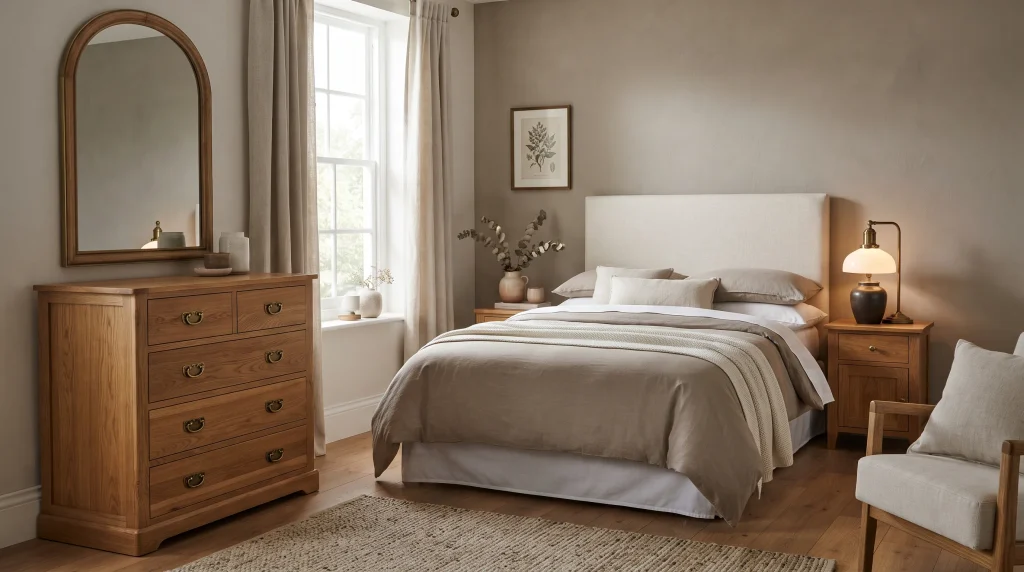
Buying every piece in a room from unrelated sources, with no shared thread between the finishes, is one of the fastest ways to make a space feel thrown together rather than designed. That doesn’t mean everything needs to match exactly — it means picking one or two consistent elements, like a metal finish or a color family, and repeating them across multiple pieces in the room.
Brass hardware on the dresser, a brass lamp base, and a brass-framed mirror, for example, create a sense of coordination without anything being an exact matching set.
I’d actually caution against buying a fully matched furniture set from one collection — it can read as slightly generic, almost like a furniture-store showroom, whereas pieces from different sources that share one deliberate common thread tend to look more like they were collected over time by someone with a clear point of view.
13. Choose One Standout Statement Piece
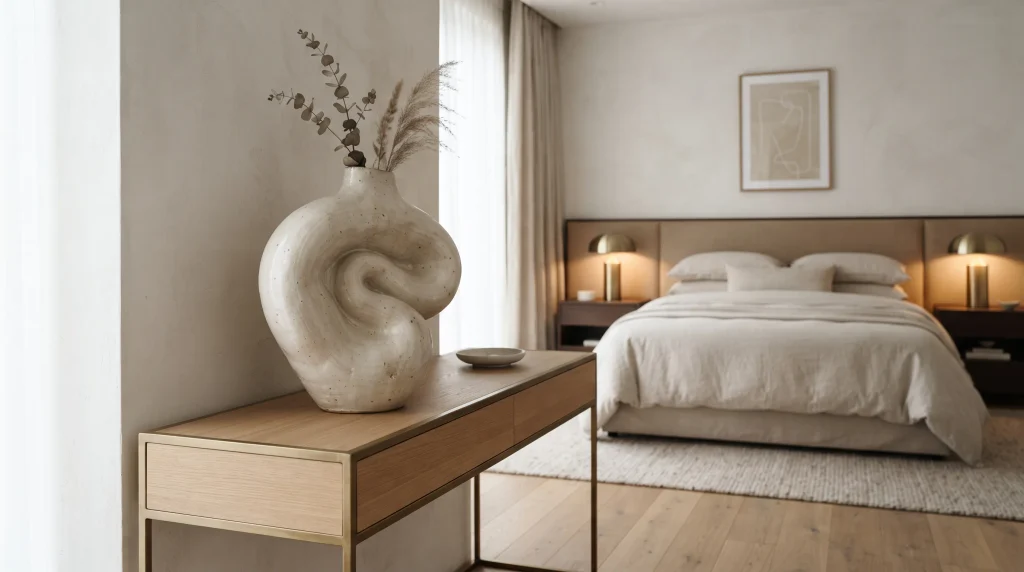
Every genuinely expensive-looking room has at least one piece that does more visual work than everything else combined — an oversized vase, a sculptural lamp, a striking piece of furniture with real presence. The rest of the room can be relatively simple and restrained precisely because this one piece is carrying the visual interest.
The trick is committing to just one. Rooms that try to make three or four different pieces all “statement” objects end up competing with themselves, and nothing actually gets to stand out. Pick the piece that genuinely excites you most — it doesn’t have to be the most expensive item in the room, just the one with the strongest shape or presence — and let everything else around it stay quiet and supportive rather than trying to compete for the same attention.
14. Let Less Clutter Make the Room Feel More Expensive
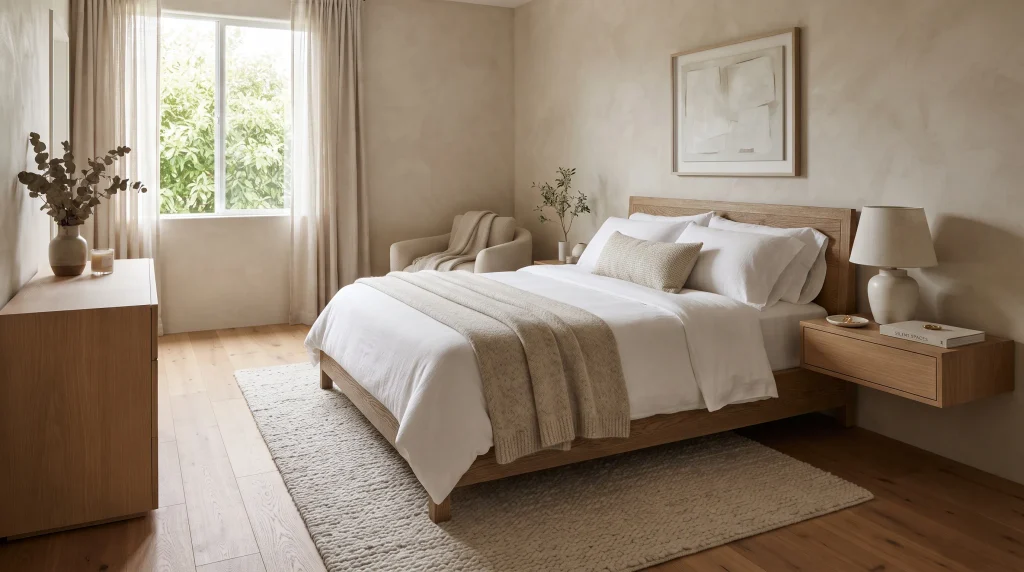
This is the least glamorous item on the list and also, honestly, the one that makes the biggest difference. A beautifully decorated room with visible clutter — mail stacked on a dresser, cables trailing across the floor, random items piled on a chair — will always photograph and feel less expensive than a simpler room that’s genuinely tidy.
I’d treat this as a maintenance habit rather than a one-time styling task. Set a rule for yourself, even something as simple as clearing every surface once a day, and give the inevitable clutter — chargers, receipts, half-read books — a designated container or drawer instead of leaving it to accumulate on visible surfaces. A room doesn’t need more decor to look more expensive nearly as often as it needs less visible mess; that’s genuinely the single highest-impact, zero-cost change on this entire list.
15. Finish With Small Luxury-Looking Details
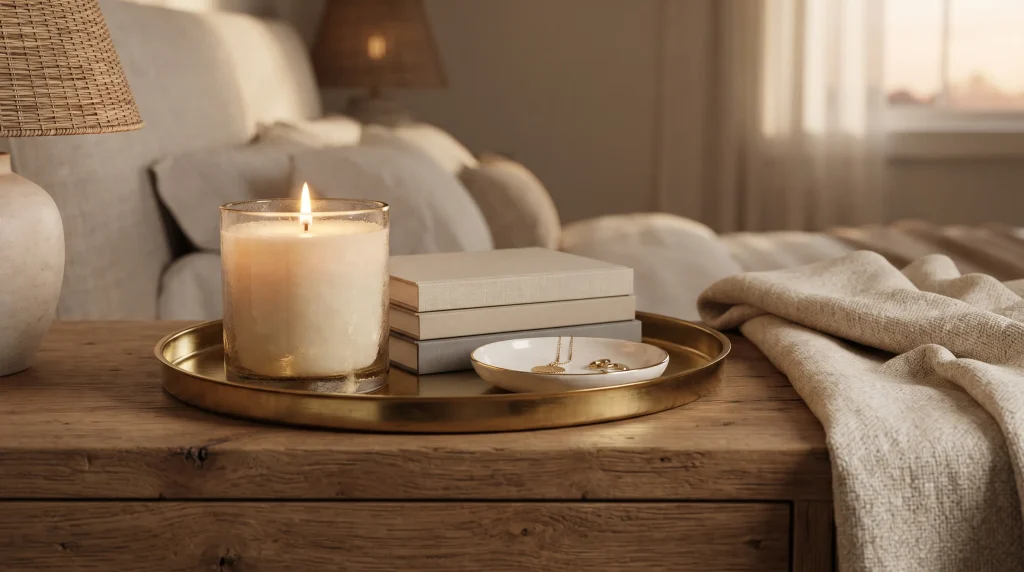
The last five percent of a room — the small finishing touches — is often what separates “nicely decorated” from “genuinely expensive-looking.” Think a scented candle in a substantial glass vessel, a small stack of coffee table books with attractive spines, a ceramic dish for jewelry, or a folded throw draped deliberately rather than tossed.
These details work because they signal that someone thought about the room down to the last few inches, not just the big furniture decisions. None of them need to be expensive individually — a candle from a mid-range retailer in a heavy glass jar reads just as well as a luxury brand once it’s lit and styled on a tray.
Add these last, after the bigger pieces are in place, and resist adding more than two or three per surface; too many small objects start to look cluttered rather than curated, which undoes the exact effect you’re going for.
How to Make Your Room Look Expensive on a Budget
None of the fifteen ideas above require a full renovation, and several of them cost close to nothing. Swapping harsh overhead lighting for warm bulbs in a secondhand lamp, mounting existing curtains higher on the wall, and simply clearing clutter off every visible surface are all free or nearly free changes that make a measurable difference in how expensive a room feels.
Thrifted frames spray-painted a consistent brass or black, and one oversized piece of art printed affordably online, can replace an entire gallery wall’s worth of small framed prints for a fraction of the cost.
The biggest budget mistake is spreading a small budget across many small purchases instead of concentrating it on one or two higher-impact pieces. A single well-chosen mirror or rug will do more for a room than ten small trinkets bought at the same total price.
I’d also encourage shopping secondhand for anything with real material presence — a solid wood console or a genuine brass lamp from a thrift store or marketplace listing almost always looks and feels more expensive than a new, mass-produced equivalent at the same price point, simply because the materials are better to begin with.
Aesthetic Room Decor Mistakes That Can Make a Room Look Cheap
The most common mistake is over-decorating rather than under-decorating — filling every available surface and wall because a room feels unfinished, when the actual fix is usually removing a few items rather than adding more.
A close second is buying decor in isolated pieces without any shared color, material, or finish connecting them, which leaves a room feeling assembled rather than designed even when every individual piece is nice on its own.
Lighting mistakes come up constantly too — relying on one overhead fixture, using a cool white bulb that makes the whole room feel clinical, or leaving a bedside lamp with a bulb that’s too dim to actually read by. C
urtains hung too low or too tight to the window frame, art hung too high above the furniture, and rugs sized too small for the furniture sitting on them round out the list of small, fixable details that quietly undercut an otherwise well-decorated room. Most of these are genuinely free to fix — they’re placement and habit issues, not spending issues.
Frequently Asked Questions
How can I make my room look expensive?
Focus on layered lighting, a restrained two-to-three-color palette, and clutter-free surfaces before buying more decor. One larger, well-chosen piece — a mirror, a rug, or a piece of art — almost always has more impact than several smaller purchases at the same combined cost.
What makes a bedroom look luxurious?
Layered bedding, warm ambient lighting, rich textures like velvet or boucle, and floor-to-ceiling curtains are the details that show up most consistently in bedrooms that read as luxurious, regardless of the actual budget behind them.
How do I make my room aesthetic on a budget?
Prioritize free or low-cost changes first — warm lightbulbs, curtain rods mounted higher, and decluttering visible surfaces — before spending on new decor. When you do buy, concentrate the budget on one or two higher-impact pieces instead of many small ones.
What colors make a room look expensive?
Neutral, muted tones like warm white, taupe, sage, and soft greige tend to read as sophisticated, especially paired with one deeper accent color repeated consistently across two or three items in the room rather than scattered randomly.
What decor makes a bedroom look more luxurious?
An oversized mirror, layered bedding with mixed textures, warm multi-source lighting, and one confident statement piece are the details that consistently show up in bedrooms that feel luxurious rather than simply decorated.
Final Thoughts
Making a room look expensive has surprisingly little to do with how much you actually spend, and a lot to do with restraint, lighting, and a handful of intentional choices repeated consistently throughout the space. Start with the free changes — lighting temperature, curtain height, and clearing clutter off surfaces — before spending anything at all, and when you do buy, put the budget toward one or two pieces with real presence rather than a dozen small ones. The rooms that read as genuinely expensive aren’t the most decorated ones; they’re the ones where every piece feels like a deliberate choice. Save this for your next room refresh, and pass it along to anyone else chasing that same elevated, aesthetic look on a real-world budget.


2 Comments