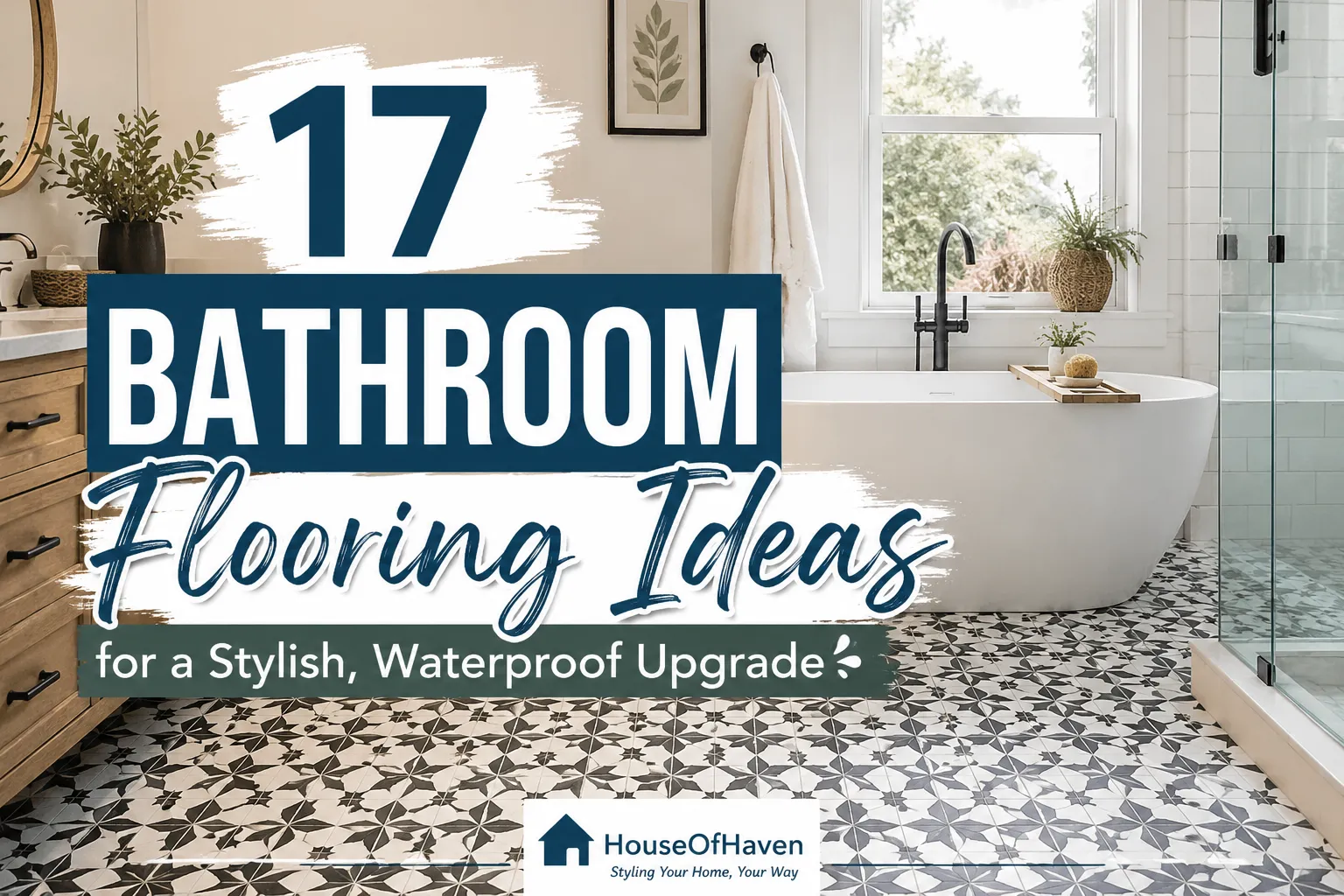
17 Bathroom Flooring Ideas for a Stylish, Waterproof Upgrade
The floor is easy to overlook when planning a bathroom, yet it does more work than almost any other surface in the room. It has to survive daily splashes, steam, bare feet, and constant cleaning, all while still looking good enough to set the tone for the whole space.
Choosing the right bathroom flooring isn’t just about picking a color you like, it’s about balancing water resistance, slip safety, upkeep, and comfort with the overall style you’re going for.
Whether you’re gutting a bathroom down to the studs or simply swapping out a worn-out floor, the options today go far beyond basic white tile.
This guide walks through 17 bathroom flooring ideas, from dependable porcelain and ceramic to warmer choices like luxury vinyl plank, plus statement materials like terrazzo, microcement, and heated floors. Each one comes with practical notes on durability, maintenance, and where it works best, so you can narrow down what actually fits your bathroom, not just what looks good in a photo.
What Makes a Good Bathroom Floor?
Before comparing individual materials, it helps to understand the three things that actually determine whether a floor performs well in a bathroom: how it handles water, how safe it is when wet, and how much upkeep it realistically needs. Style matters too, but these three factors are what separate a floor that lasts from one that causes problems within a few years.
Waterproof vs. Water-Resistant Flooring
These two terms get used almost interchangeably in flooring marketing, but they describe different levels of protection. Waterproof flooring is built to prevent moisture from penetrating the material at all, even if water sits on the surface for a while, which is why it’s the safer choice for shower floors and areas around a tub. Water-resistant flooring can handle everyday splashes and quick spills, but it isn’t designed to withstand standing water or prolonged exposure, and it can warp, swell, or stain if moisture gets past the surface. The distinction matters most with vinyl, laminate-style products, and engineered materials, since “waterproof” isn’t automatically true just because a product is marketed as bathroom-friendly. Always check the manufacturer’s specific rating rather than assuming based on the general material category.
Slip Resistance
Wet floors and bare feet are a daily reality in a bathroom, so slip resistance deserves more attention than it usually gets. Rather than assuming a finish is safe just because it looks textured or matte, look for a product with a slip-resistance rating appropriate for wet areas, sometimes listed as a coefficient of friction or DCOF rating on tile specifications. Smaller tiles and mosaic formats tend to help because the extra grout lines add texture underfoot, but grout lines alone aren’t a substitute for a properly rated surface. Glossy, highly polished finishes are the ones to be most cautious with, especially near the shower or tub, regardless of the material they’re made from.
Maintenance & Durability
Every flooring material asks something of you in return for how it looks. Porcelain and ceramic are close to low-maintenance once installed, needing little beyond regular cleaning and occasional grout care. Natural stone, cement-based tile, and microcement typically require sealing and more careful product selection when cleaning. Vinyl and rubber are generally easy to maintain but vary in how they hold up to sharp objects or heavy impact over time. Before committing to a material, it’s worth being honest about how much upkeep you’re actually willing to do, since a floor that looks stunning but gets neglected will age far worse than a simpler one that’s properly cared for.
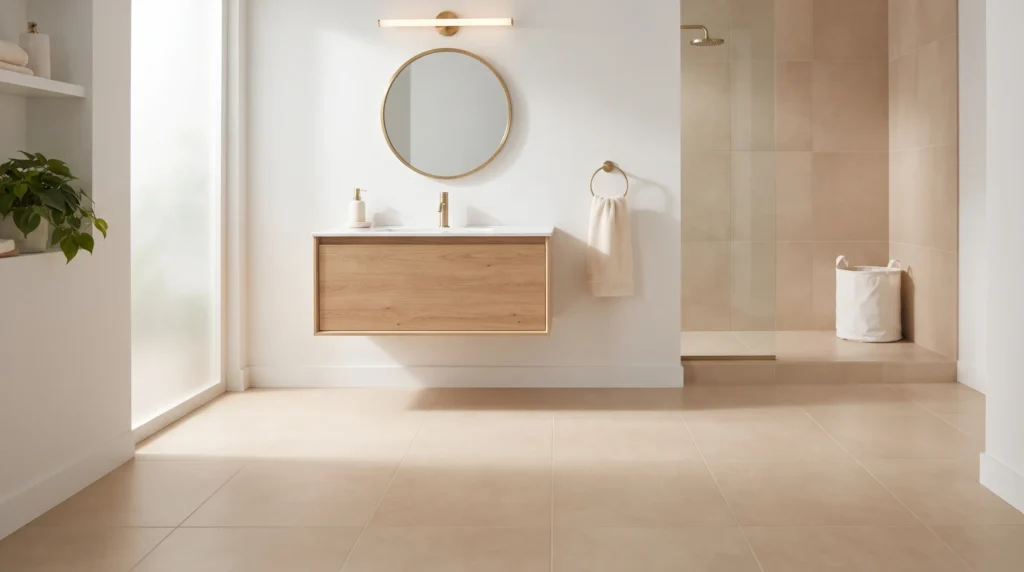
1. Porcelain Tile Flooring
Porcelain is one of the most reliable materials you can put on a bathroom floor, and it’s often the first recommendation contractors give when durability and water resistance top the list. It’s dense, low-porosity, and holds up well against humidity, splashes, and years of foot traffic without much fuss. Because it’s manufactured rather than quarried, porcelain comes in an enormous range of colors, sizes, and finishes, so it works just as well in a small guest bathroom as it does in a large primary suite. A matte or textured finish is worth choosing over high-gloss, since it improves grip on a floor that’s regularly wet.
Tile size changes the feel of the room more than most people expect. Large-format porcelain tiles cut down on grout lines and create a calmer, more open look, while smaller tiles add texture and pattern. Warm white, soft beige, and pale gray porcelain pair easily with wood vanities, brass fixtures, or black hardware, and some options mimic marble veining at a fraction of the cost and upkeep. Picking a grout shade that blends with the tile, rather than contrasting sharply, usually makes the finished floor look more deliberate and polished.
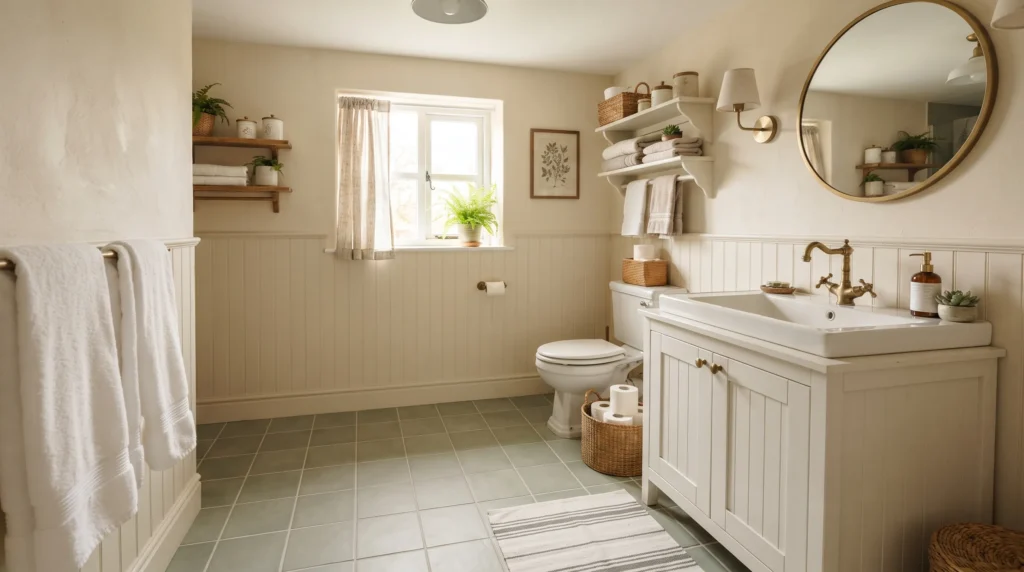
2. Ceramic Tile Flooring
Ceramic tile is the flooring most people picture when they think “classic bathroom,” and it’s stuck around for good reason. It’s more affordable than porcelain, easier to cut and install, and available in an equally wide range of colors and patterns, from plain matte squares to decorative designs that look almost handmade. As long as the product is rated for floor use and installed correctly, ceramic handles everyday bathroom moisture just fine. It also gives homeowners a lot of room to coordinate the floor with paint, cabinetry, and hardware without a big budget.
This material shines when you want a design detail without redoing the entire room. Creamy tiles with a warm grout create a relaxed, timeless look, while muted blue or sage tones lean into a fresher, spa-like palette. If you go with a patterned ceramic tile, it’s worth keeping the walls and fixtures simple so the floor doesn’t compete with everything else in the room. A slightly textured or matte surface is generally the safer, more practical choice over anything glossy.
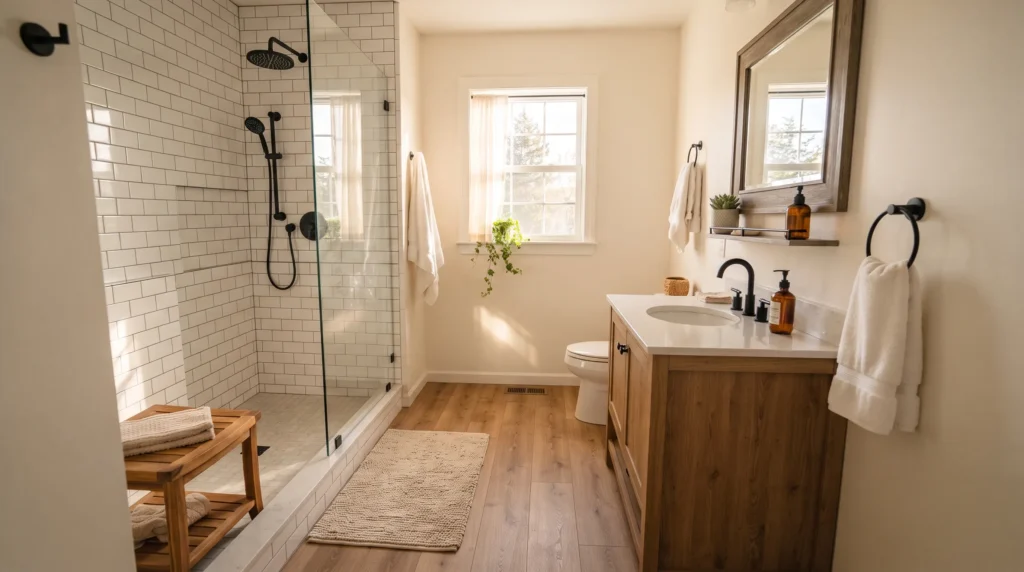
3. Luxury Vinyl Plank
Luxury vinyl plank, usually shortened to LVP, brings the warmth of wood into a room where real hardwood doesn’t belong. Modern LVP does a convincing job mimicking grain patterns and natural color variation, and it feels noticeably softer and warmer underfoot than tile, a small detail that matters a lot on cold mornings. It tends to suit bathrooms with a relaxed, residential feel rather than a polished, spa-like aesthetic. That said, not every vinyl plank is created equal, so it’s worth confirming a product is specifically rated for bathroom use before installing it near a tub or shower.
One of LVP’s biggest advantages is how easily it creates visual flow between rooms. A warm oak-toned plank can carry the eye from a hallway straight into the bathroom without an abrupt material change, while a darker wood tone adds contrast against white walls and cabinetry. Waterproof ratings, seam quality, and installation method vary by brand, so check the manufacturer’s specs rather than assuming vinyl automatically means fully waterproof. Careful installation around the toilet, tub, and shower base matters just as much as the material itself.
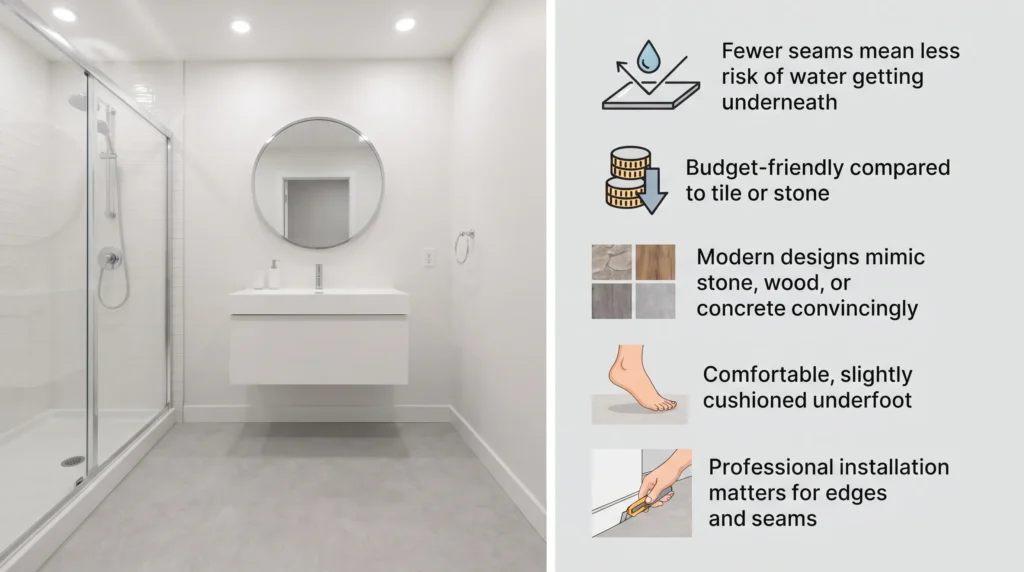
4. Vinyl Sheet Flooring
Vinyl sheet flooring solves a specific problem: seams. Because it comes in large continuous rolls, there are far fewer joints where water can potentially seep through, which makes it a practical option for busy family bathrooms or smaller powder rooms. Today’s sheet vinyl isn’t the dated pattern people remember from decades ago, many versions convincingly imitate stone, concrete, or wood while keeping installation straightforward and budget-friendly. It also has a bit of give underfoot, which some people find more comfortable than hard tile.
This flooring works best when the design stays fairly simple. A pale stone-look pattern can visually open up a small bathroom, while a deeper gray or warm beige tone is more forgiving between cleanings. It pairs naturally with floating vanities and understated hardware, since the goal is usually a clean, uninterrupted look. Installation quality matters here, sloppy work around the toilet base or wall edges is where water problems tend to start, so it’s worth having it professionally fitted rather than DIYing the edges.
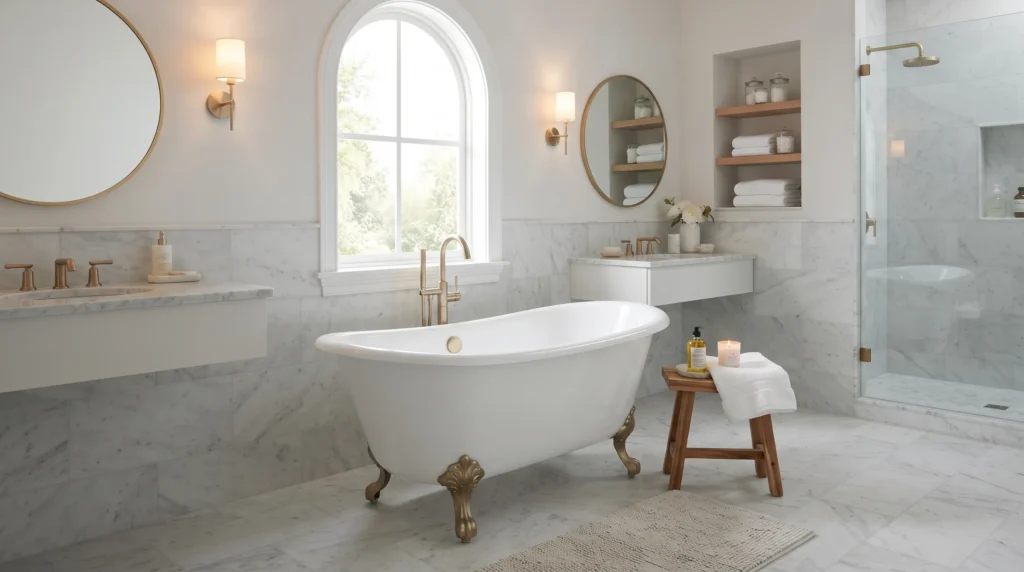
5. Natural Stone Flooring
Few materials give a bathroom floor the same depth and character as natural stone. Marble brings elegant veining, slate has an earthy, textured presence, and travertine leans into a softer, old-world look. Because every slab or tile is naturally unique, a stone floor never feels mass-produced the way some manufactured tiles can. That individuality tends to work best in a larger bathroom, where the pattern has room to breathe instead of feeling cramped. Keeping the surrounding design, cabinetry, lighting, accessories, fairly restrained lets the stone do the visual heavy lifting.
The tradeoff with natural stone is maintenance. Many varieties are porous and need sealing to resist staining and water damage, and textured finishes can require more careful cleaning than a smooth tile. Marble in particular can etch or discolor if the wrong cleaning products are used on it, so it’s worth knowing what you’re signing up for before committing. Slate tends to suit rustic or organic-leaning bathrooms, while polished marble fits a more formal, refined space. Whatever you choose, confirm the specific stone is rated for bathroom flooring and stick to compatible cleaners.
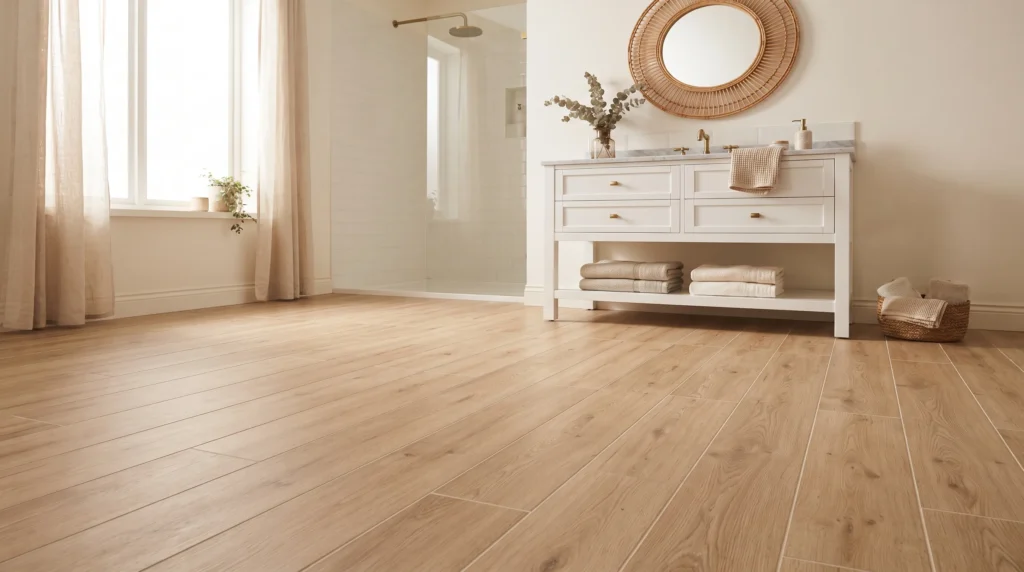
6. Wood-Look Porcelain Tile
Wood-look porcelain tile is one of the easiest ways to get the warmth of timber flooring without any of the moisture risk. The best versions use long, plank-shaped pieces with realistic grain variation and slightly uneven coloring, so from a few feet away it’s genuinely difficult to tell it apart from real wood. This makes a bathroom feel more connected to a bedroom or living space, especially useful in open-plan homes where flooring continuity matters. Warmer, oak-inspired tones tend to be the most versatile, working with white, cream, sage, or charcoal color schemes.
Getting a convincing result comes down to a few details: plank layout, grout color, and finish. A staggered layout reinforces the illusion of real floorboards, and grout close to the tile’s own color keeps the seams from standing out. A matte finish almost always looks more believable than anything glossy, high-shine wood-look tile tends to give away that it’s not real wood. Pairing the floor with an actual wood vanity or woven textures adds warmth without needing every tone in the room to match exactly, which usually looks more intentional anyway.
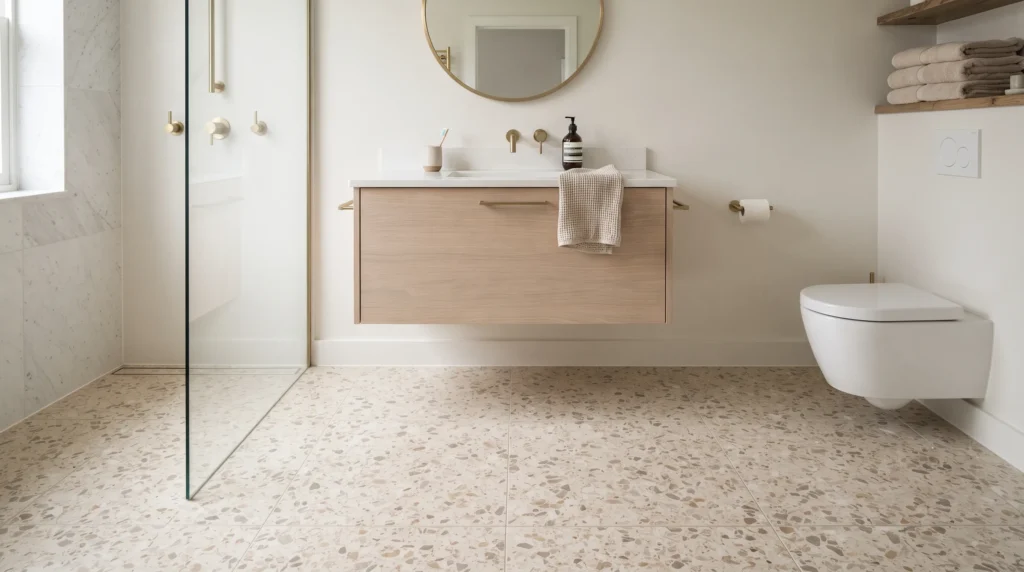
7. Terrazzo Flooring
Terrazzo has made a real comeback in bathroom design, and it’s easy to see why, the mix of stone or glass chips set into a smooth base gives a floor instant character without needing a busy pattern layered on top. In a small bathroom, terrazzo can feel playful and fresh; in a larger, spa-inspired space, it reads as more sophisticated, depending on the color palette and chip scale. A cream base with muted gray and beige flecks keeps things calm, while bolder chip colors add more personality. Because the pattern already does a lot of the visual work, the floor can carry a room without much extra decoration.
One underrated advantage of terrazzo is how flexible it makes the rest of your color decisions. Since the floor naturally contains several tones, you can pull one shade from it and repeat that color in towels, paint, or hardware for a coordinated look without much effort. In my experience, this is one of the easier materials to build a whole bathroom palette around, since it does most of the color matching work for you. Durability and sealing needs vary depending on the specific terrazzo product, so it’s worth confirming care instructions before choosing cleaning products.
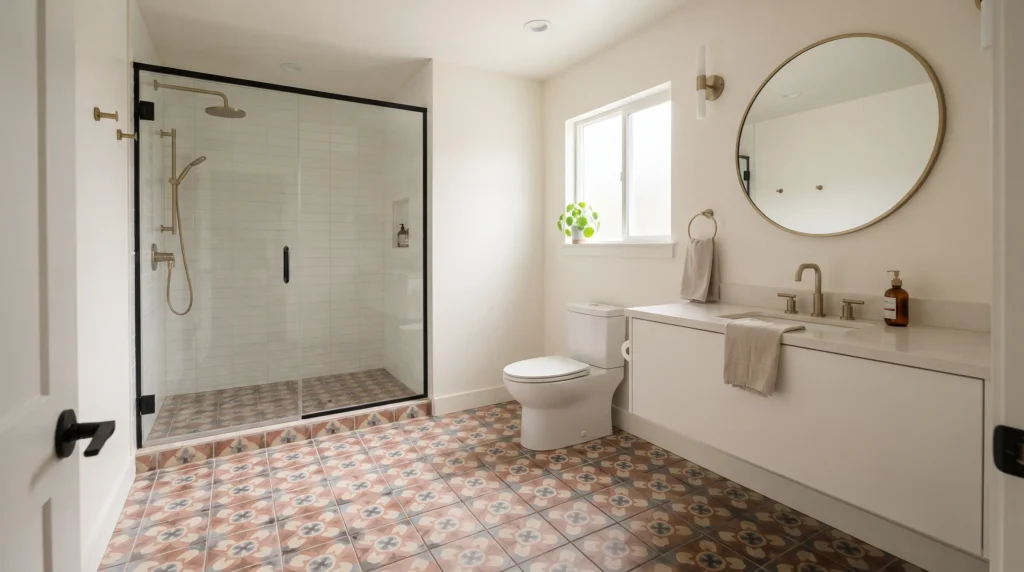
8. Cement Encaustic Tile
Encaustic-style tile is the choice for anyone who wants the floor itself to be the design statement. Its repeating geometric, botanical, or traditional motifs can make an otherwise plain bathroom feel considered and layered, even without much else going on in the room. Muted terracotta, cream, blue, and charcoal combinations tend to age better visually than very bright or saturated colors. Because the floor already carries so much visual interest, the walls and fixtures usually work best when kept simple, this is one case where less really is more.
Pattern scale matters more here than with most flooring types. Small, intricate motifs suit a powder room where you’re close to the floor, while a bolder, larger-scale pattern needs more square footage to actually read well. True cement-based encaustic tile is porous and often needs sealing, so check the manufacturer’s care instructions before installation. If ongoing maintenance is a concern, porcelain tiles printed with an encaustic-style pattern offer a similar look with far less upkeep, a practical compromise worth considering for a busy household.
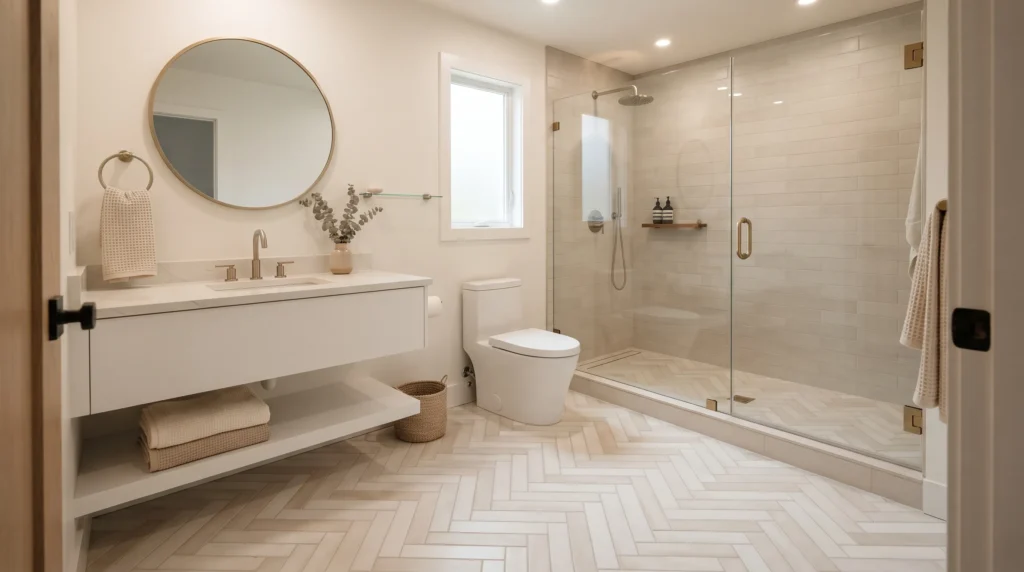
9. Herringbone Tile Pattern
Sometimes the material matters less than how it’s laid, and herringbone is a good example. Taking an ordinary rectangular tile and angling it into a zigzag arrangement adds real visual movement without introducing a second color or texture. It’s a useful trick for anyone who wants a floor with detail but doesn’t want to deal with multiple competing patterns. Warm white, beige, gray, or marble-look tiles all read well in this layout, and it tends to look especially polished in bathrooms where the fixtures themselves are kept fairly plain.
Scale and grout choice both shape the final look. Smaller tiles create a denser, more traditional herringbone pattern, while longer planks give a cleaner, more contemporary version of the same idea. Contrasting grout makes the zigzag pop; matching grout lets it read as a subtler texture instead. Because herringbone involves more cuts and precise alignment than a standard grid, it’s genuinely worth paying for professional installation, a slightly off angle is much more noticeable in this pattern than in a straight layout.
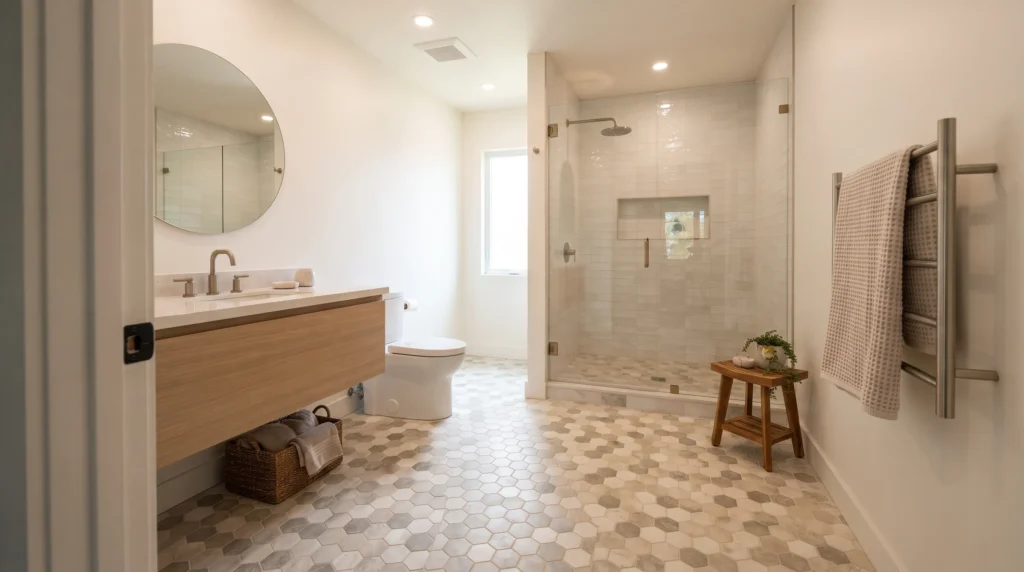
10. Hexagon Tile Flooring
Hexagon tile brings geometric interest to a bathroom floor without tipping into visual clutter, which is probably why it’s stayed popular for so long. The six-sided shape naturally creates a repeating pattern that can be understated in neutral tones or much bolder with contrasting colors. Smaller hexagons add a tactile, detailed feel to a compact floor, while larger versions read as cleaner and more contemporary. Soft white, warm gray, and beige combinations tend to be the easiest to live with long-term, since they stay flexible as towels, artwork, and accessories change over time.
Grout is doing more work than people usually give it credit for on a hexagon floor. Matching grout creates an almost continuous surface with a quieter overall look, while darker grout outlines each hexagon and makes the geometric pattern much more noticeable. Smaller tiles mean more grout lines overall, which adds texture but also means more cleaning. For a relaxed feel, pair hexagon flooring with a simple vanity and warm wood accents; if the rest of the room already has a lot going on, a more restrained hexagon palette keeps the floor from competing for attention.
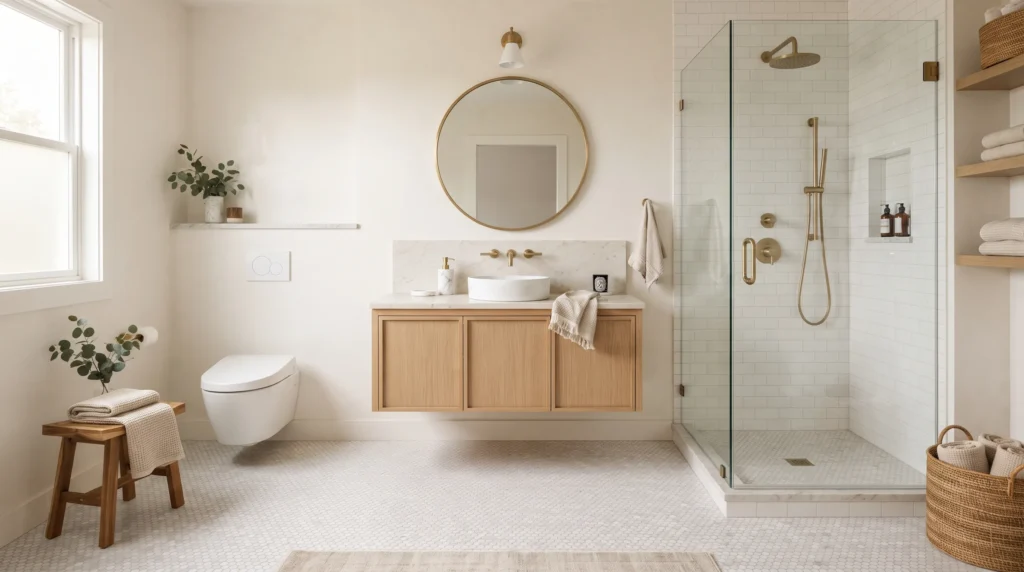
11. Penny Mosaic Tile
Penny mosaic tile has a small-scale, almost delicate quality that’s hard to get from any other flooring option. The rounded shapes soften a room that’s otherwise full of straight lines from vanities, mirrors, and cabinet edges, and the sheer number of grout joints can actually improve underfoot traction in a shower when the right product and installation method are used. Classic white penny tile with light gray grout is close to a foolproof combination, it works with brass, chrome, black, or nickel fixtures without any real risk of clashing.
The tradeoff for that charm is maintenance. More individual pieces mean more grout lines, and more grout lines mean more cleaning over time, so it’s worth choosing a grout product specifically suited to wet bathroom conditions. Penny mosaic isn’t limited to showers, either, it works nicely in a small powder room where its scale adds personality without visually overwhelming the space. For something a bit different, charcoal, muted green, or warm beige pieces offer a modern twist on the classic look.
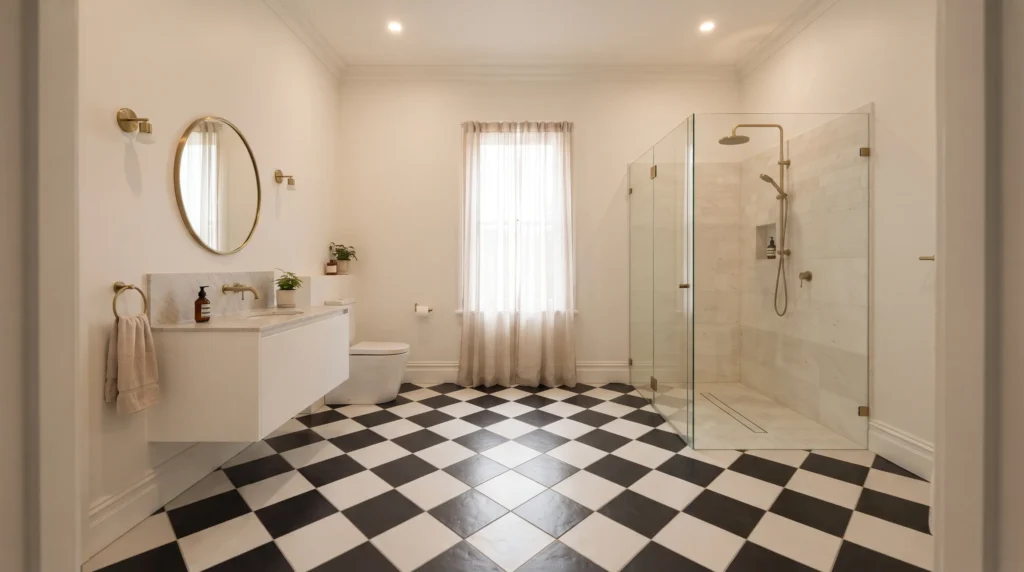
12. Checkered Black-and-White Floor
A black-and-white checkerboard floor is one of the fastest ways to give a plain bathroom real personality without touching the walls or fixtures. The strong contrast creates an immediate focal point, and depending on the rest of the room, it can lean vintage with traditional hardware, sophisticated with marble-look tile, or surprisingly modern when paired with streamlined cabinetry and matte black fixtures. Because the floor already provides so much visual rhythm on its own, this is a case where simpler walls and fewer accessories genuinely make the design feel more intentional, not less.
Scale changes the personality of this pattern more than color does. Large checkerboard squares feel bold and spacious, while smaller squares read as more traditional and intricate. If true black and white feels too stark for the space, charcoal paired with warm white softens the contrast while keeping the classic pattern recognizable. Porcelain or ceramic versions offer the look with practical, everyday care requirements. Alignment matters a lot here, uneven grout spacing is far more noticeable in a checkerboard than in almost any other layout.
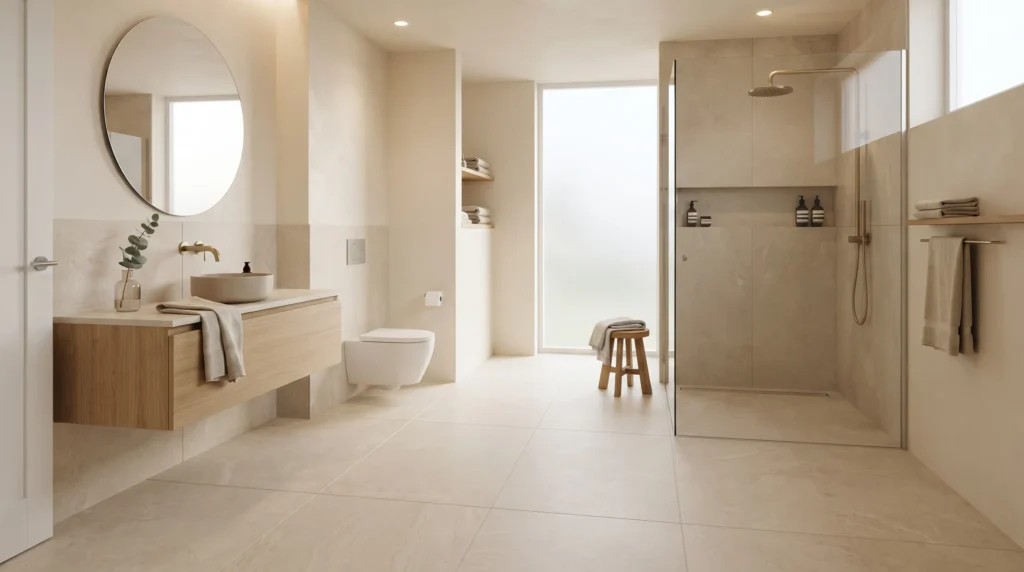
13. Large-Format Tile
Large-format tile has become a go-to choice for anyone chasing the calm, spa-like bathroom look that’s currently a popular design direction. Fewer grout lines mean less visual interruption, which can make even a modest-sized bathroom feel more open and less busy. Oversized porcelain tiles finished to look like limestone, travertine, or concrete fit naturally into this softer, more spa-inspired aesthetic. This style pairs especially well with floating vanities, since the uninterrupted floor visually extends beneath the cabinet and adds to the sense of openness.
The bigger the tile, the more the installation details matter. Large pieces need a properly leveled subfloor to avoid lippage and uneven edges, so this is one area where professional installation genuinely pays off. I’ve seen this go wrong more than once when a homeowner tried to cut corners on subfloor prep, so it’s worth budgeting for it upfront. A matte or lightly textured finish is worth prioritizing for both appearance and everyday traction. In a smaller bathroom, it’s best to avoid a heavily veined stone pattern, a more restrained tile supports the spacious feel instead of working against it.
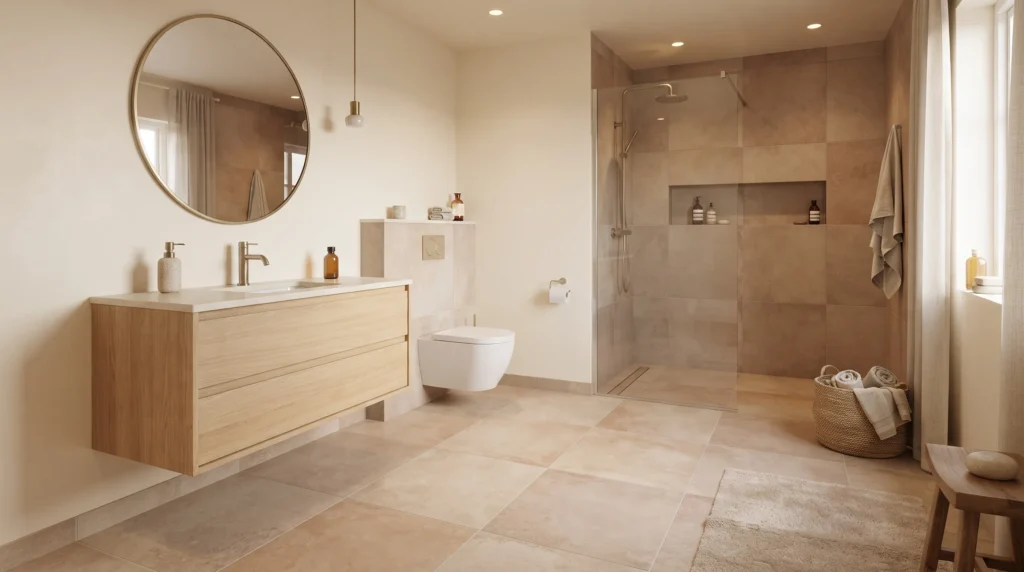
14. Warm Earthy Tone Tile
Bathrooms have leaned heavily on cool grays and whites for years, which is part of why warm earthy flooring has become a favored current design direction in more recent projects. Terracotta, sandy beige, clay, muted brown, and warm taupe tones bring a natural softness that feels more lived-in and comfortable than a strictly white or gray palette. These colors pair beautifully with wood, woven textures, and brushed brass, and they tend to work particularly well in bathrooms designed for relaxation rather than a strictly clinical, spa-white aesthetic.
The trick with earthy tones is layering related shades rather than leaning on one strong color everywhere. A sandy tile works nicely against creamy walls and light oak cabinetry, while deeper terracotta stands out more dramatically against soft ivory surfaces. Natural textures, linen towels, woven baskets, stone accessories, reinforce the palette without making the room feel like a themed space. For a current, updated look, muted earthy shades tend to age better than highly saturated orange or brown, and a matte finish usually suits the relaxed quality of these tones more than anything glossy.
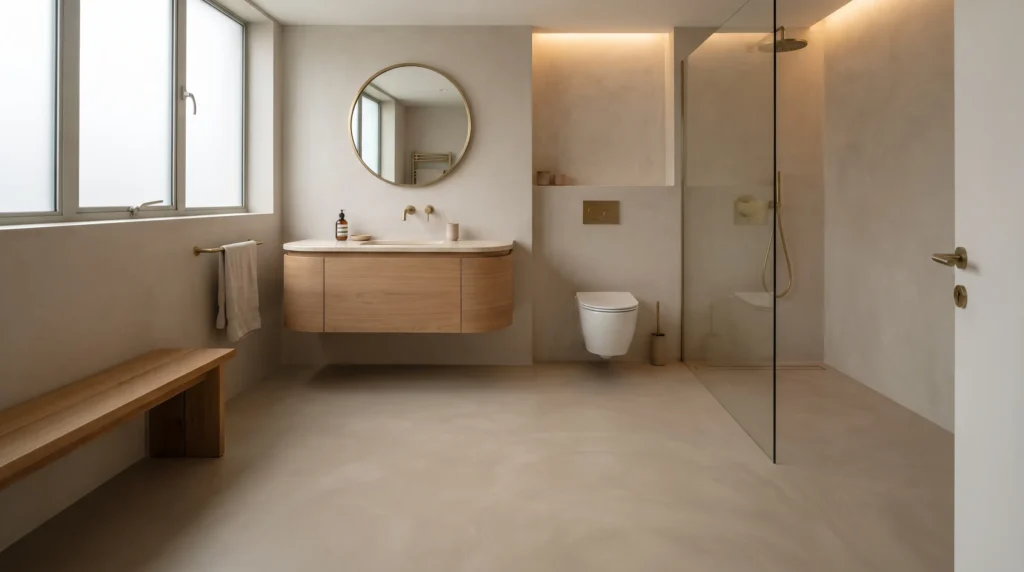
15. Microcement Flooring
Microcement is one of the more architectural options on this list, creating a continuous, seamless surface with no visible individual tiles or regular grout lines. That seamlessness makes a bathroom feel quieter and more spacious almost immediately, since the eye isn’t tracking a repeating grid across the floor. Warm greige, soft beige, and muted gray microcement tend to be the most versatile, working with wood, concrete, brass, or black fixtures alike. It’s a natural fit for minimalist bathrooms where the goal is to let shape, texture, and light take center stage instead of pattern.
Microcement isn’t a shortcut, though. It requires the underlying surface to be prepared correctly, and waterproofing around showers and other wet zones has to be handled with real care. This is genuinely one material where professional application matters more than almost any other on this list, since the final look depends heavily on preparation and finishing technique. If the aesthetic appeals to you but you’d rather use a more familiar installation process, porcelain tile printed to imitate microcement can get you a similar visual effect with a more standard install.
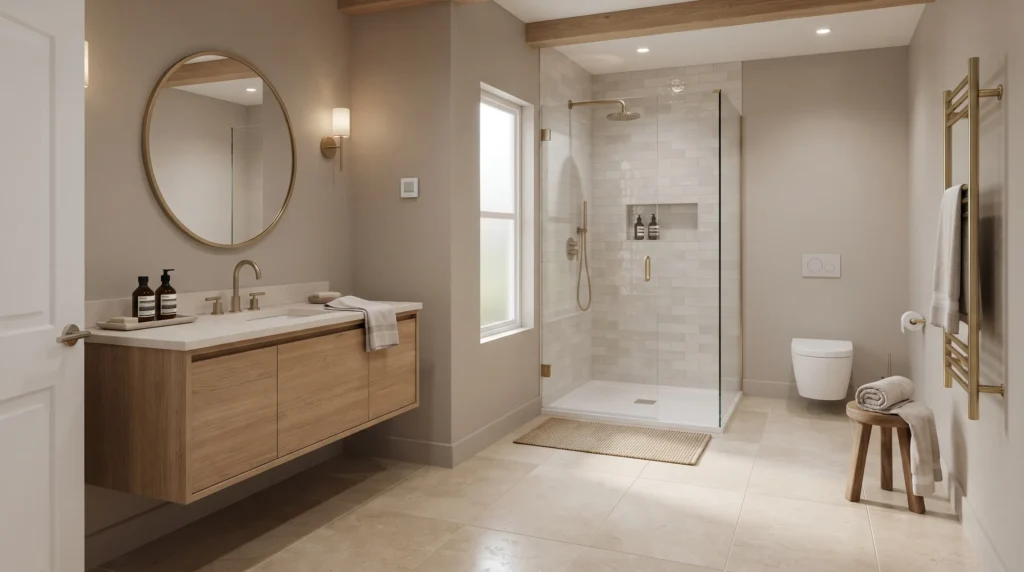
16. Heated Radiant Floor
A heated floor is one of those upgrades that doesn’t show up in photos but makes a real difference every single morning.
Instead of relying only on room-temperature air, radiant heating warms the floor itself from below, which takes the edge off cold porcelain, ceramic, or stone underfoot, materials that otherwise tend to feel chilly, especially in colder months. It’s a quiet upgrade in the sense that it doesn’t change how the bathroom looks at all, since the heating system sits hidden beneath the finished flooring.
The planning has to happen early, though, since the heating system needs to be installed before the finished floor goes down. This isn’t something you can add after the fact without ripping up the floor. Electric and hydronic systems have different installation requirements and costs, so the right choice depends on the scope of the project and the existing heating setup in the home.
That’s why many contractors recommend deciding on radiant heat at the very start of a remodel, rather than trying to retrofit it later. A programmable thermostat helps manage energy use rather than keeping the floor warm around the clock.
17. Rubber Flooring
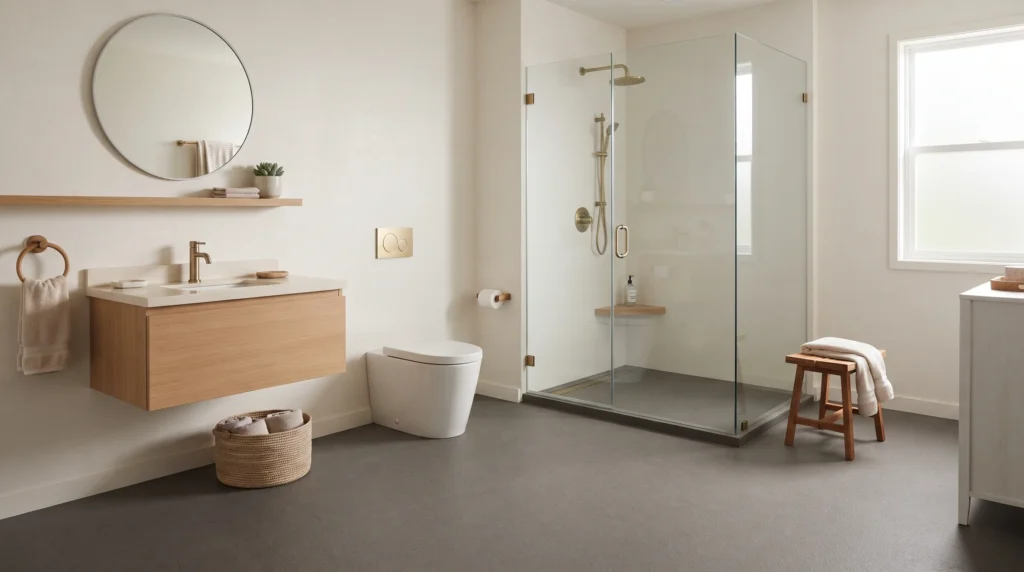
Rubber flooring isn’t the first material most people think of for a bathroom, but it earns its place on this list for practical reasons. Its naturally resilient surface feels noticeably softer underfoot than ceramic or stone, and textured versions offer real traction in a room where slipping is a genuine concern, which makes it a sensible option for family bathrooms, utility-style spaces, or bathrooms designed with accessibility in mind. It tends to work best when the overall design is kept intentionally simple, using charcoal, warm gray, or muted neutral tones rather than trying to imitate a decorative tile pattern.
Not every rubber floor is built the same, so checking the manufacturer’s specifications for moisture resistance, seam construction, and cleaning requirements matters more here than with most other materials. Professional installation is worth considering, especially for creating a well-sealed surface around the toilet, tub, and other plumbing fixtures. For a look that doesn’t feel purely utilitarian, pair a dark rubber floor with warm white walls and natural wood accents. When safety and comfort matter more than a decorative floor pattern, rubber is a practical, low-maintenance option worth taking seriously.
Which Bathroom Flooring Is Right for You?
There’s no single “best” bathroom floor, the right choice depends on how the room gets used day to day. A busy family bathroom benefits from something forgiving and low-maintenance, like porcelain, LVP, or rubber, while a primary suite designed for relaxation can afford to lean into natural stone, terrazzo, or a heated floor. Budget, climate, and how much upkeep you’re willing to do all factor in just as much as style.
Use this as a simple starting checklist before you decide:
- Define your moisture and safety needs first — shower floors and wet zones need a genuinely waterproof, slip-rated product, not just a water-resistant one.
- Be honest about maintenance — natural stone and cement-based tiles need more care than porcelain, ceramic, or vinyl.
- Pick your visual direction — warm and organic, classic and timeless, or bold and graphic.
- Shortlist two or three materials that fit both your practical needs and your style.
- Confirm product specifications — waterproof rating, slip rating, and installation requirements, before you buy.
- Save your favorites and bring them along when you’re comparing samples in person, since color and finish can look different under bathroom lighting than they do in a photo.
A floor that looks great but can’t handle daily moisture will cause problems long before it goes out of style, so let water resistance and slip safety guide the shortlist, then choose the color and pattern from there.
Frequently Asked Questions
What is the best flooring for a bathroom? There isn’t one single best option, but porcelain and ceramic tile are the most consistently recommended choices because of their strong water resistance and low maintenance. The better question is which material best fits your specific bathroom, budget, and how much upkeep you’re willing to do.
Is vinyl or tile better for a bathroom floor? It depends on priorities. Tile, particularly porcelain, generally offers stronger long-term durability and water resistance, while luxury vinyl plank is often more comfortable underfoot, warmer, and less expensive to install. For wet areas like shower floors, tile is usually the more dependable choice.
What flooring should you avoid in a bathroom? Solid hardwood is the main material to avoid, since it isn’t designed to handle consistent moisture and will warp or degrade over time. Standard laminate and carpet also tend to perform poorly in bathrooms for the same reason. If you want a wood look, wood-look porcelain tile or a bathroom-rated luxury vinyl plank is a safer route.
Can you put hardwood in a bathroom? It’s not recommended for full bathrooms with a shower or tub, since even sealed hardwood is vulnerable to warping and water damage over time. In a half-bath or powder room without a shower, engineered hardwood with careful sealing is sometimes used, but it still carries more risk than tile or vinyl.
What’s a current design direction in bathroom flooring? Large-format tile, warm earthy tones, and microcement have become popular current directions in bathroom design, moving away from the cooler, all-white palettes that dominated in previous years. That said, classic options like porcelain, ceramic, and natural stone remain reliable choices that aren’t tied to any particular trend cycle.