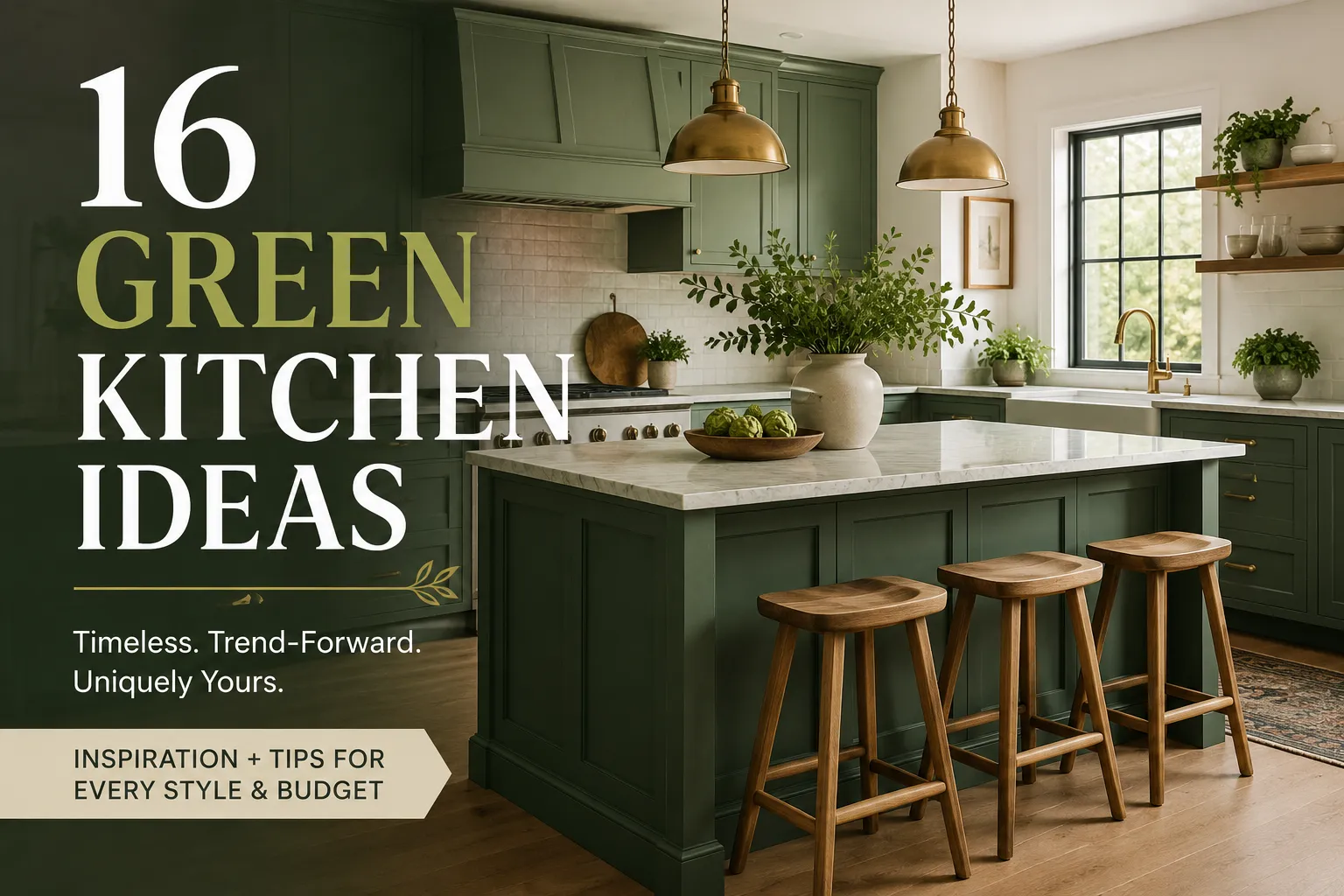
16 Green Kitchen Ideas for a Timeless, Trend-Forward Space
Green kitchen ideas have moved well beyond a passing trend — green now works in almost any kitchen because it behaves less like a bold accent color and more like a flexible neutral A soft sage reads as calm and understated; a saturated hunter or forest green reads as dramatic and formal. The right shade — and the right place to use it — depends less on trends and more on your kitchen’s size, light, and how much color commitment you actually want.
This guide covers 16 ways to bring green into a kitchen, from full cabinetry to smaller, lower-commitment details like tile, shelving, or flooring. Each idea notes where it tends to work best and what to pair it with, so you can narrow down which version fits your space before you start sourcing paint or cabinet samples.
Quick styling guidance: If you’re unsure how much green to use, start with one dominant feature — an island, a backsplash, or a pantry wall — and keep everything else in the room light. It’s easier to add more green later than to tone down a fully painted kitchen.
1. Forest Green Island
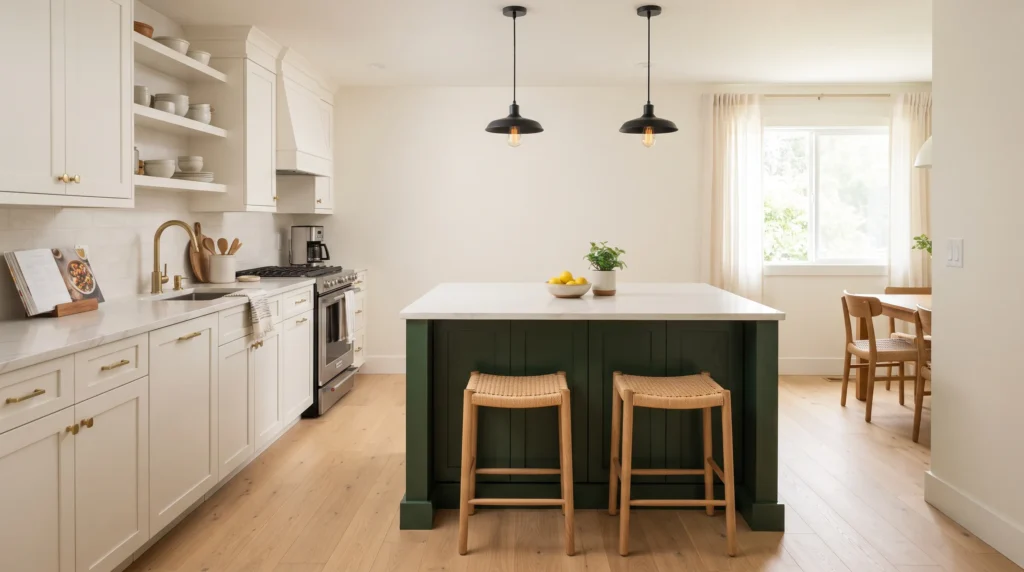
A forest green island can anchor a kitchen visually without darkening the whole room. Rich shades like emerald or moss work well as an island base when balanced against warm white walls, light oak flooring, and a pale quartz or marble-look countertop. Because the surrounding space stays bright, the color reads as intentional rather than heavy — a technique especially effective in compact or galley-style kitchens, where the island becomes the room’s single strongest design statement.
Letting the island carry most of the color, while perimeter cabinets stay neutral, keeps the palette from feeling top-heavy. Pendant lighting above the island defines the workspace, and simple wood counter stools keep the base from feeling like the only focal point in the room.
Best for: homeowners who want one strong statement piece without repainting the whole kitchen.
2. Sage Green Cabinetry
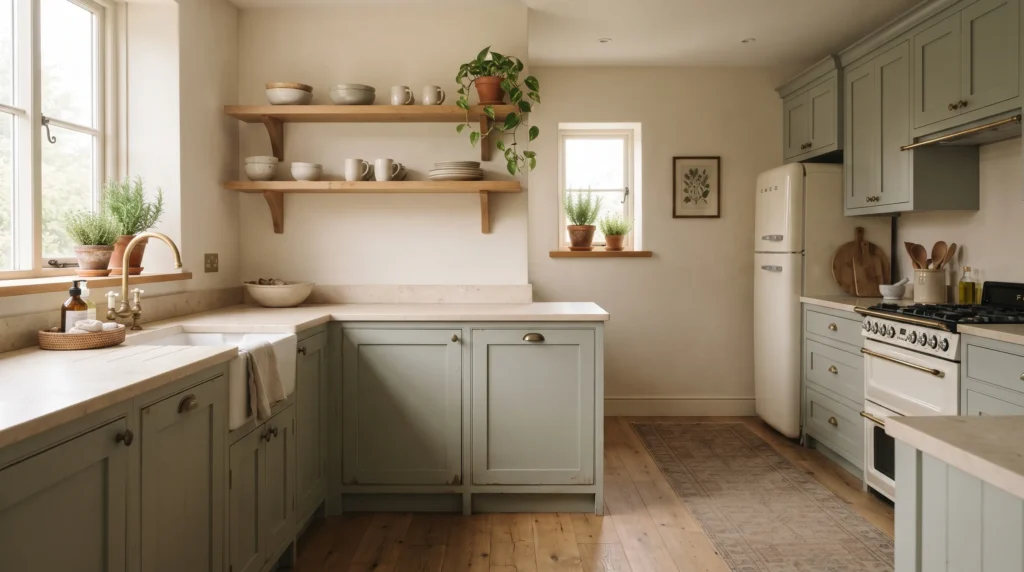
Sage is one of the most approachable green cabinet colors because its gray undertone keeps it calm rather than saturated. Paired with creamy walls, natural oak flooring, and honed stone countertops, sage cabinetry reads as soft and livable — a good fit for homeowners who want more personality than white cabinets offer without committing to a bold, dramatic hue.
Because sage sits closer to a neutral than a true accent color, it tends to age well and stays easy to update with seasonal textiles or hardware changes, rather than needing a repaint every few years.
Best for: anyone hesitant about color who wants the safest possible entry point into a green kitchen.
3. Olive Tile Backsplash
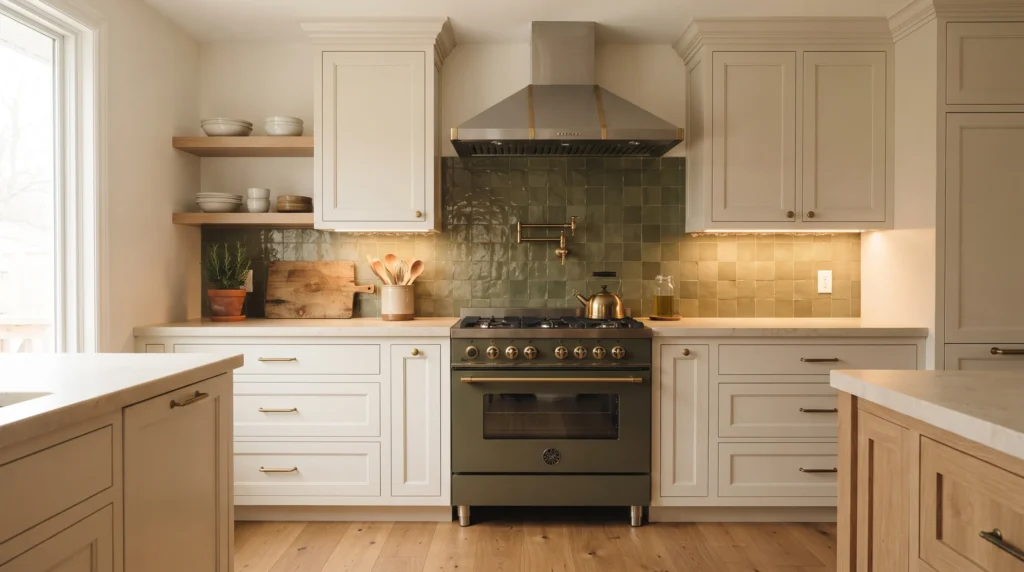
A backsplash is often the lowest-commitment way to introduce green into a kitchen renovation. Olive-toned tile — especially in a handmade or slightly irregular finish — adds texture and depth without requiring new cabinetry. Its soft sheen reflects light across the cooking zone, and it pairs naturally with creamy cabinet fronts and warm-toned grout.
Because tile is far cheaper and faster to change than cabinetry, this is the idea to start with if you’re testing whether you actually like living with green before making a bigger investment.
Best for: renters or anyone renovating on a smaller budget who still wants a real color statement.
4. Two-Tone Green Lower Cabinets
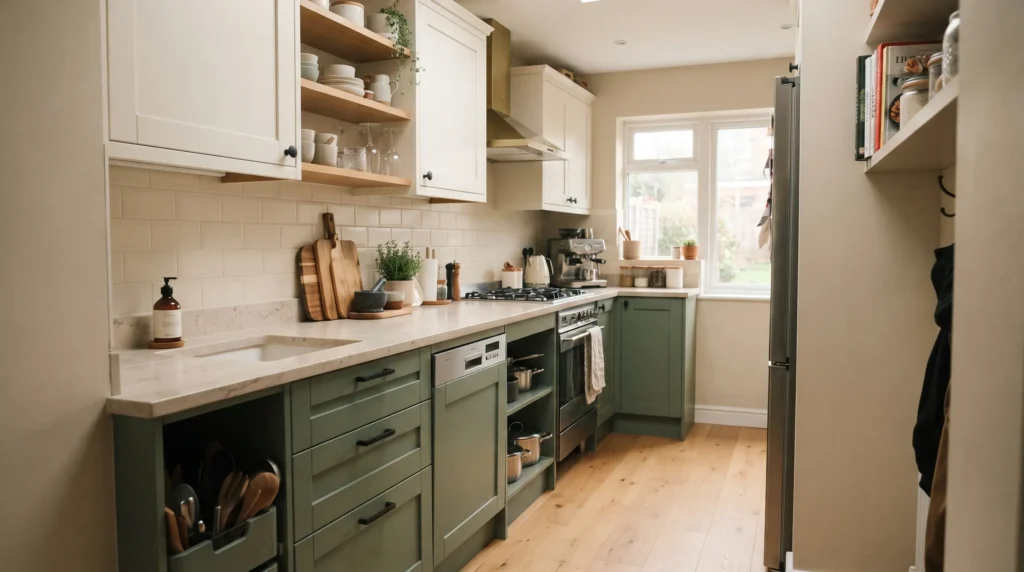
Two-tone cabinetry — green lower cabinets paired with white or cream uppers — is one of the most practical ways to introduce color without darkening an entire kitchen. Muted tones like eucalyptus or olive work particularly well on base cabinets, since the lighter upper cabinets bounce light back into the room and prevent narrow layouts from feeling closed in.
This split-color approach also creates useful visual zoning: lower cabinets frame appliances and storage, while upper cabinets keep the cooking zone feeling open and easy to navigate.
Best for: narrow or galley kitchens where a full green kitchen would feel too enclosed.
5. Moss Green Range Hood
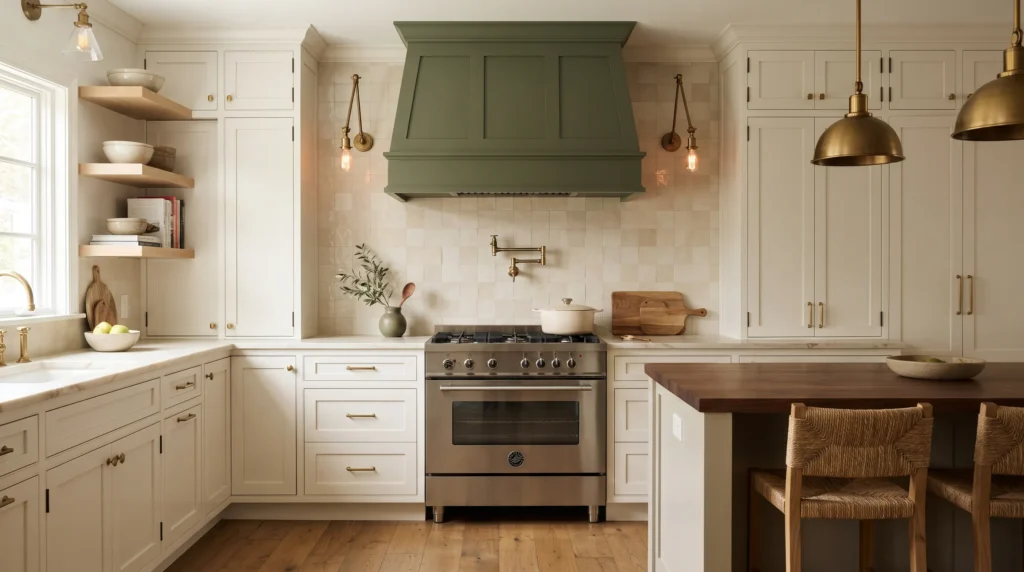
A painted range hood turns a purely functional element into an architectural focal point. Moss, olive, or muted forest tones work especially well on hoods with clean, simple trim, drawing the eye toward the cooking zone while containing the boldest color to one concentrated area.
Unlike a full cabinet suite, a colored hood can be repainted relatively easily if your taste changes, which makes it a lower-risk way to try a more saturated shade than you’d commit to elsewhere.
Best for: kitchens with a strong range wall that could use a focal point, without repainting cabinetry.
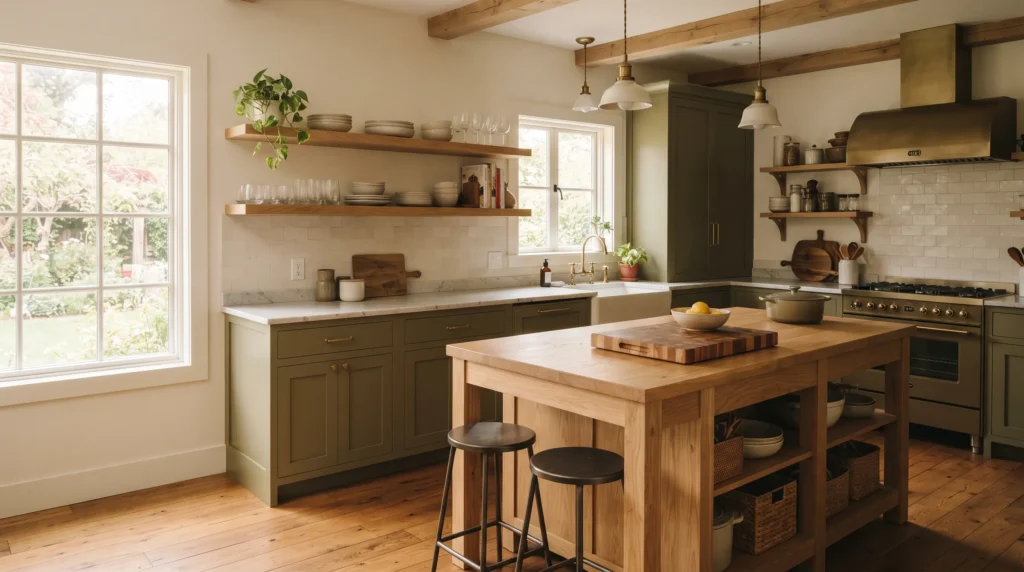
6. Green Cabinetry with Natural Wood
Green cabinetry paired with natural wood tones feels warmer and more timeless than glossy, high-contrast finishes. Olive, sage, or eucalyptus cabinet colors combine naturally with oak flooring, butcher-block counters, or open wood shelving, softening painted surfaces with visible grain and organic texture — a palette well suited to homes that prioritize comfort over formality.
Avoid covering every surface in timber; repeating the same wood tone in just two or three places — an island, a shelf, a cutting board — keeps the pairing intentional rather than accidental.
Best for: farmhouse or rustic-leaning kitchens that want warmth over polish.
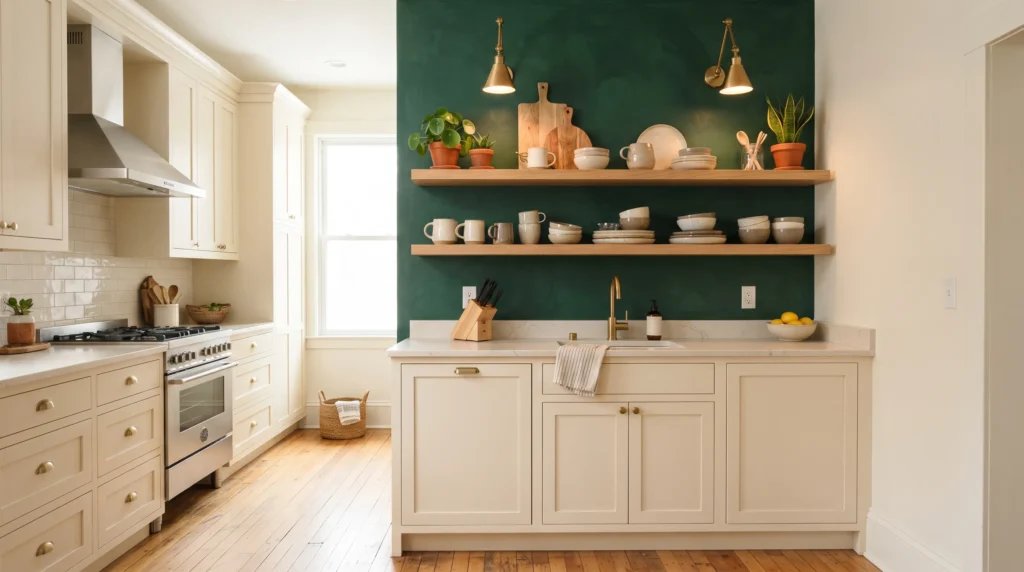
7. Emerald Green Accent Wall
An emerald accent wall delivers a dramatic color change with far less commitment than colored cabinetry — ideal behind open shelving, a breakfast nook, or a range wall. Because it’s a single surface rather than a full cabinet suite, saturated green here works best when the rest of the palette — cabinets, counters, hardware — stays restrained.
This is one of the few ideas on this list that’s genuinely simple to reverse: a coat of paint, rather than new cabinetry, if the look doesn’t suit you long-term.
Best for: renters, or homeowners testing a bold shade before committing to it elsewhere.
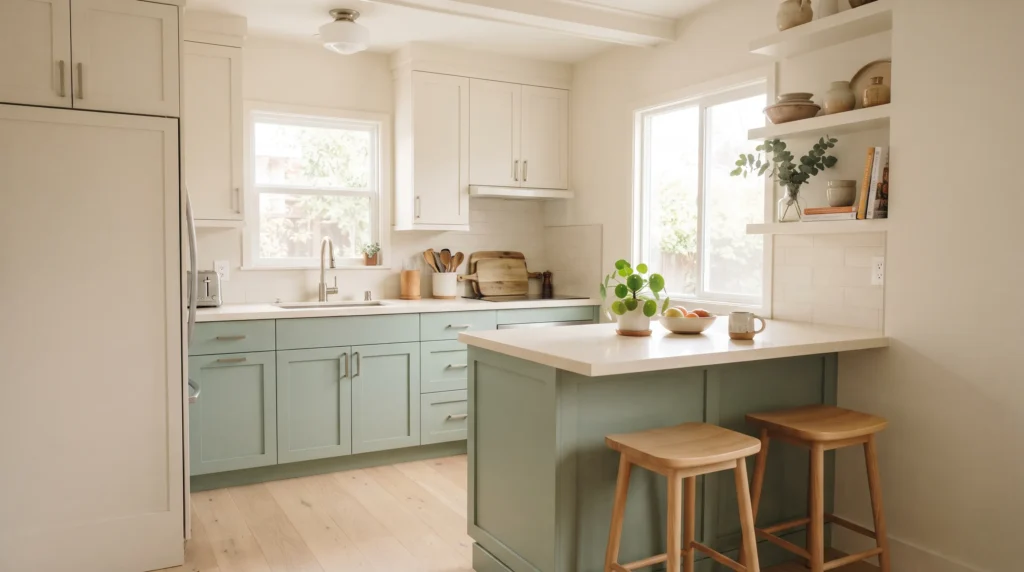
8. Mint Green Cabinet Details
Mint introduces a lighter, softer version of the green kitchen trend and works best applied selectively — a small island, pantry doors, or a single row of lower cabinets — rather than across the whole kitchen. White countertops and warm neutral walls keep the pastel tone crisp, while pale oak flooring adds enough natural texture to prevent the palette from feeling overly sweet.
In kitchens with limited daylight, lighter greens like mint tend to feel expansive rather than dim — the opposite effect of a deep hunter or forest tone in the same space.
Best for: small or low-light kitchens that still want a distinct color identity.
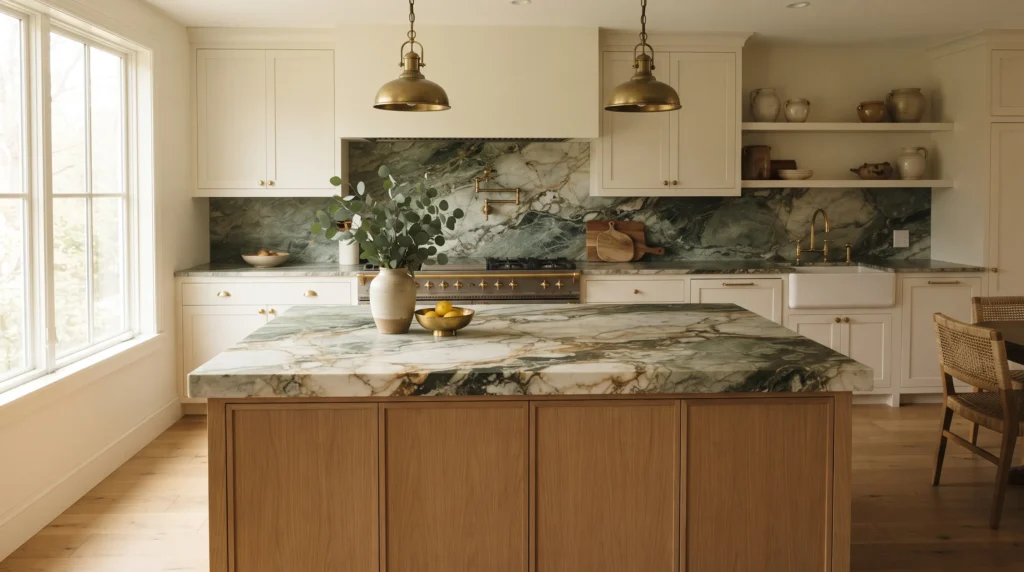
9. Green Marble Countertop Accents
Green marble introduces depth and material texture without relying on paint at all. A veined green stone works particularly well on an island countertop, short backsplash, or small prep surface, where its natural pattern becomes the design feature. Keeping surrounding cabinetry in creamy white, beige, or soft wood tones lets the stone’s color and movement remain dominant.
Because natural stone has real variation piece to piece, it’s worth seeing a physical slab in person rather than relying on a sample chip — the pattern is part of what you’re paying for.
Best for: kitchens where you want green as a material choice rather than a paint color.
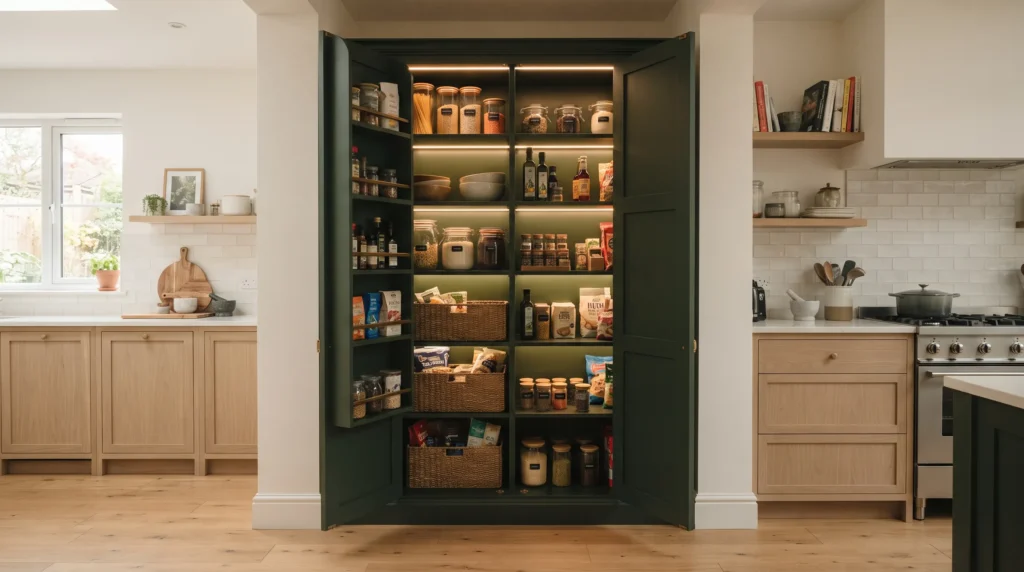
10. Deep Green Pantry
A deep green pantry turns everyday storage into a design feature while keeping the main kitchen visually calm. Olive, forest, or bottle-green paint on pantry doors or built-in storage — surrounded by warm white walls and natural wood accents — gives the room a sense of architectural detail. In open-plan layouts, a richly colored pantry can serve as a quiet visual anchor without competing with adjoining living or dining spaces.
Because a pantry is often a smaller, separate zone, it tolerates a bolder or darker shade than you might choose for the main kitchen run.
Best for: open-plan homes that want a defined kitchen zone without walls.
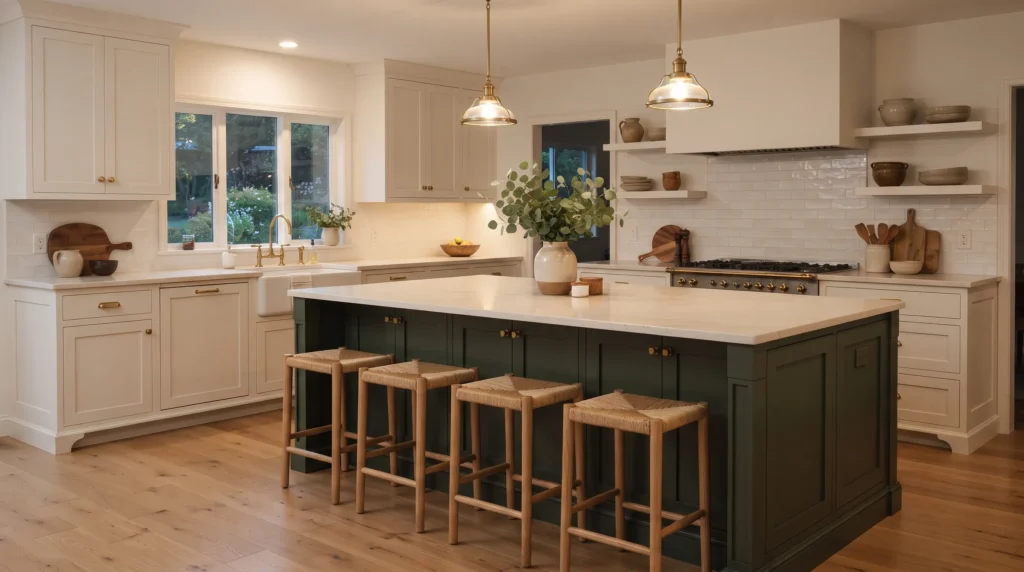
11. Hunter Green Kitchen Island
Hunter green gives an island a more formal, sophisticated presence while keeping the rest of the kitchen flexible and light. A paneled hunter green island paired with creamy quartz, warm white perimeter cabinetry, and natural oak stools creates depth without requiring a full-kitchen color commitment.
Of the darker greens on this list, hunter tends to read as the most traditional — it suits classic shaker-style cabinetry more naturally than a very modern, slab-door kitchen.
Best for: traditional or transitional kitchens wanting a formal, dramatic island.
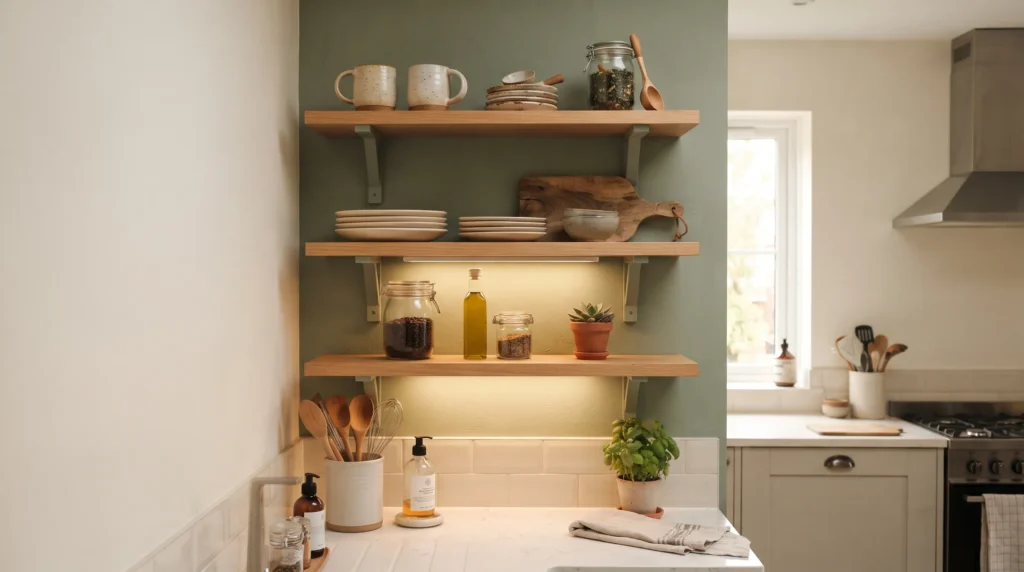
12. Green Open Shelving
Open shelving offers one of the simplest ways to introduce color while keeping a kitchen feeling light and accessible. Painting the shelving brackets, back panel, or a full niche in sage, olive, or muted forest green — then using natural wood shelves — brings warmth into the arrangement. Because open shelving leaves visible space between objects, the color reads as lighter than a full cabinet run.
Unlike closed cabinetry, this idea only works if you’re willing to keep the shelves edited and tidy — it doubles as storage and as a permanently visible display.
Best for: small kitchens where bulky closed cabinetry would feel heavy.
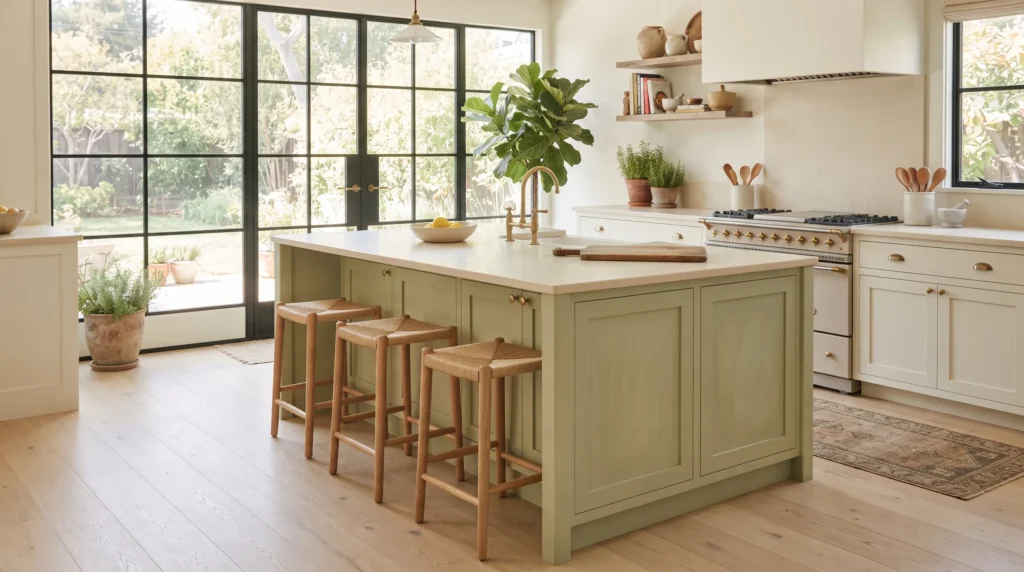
13. Pistachio Green Island
Pistachio offers a fresh, gentle way to bring color into a kitchen that still wants to feel bright and relaxed. Used on an island and surrounded by warm white cabinetry, pale oak flooring, and creamy countertops, this pale green tone catches natural light beautifully — reading as a soft focal point rather than a heavy block of saturated color.
It performs especially well in kitchens with large windows, where daylight highlights subtle tonal variation across the finish throughout the day.
Best for: bright, sunny kitchens that want color without visual weight.
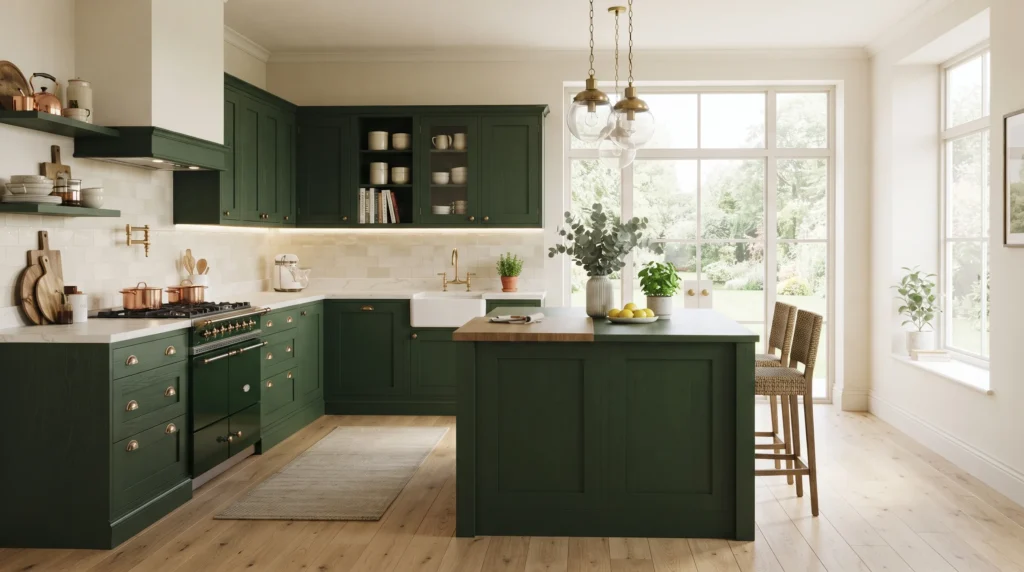
14. Forest Green Cabinets Throughout
For homeowners ready to commit fully, forest green cabinetry — used across the entire kitchen — creates a rich, cohesive space with real character. On classic shaker or simple slab doors, the color itself becomes the primary design feature, without needing ornate hardware or trim.
This is the most demanding idea on the list to get right: it requires more artificial lighting than a lighter kitchen, since deep, saturated cabinetry absorbs more light than pale tones do.
Best for: homeowners doing a full renovation who are confident about committing to color.
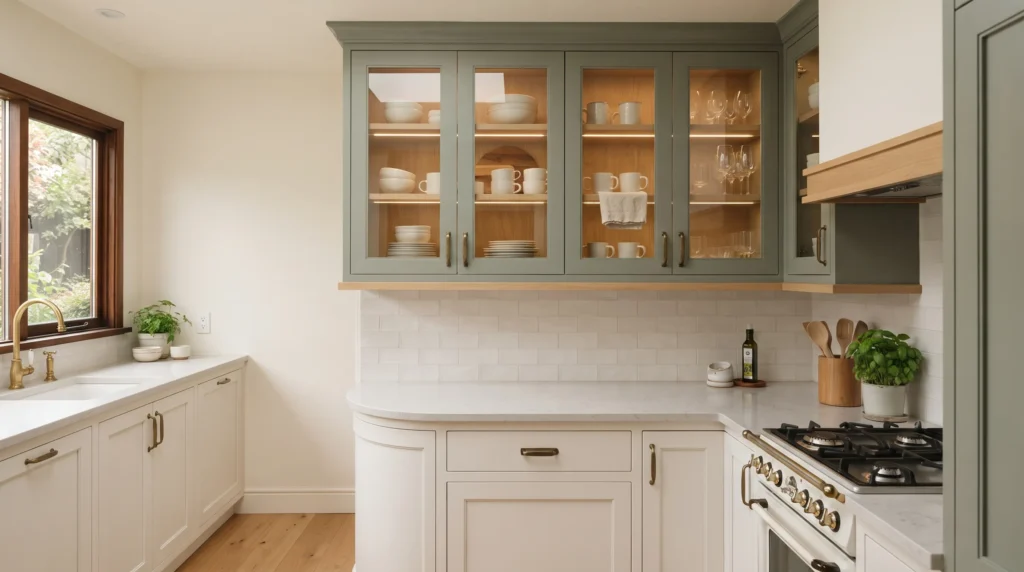
15. Green Glass-Front Cabinets
Glass-front cabinets combine color, storage, and display in a single feature. Painting cabinet frames in sage, olive, or a deeper green — then fitting them with clear glass panels — keeps the upper section of the kitchen visually open, letting dishware and glassware become part of the styling rather than hiding it behind solid doors.
Because the contents are visible, this idea requires more curation than closed cabinetry — a mismatched dish collection will show, in a way it wouldn’t behind a solid door.
Best for: smaller kitchens where full-height painted cabinetry would otherwise feel heavy.
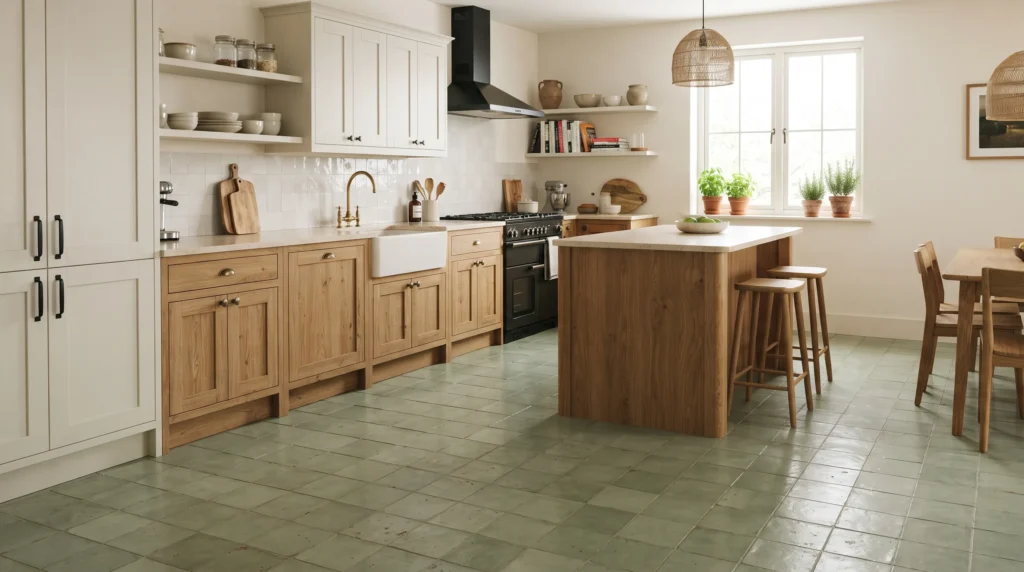
16. Green Floor Tile
Floor tile is the one part of a kitchen most people don’t think to color, which makes it one of the more distinctive ideas on this list. A muted green terracotta, cement, or patterned tile underfoot grounds the room from below rather than at eye level, and works whether the cabinetry above is neutral white or a deeper matching green.
Because flooring is harder and more expensive to change than paint, this is best treated as a long-term decision rather than a trend to try casually — pick a muted, versatile tone rather than the most saturated shade you can find.
Best for: kitchens with mostly neutral cabinetry that want color introduced underfoot instead.
Final Thought
There’s no single “correct” green kitchen — the right choice depends on how much color you actually want to live with day to day, not just which shade looks best in a photo. A kitchen you use every morning needs to hold up to real light, real mess, and years of use, so it’s worth weighing commitment level as seriously as the color itself.
If you’re still deciding, work backward from how reversible each option is. Tile, a pantry wall, or an accent wall are the easiest to change your mind about later, since they involve one surface rather than a full cabinet order. A two-tone kitchen or a single green island sits in the middle — enough color to feel intentional, without repainting every cabinet in the room. Full cabinetry, in a saturated shade like hunter or forest green, is the one decision on this list you should be fully confident about before ordering, since it’s the most expensive and time-consuming to undo.
The safest starting point, if you’re unsure, is a lighter, more neutral-leaning green like sage or olive — both hold up well against changing trends and pair easily with whatever countertop, hardware, or flooring you choose later. If you already know you love a bolder shade, though, don’t talk yourself out of it for the sake of resale value alone; a well-executed green kitchen, paired with light counters and warm hardware, tends to read as a design choice rather than a risk.
What is the most popular shade of green for kitchen cabinets?
Sage is the safest, most requested choice — its gray undertone works in almost any kitchen style. Olive reads warmer and earthier, hunter green is more dramatic and traditional, and full forest green is the boldest option, best suited to a full-room commitment rather than a single accent.
What hardware finish looks best with green cabinets?
Brass, unlacquered brass, and brushed brass are the most common pairings, since warm metals complement green’s natural, earthy undertones. Matte black and brushed nickel also work well with cooler, gray-green tones like sage.
Do green cabinets make a small kitchen feel darker?
Not necessarily. Lighter shades like sage, mint, or pistachio tend to open up a small kitchen, especially when paired with pale countertops and plenty of natural light. Darker greens work best concentrated on an island or lower cabinets rather than used across the whole room.
What countertop color pairs best with green cabinets?
Cream, white, and warm-veined stone countertops are the most versatile pairings, since they create contrast without competing with the cabinet color. Green-toned marble can also work well when the rest of the kitchen stays neutral.
Is green a timeless kitchen color or a passing trend?
Muted greens like sage and olive tend to have more staying power than saturated, high-fashion shades, since they function almost like a neutral. Bolder tones like emerald and hunter green are still considered trend-forward but have remained popular for several years running, which suggests real staying power rather than a short-lived trend.