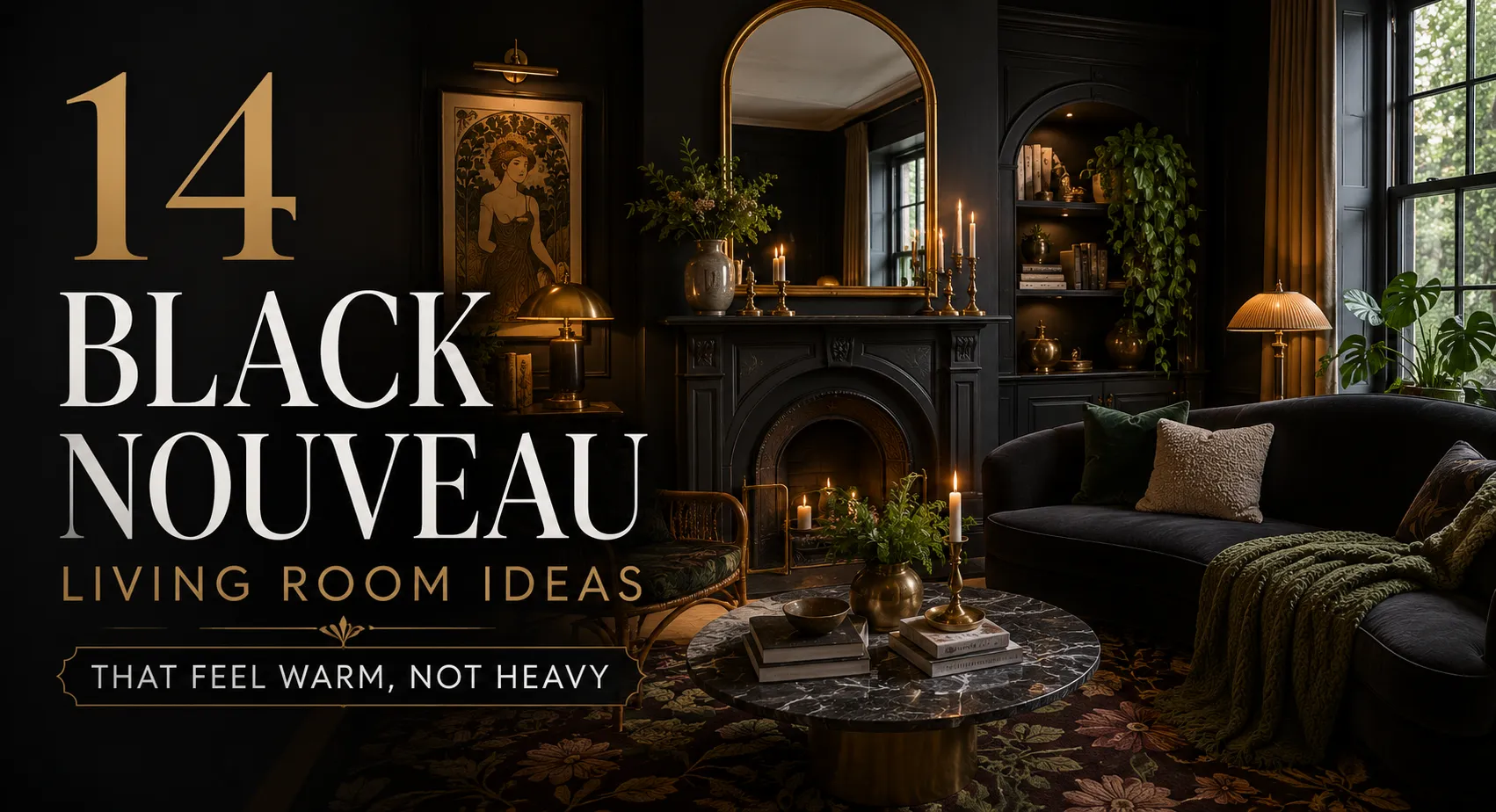
14 Black Nouveau Living Room Ideas That Feel Warm, Not Heavy
Dark living rooms get a bad reputation for feeling cold or cramped, but that’s usually a lighting and texture problem, not a color problem. Done right, Black Nouveau Living Room Ideas can create a moody, Art Nouveau-inflected room that feels like the coziest spot in the house — the kind of room people don’t want to leave.
The ideas below mix black surfaces with curved silhouettes, warm brass, natural materials, and botanical detail — the combination that keeps a dark palette from tipping into gloomy. This collection of dark Nouveau living room ideas includes full-room commitments as well as one-afternoon swaps like a lamp or a mirror. I’ve pulled from rooms I’ve actually worked on and mistakes I’ve made along the way (that first all-black room I tried, with zero warm light sources, was genuinely depressing to sit in — lesson learned). Pick a few that fit your space and your budget, and build from there.
What Makes a Black Nouveau Living Room Feel Warm, Not Heavy?
The difference usually comes down to balance rather than how much black you use. In the rooms I’ve worked on, black surfaces feel much more inviting when they’re paired with warm layered lighting, curved furniture, natural wood, softer textiles, and a few living plants. Brass adds another layer of warmth, while lighter rugs and reflective surfaces such as an arched mirror help keep the room from feeling visually closed in.
The easiest mistake is treating black as the entire design instead of the backdrop. Start with one or two dark elements, then bring in contrasting textures and warmer materials around them. If a room still feels heavy after the black furniture or walls are in place, I’d look at the lighting first, then the amount of natural texture and open space before adding more decoration.
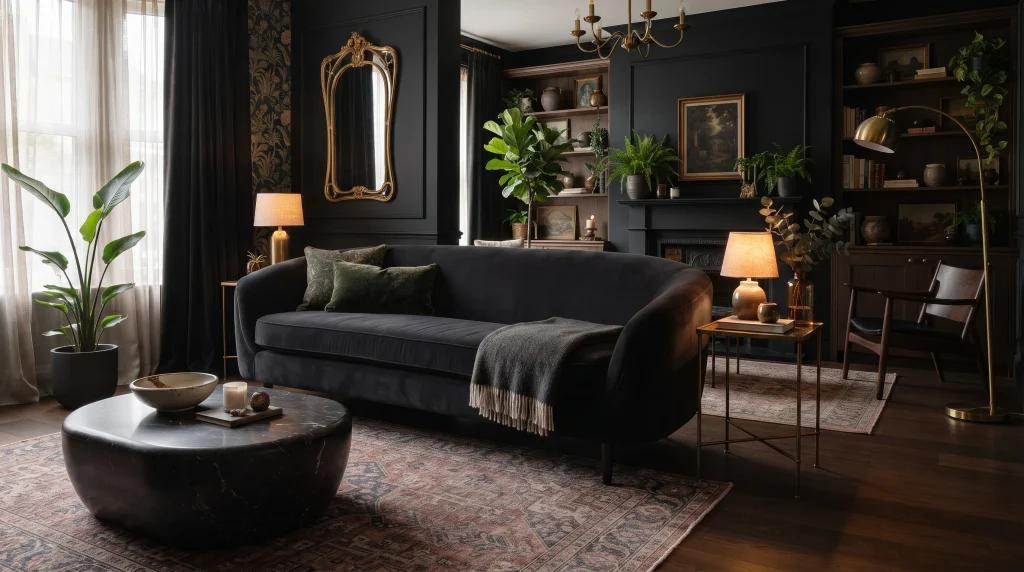
1. Curved Velvet Sofa
A rounded-arm sofa does more work in a dark room than almost any other single piece. Sharp-edged furniture on top of black walls reads heavy fast; curves soften that same room without lightening the color at all. Look for a gently sloped back and rolled arms in charcoal, deep emerald, or true black — velvet especially, since it catches light in a way flat cotton or linen just doesn’t.
One thing I got wrong the first time I tried this look: I pushed the sofa flush against the wall, and the room felt boxier for it. Floating it even six inches off the wall, angled slightly toward the room, made the whole layout feel more considered and less like furniture had been parked there. Keep the pieces around it simple — a slim brass side table, a stone coffee table, maybe one patterned rug — so the sofa’s shape stays the thing your eye lands on first. Two textured pillows and a throw are usually all it needs beyond that.
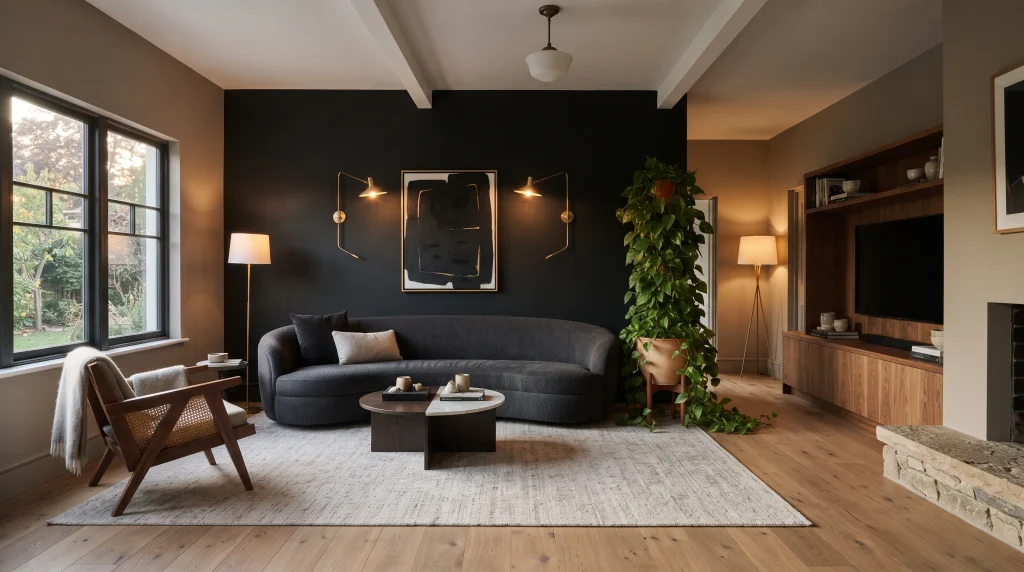
2. Matte Black Accent Wall
You don’t need to commit an entire room to black to get the drama — one wall, done in a soft matte finish, gives you most of the effect with a fraction of the risk. Paint the wall behind the sofa or fireplace and leave the rest of the room in warm white or taupe. The contrast gives your furniture a much stronger outline than it would have against a plain white wall, and it gives you an obvious backdrop for brass sconces, artwork, or a big trailing plant.
Matte over glossy matters more than people expect — a sheen finish on black will bounce light unevenly and show every roller mark, while matte just absorbs it quietly. If you’re renting, this is where removable wallpaper or matte peel-and-stick panels earn their keep; you get the same visual weight without touching the lease. Pair the wall with a lighter rug underfoot and a couple of warm-toned lamps nearby so the black doesn’t read as a flat void once the sun goes down.
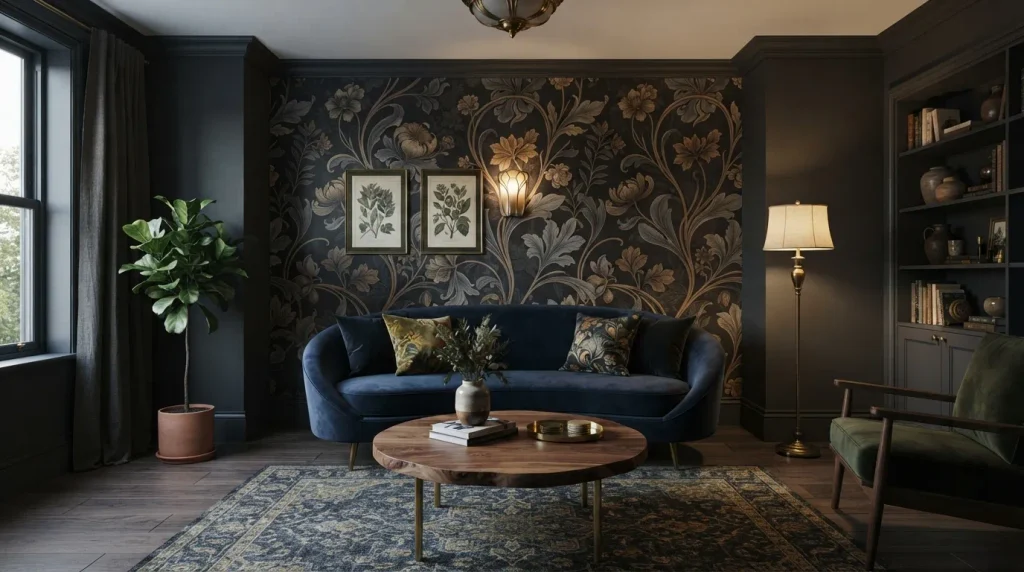
3. Botanical Wallpaper
Botanical wallpaper is one of the few dark design choices that adds movement instead of just color. Look for patterns with flowing stems, oversized leaves, or stylized florals in black, charcoal, and muted gold — it reads as intentional and collected rather than decorated-by-numbers. Treat it as a feature, not wall-to-wall coverage: one wall behind the sofa or fireplace, with the rest of the room left plain, keeps the pattern from overwhelming a smaller space.
Scale matters more than people think when choosing a pattern like this. A tight, small-scale print reads calmer in a compact room, while a bigger space can genuinely handle an oversized, dramatic leaf pattern without it feeling busy. Once the wallpaper’s up, resist the urge to match everything else in the room to it — pull just one or two colors from the pattern into your cushions or a vase, rather than trying to coordinate the whole space around it. That restraint is usually what separates a wallpapered room that looks curated from one that looks like a showroom display.
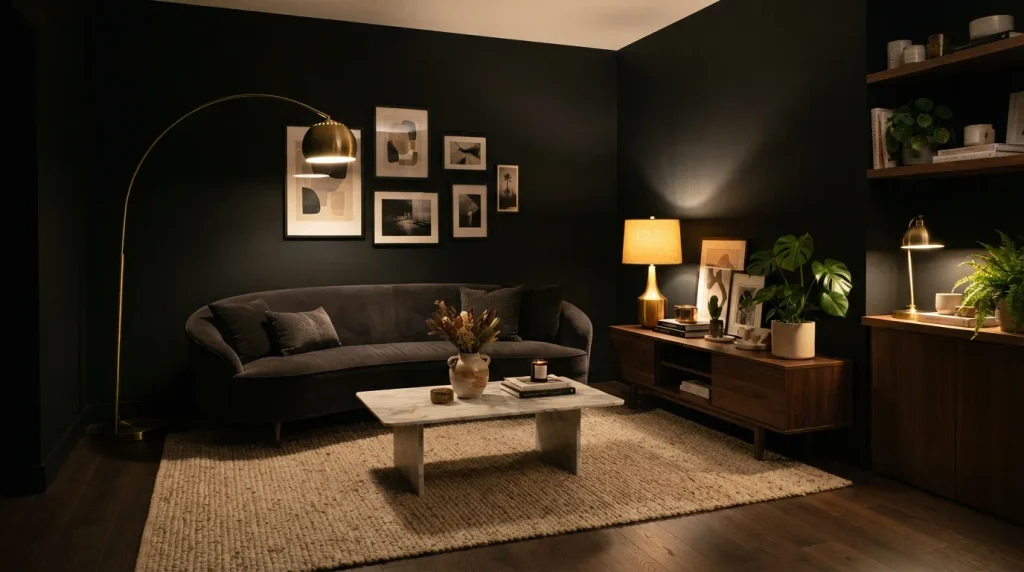
4. Brass Layered Lighting
A single overhead fixture is the fastest way to make a black room feel flat and a little cold. Layering three or four light sources at different heights — a floor lamp, a table lamp, a smaller accent light — does more for the mood of a dark room than almost any other single change you can make. Brass fixtures specifically play well against matte black because the metal has warmth built into it; even a modest lamp will read as more expensive next to a dark wall than it would against white.
Dimmers are worth the extra step if your budget allows them. A room that needs full brightness for cleaning during the day can drop to something much moodier by evening without buying a second set of lamps. I’d also push back gently on symmetry here — matching lamps on either side of a sofa look tidy, but two different fixtures at different heights actually create more visual interest and cast more varied shadow, which is what makes a dark room feel dimensional instead of just dim.
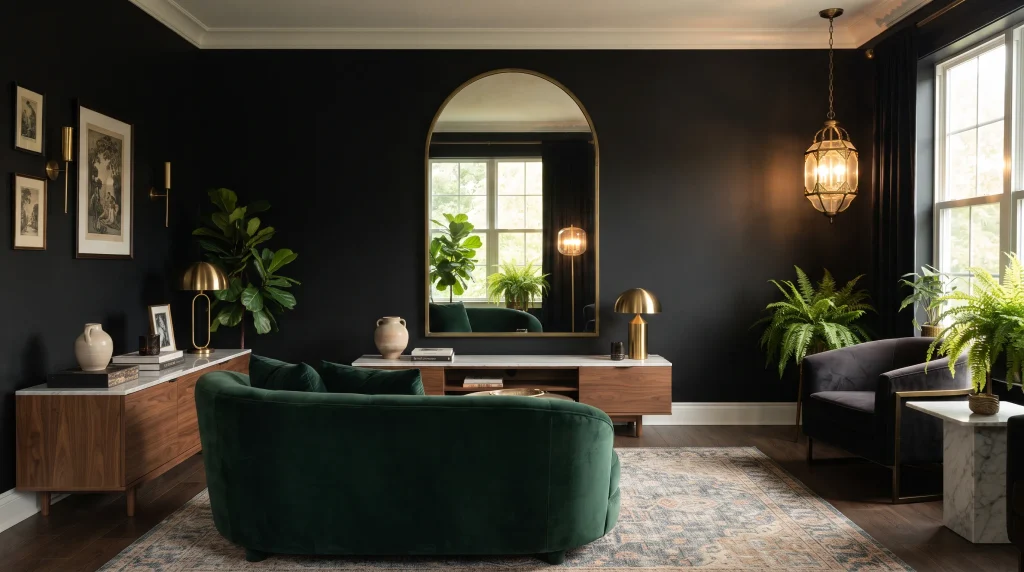
5. Arched Brass Mirror
An arched mirror earns its place in this style twice over — it repeats the curved silhouette that runs through Art Nouveau design, and it does real, practical work bouncing light into a dark room. Choose a generously sized mirror with a slim brass or antique-gold frame and hang it where it will actually catch daylight from a window, not just wherever there happens to be wall space.
Where you point it matters as much as where you hang it. Aim the mirror at something worth reflecting — a window, a lamp, a plant — and you’ll double the visual interest in the room for free. Aim it at a cluttered shelf or the back of the television, though, and you’ll just double the clutter, which is a mistake I’ve seen more than once in otherwise well-planned rooms. In a smaller living room, a tall arched mirror pulls the eye upward and can make a dark, low-ceilinged space feel meaningfully taller than it actually is.
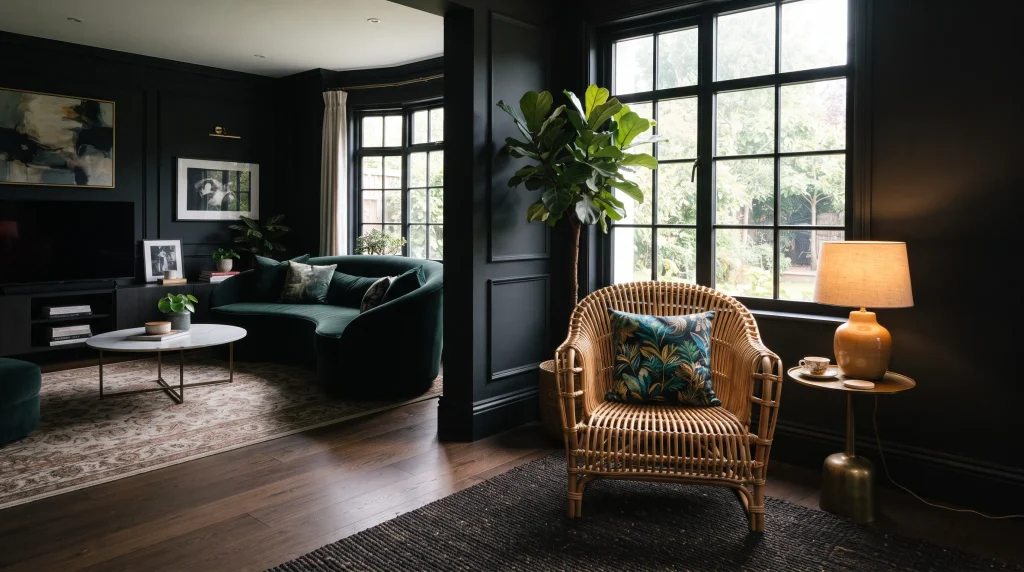
6. Rattan Accent Chair
Woven rattan is the fastest fix when a black-and-brass room starts feeling a little too polished or showroom-perfect. The open weave catches light completely differently than a painted or upholstered surface, throwing soft shadows that read as texture rather than pattern. One chair is usually all a room needs — you’re not trying to introduce a whole new material family, just enough to break up the darker, smoother surfaces around it.
Placement-wise, a rattan chair does its best work in the spot that’s otherwise hardest to furnish: the awkward corner, the reading nook by a window, the gap beside a fireplace that a full sofa would overwhelm. Add one jewel-toned or botanical-print cushion and it stops looking like an afterthought. If the rest of your furniture already leans dark and heavy, rattan’s natural, lighter tone is doing a lot of quiet work — it separates pieces from each other visually instead of letting them blur into one dark mass across the room.
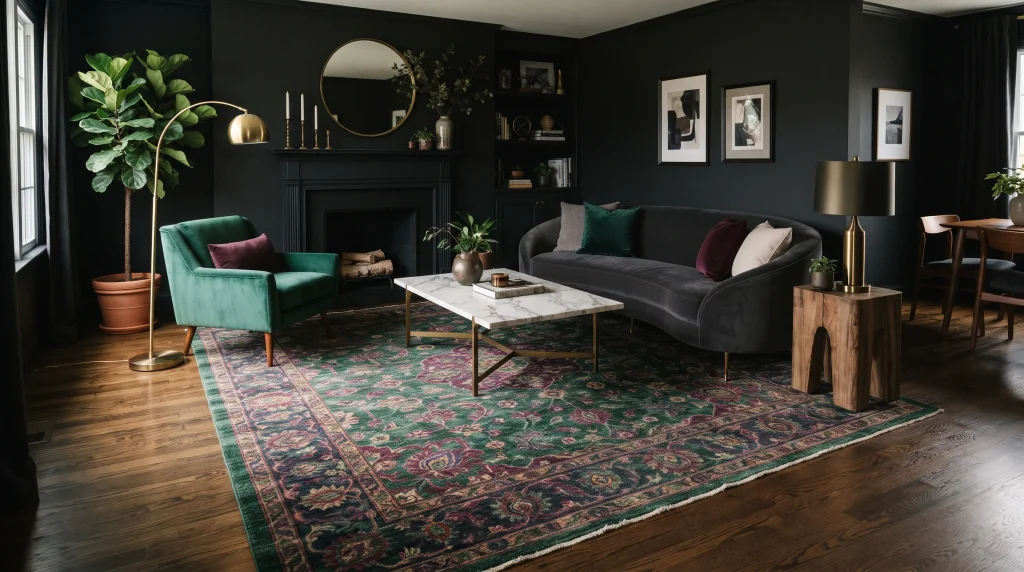
7. Jewel-Tone Patterned Rug
A flat black-and-brass palette can start to feel one-note without a rug to layer color underneath it. Emerald, burgundy, navy, or plum, in a loose floral or flowing pattern, adds real personality while staying in the same moody register as the rest of the room. Size the rug so it sits under at least the front legs of your main seating — a rug that’s too small is one of the most common layout mistakes I see, and it makes an otherwise well-furnished room look unfinished.
Read the rest of your walls before picking the rug’s pattern. If you’ve already committed to bold wallpaper, go quieter on the rug so the two patterns aren’t competing for the same attention. If your walls are plain, the rug can carry more of the room’s personality on its own. Either way, pull one of the rug’s colors into a cushion or a small object elsewhere in the room — that one repeated note is usually enough to make the whole space feel pulled together rather than assembled piece by piece.
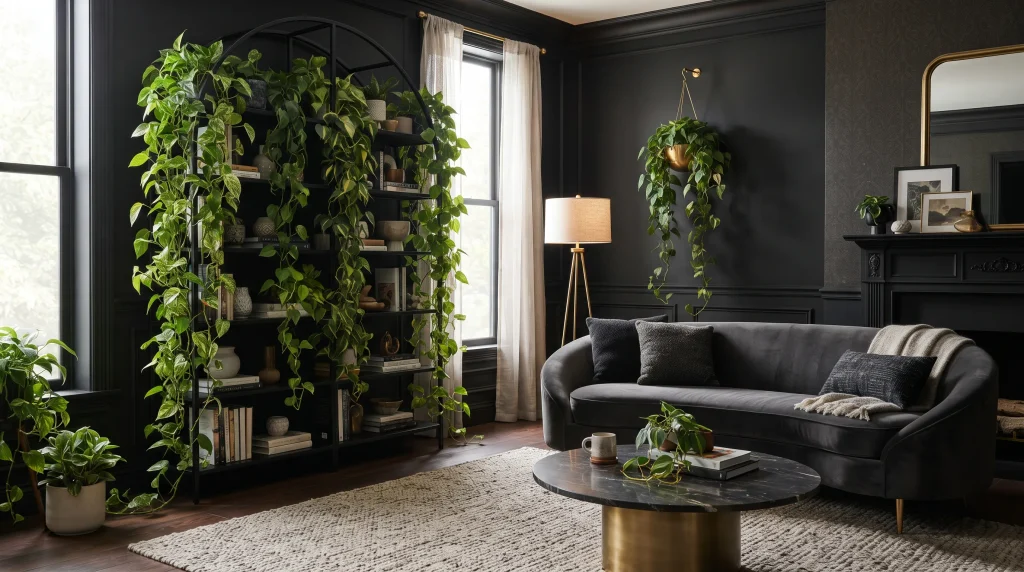
8. Trailing Greenery
Nothing undercuts the heaviness of a dark room faster than a plant that’s actually allowed to trail. Pothos and philodendrons are the reliable choices — put them somewhere with height, like a high shelf, an arched bookcase, or a hanging planter, so the vines fall naturally instead of sitting stiffly in a pot on the floor. Against a black wall, the green reads almost electric, which is exactly the kind of contrast this style needs.
Match your planters to the room’s other metals and materials — matte black, aged brass, or plain terracotta all work better here than glossy ceramic, which can look out of place against everything else. Be honest about your light situation before buying, though; a pothos in a dim corner will survive but won’t thrive, and a struggling plant undercuts the whole effect faster than no plant at all. If natural light is genuinely limited, a well-made faux trailing plant will do more for the room than a real one that’s slowly dying in the corner.
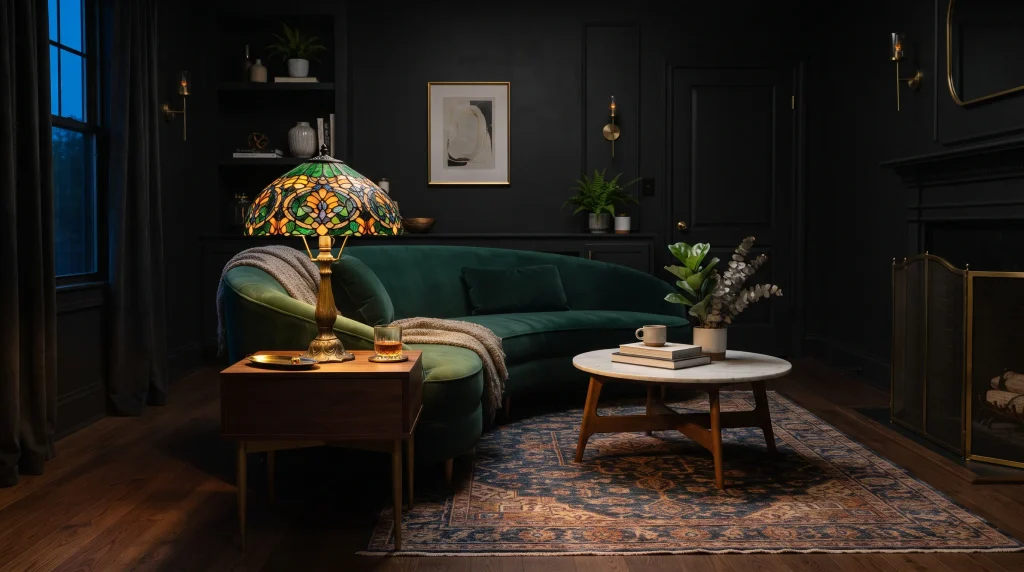
9. Stained Glass Details
You don’t need architectural stained glass to bring this detail into a room — a single lamp with a stained-glass shade, a small framed panel, or glass cabinet inserts will do the job. Emerald, amber, and deep blue glass against black walls and brass fixtures is a genuinely striking combination, and it’s one of the more distinctly Art Nouveau touches on this whole list, which is part of why it’s worth including even in small doses.
Treat it as an accent, not a second pattern competing with your rug and wallpaper. If your room already has a lot going on visually, one simple stained-glass lamp is plenty — save the more detailed panel pieces for a more minimal room where they can actually be the focal point instead of getting lost. Position anything with colored glass near a light source, whether that’s a window during the day or a bulb inside the fixture at night; stained glass that isn’t lit from somewhere just looks like tinted glass, and you lose the whole effect.
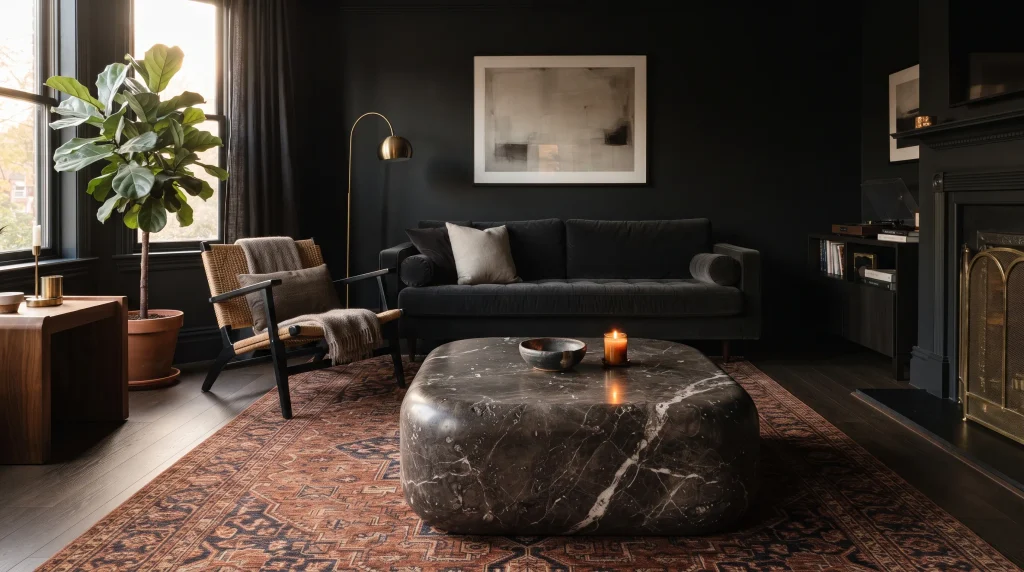
10. Marble Coffee Table
A marble coffee table gives a dark room something it usually needs and doesn’t have enough of: a hard, cool surface to balance out all the soft, dark upholstery. Black or dark-veined stone, in a rounded or softly sculpted shape rather than sharp rectangular edges, keeps the room’s curved theme going while adding real material contrast against velvet and brass.
Keep the top mostly clear — a small bowl, a candle, maybe a stack of books, nothing more. The stone’s natural veining is doing the decorative work here, and it disappears fast under a pile of trays and accessories. If genuine marble is outside the budget, a good engineered-stone or marble-look laminate will get you 90% of the visual effect for a fraction of the price and a lot less worry about staining. Either way, a table with real texture between two soft, dark seating pieces breaks up what would otherwise be a lot of visually heavy furniture sitting right next to each other.
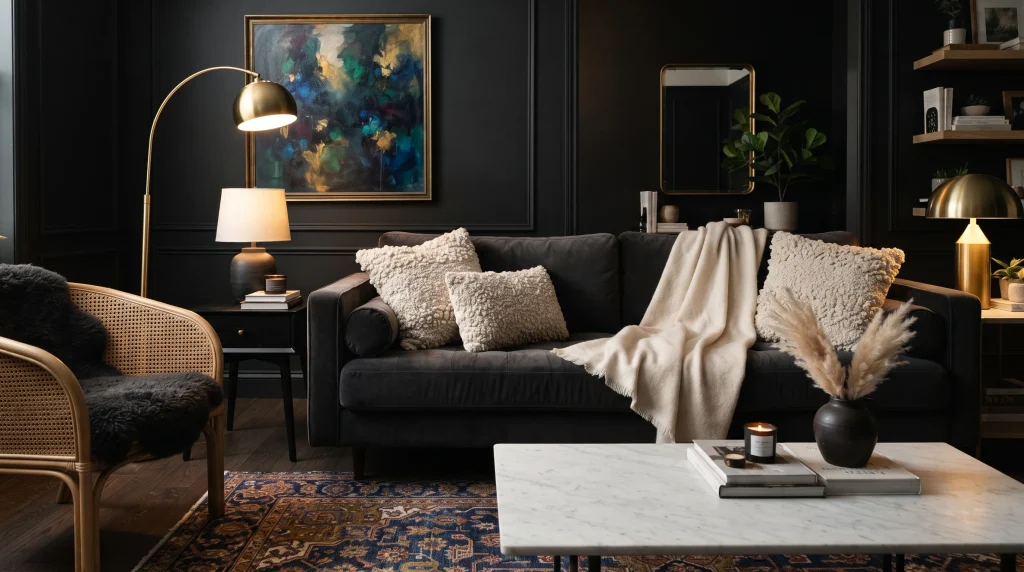
11. Boucle Textured Accents
Texture is what stops a dark room from reading as flat, and boucle is the easiest, cheapest way to add it. A couple of cream or ivory boucle pillows on a dark velvet sofa, plus a throw draped over one arm, does more for the room’s depth than most people expect from something this small. The nubby surface catches light in a completely different way than smooth velvet does, so even a room with a limited color palette ends up feeling layered rather than one-note.
Mix textures rather than repeating them — boucle next to velvet, rattan, marble, and wood reads as considered; boucle everywhere reads as matchy. If your walls already carry a pattern from wallpaper or your floor has a busy rug, keep the boucle solid so the eye has somewhere to rest. And practically speaking, washable covers are worth the extra cost if the room sees real daily use — boucle looks great but shows dirt more than a tighter weave, which matters if you’ve got kids, pets, or both.
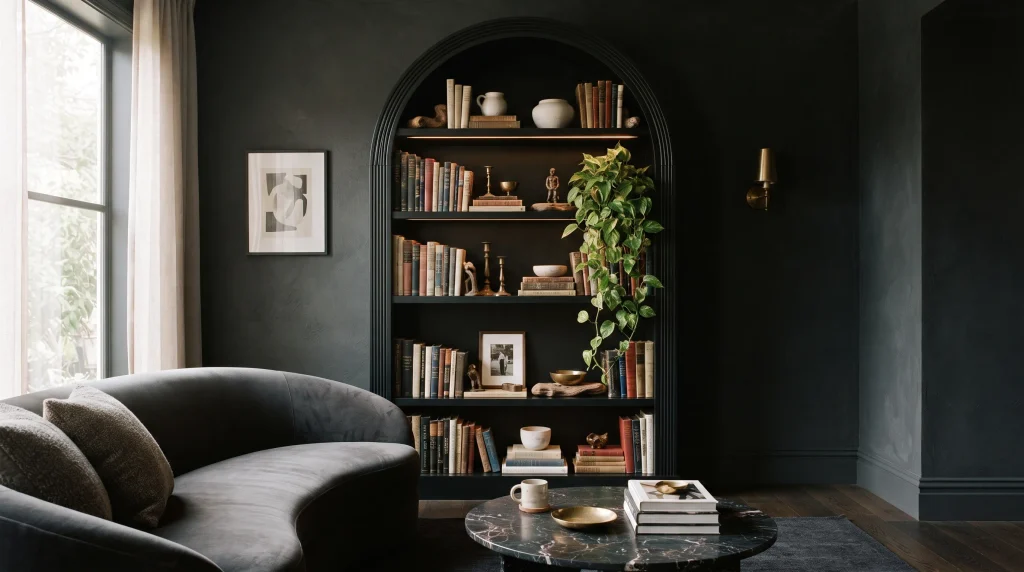
12. Arched Bookshelf Detail
A tall, arched bookshelf adds real architectural character to a room without the cost of an actual renovation. Look for a black unit with a rounded top or fluted side panels — details that echo the curved theme running through the rest of the room. Style the shelves with restraint: books, a few ceramics, a small brass object or two, and maybe a trailing plant, rather than filling every inch of shelf space.
Uneven heights matter more than symmetry here. Lining everything up in tidy, matching rows tends to look staged; leaving gaps and varying the height of what’s on each shelf reads as genuinely collected over time, which is the effect you actually want. If the unit itself is black, lean on lighter ceramics and natural wood objects on the shelves so they don’t disappear against the backdrop. For renters, a freestanding arched bookcase gets you most of this effect without touching the walls, which makes it one of the lower-risk additions on this whole list.
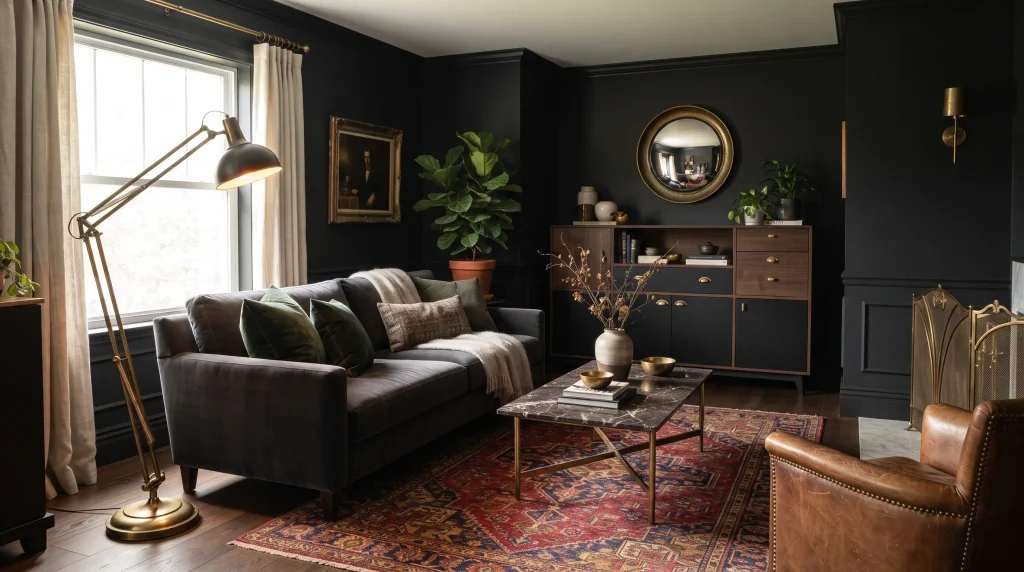
13. Unlacquered Brass Accents
Unlacquered brass is the detail that keeps a black room from feeling cold, and it’s worth understanding why it works better than polished brass here: the softer, slightly uneven finish already looks a little aged, which suits a room built around rich, moody materials far better than something bright and mirror-shiny would. You don’t need one big brass statement piece — a lamp base, a picture frame, a set of cabinet pulls, a curtain rod, spread across the room, adds up to more warmth than a single showpiece.
The other advantage is that unlacquered brass changes over time — it develops a patina with handling and age, which means the room actually looks better and more collected a year in than it did on day one. That’s a genuinely different experience than most finishes, which just look tired as they age. Start with two or three pieces at different heights around the room, and resist the urge to buy everything brass at once; letting it accumulate piece by piece tends to look more intentional than a matching set bought in one trip.
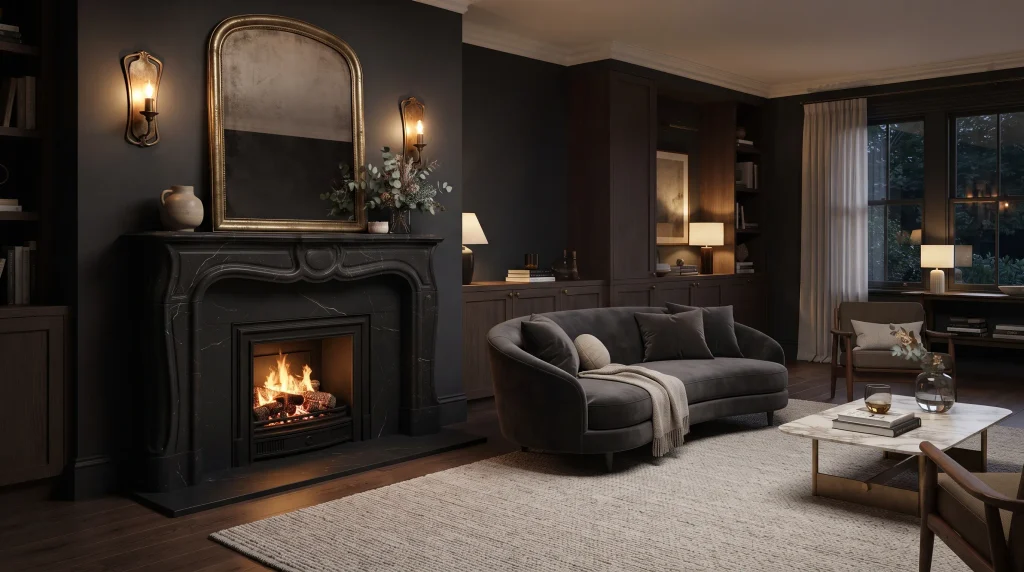
14. Black Nouveau Fireplace
If your room has a fireplace, it’s the single easiest place to anchor this entire style. Paint the surround in matte black, or use a dark stone with visible veining, and the fireplace becomes the room’s natural focal point without you having to do much else to earn it. Soften the strong, straight lines of the surround with an arched mirror above it or curved furniture nearby, and add brass sconces on either side for evening light.
Keep the mantel simple — one ceramic vessel, a small arrangement of greenery, maybe two or three objects total. A crowded mantel competes with the fireplace itself instead of framing it. If you don’t have a working fireplace, a decorative or electric surround can still give you this same anchoring effect; the room doesn’t need real flame to read as warm, it needs the shape and the material. A lighter rug in front of it also helps — an all-black lower half of the room can start to feel like it’s swallowing the floor otherwise.
Frequently Asked Questions
Is a black living room a bad idea in a small space?
Not if you manage light and contrast. One dark accent wall, layered warm lighting, and a lighter rug will keep a small room from feeling closed in, even with black on the walls.
What color brass works best with black walls?
Unlacquered or antique brass generally reads warmer and less “showroom” than polished brass, which can look a little cold or stark against matte black.
Do I need to paint the whole room black for this look to work?
No — most of the ideas here (an accent wall, one dark piece of furniture, brass lighting) work as standalone updates without committing the entire room.
Conclusion
None of this requires redoing your whole living room in one weekend. Start with one change — a lamp, a mirror, a single dark wall — and build from there as budget and confidence allow. The rooms that actually work aren’t the ones where every single element matches; they’re the ones layered with a few real textures, some warm light, and one or two pieces that feel genuinely collected rather than bought as a set. Save this for when you’re ready to start, and pass it along to anyone else who’s drawn to a moodier, more elegant kind of room.




2 Comments