20 Rustic Bedroom Ideas for a Warm, Cabin-Inspired Retreat
20 Rustic Bedroom Ideas has a reputation problem. Done carelessly, it slides into theme-park log cabin — antlers on every wall, plaid on every surface, nothing left to breathe. Done well, it’s one of the warmest bedroom styles there is, built on real materials that actually improve with age: raw wood, iron, stone, worn leather.
I worked on a client’s guest room a couple of years ago where the brief was “rustic, but not a hunting lodge.” The fix wasn’t adding more rustic elements — it was picking two or three (a reclaimed wood headboard, iron hardware, a wool throw) and letting the rest of the room stay simple around them. That’s the pattern behind every idea below: rustic reads as authentic when it’s restrained, and as costume when it’s everywhere at once.
These 20 ideas range from a full accent wall to a single throw pillow, so there’s an entry point whether you’re starting from scratch or nudging a room that’s already close. Start with whichever one solves a problem you actually have — a plain headboard wall, bare lighting, a bed that needs more warmth — rather than trying to do all 20 at once.
What Keeps Rustic From Looking Dated
Every “don’t overdo it” note in this guide is really pointing at the same idea: modern rustic. The dated version of this style piles on every rustic motif at once — antlers, plaid, log walls, wagon wheels, all in one room. The current version picks two or three materials and lets everything else stay quiet and contemporary around them.
In practice, that means pairing one rustic anchor (a reclaimed headboard, a stone wall) with otherwise simple, current furniture rather than an entirely rustic room. A plain platform bed frame under a reclaimed wood headboard reads as modern rustic; a four-poster log bed under the same headboard reads as a hunting lodge. The material is doing the rustic work — the shapes around it can stay clean and current.
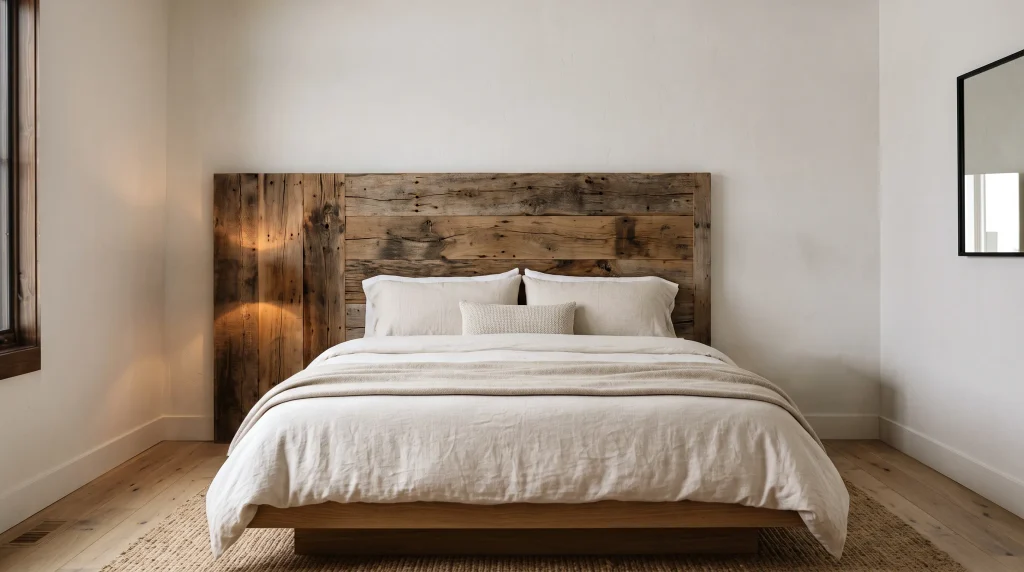
1. Reclaimed Wood Headboard
A reclaimed wood headboard is usually the single highest-impact purchase in a rustic bedroom, because real salvaged wood carries a history a new board simply can’t fake — old nail holes, uneven staining, saw marks from decades of use. Look for boards reclaimed from barns, old fencing, or shipping pallets rather than “distressed” new lumber, which tends to look artificially aged under close inspection.
Keep the rest of the wall plain. A busy headboard next to patterned wallpaper or a gallery wall competes with itself; let the wood grain be the one thing doing visual work on that wall. If you’re building it yourself, mismatched board widths actually help the authentic look — perfectly uniform planks read as new lumber stained to look old, which isn’t the same thing.
Look for a reputable reclaimed-lumber supplier or salvage yard before a big-box “farmhouse” headboard — the difference in grain and weathering between real reclaimed wood and a printed veneer is obvious up close, even if it’s harder to tell in a photo.
Best for: Any bedroom with a plain, unfinished wall behind the bed. Avoid: pairing it with other patterned or busy elements on the same wall.
2. Exposed Ceiling Beams
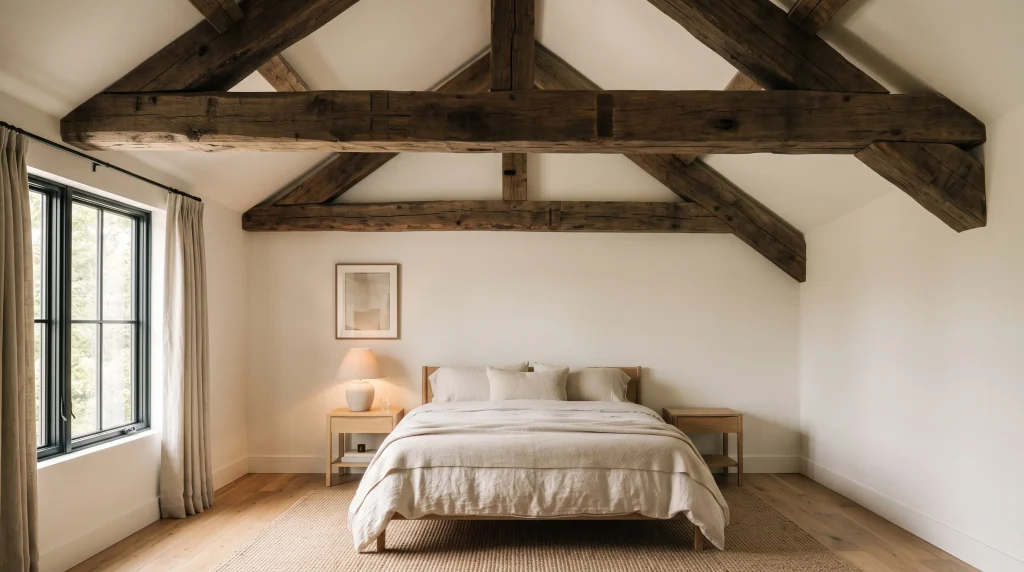
Exposed beams give a bedroom real architectural weight, and if your home already has them structurally, the best move is usually to do almost nothing else — a beamed ceiling with a simple bed underneath often looks better than one competing with heavy furniture and busy walls. If your beams are structural but currently painted or covered, stripping them back to raw or lightly stained wood is one of the more dramatic changes available in an older home.
If you don’t have real structural beams, faux beam kits — lightweight polyurethane or thin-cut wood cladding — can be mounted to a flat ceiling and are genuinely difficult to distinguish from the real thing once painted or stained, especially from bed height where you’re looking up rather than examining them closely.
Keep the wall color and bedding lighter if the beams are a dark stain, so the ceiling doesn’t make the room feel lower than it is. A dark beam against a light ceiling reads as intentional contrast; dark beams against dark walls can make a room feel like it’s closing in, especially in a bedroom with average ceiling height.
3. Plaid Flannel Bedding
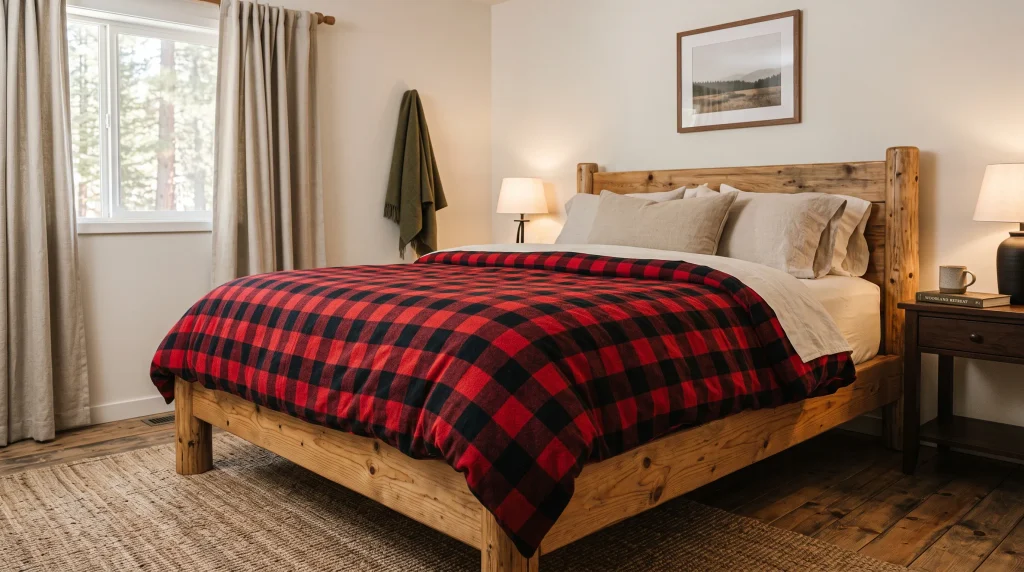
Flannel plaid bedding is one of the fastest ways to bring cabin warmth into a bedroom, and it has a practical advantage most decorative choices don’t: it’s genuinely warmer to sleep under, not just warmer-looking. A buffalo check or classic tartan duvet in red, black, or forest green against a plain cream sheet set keeps the pattern from overwhelming the whole bed.
The mistake to avoid is matching plaid everywhere — curtains, pillows, and a duvet all in the same pattern tends to look more like a themed hotel room than a real bedroom. Use the plaid on one or two pieces (a duvet or a folded throw) and keep everything else, including the walls and other textiles, solid and quiet.
For genuine flannel rather than a printed cotton that only looks like flannel, check brands like L.L.Bean or Pendleton, both of which make actual brushed-flannel bedding in traditional plaid patterns — the texture difference matters here more than in most fabric choices, since flannel’s whole appeal is how it feels, not just how it looks in a photo.
4. Wrought Iron Bed Frame
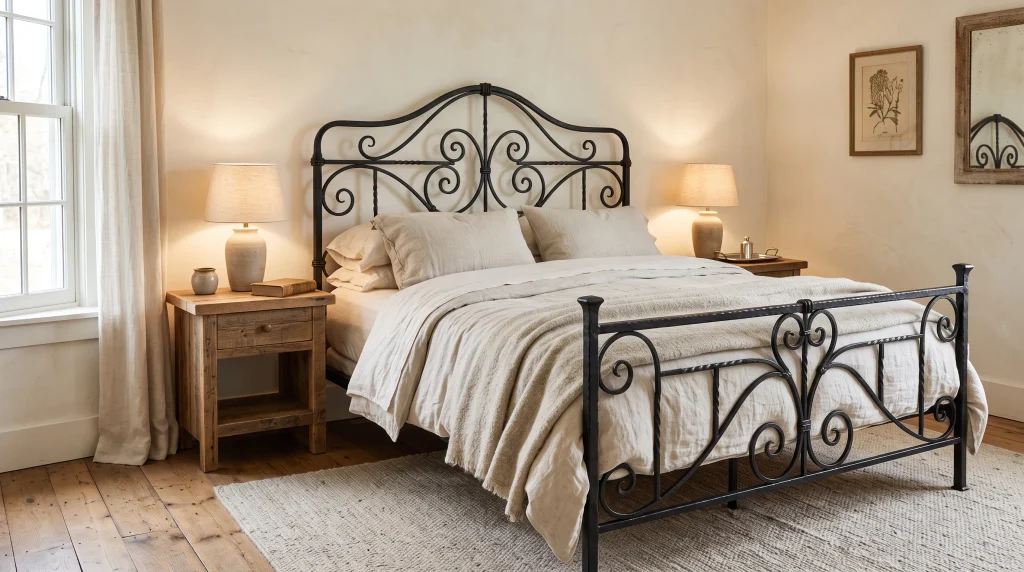
A wrought iron frame brings a handmade, slightly imperfect quality that most modern metal beds don’t have — real forged iron shows small variations in the scrollwork and joints that a mass-produced tubular metal frame simply doesn’t. It also pairs surprisingly well with soft textiles; the hard material actually makes flannel, wool, and linen look cozier by contrast rather than clashing with them.
Look for a matte black or aged bronze finish rather than a glossy powder coat, which can look closer to a modern industrial style than a rustic one. Vintage or antique iron frames, if you can find one at the right size, often have more character than new reproductions — a local antique market or architectural salvage yard is worth a look before ordering new.
Balance the visual weight of the frame with lighter bedding and a warm wood nightstand on either side. An all-black iron frame against dark walls and dark furniture can tip the room from “rustic” into “gothic,” which isn’t the same look even though the materials overlap.
5. Stone Accent Wall
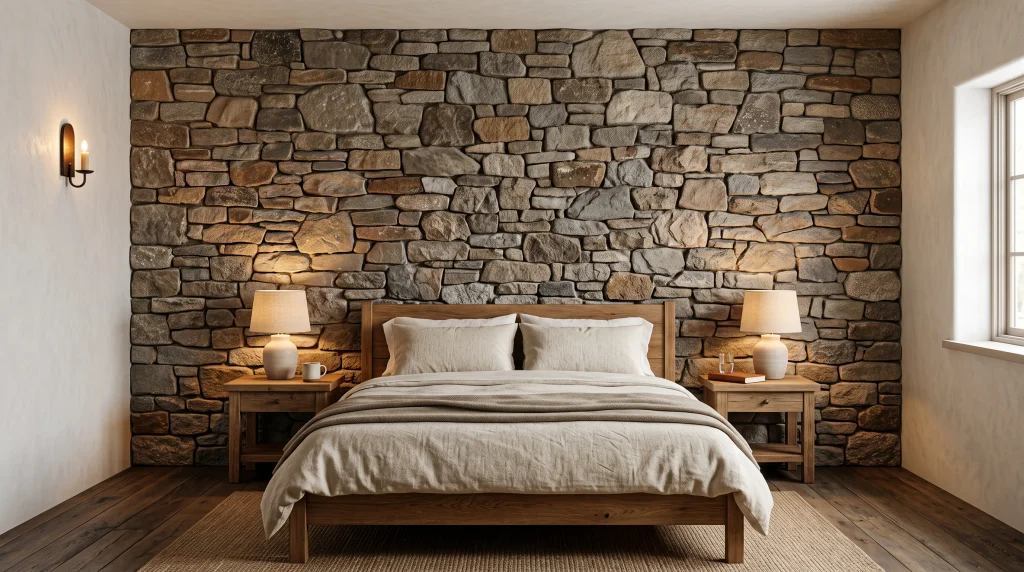
A stone accent wall is one of the more substantial projects on this list, but it does more to establish a genuine cabin or lodge feeling than almost anything else, because stone is one of the few materials that reads as structural rather than decorative. Stacked fieldstone or a manufactured stone veneer panel, applied to the wall behind the bed, gives the room a sense of permanence that wood alone doesn’t quite achieve.
Manufactured stone veneer is considerably more realistic than it used to be and far less expensive than real quarried stone, which makes this project accessible even in a standard bedroom rather than a true log home. It also weighs less, which matters if you’re mounting it on drywall rather than a structural wall — check the product’s technical specs or ask a supplier directly rather than assuming any veneer is drywall-safe.
Keep the lighting warm and slightly low against a stone wall — cool white light tends to make stone look gray and flat, while warm bulbs bring out the natural variation in tone between individual stones, which is most of the visual appeal in the first place.
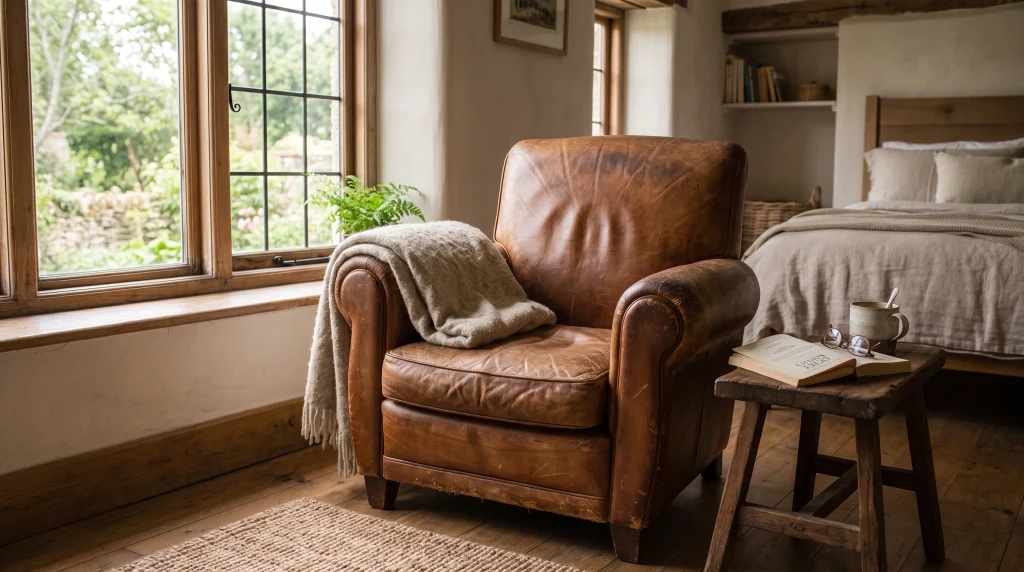
6. Vintage Leather Armchair
A genuinely worn leather chair does something a new one can’t — the creases and slight color variation happen naturally over years of use, and that history is a big part of what makes rustic design feel authentic rather than staged. If you can find a real vintage piece at an estate sale or secondhand shop, it’s usually a better investment than a new “distressed” leather chair, which is manufactured to fake that same wear.
Position it near a window if the bedroom has the space, ideally with a small side table nearby, so it functions as an actual reading spot rather than a purely decorative object taking up floor space. A worn wool or sheepskin throw draped over one arm adds warmth and softens the hard leather surface without hiding its character.
If new is the only realistic option, look for full-grain leather specifically — not bonded or “genuine” leather, which is a lower-quality material despite the reassuring name — and expect it to take a year or two of regular use before it starts to develop real character on its own.
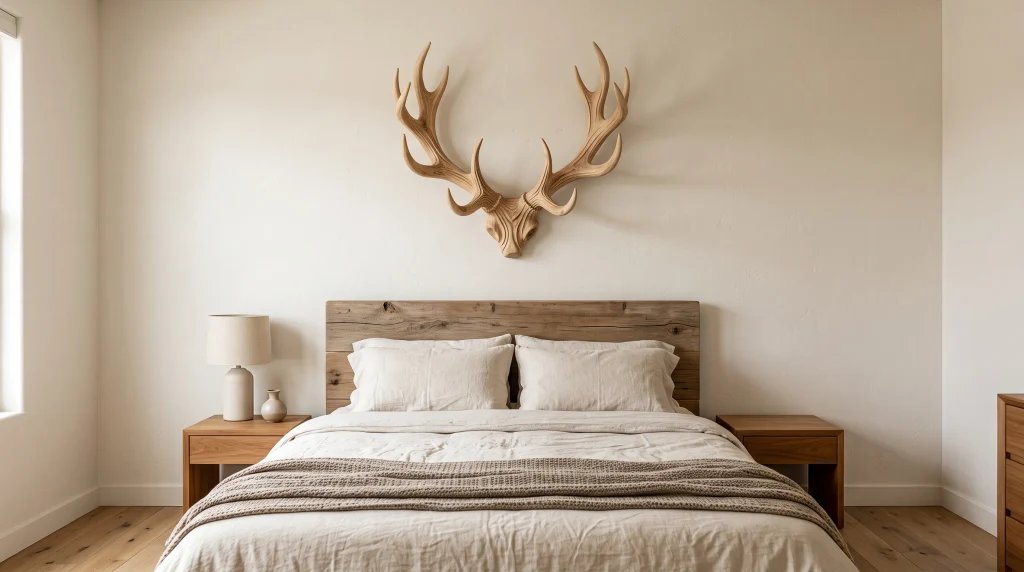
7. Antler-Style Wall Decor
Antler and horn motifs are the single easiest way to tip rustic into cliché, so this is the idea on the list that most needs restraint. One sculptural piece — a carved wood antler form, a single mounted set (real, faux resin, or shed antlers rather than a hunting trophy), or an antler-style chandelier — reads as a design choice. A wall covered in them reads as a theme.
If you want the shape without the hunting association some people find off-putting, faux or wood-carved versions give the same silhouette in a material that reads more sculptural than literal. Shed antlers — naturally dropped, not from a hunted animal — are also widely sold and carry a different meaning for buyers who care about that distinction.
Place it somewhere it can be appreciated as a single object: centered above a headboard, or alone on an otherwise empty wall. Combined with a busy gallery wall or other wildlife-adjacent decor, even one antler piece starts to feel like it’s part of a larger theme rather than a considered accent.
Best for: one empty wall as a singular statement. Avoid: pairing with more than one other rustic wall motif in the same sightline.
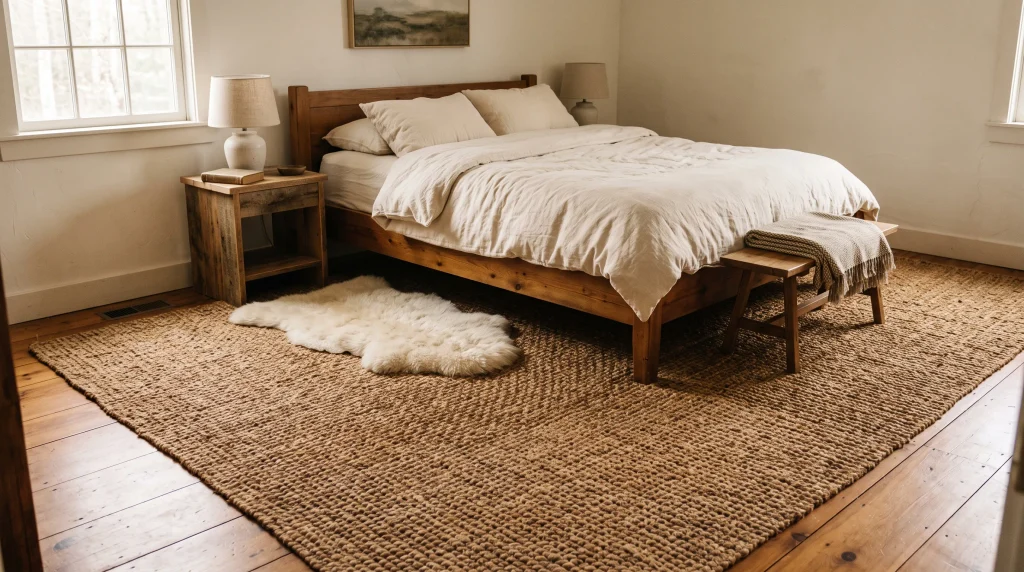
8. Woven Jute Rug
A jute rug brings texture and warmth underfoot while staying visually quiet enough not to compete with heavier rustic elements like exposed beams or a stone wall. Its natural, slightly rough weave and warm tan color read as organic and unfussy in a way that a smooth wool or synthetic rug doesn’t quite achieve in this particular style.
Size the rug generously — it should extend well beyond the sides of the bed and toward the foot, rather than sitting as a small mat that only the bed touches. A too-small rug is one of the most common mistakes in bedroom layouts generally, and it’s especially noticeable in a rustic room where the rug is meant to feel like part of the room’s foundation rather than an accessory.
Jute isn’t the softest material underfoot, so if you want the look with more comfort, layering a smaller, softer sheepskin or wool rug on top of a larger jute one is a common trick — you get the visual texture of jute with a genuinely comfortable spot to stand on when you get out of bed.
Budget: low. Commitment: easy, fully reversible.
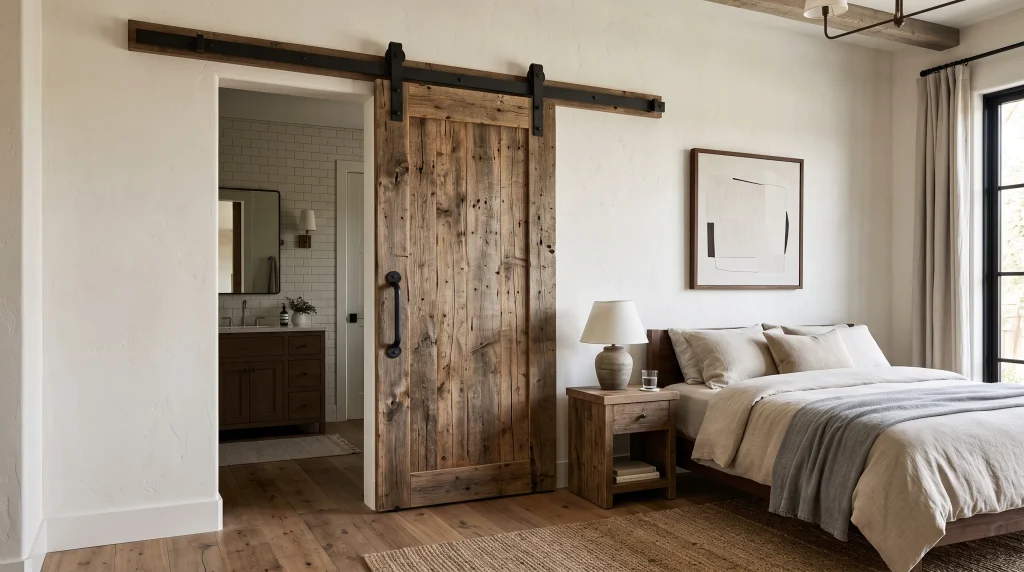
9. Sliding Barn Door
A sliding barn door is both a functional and a decorative choice — it solves a real space problem (a swinging closet door that eats into a tight bedroom layout) while adding one of the most recognizable rustic architectural details available. Reclaimed or distressed wood on black iron track hardware is the classic combination, though a painted door in a muted color works too if you want something slightly less literal.
Measure carefully before ordering. A barn door needs wall space on either side of the opening to slide into when open, which some bedrooms simply don’t have room for — this is worth checking with a tape measure before falling for a photo online, since it’s one of the more common regrets with this particular feature.
If a full barn door install feels like too much, several companies now sell barn-door-style hardware kits that can be added to an existing hollow door, which gets a version of the look without a full replacement — a reasonable middle ground if you’re not ready for the larger project.
Best for: bedrooms where a swinging door currently eats into a tight layout. Avoid: ordering before measuring the wall space on either side of the opening.
10. Log Cabin Wall Paneling
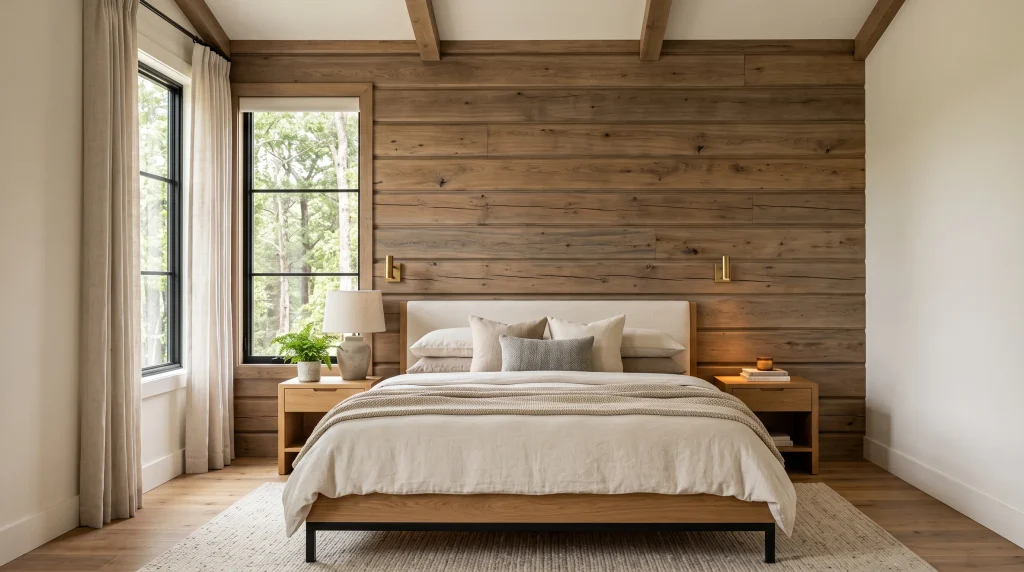
Full log paneling is the most literal expression of rustic style on this list, and it works best used sparingly — one wall, not four, unless you’re specifically building an actual cabin-style room. Horizontal tongue-and-groove log siding, even in a modern engineered version rather than true full logs, gives a wall real dimension and a strong, unmistakable rustic identity.
Keep the surrounding walls in a plain, light color if you go with a full log wall, so the room doesn’t feel like it’s closing in — a small bedroom with log paneling on every surface can start to feel more like a sauna than a bedroom. One accent wall, typically behind the headboard, gets the effect without the claustrophobia.
Pre-finished paneling kits from a specialty supplier or local lumberyard are considerably easier to install than true log construction and come pre-sanded and sealed, which matters for a bedroom specifically — raw, unsealed log wood can be rough enough to catch on fabric or skin if you brush against it.
If full log siding feels too literal for your space, the same tongue-and-groove profile in a flat-sawn (rather than rounded) board gets a subtler, more modern-rustic version of the same texture without reading as a cabin wall.
11. Mason Jar Pendant Lighting
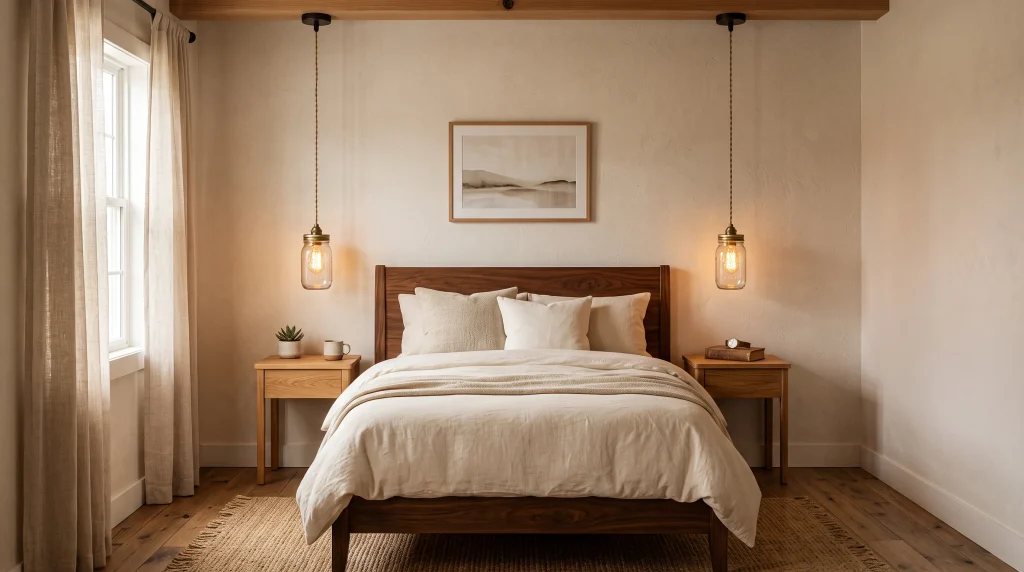
Mason jar pendants are a small, inexpensive detail that reads as distinctly rustic without requiring any structural change to the room. Hang one on each side of the bed in place of traditional bedside lamps, using a warm edison-style filament bulb rather than a standard LED — the visible filament is part of the aesthetic, and a frosted or fully enclosed bulb loses most of the effect.
This works particularly well as a space-saving swap in a smaller bedroom, since it frees up the entire nightstand surface that a lamp would otherwise occupy. Just make sure the ceiling height and ceiling mount position actually allow for the cord length you need — a pendant hung too low over a bed becomes a hazard rather than a design detail, especially if anyone sits up quickly at night.
Pre-assembled kits with the jar, cord, and socket already wired are widely available if you’d rather not handle the electrical work yourself. If you do build your own from canning jars, use a licensed electrician for the actual ceiling wiring and junction box connection — the jar and shade are a simple DIY swap, but the hardwired portion isn’t a place to guess.
12. Cowhide Rug Accent
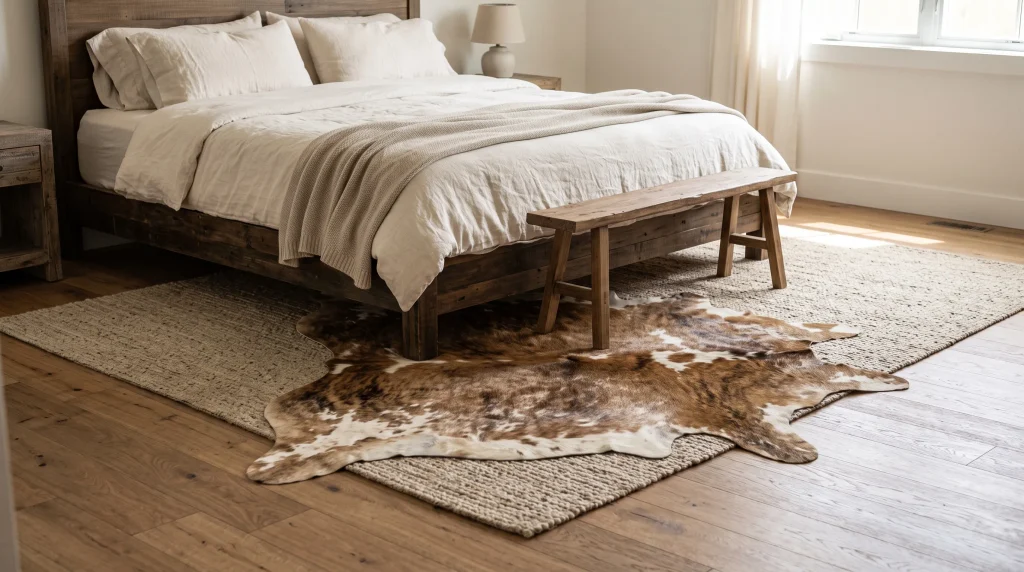
A cowhide rug adds a genuinely distinctive texture that no synthetic alternative quite replicates — the natural pattern is different on every single hide, which means no two rooms with a real cowhide will ever look identical. Use it as a layering piece rather than the room’s main rug: placed at the foot of the bed or under a reading chair, it adds interest without needing to cover the full floor.
This is one of the more polarizing choices on this list, and it’s worth deciding upfront whether the material itself matters to you, not just the look. If it does, faux cowhide has improved enough that it’s difficult to distinguish at a glance once styled into a room, and it sidesteps the sourcing question entirely. If you do want a real hide, buy from a seller who’s upfront about where it came from — that transparency matters more here than with most other materials on this list.
Best for: a small layering accent, not a full-room rug. Avoid: treating it as the bedroom’s primary floor covering — the pattern is too busy to anchor a whole room.
13. Distressed Wood Dresser
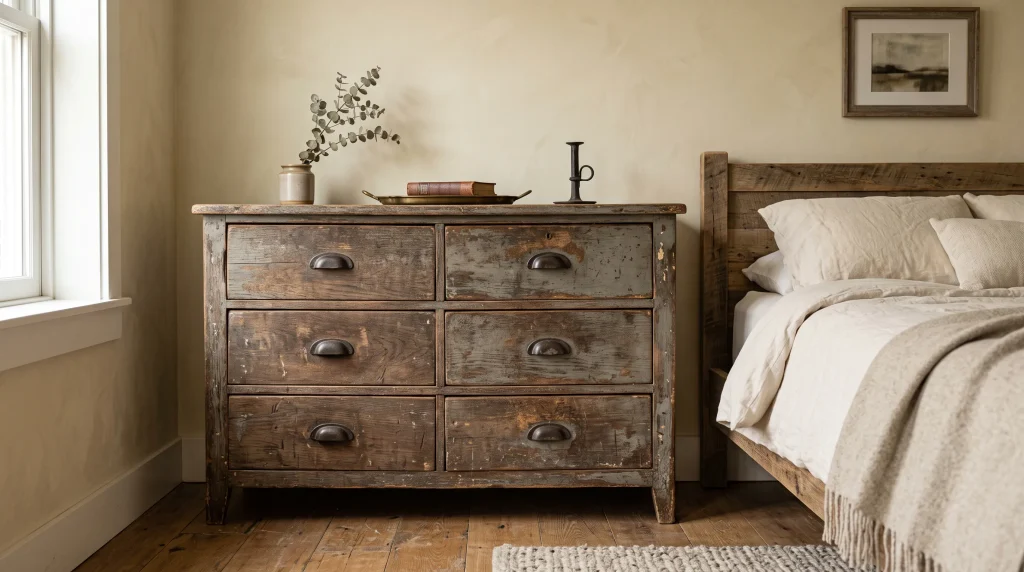
A distressed dresser brings the same worn, lived-in quality as reclaimed wood, but in a piece of furniture rather than a fixed architectural element — which makes it a good entry point if you’re not ready for a bigger project like paneling or a stone wall. Look for genuinely aged secondhand pieces first; a real antique dresser with decades of actual wear has a depth that manufactured “distressing” (sanding through fresh paint in strategic spots) doesn’t fully replicate, even when it’s well done.
If buying new, choose furniture where the distressing looks irregular rather than symmetrical or repeated in an obvious pattern — real wear happens unevenly, concentrated at edges, corners, and handle areas that get touched most often, not in a uniform pattern across every surface.
Swap standard hardware for iron or aged bronze pulls if the piece doesn’t already have them; this is a small, inexpensive change that does a lot to tie a dresser into the rest of a rustic room’s materials, especially if you’ve used iron elsewhere on the bed frame or light fixtures.
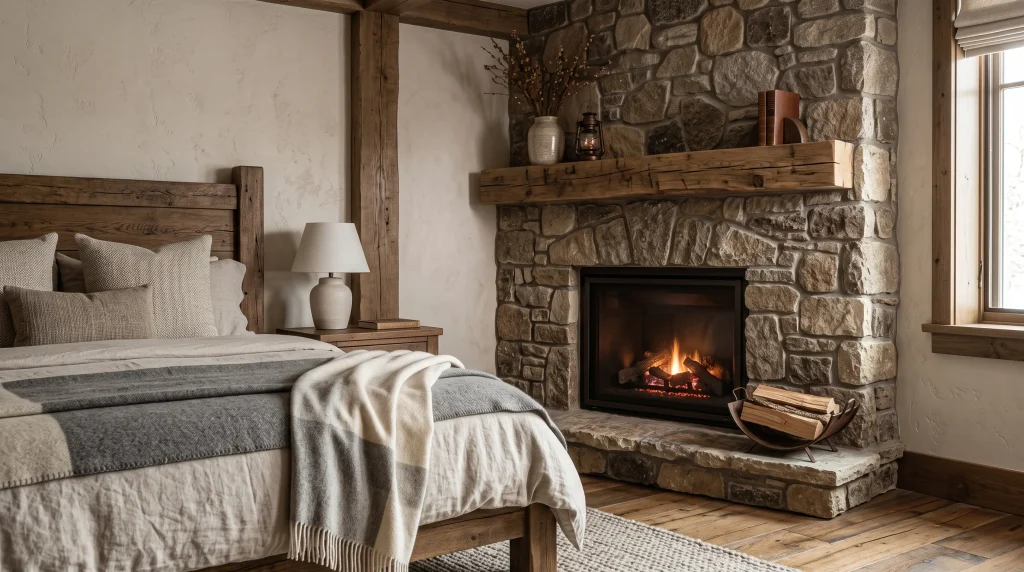
14. Stone Fireplace Nook
A working or even a simple electric fireplace built into a stone surround turns a bedroom corner into a genuine focal point, and it’s one of the few rustic elements that adds real function alongside the visual warmth — actual heat and light, not just the appearance of coziness. If a wood-burning or gas insert isn’t feasible, modern electric inserts have improved enough that they read convincingly from across a room, especially with a stone or wood mantel surround doing most of the visual work.
This is a bigger renovation than most items on this list, so it’s worth consulting a contractor about venting, clearances, and local code requirements before committing, particularly for anything beyond a plug-in electric unit — fireplace installations in a bedroom specifically often have different safety requirements than a living room.
If a built-in fireplace isn’t realistic, a smaller freestanding wood stove or an electric stove-style heater with a similar cast-iron look can approximate the same nook feeling in a corner, without the structural work a true fireplace requires.
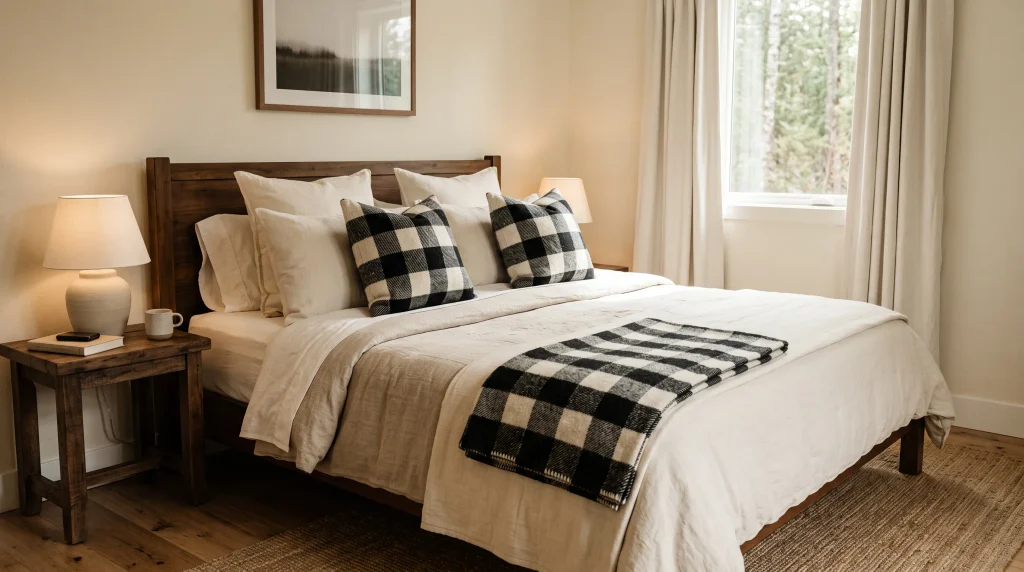
15. Buffalo Check Accents
Buffalo check is a smaller, easier commitment than a full plaid bedding set, and it’s a good way to bring the same cabin-plaid warmth into a room through just a couple of accent pieces — two throw pillows and a folded blanket at the foot of the bed, rather than covering the whole duvet. Black and white is the classic combination, though red and black or a muted gray-and-cream version work equally well depending on the rest of the room’s palette.
Keep the pattern contained to soft accents rather than hard surfaces like curtains or a headboard, where a bold check can start to feel heavier and more overwhelming than it does on a small pillow. This is one of the easiest ideas on this list to change seasonally — swap the buffalo check for a plain wool throw in warmer months and bring it back for winter, without touching anything else in the room.
Look for genuine wool or wool-blend buffalo check specifically — it holds its shape and color better over time than a cheaper printed cotton version, which tends to fade and flatten faster with regular washing.
Budget: low. Commitment: easy, seasonal.
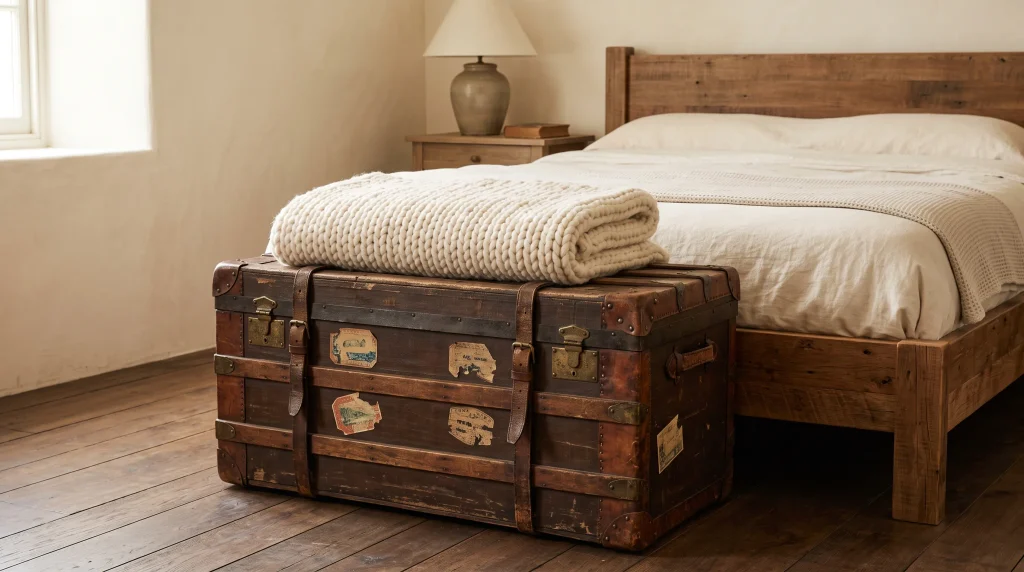
16. Vintage Trunk Storage
An old trunk at the foot of the bed solves a real storage problem — extra blankets, off-season clothing, spare bedding — while adding genuine rustic character that a modern storage bench can’t match. Real vintage trunks, with visible leather straps, brass corners, and travel stickers or stamps, carry a sense of history that’s hard to fake, and they’re often more affordable secondhand than a comparable new “vintage-style” piece.
Estate sales, antique malls, and secondhand online marketplaces are usually better sources than a retail furniture store for a trunk with real age and wear, though it’s worth checking the hinges and latch function before buying, since decorative appeal doesn’t always mean the trunk still works as actual storage.
Use it as a bench as well as storage if the lid is sturdy enough to sit on — a folded wool blanket on top makes it double as extra seating for putting on shoes, which is a practical bonus beyond its role as a decorative anchor at the foot of the bed.
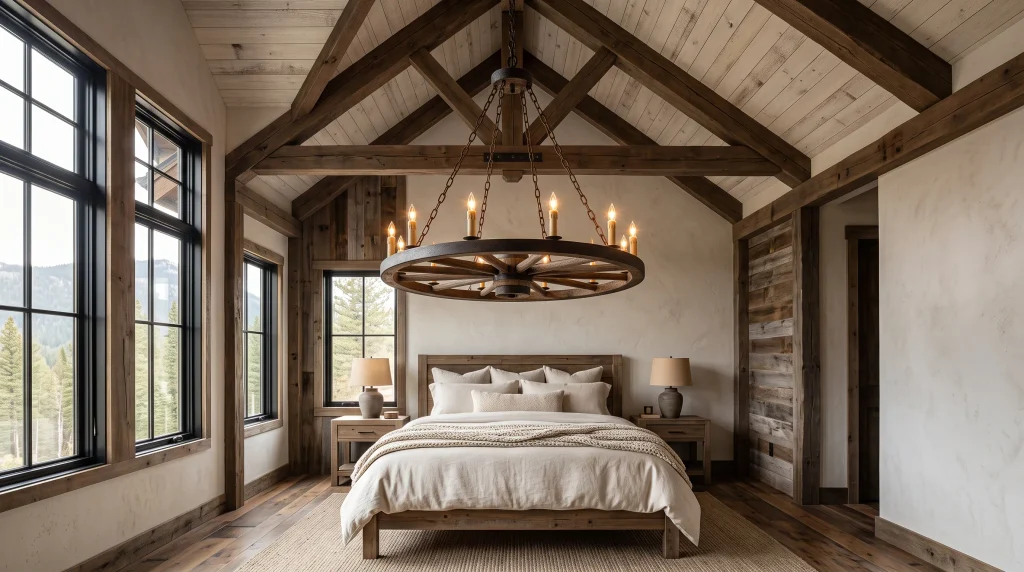
17. Wagon Wheel Chandelier
This is the most literal, statement-making idea on this list, and it’s not the right fit for every bedroom — it needs genuinely high ceilings and real surrounding space to read as a striking centerpiece rather than an oversized fixture crowding a modest room. If that’s your room, it’s a strong one; if you’re working with a standard 8-foot ceiling, skip to the alternative below instead of forcing it.
Real reclaimed wagon wheels are increasingly rare and expensive; most available fixtures now are built new to look weathered, which is a reasonable trade-off given how few authentic wheels remain in circulation. Choose warm candle-style bulbs rather than bright modern LEDs — a wagon wheel fixture with cool white light looks oddly clinical, undercutting the whole point of the piece.
Best for: vaulted or high-ceiling bedrooms, statement rustic rooms. Avoid: standard-height bedrooms, where a smaller wagon-wheel-inspired flush mount or wall sconce gets a hint of the same detail without overwhelming the space.
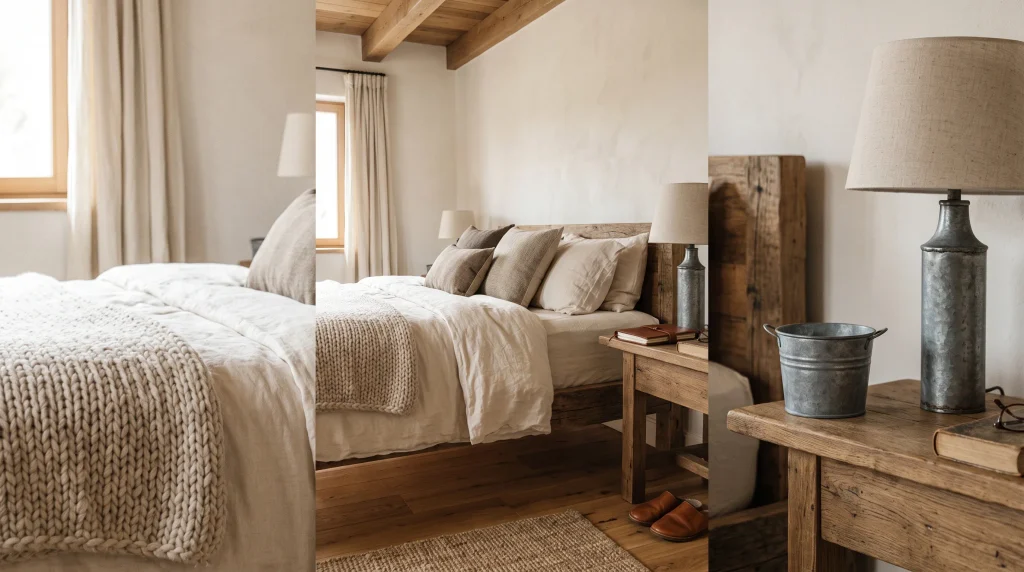
18. Galvanized Metal Accents
Galvanized metal — the slightly dull, silvery-gray finish seen on old buckets, watering cans, and farmhouse light fixtures — adds a cooler counterpoint to all the warm wood and leather that typically dominates a rustic room. A galvanized metal lamp base, a small bucket used as a wastebasket, or drawer pulls in the same finish introduce just enough contrast to keep an all-wood room from feeling one-note.
Use it sparingly, since too much galvanized metal can start to pull the room toward industrial farmhouse rather than true rustic — these overlap but aren’t identical styles, and the balance tips quickly with just a couple more metal pieces than the room can comfortably hold. One or two accents, repeated in a lamp and a small vessel, is usually enough.
This is also one of the more budget-friendly ideas here — genuine galvanized buckets and containers are inexpensive and widely available at hardware and farm-supply stores, not just specialty home decor shops, which makes it an easy, low-cost way to test the finish before committing further.
Budget: low. Avoid: more than two or three galvanized pieces, or the room tips toward industrial farmhouse.
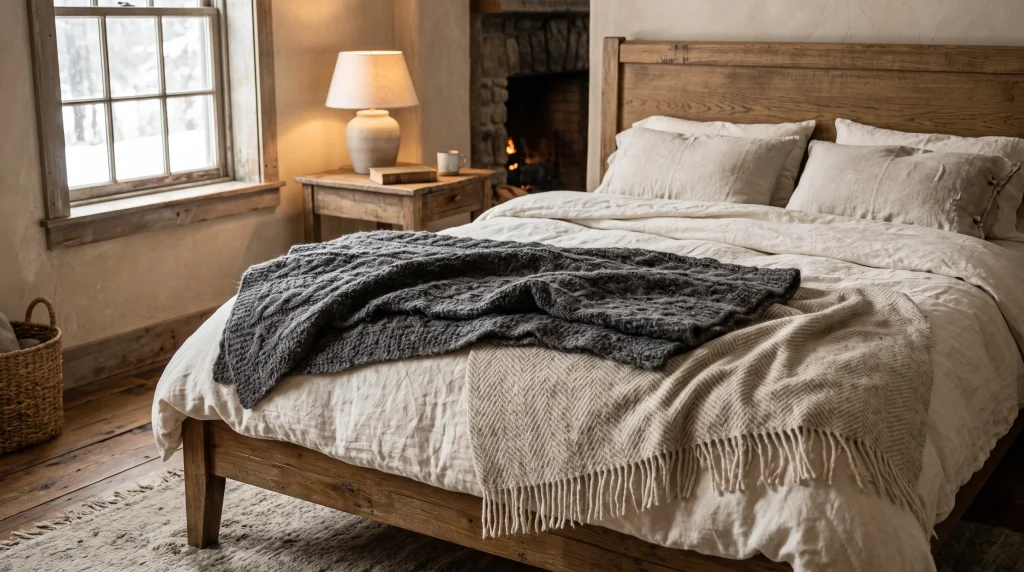
19. Layered Wool Blankets
A stack of folded wool blankets at the foot of the bed does more for a rustic room’s warmth — visually and literally — than almost any other single textile choice. Two or three blankets in slightly different weaves and closely related neutral tones (cream, oatmeal, charcoal) create depth without needing a bold pattern, and they’re genuinely useful on a cold night rather than purely decorative.
Fold them loosely rather than perfectly squared — a slightly relaxed fold looks more like something you’d actually reach for and use, which suits the practical, lived-in character rustic design is going for. A too-precise, hotel-corner fold can look slightly at odds with the rest of the room’s intentionally worn materials.
Genuine wool has a weight and texture that synthetic throws don’t quite match — worth the higher price from a mill-quality wool brand if you want blankets that will actually hold up to years of regular use rather than pilling or flattening within a season.
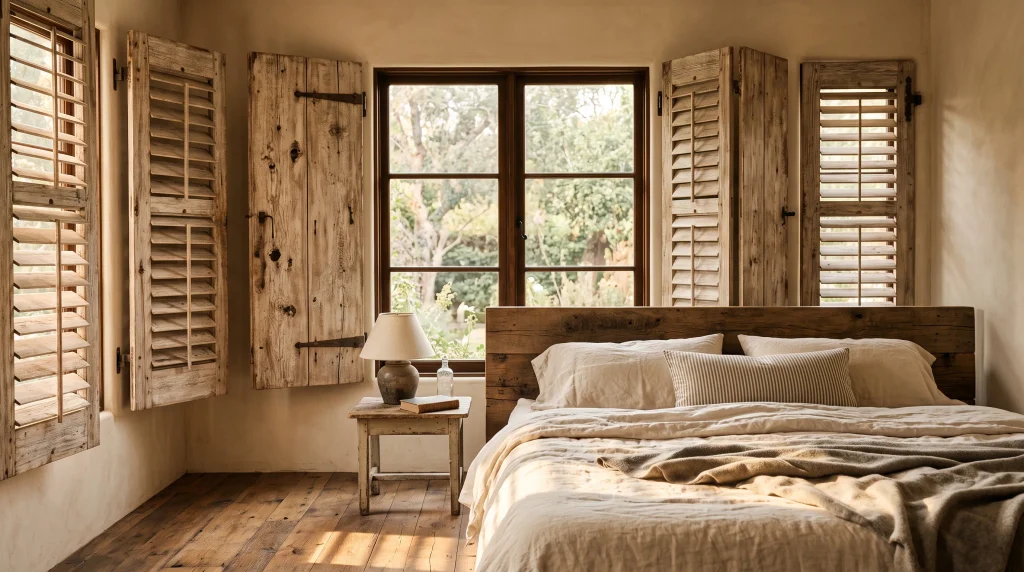
20. Rustic Wood Shutters
Wood shutters bring rustic texture directly to the window, which is often one of the largest untreated surfaces in a bedroom, and they offer genuine light control that curtains alone don’t provide — closed for full privacy and darkness, angled open for filtered daylight during the day. A weathered or lightly whitewashed finish keeps them from looking too formal, which a solid painted plantation shutter sometimes can in a more casual, rustic room.
Reclaimed or barnwood-style shutters, whether repurposed from an actual old building or built new with a weathered finish, add more texture than a standard smooth-painted shutter, and they pair naturally with other reclaimed wood elements elsewhere in the room, like a headboard or dresser.
If full shutters are a bigger investment than the room calls for, a simpler wood blind in a similar weathered tone gets a version of the same texture and light control at a considerably lower cost — a reasonable middle step if you’re not ready for a permanent window treatment change.
How to Pull the Look Together: Budget and Small Rooms
If you don’t want to read all 20 ideas in order, these two shortcuts pull out the most relevant ones depending on what you’re working with.
If you’re decorating on a budget, start with the lowest-cost, most reversible ideas rather than the structural ones: a wool or buffalo check throw, a secondhand trunk, iron or aged-bronze hardware swapped onto existing furniture, a jute rug, and one reclaimed-look accent piece. All five together typically cost less than a single stone wall or beam installation, and every one of them can move with you if you relocate.
If your bedroom is small, prioritize differently: one strong headboard (reclaimed wood or wrought iron) as the anchor, one warm lighting change (mason jar pendants free up nightstand space), one texture (a jute rug or wool throw, not both), and light surrounding walls. Skip full log paneling, a wagon wheel chandelier, and anything that adds visual weight to more than one wall — small rustic rooms fail when every surface is doing something at once, the same restraint principle from the introduction, just applied more strictly.
Frequently Asked Questions
What makes a bedroom look rustic without feeling like a log cabin?
Restraint is the key difference — pick two or three rustic elements (wood, iron, stone, worn leather) rather than incorporating every rustic material and motif at once. Keeping the surrounding walls and furniture simple lets the chosen textures stand out instead of competing.
What colors work best in a rustic bedroom?
Warm, earthy neutrals form the base: browns, creams, and warm grays, often paired with deep reds, forest greens, or charcoal in smaller accents like plaid or wool textiles. These colors echo the natural materials — wood, stone, leather — that define the style.
Can rustic design work in a small bedroom?
Yes, though it requires more editing than a larger space. Choose one or two anchor pieces, like a reclaimed wood headboard or a stone accent wall, rather than heavier elements like full log paneling, and keep the rest of the room light and simple so it doesn’t feel cramped.
Is rustic bedroom design expensive to achieve?
Not necessarily. Smaller changes — a plaid throw, mason jar pendant lights, a secondhand trunk — cost relatively little and can be added gradually. The larger investments, like a stone wall or structural beams, are optional additions rather than requirements for the overall look.
How do you make a rustic bedroom look modern rather than dated?
Limit the room to two or three rustic materials — wood, iron, stone, worn leather — and keep everything else, including furniture shapes and wall color, simple and current. Dated rustic tends to combine many rustic motifs at once; modern rustic uses restraint to let a few authentic materials carry the whole room.
Conclusion
The best rustic bedrooms feel gathered over time rather than bought all at once — a reclaimed headboard here, a worn leather chair found secondhand there, wool blankets that actually get used. Start with one idea that solves something your current room is missing, live with it, and let the next addition earn its place rather than filling the room in a single trip.
Save this guide before your next bedroom refresh, so you can come back to the ideas that fit your space, budget, and style when you’re ready for them. If you try one of these, I’d like to hear which piece made your bedroom feel the most like an actual retreat rather than a styled photo.