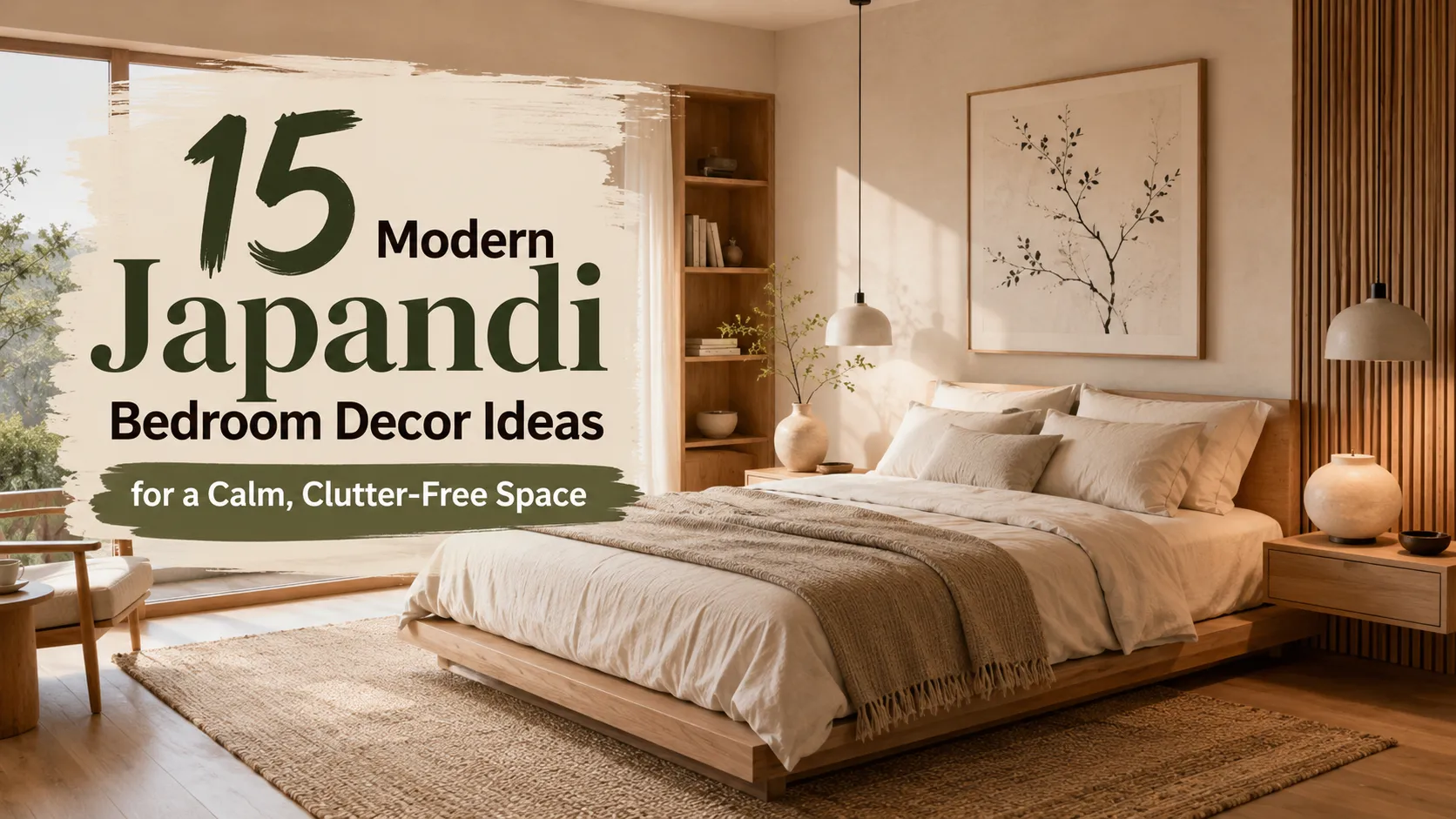
15 Modern Japandi Bedroom Decor Ideas for a Calm, Clutter-Free Space
If you’re looking for a bedroom that feels calm, warm, and uncluttered, Modern Japandi Bedroom Decor is a beautiful place to start. It brings together the simplicity of Japanese design with the warmth of Scandinavian interiors, using natural wood, soft fabrics, muted colors, and carefully chosen pieces to create a room that feels peaceful rather than empty.
Japandi works because it borrows the right things from both traditions. Japanese restraint keeps the room from feeling cluttered, while Scandinavian warmth keeps that simplicity from feeling cold. The key is not trying to change everything at once. Start with one element that needs the most attention—perhaps the bed, lighting, or bedding—and let the rest of the room quietly support it.
In this guide, you’ll find 15 practical ideas for creating that balanced look, whether you’re starting with a completely blank bedroom or simply refreshing the space you already have. Choose one idea, give it some time, and add more only if the room still feels like it needs something.
1. Low-Contrast Bedding
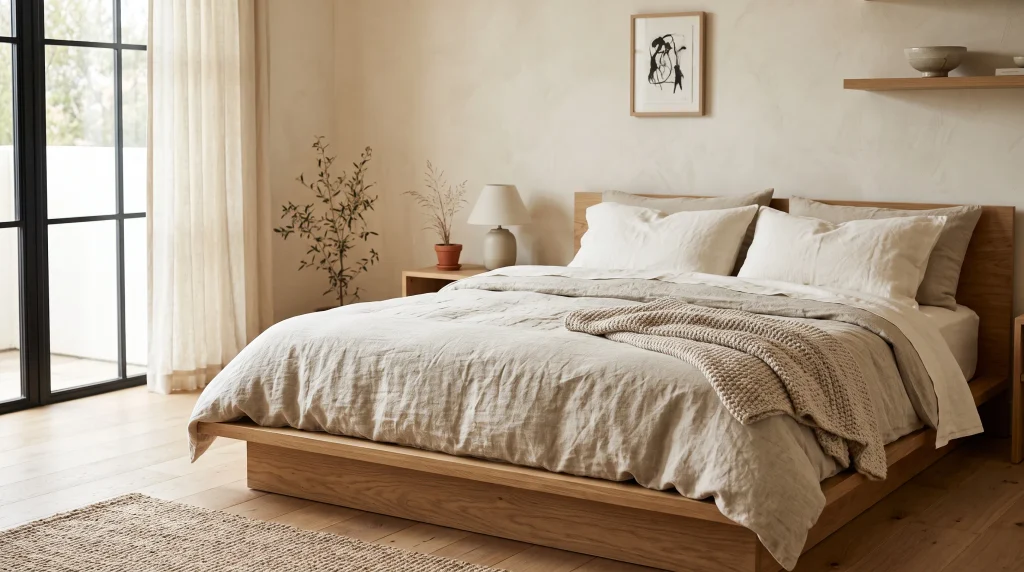
Low-contrast bedding is the fastest way to make a bed feel like it belongs to the room instead of sitting on top of it. Stick to a narrow band of the palette — ivory, cream, oatmeal, sand — rather than reaching for a bold headboard or patterned duvet to create interest. The interest comes from texture instead: a crisp cotton sheet under a slightly nubby linen duvet, with one wool throw folded at the foot.
This only works if you resist the urge to add a “pop of color.” I’ve made that mistake myself — a single rust-colored pillow on an otherwise tonal bed, thinking it would look intentional. It just looked like an accident. If you want contrast, get it from the wood frame underneath the bedding, not from the fabric itself.
Brands like Parachute and Coyuchi both make washed-linen sets in these tonal ranges if you want to see the actual color range before committing — online swatches tend to run warmer or cooler than they photograph. Buy one duvet cover first and build the rest of the layers around it in person, rather than ordering a full set sight unseen.
2. Open Wood Shelving
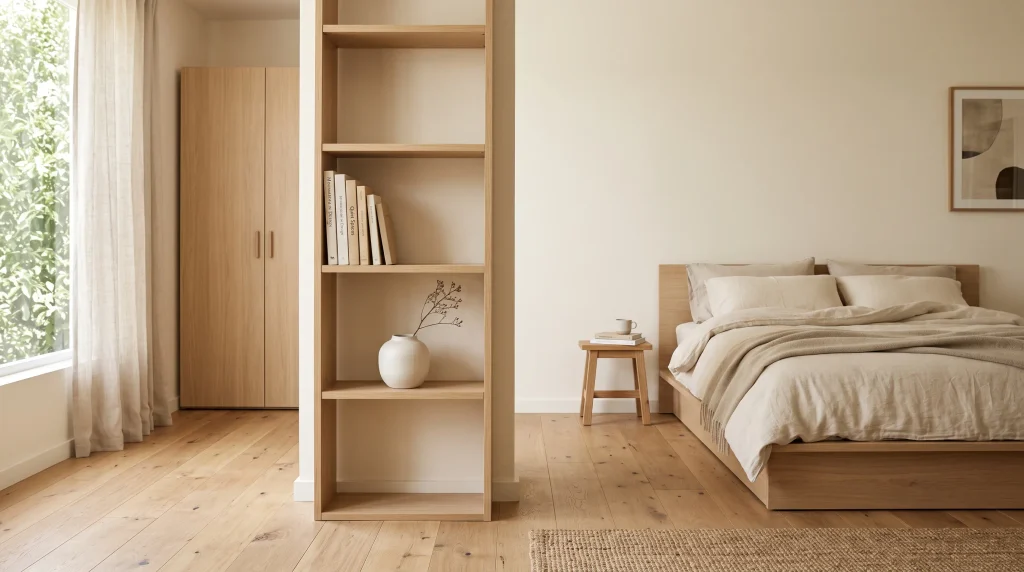
A single narrow shelving unit does more for a Japandi bedroom than a full wall of storage, because the empty space between objects is doing as much visual work as the objects themselves. Install one vertical unit in light oak or ash beside a wardrobe or blank wall — not covering an entire surface — and resist filling every shelf.
Treat each shelf as its own small arrangement rather than general storage. Group a few books by spine color, add one ceramic vessel, leave the shelf below it almost bare. The empty shelf isn’t wasted space; it’s what keeps the whole thing from reading as clutter. Closed storage elsewhere — a dresser drawer, a lidded basket — should absorb the cables, chargers, and everyday mess that doesn’t photograph well.
If you’re renting and can’t mount shelving into the wall, a freestanding ladder shelf (IKEA’s Fjällbo or Article’s equivalent) gets close to the same effect without drilling. The trade-off is it reads slightly less built-in, but it’s fully reversible, which matters more in a rental than perfect symmetry.
3. Soft Sculptural Decor
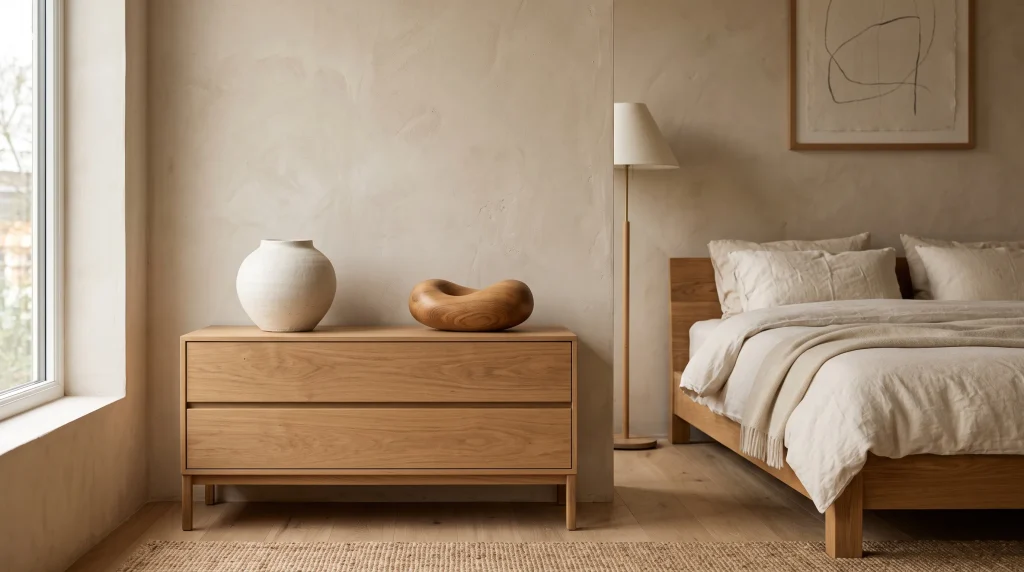
Personality in a Japandi bedroom comes from shape more often than color. A rounded ceramic vase, a smooth stone object, a softly carved wooden form — these give a room character without adding another pattern or bright hue to manage. One well-chosen piece can genuinely replace three or four smaller decorations, and it’s usually the better trade.
Give each object real breathing room. A sculptural vase crammed next to a lamp and a picture frame loses its shape entirely; the same vase alone on a console reads as a deliberate choice. If you’re mixing materials — ceramic, stone, wood — let each one hold its own spot rather than clustering them together, where the different textures start to compete instead of complement.
Skip anything glossy. A matte or slightly rough, handmade-looking finish sits much better next to linen and plaster than a polished, showroom-glossy surface, which tends to look slightly out of place in an otherwise soft, textured room. Small pottery studios on Etsy or a local ceramics market are worth checking before a big-box home store — the irregularity is the point.
4. A Japandi Reading Nook
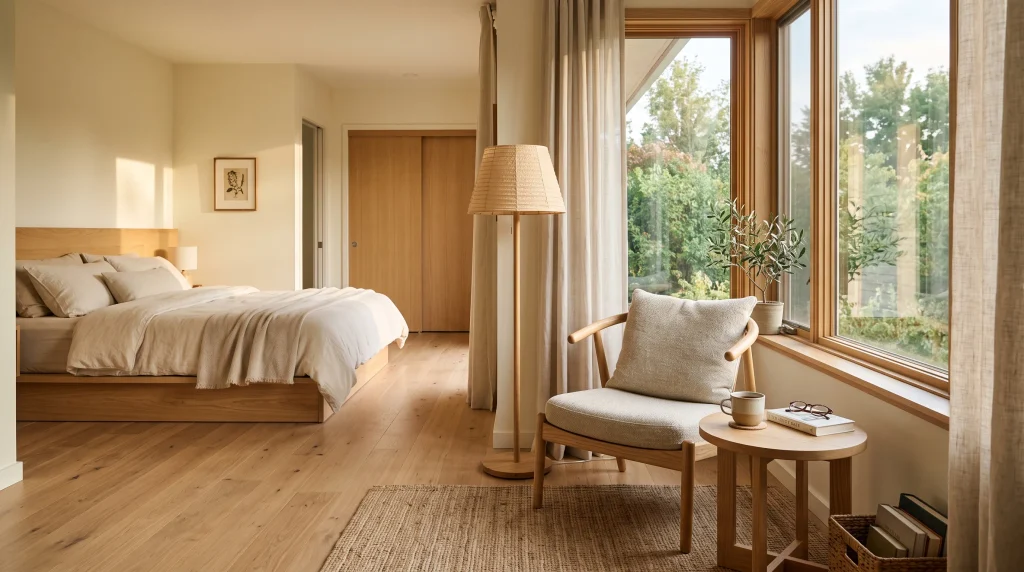
An empty corner near a window is one of the most underused spots in most bedrooms, and a reading nook is a genuinely functional way to fill it — not just a styling trick. A compact chair with rounded edges, positioned where the light is strongest in the afternoon, does more for daily use than another decorative object ever could.
Keep the footprint tight. A small round side table and a woven or paper floor lamp are enough; you don’t need a full seating arrangement in a bedroom. If the room is small, skip the table entirely and use a wall-mounted ledge for a book and a cup of tea instead — it frees up floor space that a nook can otherwise eat into quickly.
One practical note: measure the clearance around the chair before buying it, especially if the nook sits near a closet or the bedroom door. A chair that looks perfectly proportioned in a showroom can make a walkway feel tight once it’s actually in the room, and that’s the kind of mistake that’s expensive to reverse.
5. Minimal Black Accents
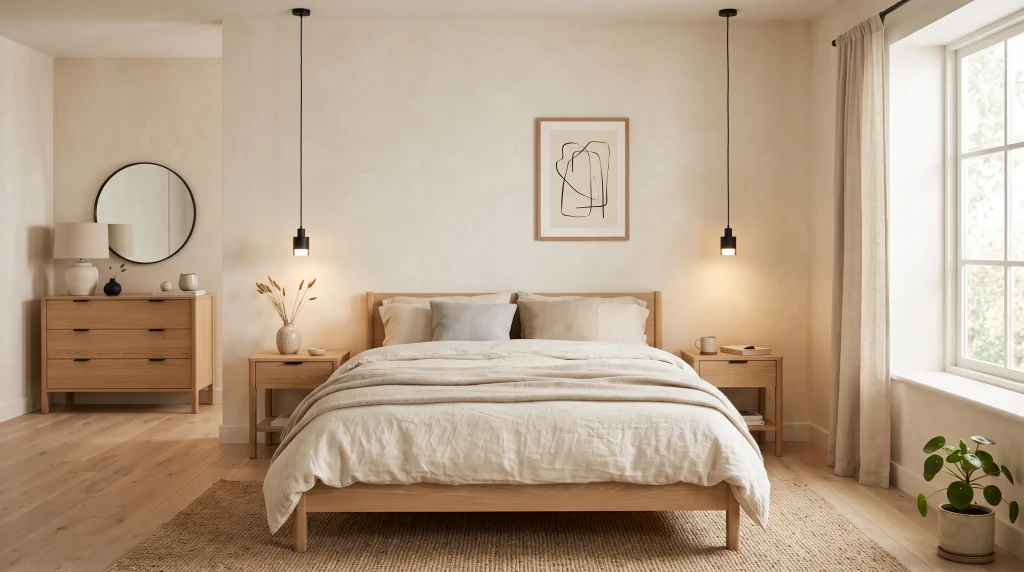
A neutral bedroom needs some contrast, or it starts to look washed out rather than calm — and black in small doses is the easiest way to add it without introducing another color. Thin pendant fittings, drawer pulls, a curtain rod, one small ceramic vessel: these sharpen the surrounding cream and wood without changing the room’s temperature.
The mistake I see most often is going too big with it — a black accent wall or a large black bed frame, which shifts the whole room from “warm with definition” to “dark and heavy.” Keep the black elements visually thin and spread them out rather than concentrating them in one spot. Matte finishes work better than glossy black here; a glossy black hardware piece next to soft plaster and linen looks slightly out of place, almost too polished for the room around it.
Pendant lighting from brands like Schoolhouse or Rejuvenation in a matte black finish pairs well with oak furniture if you want a specific starting point rather than guessing at finishes online.
6. Nature-Inspired Artwork
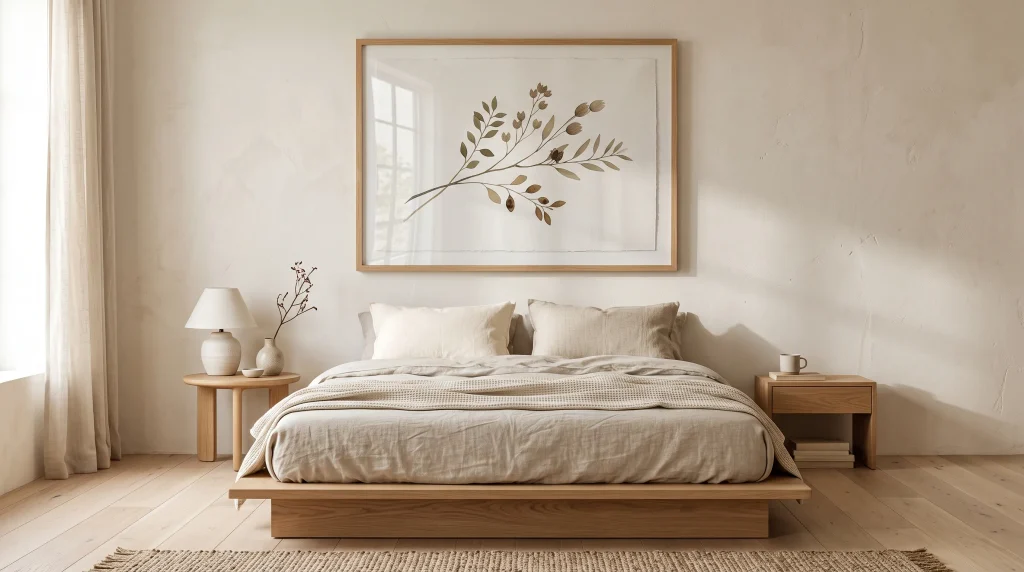
One large, quiet piece of art above the bed does more than a gallery wall of smaller frames — it gives the eye a single place to land instead of several competing ones. Look for a simple botanical print, a muted landscape, or an abstract foliage piece in olive, sand, or warm brown, and frame it in the same wood tone as your furniture so it feels connected rather than added on.
Scale matters more than people expect. A piece that’s too small over a queen or king bed looks stranded, floating in too much blank wall around it. As a rough guide, the artwork should span roughly two-thirds the width of the headboard — wide enough to feel intentional, not so wide it overwhelms the wall.
If wall-mounting isn’t practical, leaning a large framed print against a low dresser is a genuinely good alternative, not just a fallback — it reads as more relaxed and is easy to swap out when your taste shifts, which a mounted piece isn’t.
7. A Textured Wool Rug
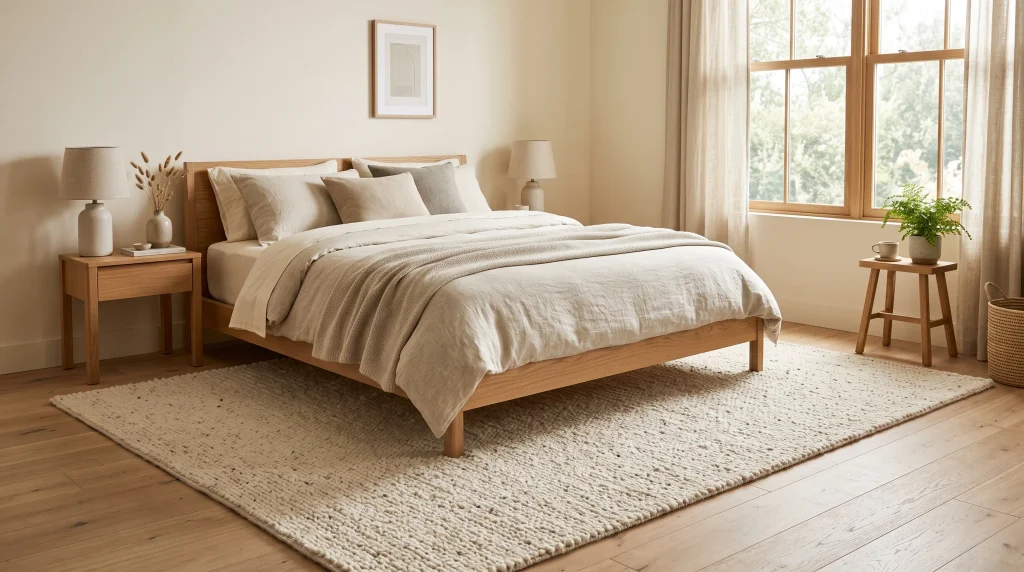
A rug changes how a Japandi bedroom feels underfoot more than almost any other single purchase, and it’s one of the few items where texture matters more than color. A low-pile or gently nubby wool in ivory, oatmeal, or warm gray adds softness without introducing a bold pattern the rest of the room then has to work around.
Size is where most people go wrong. A rug that stops right at the edge of the bed frame looks like an afterthought; one that extends well beyond both sides and toward the foot of the bed reads as a deliberate, grounded choice. If a rug that large is out of budget, two matching runners along each side of the bed create a similar effect for considerably less money.
Wool holds up better than a cotton or jute blend in a bedroom specifically, since it resists compressing under furniture legs over time — worth the slightly higher upfront cost if you’re planning to keep the piece for years rather than replacing it in a season or two.
8. A Slatted Wood Headboard
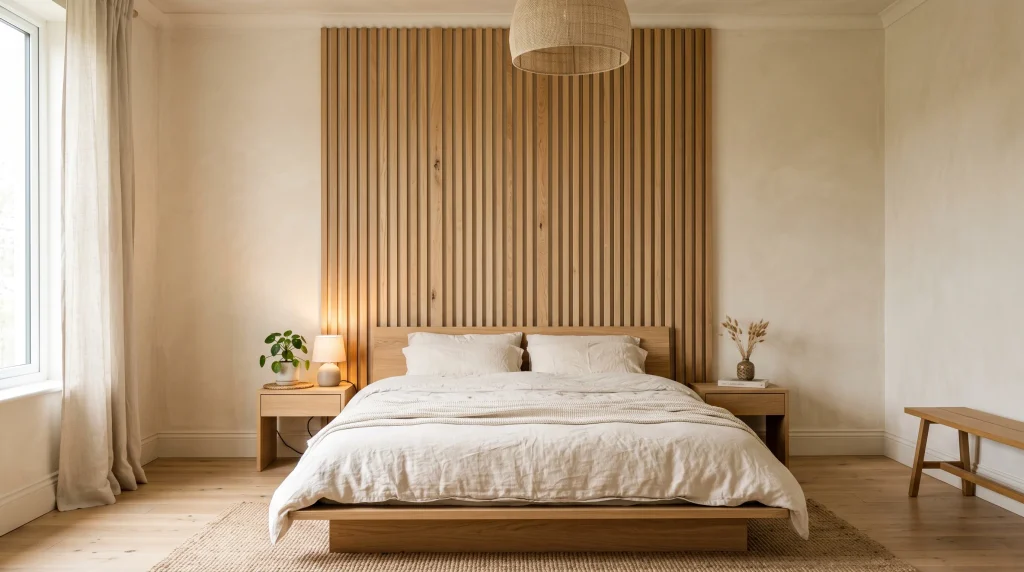
A slatted wall behind the bed gives the room architecture without requiring artwork or a bold paint color — the repeating vertical lines do the work on their own, and they genuinely do make a low-ceilinged room look taller, not just in theory. Light oak or ash keeps it feeling airy; a darker walnut version reads heavier and works better in a room with strong natural light to balance it.
You don’t need to slat the entire wall. A section slightly wider than the headboard creates a strong enough focal point on its own, and it’s a considerably smaller project — both in materials and installation time — than covering the full wall. Pre-cut slat panel kits are widely available now through retailers like Wayfair or specialty suppliers like Slatwall Co., which makes this a realistic weekend project rather than a full renovation.
Consider running a hidden cable channel or a thin shelf into the structure while you’re building it. It’s much easier to plan that in from the start than to retrofit it once the panel is up.
9. Paper Lantern Lighting
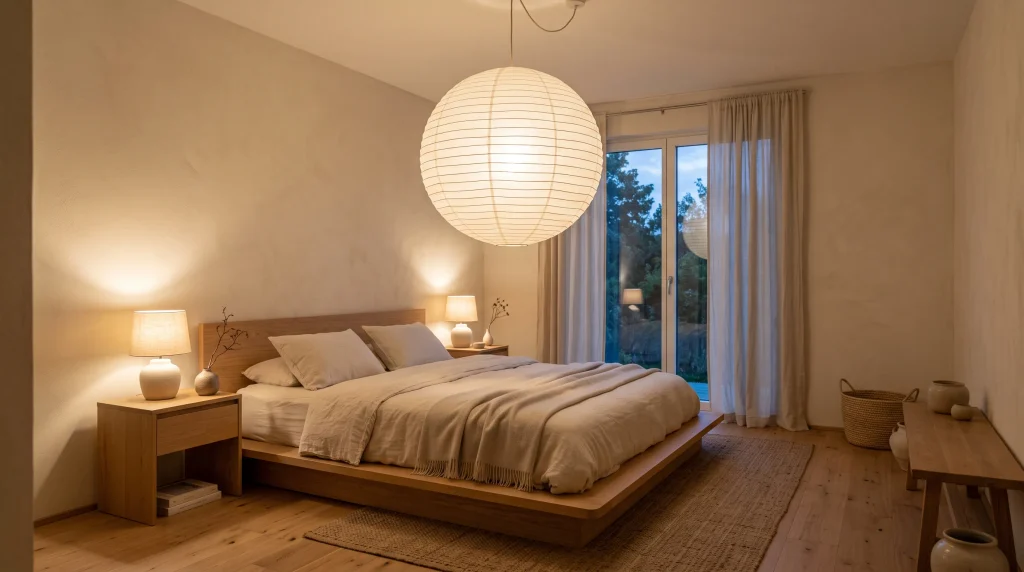
A single paper lantern does more to soften a bedroom’s evening light than almost any other fixture, because the diffusion is built into the material — there’s no way to make it look harsh. A generously sized round or softly irregular shade in warm white or natural rice paper spreads a gentle glow across the room instead of casting one hard beam from an overhead fixture.
Pair it with lower-level lighting rather than treating it as the room’s only source. A lantern alone, at full brightness, can actually feel slightly flat by itself; a small bedside lamp on each side gives the room depth and lets you dim the space in layers depending on the time of day. Keep the bulb warm — 2700K or lower — since a cool white bulb inside a paper shade tends to look clinical rather than cozy, which somewhat defeats the point.
Noguchi-style lanterns are the classic reference here, but far less expensive options from IKEA (the REGNA or similar round paper shades) get close to the same effect for a fraction of the price.
10. Soft Architectural Curtains
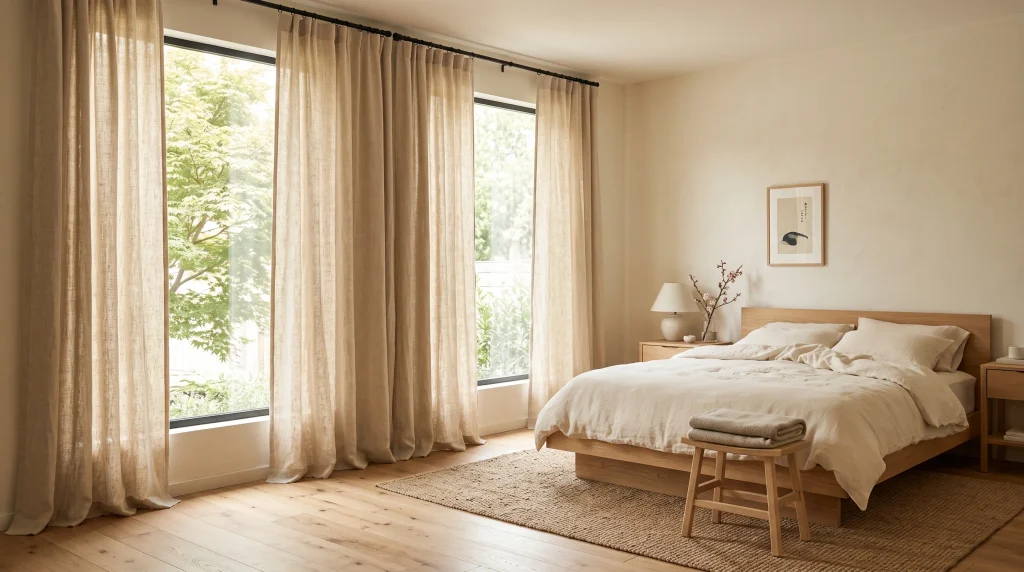
Curtains change how light behaves in a room more than most people expect from a single fabric choice. Full-length linen panels in ivory or oatmeal filter daylight into something softer without blocking it entirely, and they add a vertical softness that a bare window or a simple roller blind can’t provide on its own.
Mount the rod as close to the ceiling as your architecture allows — this is the single change that makes the biggest visual difference, since it pulls the eye upward and makes the window (and the room) look taller than it is. Let the fabric pool slightly or just graze the floor rather than stopping short, which can make an otherwise nice curtain look under-ordered.
If you want the curtains to nearly disappear into the wall color, order swatches before committing to a full set — linen shifts noticeably under different light, and a shade that looks right on a screen can read several tones warmer or cooler once it’s actually hanging against your wall.
11. Wabi-Sabi Wall Texture
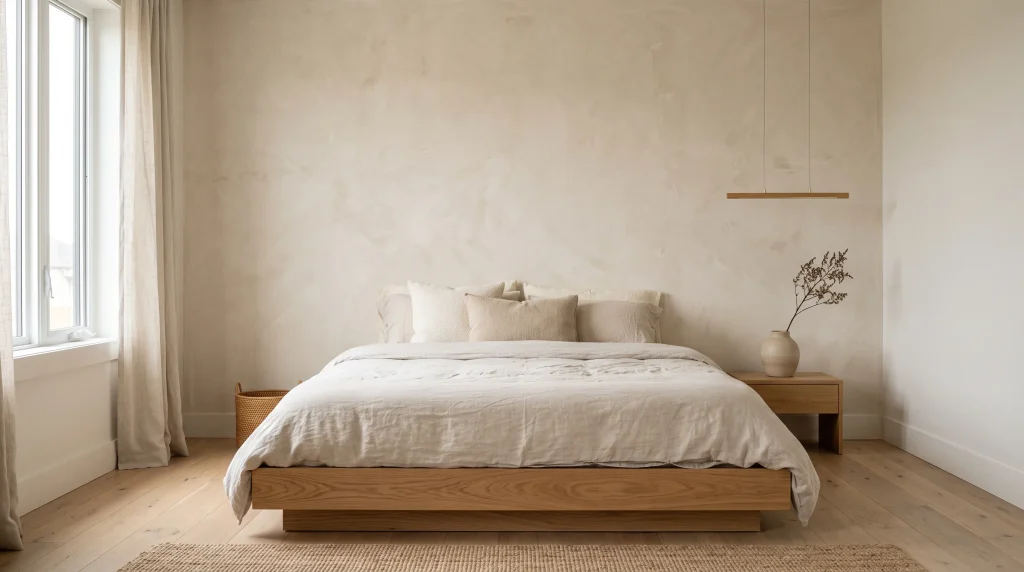
A textured plaster or limewash finish gives a plain wall more depth than paint ever will, because it catches light differently throughout the day instead of reflecting it uniformly. The slight variation and visible hand-applied texture is the whole point — it’s meant to look a little imperfect, which is what separates it from a flat painted wall.
This is a bigger project than most items on this list, so it’s worth trying on a small section first. Limewash from a brand like Bauwerk or Portola Paints applied to just the wall behind the headboard is a realistic way to test whether you actually like the texture before committing to a full room — and it’s genuinely difficult to tell the difference in photos between one wall and four, since the effect reads mostly in person anyway.
Keep everything else in the room simple if you go this route. A textured wall next to heavily patterned bedding or busy artwork competes with itself; let the wall be the one thing doing something visually complex, and keep the furniture and fabric quiet around it.
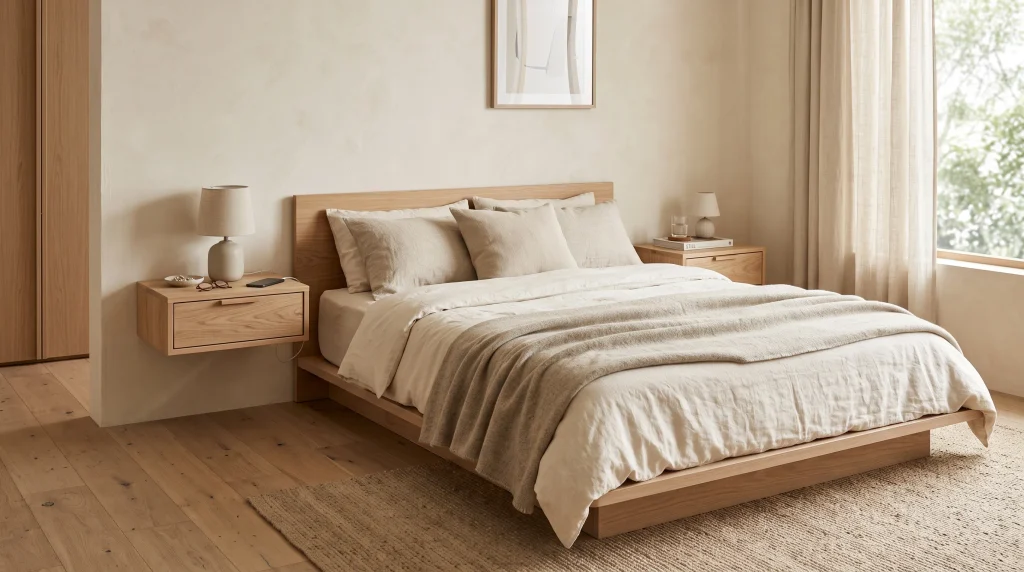
12. Floating Nightstands
Wall-mounted nightstands solve a specific problem: in a smaller bedroom, traditional floor-standing nightstands can make the walkway around the bed feel genuinely tight, not just visually busy. Mounting them instead leaves a strip of visible floor underneath, and that few inches of exposed flooring does more to make a small room feel larger than most people expect from such a small change.
Function should drive the sizing here more than aesthetics. Make sure there’s enough surface for what you actually use every night — a lamp, glasses, a phone charger — rather than choosing the smallest, most minimal-looking option and then resenting it in daily use. A shallow drawer is worth the slightly bulkier profile if you tend to accumulate bedside clutter.
Installation requires finding a stud or using the right wall anchors for the weight — this isn’t a project to eyeball. If you’re renting or unsure about your walls, a floating shelf rated for the load (rather than a true cabinet) is a lighter-weight alternative that’s easier to install and remove cleanly later.
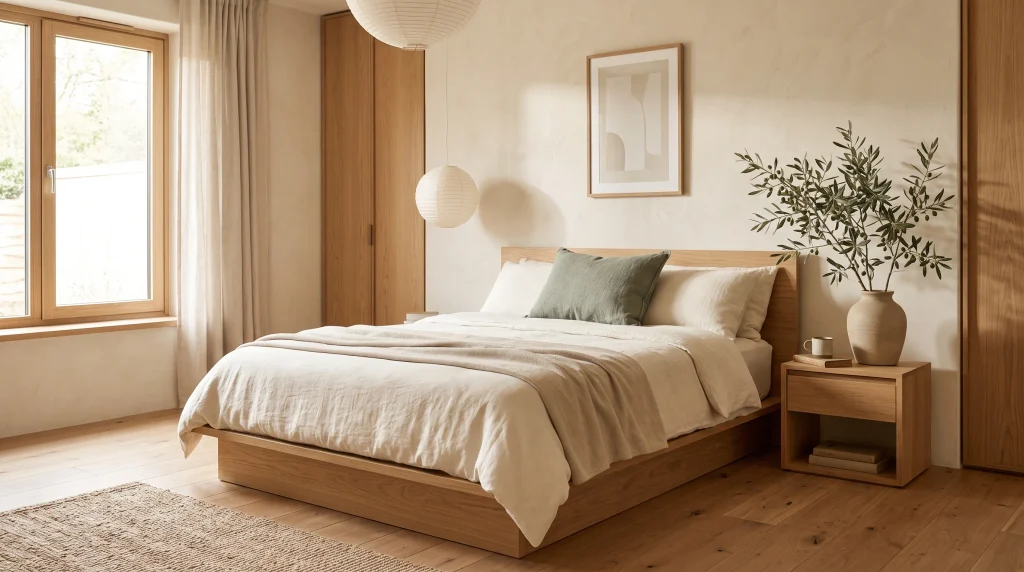
13. Muted Green Accents
A small amount of green brings a room to life in a way that pure neutrals sometimes can’t manage on their own, but it only works in Japandi if the green stays dusty and muted rather than bright. Sage, eucalyptus, and soft olive sit naturally next to cream and oak; a saturated emerald or kelly green immediately looks like it belongs to a different room.
Repetition matters more than quantity. One sage cushion on the bed and one small olive branch on the nightstand reads as intentional; the same amount of green scattered as five unrelated objects around the room reads as random. If you’d rather use a real plant than fabric or ceramics, choose one with a simple, uncomplicated shape — an olive tree or a snake plant rather than something with busy, heavily patterned leaves — and place it somewhere it will actually get enough light to survive, not just wherever looks best.
Keep the containers plain: unglazed ceramic, stone, or raw wood rather than colored or patterned pots, which pull attention away from the plant itself.
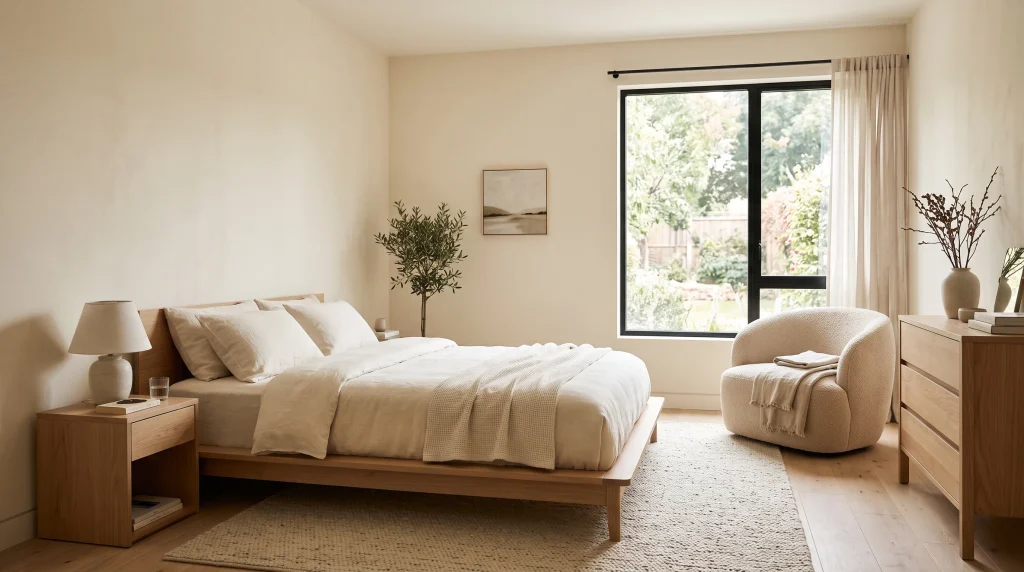
14. Organic Curved Furniture
Most minimalist bedrooms are built entirely from straight lines — square headboards, rectangular nightstands, boxy dressers — and one curved piece breaks that up in a way that makes the whole room feel less rigid. A rounded headboard, an oval nightstand, or a small sculptural chair with a curved back doesn’t need to dominate the room; it just needs to interrupt the pattern once.
Use curves sparingly rather than throughout. A bedroom full of rounded furniture can start to feel indecisive or overly soft, without any of the structure that made the straight lines feel calm in the first place. One curved piece near the bed — a nightstand or a headboard — combined with simpler, straight-edged furniture elsewhere usually strikes the right balance.
This is especially worth trying in a bedroom with a very square or boxy architectural footprint, where the room itself has no organic lines at all. In that case, even one curved chair by the window can soften the whole space more than its size would suggest.
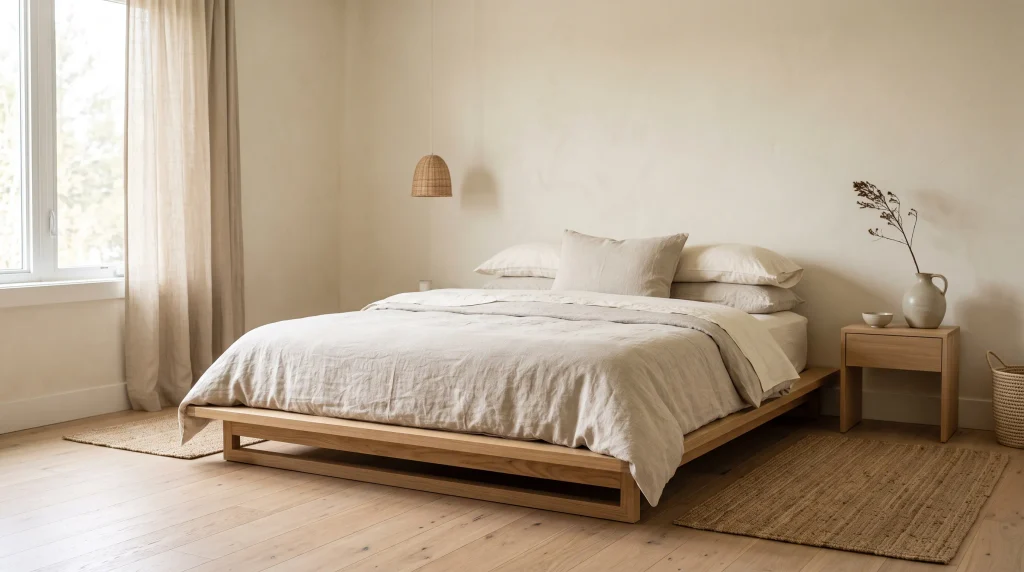
15. A Low Platform Bed
Dropping the bed’s height is one of the simplest ways to make a bedroom feel calmer, and it’s the change I recommend first to almost anyone starting a Japandi bedroom from scratch. A low wooden frame with clean edges and no ornate footboard grounds the room visually, and it tends to make even a fairly compact bedroom feel more open than a tall, boxspring-raised bed does.
Light oak or ash keeps the frame feeling warm rather than heavy; a darker walnut version works too, but pair it with lighter bedding and walls so the low profile doesn’t start to feel like it’s sinking into the floor. Keep the bedding layered but simple — linen and cotton in close, related tones — so the frame stays the visual anchor rather than getting lost under too much pattern.
One practical trade-off worth knowing before you buy: a platform bed sits low enough that getting in and out can feel different, especially for anyone with mobility considerations. It’s worth sitting on a floor model in person if that’s a concern, rather than judging entirely from photos.
Frequently Asked Questions
What is Japandi style, exactly?
Japandi combines Japanese minimalism — clean lines, restraint, and natural materials — with Scandinavian warmth, which brings in cozier textures, layered neutrals, and softer lighting. The result avoids both the starkness of pure minimalism and the clutter of maximalist styling.
Is Japandi still a popular design style?
Yes, it remains one of the more enduring interior trends because it isn’t tied to a specific color or pattern that dates quickly. Its focus on natural materials and restraint tends to age better than trend-driven styles built around a particular color palette.
How do I get the Japandi look on a budget?
Start with bedding and lighting rather than furniture — a tonal linen set and a warm-bulb lamp swap cost far less than a new bed frame and still shift the room’s feel noticeably. Secondhand wood furniture, refinished if needed, is also a realistic way to get the material warmth without new-furniture pricing.
What colors work best in a Japandi bedroom?
Warm neutrals form the base: ivory, oatmeal, beige, and taupe, layered with natural wood tones. Small accents in muted sage, charcoal, or terracotta add definition without breaking the calm, restrained palette that defines the style.
Conclusion (Modern Japandi Bedroom Decor)
Japandi rewards editing more than acquiring — the calmest bedrooms on this list usually have fewer pieces than you’d expect, not more. Pick one idea that matches whatever’s currently bothering you about your room, whether that’s harsh lighting, a cluttered nightstand, or a bed that feels too heavy for the space, and start there. If you try one of these, I’d like to hear which single change made the biggest difference in how the room actually feels to sleep in.