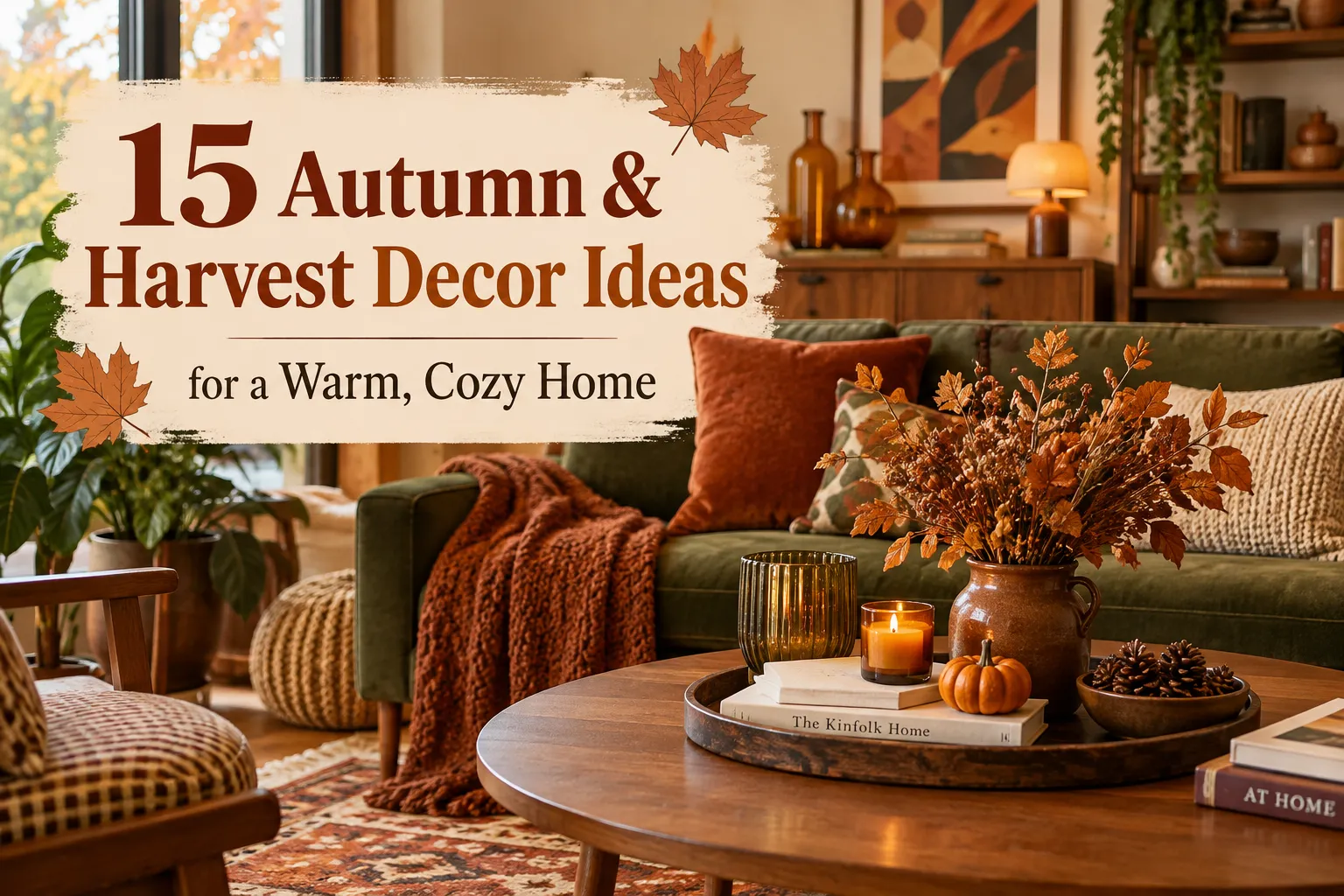
15 Autumn & Harvest Decor Ideas for a Warm, Cozy Home
Autumn & harvest decor ideas don’t have to mean bright orange everywhere or a house full of themed decorations. A warm, seasonal look can come just as easily from texture, natural materials, and a handful of well-chosen pieces — pumpkins, dried botanicals, cozy textiles, and warm lighting all do more for the feel of a room than an overloaded display ever could.
Fall doesn’t have to mean bright orange everywhere or a house full of themed decorations. A warm, seasonal look can come just as easily from texture, natural materials, and a handful of well-chosen pieces — pumpkins, dried botanicals, cozy textiles, and warm lighting all do more for the feel of a room than an overloaded display ever could.
These autumn and harvest decor ideas are built around a calm, neutral approach to the season — one that works whether your home leans farmhouse, modern, or somewhere in between, and one that keeps the focus on coziness and natural beauty rather than any particular theme. The goal is simply to bring the colors, textures, and natural elements of the season indoors, not to recreate any particular holiday or celebration.
You also don’t need to buy a whole new collection to get this look. Reusing pieces you already own, and adding just one or two natural accents, can create the same warm effect with less clutter, cost, and waste. Pick a few ideas that fit your existing style and start with one area — an entryway, a mantel, a table — rather than decorating the entire home at once.
15 Autumn & Harvest Decor Ideas
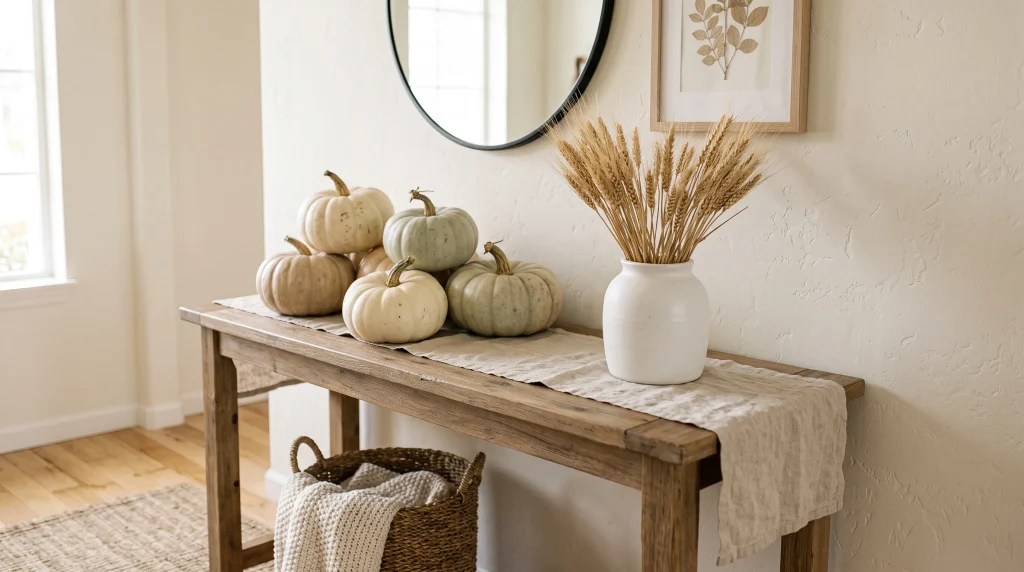
White and Neutral Pumpkins
Orange pumpkins are the expected default for fall, but white and other neutral varieties do the same seasonal job while blending far more easily into an existing color scheme. Because they don’t compete with any particular palette, they can sit comfortably in a home that’s mostly cream and wood tones, or one with deeper, more saturated colors elsewhere.
Grouping pumpkins of different sizes together, rather than spacing single ones evenly apart, tends to look more like a natural harvest gathering than a staged display. A cluster of three or five, varying slightly in size and shade, reads as effortless in a way that a single, perfectly centered pumpkin doesn’t.
A simple rule of thumb: odd numbers in a cluster generally look more natural than even ones — try three or five pumpkins together rather than two or four.
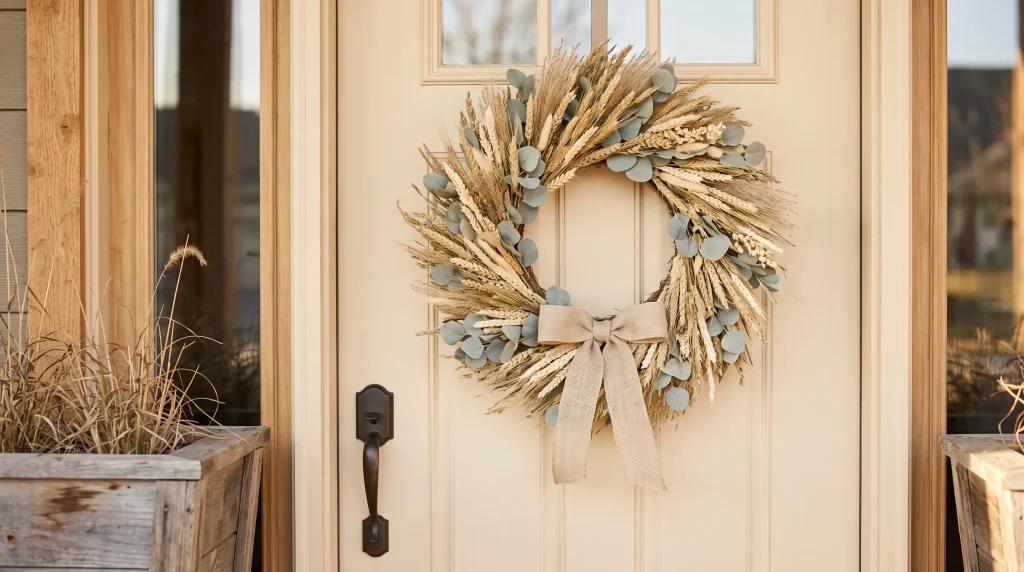
Dried Botanical Wreaths
A wreath is one of the simplest ways to mark the change of season without committing to a full decorating overhaul. Dried grasses, wheat stems, and preserved eucalyptus create texture and quiet visual interest, and because the materials are already dried, the wreath holds its shape and color for weeks rather than fading or wilting the way fresh greenery would.
The color palette matters as much as the material choice here. Muted wheat tones, soft greens, and warm neutrals tend to feel seasonal without leaning into any particular theme, which makes this style of wreath easy to keep up from early autumn through the end of the season.
Best for renters: a wreath hung with an over-the-door hook requires no drilling or permanent installation, making it one of the easiest seasonal changes to reverse later.
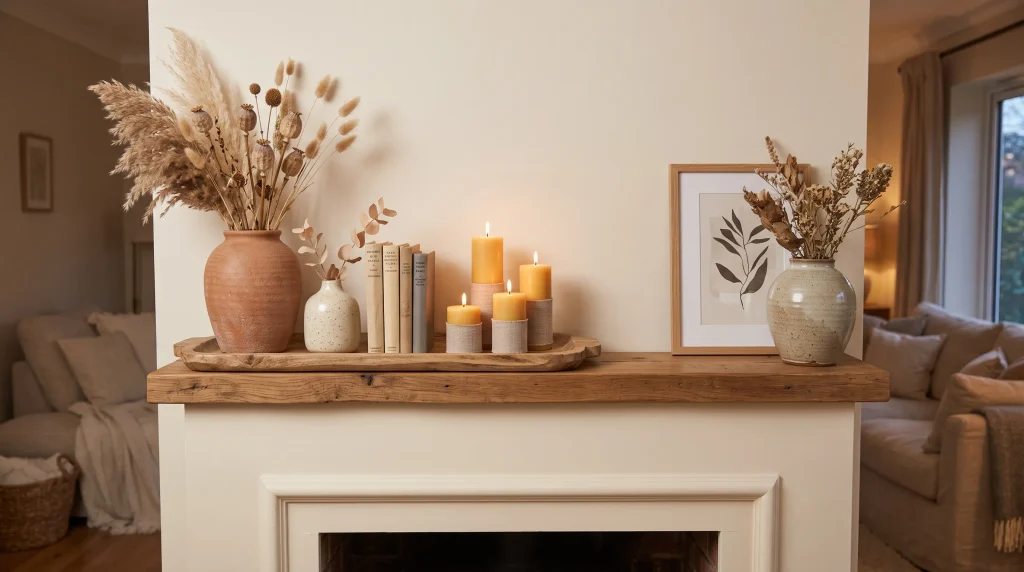
Layered Mantel Textures
A mantel can feel seasonal through texture alone, which is a useful approach if you’d rather not lean on color to signal the time of year. Mixing rough and smooth materials — a wood tray beside a smooth ceramic vase, a linen candle wrap next to a woven basket — creates visual depth that a single-material display doesn’t achieve on its own.
Height variation matters just as much as texture. A mantel where every object sits at the same level tends to look flat regardless of how nice each individual piece is, while a few taller elements mixed with shorter ones give the eye somewhere to travel across the display.
One thing to check first: if you’re adding candles, confirm they’re a safe distance from anything flammable on the mantel, and never leave a real flame unattended near dried botanicals.
Harvest Table Runner
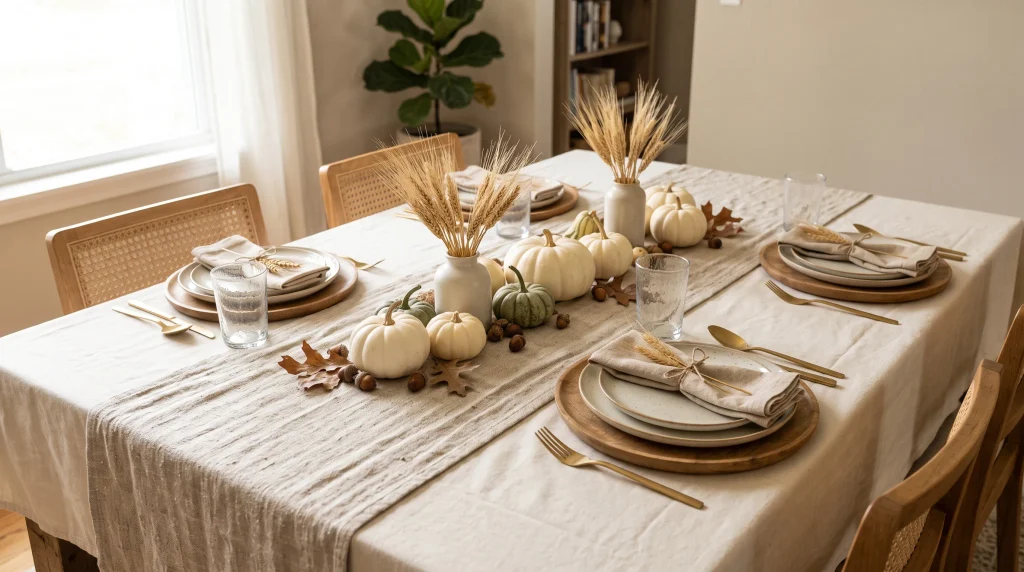
A table runner is one of the lowest-effort ways to bring a seasonal feel to a dining space, since it requires no rearranging of furniture and can be swapped in and out in minutes. A warm, textured runner in oatmeal, taupe, or soft brown reads as autumnal without needing any explicit seasonal pattern printed on it.
Layering the runner over a plain tablecloth, rather than using it alone, tends to look more finished and considered — the extra layer adds a bit of visual depth to an otherwise simple table setting, especially once a few small pumpkins or a candle are added on top.
A lower-cost alternative: if a full new runner isn’t in the budget, a length of natural linen fabric from a craft store, hemmed or left raw-edged, achieves a similar look for considerably less.
Woven Baskets and Rattan
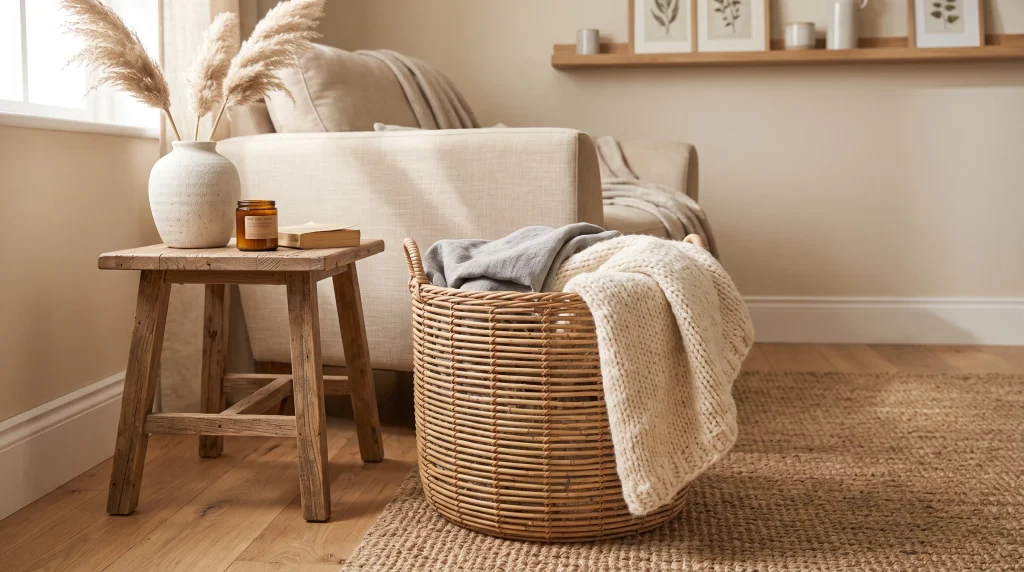
Rattan and other natural weaves bring an immediate sense of warmth to a room, largely because the material itself has visible texture and slight irregularity that manufactured surfaces don’t. A basket filled with a folded throw blanket beside the sofa, or one holding a small gathering of pumpkins near the front door, does double duty as both function and seasonal styling.
This is also one of the more practical seasonal choices on this list, since the baskets themselves aren’t tied to any particular time of year. Once the season shifts, the same basket continues holding blankets, magazines, or firewood without needing to be packed away.
Worth the investment? Often, yes — unlike single-season decor, a well-made basket gets used year-round, which makes it one of the better cost-per-use purchases in seasonal styling.
Warm Ambient Candlelight
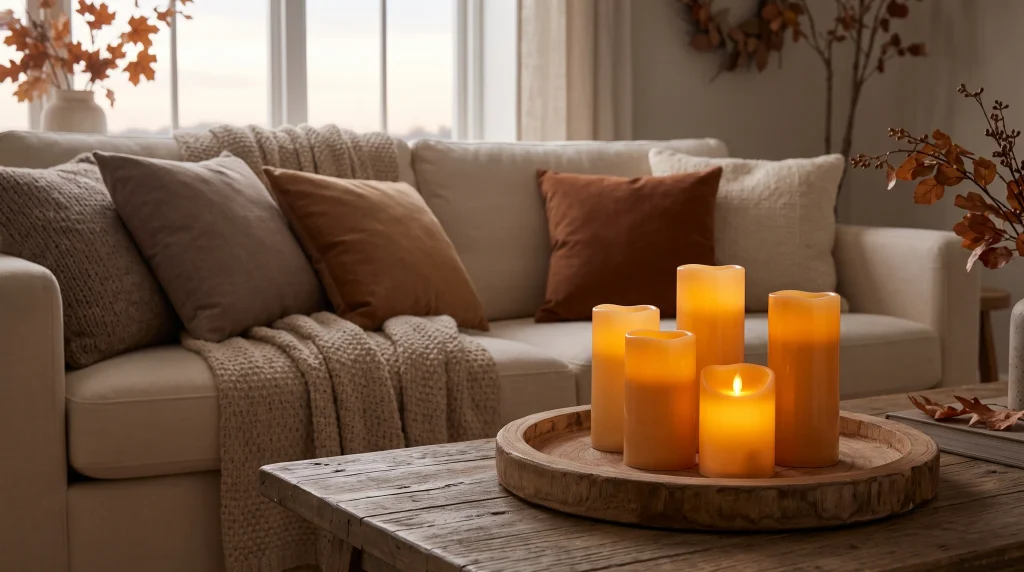
As daylight hours shrink through autumn, warm ambient lighting does a lot to keep a home feeling cozy rather than dim. Candles are an obvious choice for this, and flameless LED versions have improved enough in recent years that they convincingly mimic a real flame’s warm, flickering glow without the fire risk — a meaningful consideration in homes with children, pets, or a lot of dried decorative material nearby.
Grouping several candles of different heights on a single tray creates a more visually interesting centerpiece than one candle alone, and it also makes the display easy to move as a single unit when the table needs to be cleared.
Best for households with kids or pets: flameless candles let you keep the warm ambiance of the season without needing to supervise an open flame near curious hands or paws.
Cozy Throw Blankets and Textiles
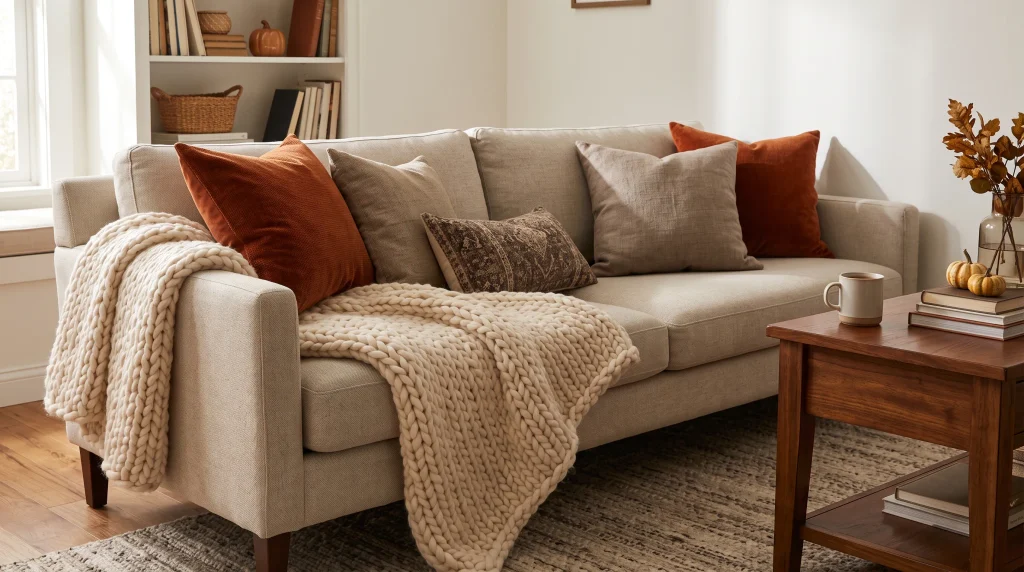
Textiles are one of the fastest ways to shift a room’s feel without touching a single piece of furniture. Replacing lightweight summer cushion covers and throws with heavier, textured versions — a chunky knit blanket, a corduroy cushion, a waffle-weave throw — changes how the whole room reads even if nothing else in the space has moved.
Rather than matching every textile exactly, layering two or three different textures in a related color family tends to look more considered and less like a matched set bought all at once. A cream knit throw beside a deep rust cushion, for instance, reads as intentional rather than mismatched.
A quick tip: store your summer textiles as you swap them out, rather than layering the new ones on top — a room with both seasons’ textiles mixed together tends to look cluttered rather than transitional.
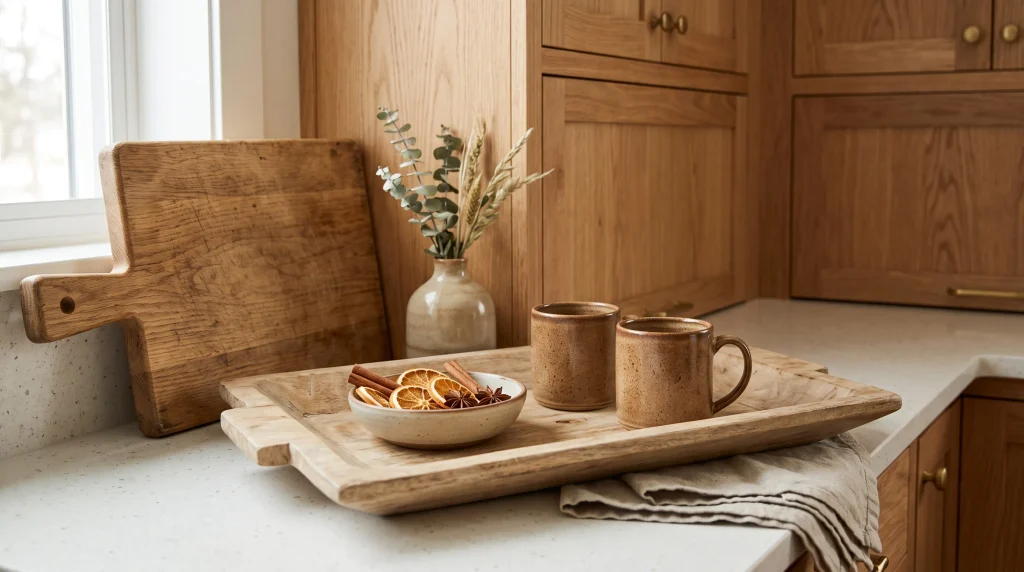
Wood and Stoneware Accents
Wood and stoneware bring a grounded, natural feel to a space without needing any explicit seasonal signal like a printed leaf pattern or an orange color scheme. A simple wood tray on a coffee table, or a stoneware vase in a warm brown or rust glaze, reads as autumnal through material and tone alone, which also means these pieces work comfortably in the room long after the season ends.
Because these materials are genuinely versatile rather than seasonal props, they tend to be a better long-term investment than decorations that only make sense for a few weeks each year. A collection built up gradually — one or two pieces added each season — ends up feeling more curated than a set purchased all at once.
The detail most people miss: mixing slightly different wood tones, rather than matching everything to a single shade, generally looks more natural and collected than a perfectly coordinated set.
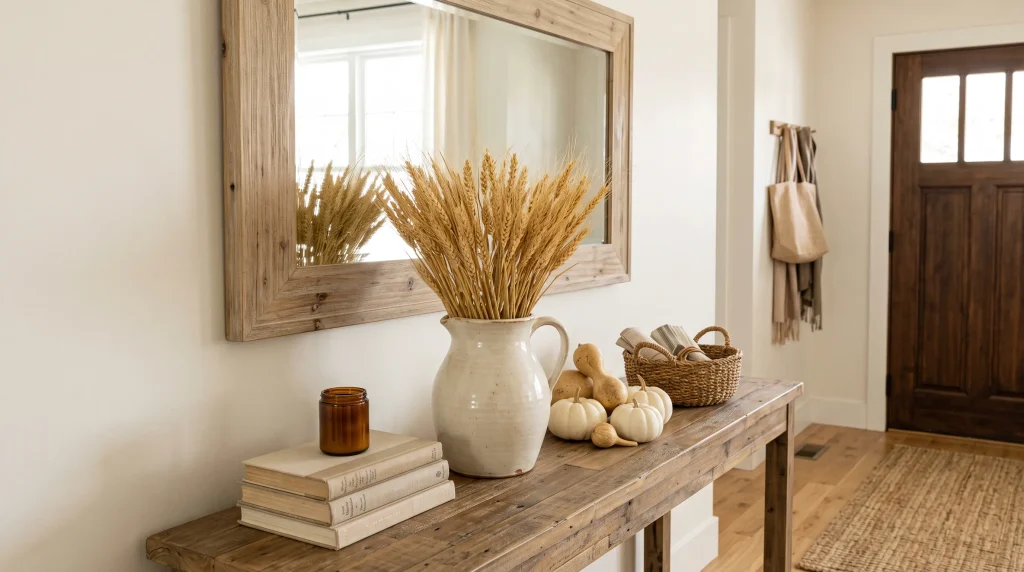
Golden Wheat and Grain Bundles
Wheat and other dried grain bundles carry an obvious harvest association without leaning on any particular color or theme to communicate the season. A tall bundle in a simple ceramic pitcher brings warmth and height to an entryway or console table, and because the material is already fully dried, it holds its color and shape for the entire season with essentially no upkeep.
This is also one of the more affordable seasonal materials available, often found at craft stores, farmers markets, or even along roadsides depending on where you live. A few stems go a long way visually, so it doesn’t take much material to create a noticeable seasonal accent.
Best for busy households: unlike fresh florals, dried wheat needs no water changes or maintenance — arrange it once and it holds its look for months.
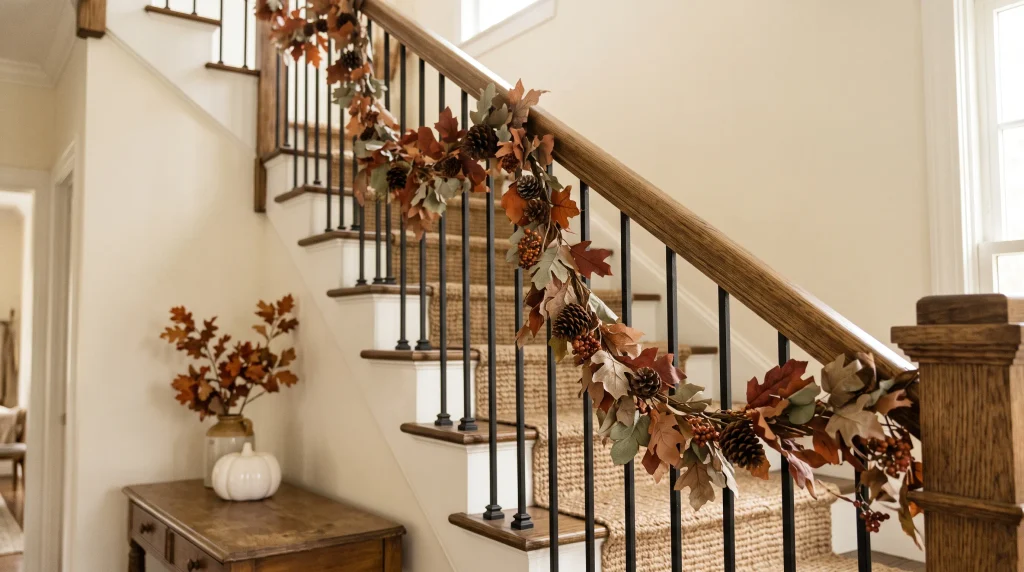
Autumn Leaf and Foliage Garlands
A garland is one of the more flexible seasonal decorations because it works in so many different spots — a staircase railing, a mantel edge, a shelf, or even a doorway frame. Choosing a garland with muted, naturalistic leaf tones rather than bright, glossy faux foliage tends to look considerably more elegant and less like an obvious decoration bought specifically for the season.
Draping the garland with some looseness, rather than pulling it taut along the railing, gives it a more organic, gathered appearance. A few small additions — pinecones, dried berries, a sprig of preserved eucalyptus — woven in at intervals add texture without requiring a completely different material.
Where this pays off most: staircases and mantels are the two spots where a garland reads most clearly, since both already have a natural horizontal or diagonal line for it to follow.
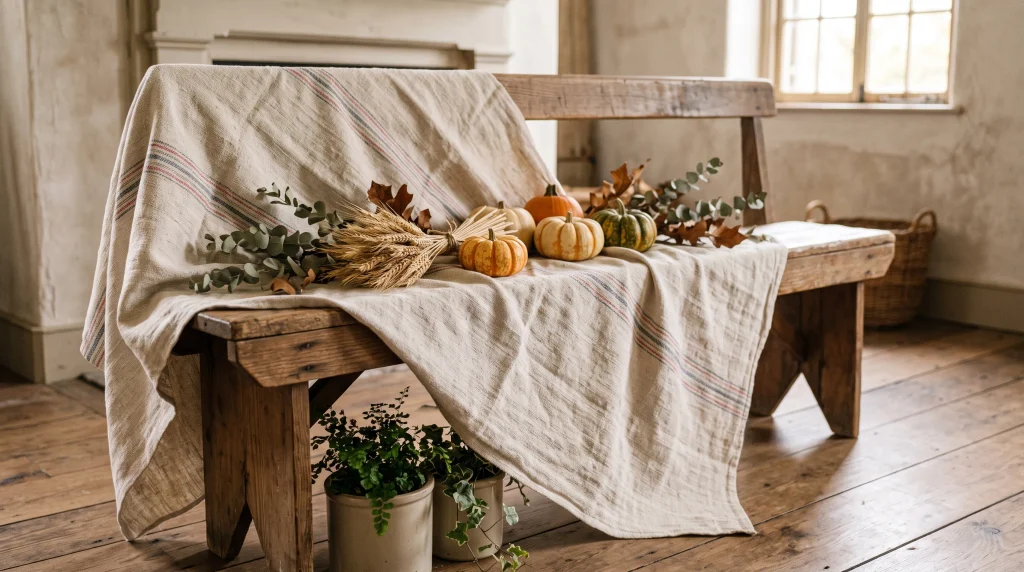
Grain Sack and Natural Textiles
Grain sack fabric, with its characteristic subtle stripe, brings a sense of history and farmhouse character to a seasonal display without needing any additional decoration layered on top. Draped over a bench, table, or wooden crate, it functions as a textured backdrop that makes whatever sits on top of it — pumpkins, dried florals, a stack of books — look more intentionally styled.
Because the pattern is subtle and the color palette stays neutral, this textile transitions easily from early autumn all the way through the winter months without needing to be swapped out or refreshed, which makes it a genuinely practical addition rather than a short-lived seasonal prop.
A smaller-scale option: if a full grain sack runner feels like too much fabric for your space, a single folded piece draped over one corner of a table or bench achieves a similar effect on a smaller scale.
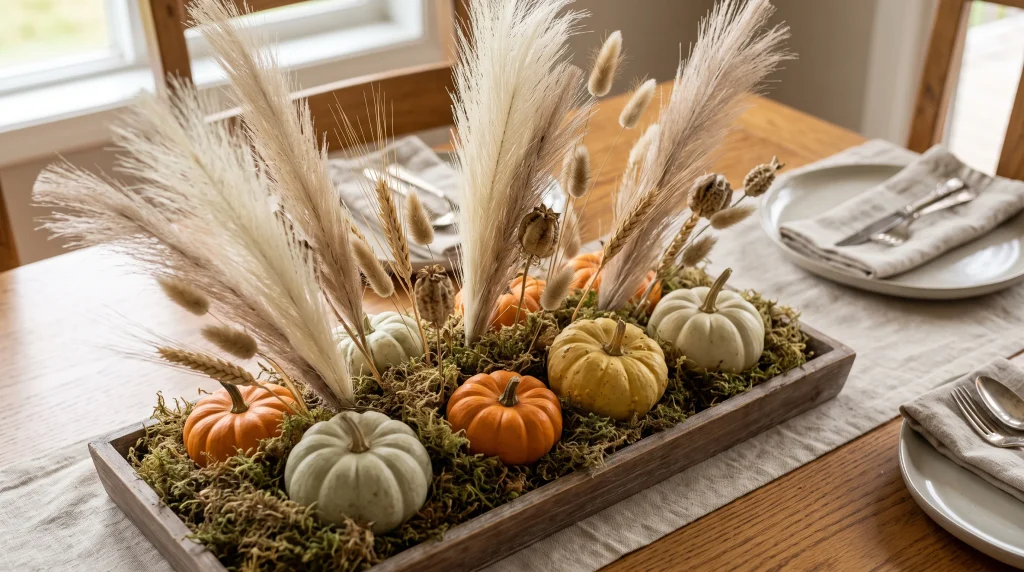
Dried Grass and Foliage Centerpieces
Most harvest centerpieces rely on pumpkins and dried botanicals alone, which is a reliable combination but can start to look predictable across several tables or seasons. Tall dried grasses add a different kind of texture and visual height that a purely low, rounded arrangement doesn’t have — a few upright stems break up the silhouette and give the display more presence on a table.
A low wooden tray or wide, shallow bowl works best as the base for this kind of display, since it lets the taller stems stand upright among the pumpkins rather than getting lost in a deep vase. A layer of moss or dried grass clippings underneath gives the stems something stable to anchor into so they hold their position.
Avoid this mistake: don’t overcrowd the tray — tall stems need a bit of open space around them to actually read as a deliberate design choice rather than visual clutter.
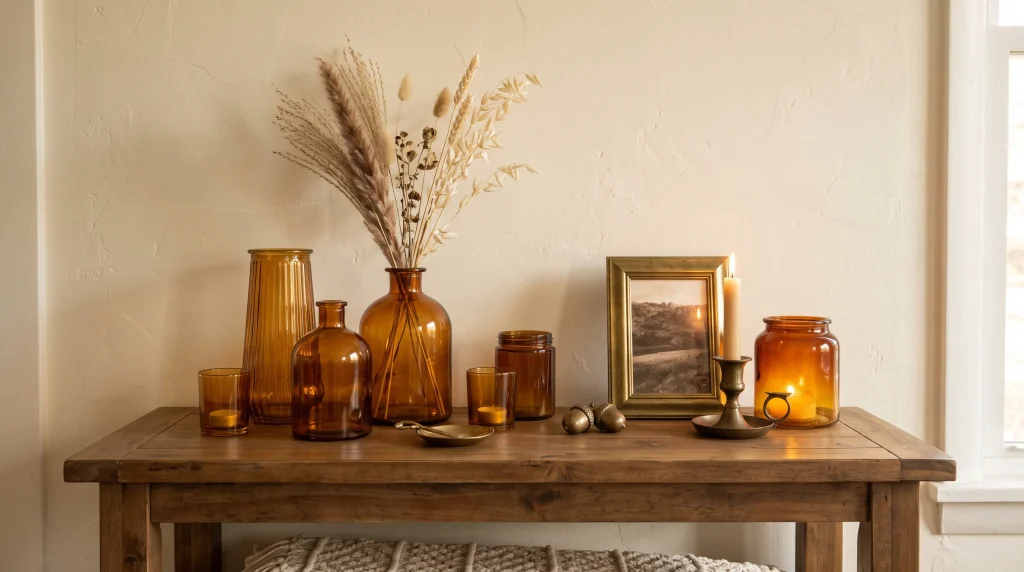
Amber Glass and Warm Metal Accents
Amber glass is a particularly effective seasonal material because its color does most of the work without needing an explicit autumn theme attached to it. A cluster of amber glass vases or candle holders on a console table brings warmth through color alone, and the glass itself catches and refracts candlelight in a way that adds a soft glow once the room dims in the evening.
This is also a genuinely collectible category, since vintage and thrifted amber glass pieces are widely available and rarely expensive. Building a small grouping gradually, mixing different shapes and sizes, tends to look more interesting than a matched set purchased all at once.
What actually matters here: undertone consistency between the amber glass and any brass or gold hardware nearby makes a noticeable difference — compare pieces together before buying rather than assuming warm metals automatically coordinate.
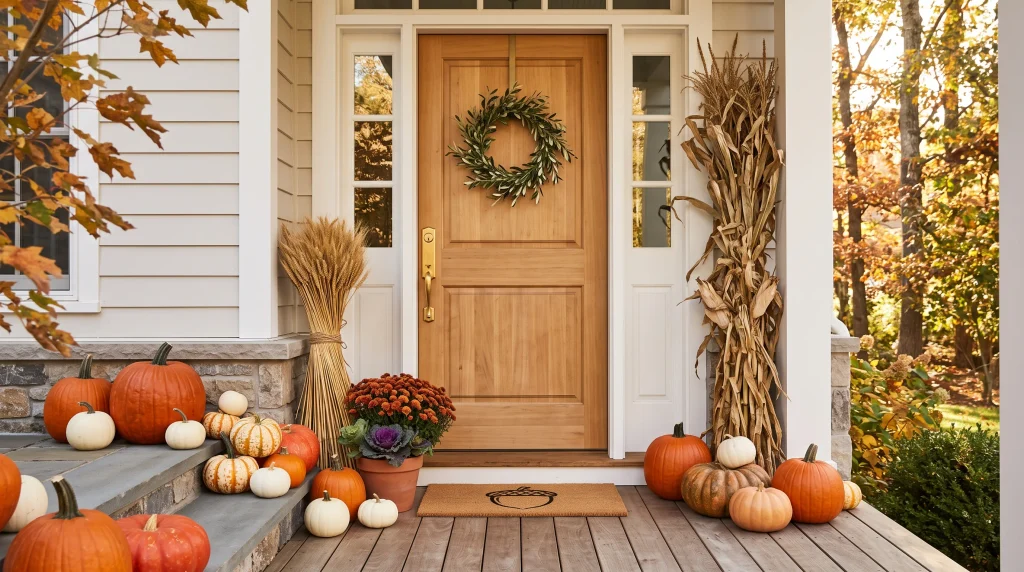
Front Porch Pumpkin Display
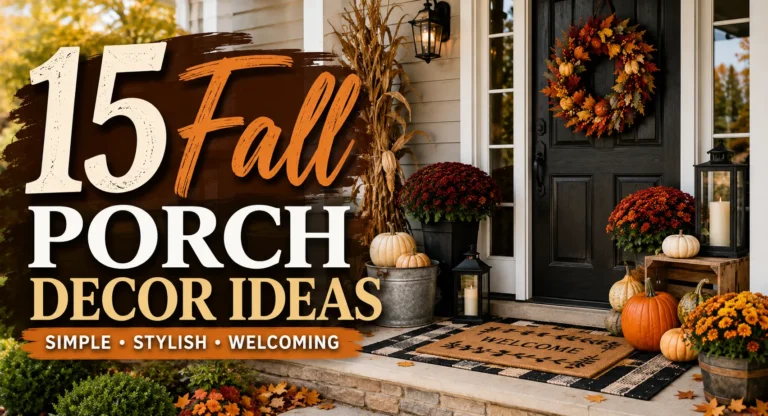
The front porch sets the tone for the whole home before anyone even steps inside, which makes it worth a bit of extra thought during the seasonal changeover. A grouped display of pumpkins in varying sizes, arranged on the steps or beside the door rather than in a single straight line, tends to look more like a natural harvest gathering than a store display.
Adding height with a dried cornstalk or a tall wheat bundle leaning against the door frame balances out a grouping of shorter, rounder pumpkins below it. Because porch decor faces sun, wind, and rain in a way indoor decor doesn’t, it’s worth choosing more durable, weather-appropriate materials for anything staying outside for the full season.
One thing to check first: if using real pumpkins outdoors, check on them periodically as the season progresses — they can soften or develop soft spots with sustained exposure to moisture.
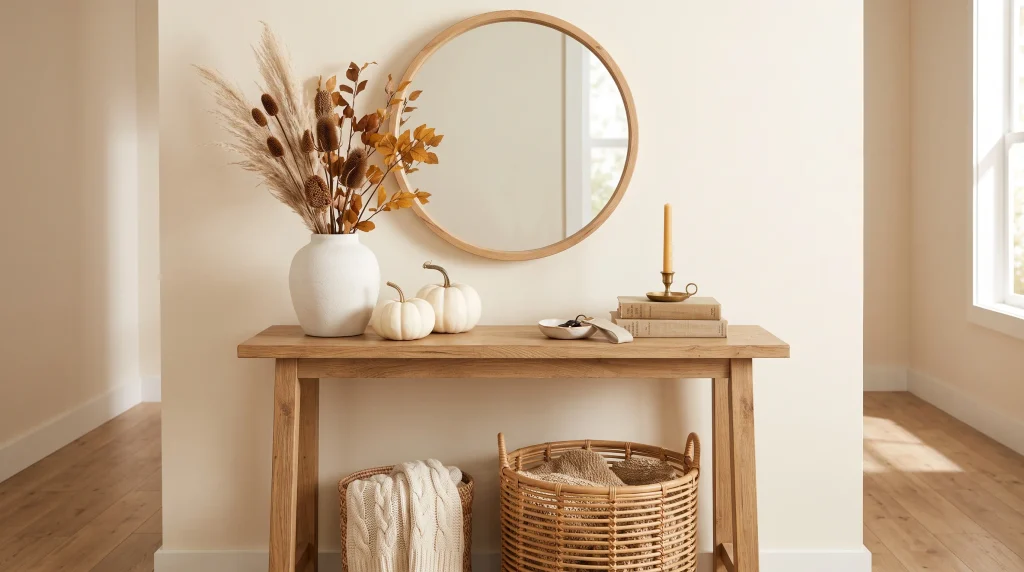
Seasonal Console Table Styling
Not every seasonal update needs to touch the whole house — a single console table, styled thoughtfully, can carry a surprising amount of the seasonal feeling on its own. This is a particularly useful approach for renters, smaller homes, or anyone who doesn’t want to commit to decorating every room for a display that will come down again in a matter of weeks.
The same styling principles that apply to a full mantel apply here at a smaller scale: vary height, mix textures, and leave some open space rather than filling every available inch of surface. A mirror or piece of artwork above the table gives the vignette a natural upper boundary, while a basket underneath adds function alongside the seasonal look.
Best for renters or smaller spaces: concentrating seasonal effort on one well-styled surface, rather than spreading a little decor across every room, tends to create a stronger visual impact for less time and cost.
Conclusion
A warm, seasonal home doesn’t require bright colors or an elaborate theme to feel like autumn has arrived. Pumpkins in neutral tones, dried botanicals, layered textiles, and warm ambient lighting can bring the season into a home gently, in a way that suits almost any existing style and stays comfortable to live with for weeks at a time. Start with one area — an entryway, a mantel, a table, or a sofa — rather than decorating the entire home at once, and build outward gradually from there. The goal is a home that feels cozy and considered through the season, not one that feels like it’s been taken over by a single theme.


One Comment